


Primary sourceDocument23 August 1939
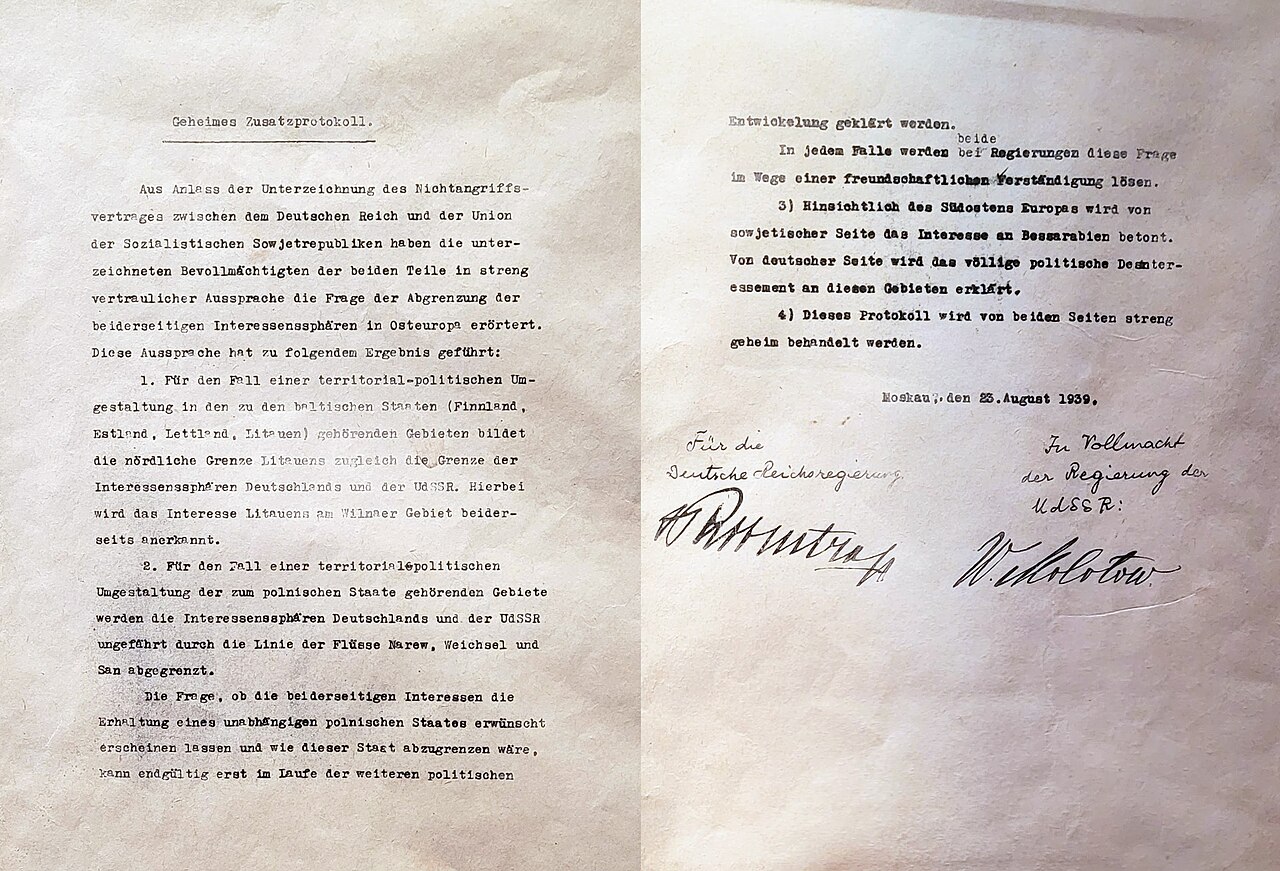
Molotov-Ribbentrop Pact
23 August 1939
The 1939 non-aggression treaty between Nazi Germany and the Soviet Union, with a secret protocol dividing Eastern Europe, commissioned under Stalin's leadership.
Stalin's government negotiated and signed this pact with Nazi Germany, dividing Eastern Europe into spheres of influence.
Free Humy account · No credit card · 53,307 sources to read
About this source
What it is
This is the Treaty of Non-Aggression between Germany and the Soviet Union, signed in Moscow in August 1939 by Soviet Foreign Minister Vyacheslav Molotov and German Foreign Minister Joachim von Ribbentrop. A secret additional protocol, shown here with its typed German text and signatures, divided Eastern Europe into Soviet and German spheres of influence, including Poland, Latvia, Estonia, Finland and Bessarabia.
Why it matters
The pact let Nazi Germany invade Poland without fear of Soviet opposition, and let the Soviet Union, under Stalin, annex territory in Poland, Finland, the Baltic states and Romania. It shows Stalin as a calculating negotiator willing to make a deal with Hitler for territorial gain, even though the two regimes were ideological enemies. The treaty collapsed when Germany invaded the Soviet Union in 1941.
Look closer
- Why would both sides want to keep the protocol secret?
- What does this pact tell us about the limits of ideology in international politics?
- How did ordinary people in the divided territories experience the consequences of this signed paper?
This document is part of the curated material that grounds the AI version of Joseph Stalin and Adolf Hitler on Humy.ai — when students ask about related events, the AI can quote it and cite it.
More Joseph Stalin sources
Browse all 96 →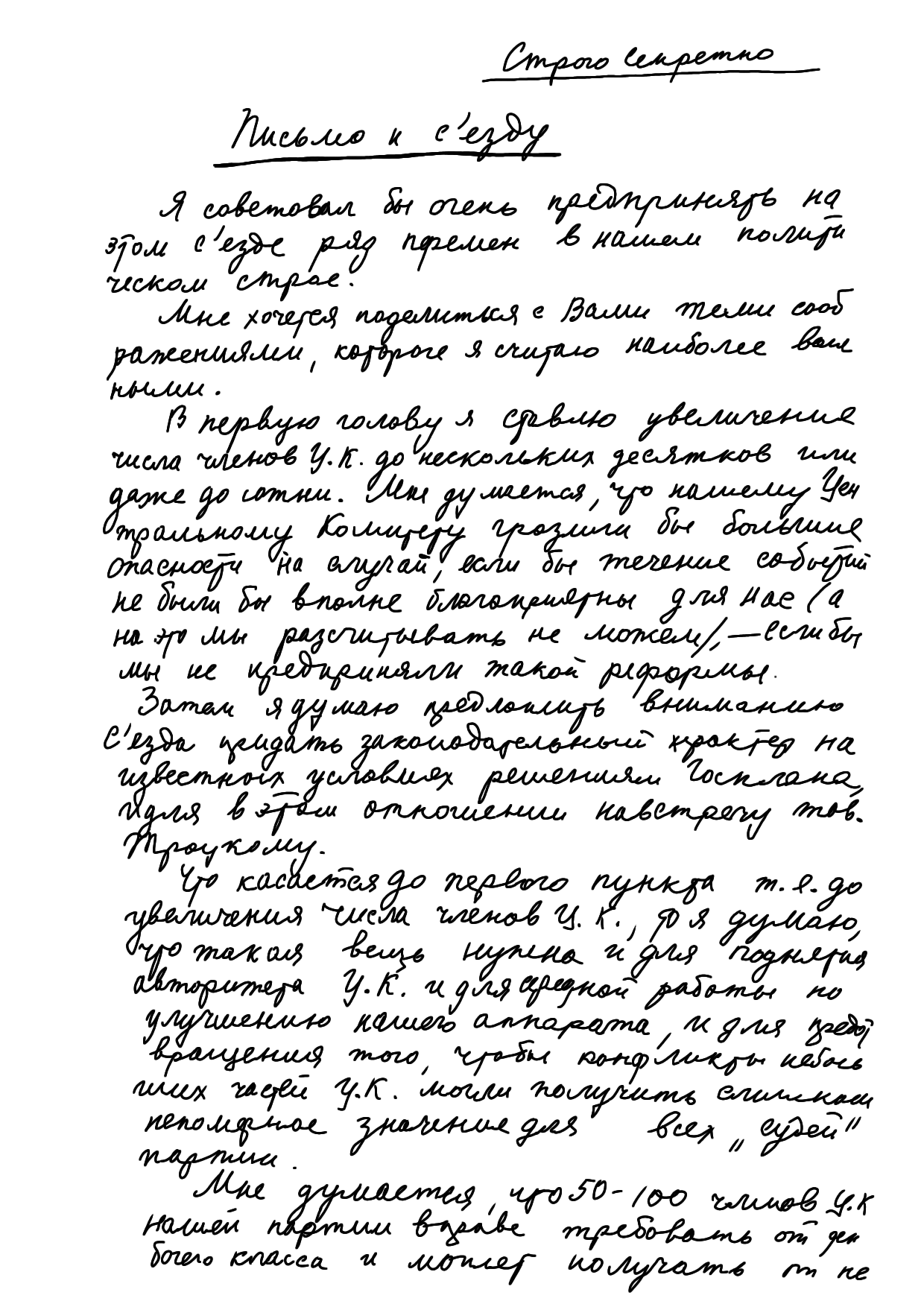 Letter
Primary source
Lenin's Testament
Vladimir Lenin · late 1922 – early 1923
 Photograph
Primary source
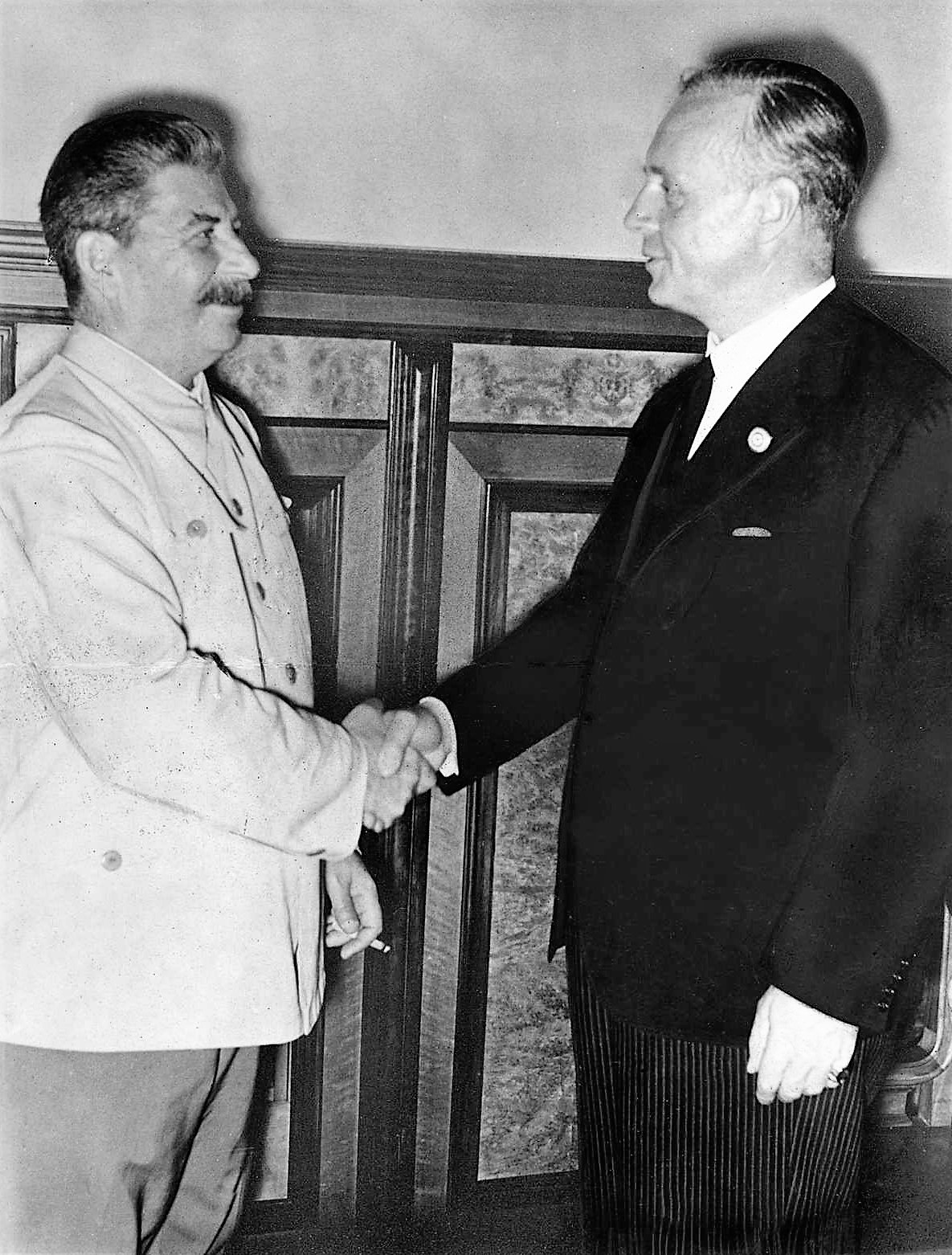
Stalin and Ribbentrop in the Kremlin
Helmut Laux · August 1939
 Speech
Primary source
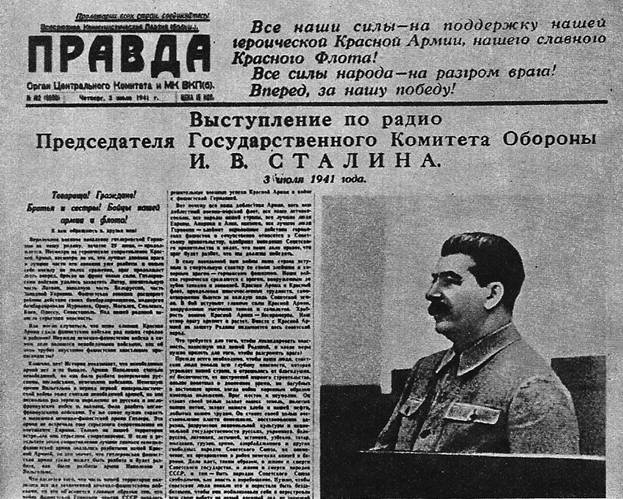
Stalin's Radio Speech of 3 July 1941
Joseph Stalin · 3 July 1941
Primary source
Order No. 227
Joseph Stalin · 28 July 1942
Free account
Browse every Joseph Stalin source
Sign up free →
Ready when you are
Start chatting with Joseph Stalin now.
20 messages free · No credit card · Available in 50+ languages.