


Primary sourcePainting1902
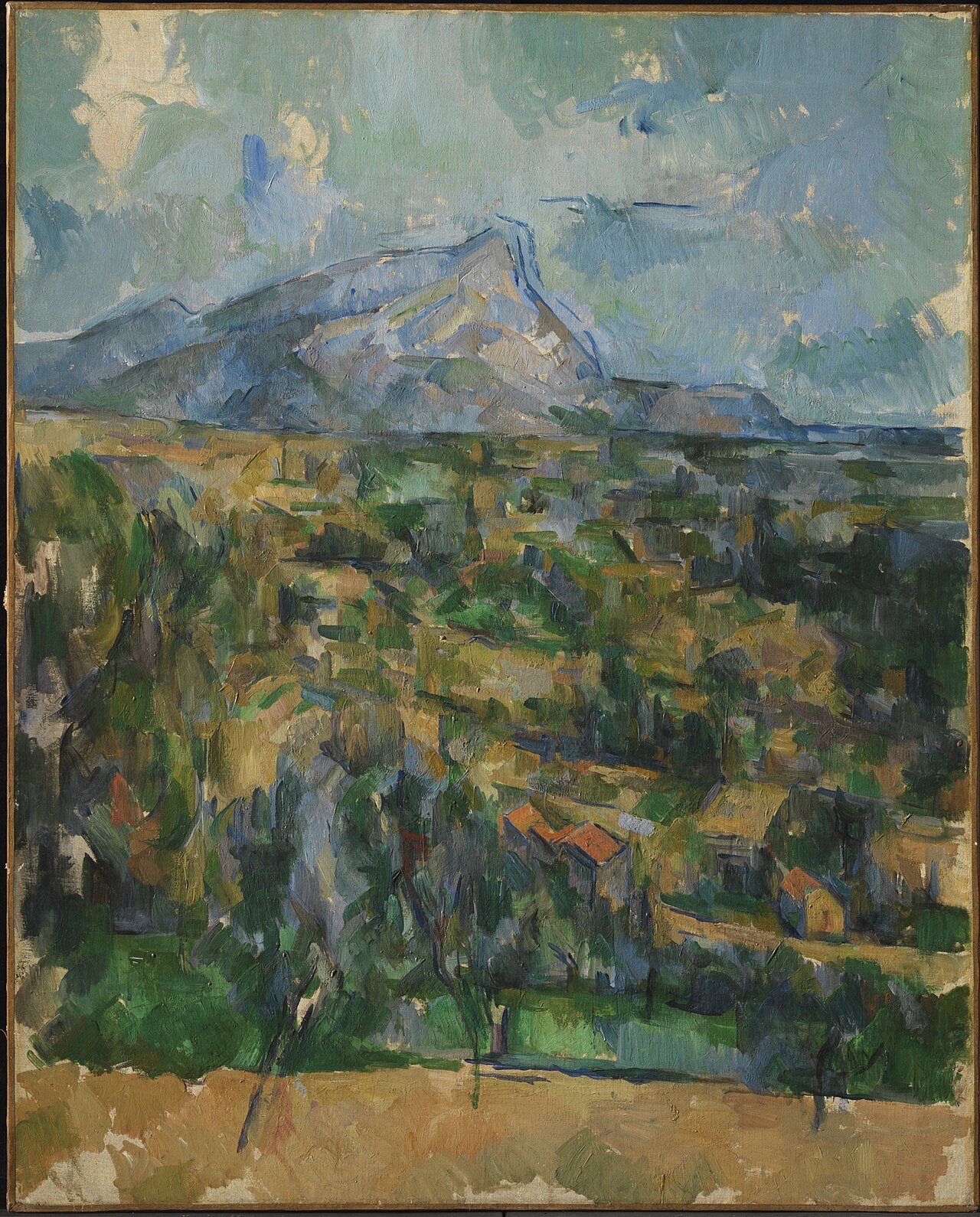
Mont Sainte-Victoire
Paul Cézanne · 1902
An oil painting by Paul Cézanne of the mountain near his home in Provence, part of a series he painted dozens of times over two decades.
One of Cézanne's many paintings of this mountain, showing his mature method of breaking landscape into geometric colour planes.
About this source
What it is
This is an oil painting by Paul Cézanne, made in 1902, showing Mont Sainte-Victoire, a mountain near his home town of Aix-en-Provence. It is one of dozens of paintings and watercolours Cézanne made of this same mountain over his career, many painted from the hillside studio he built late in life.
Why it matters
Cézanne returned to this subject again and again, changing angle, light and mood each time, breaking the landscape into blocks of colour and geometric shapes rather than copying exactly what the eye saw. This repeated study of one scene, instead of capturing a fleeting moment like the Impressionists, helped pave the way toward Cubism and influenced how later modern artists approached form.
Look closer
- How has Cézanne simplified the shapes of the fields, houses and mountain?
- Why might an artist paint the same view dozens of times instead of moving on to new subjects?
- What feels timeless or placeless about this scene — no clear time of day or season?
This painting is part of the curated material that grounds the AI version of Paul Cézanne on Humy.ai — when students ask about related events, the AI can quote it and cite it.
More Paul Cézanne sources
Browse all 95 →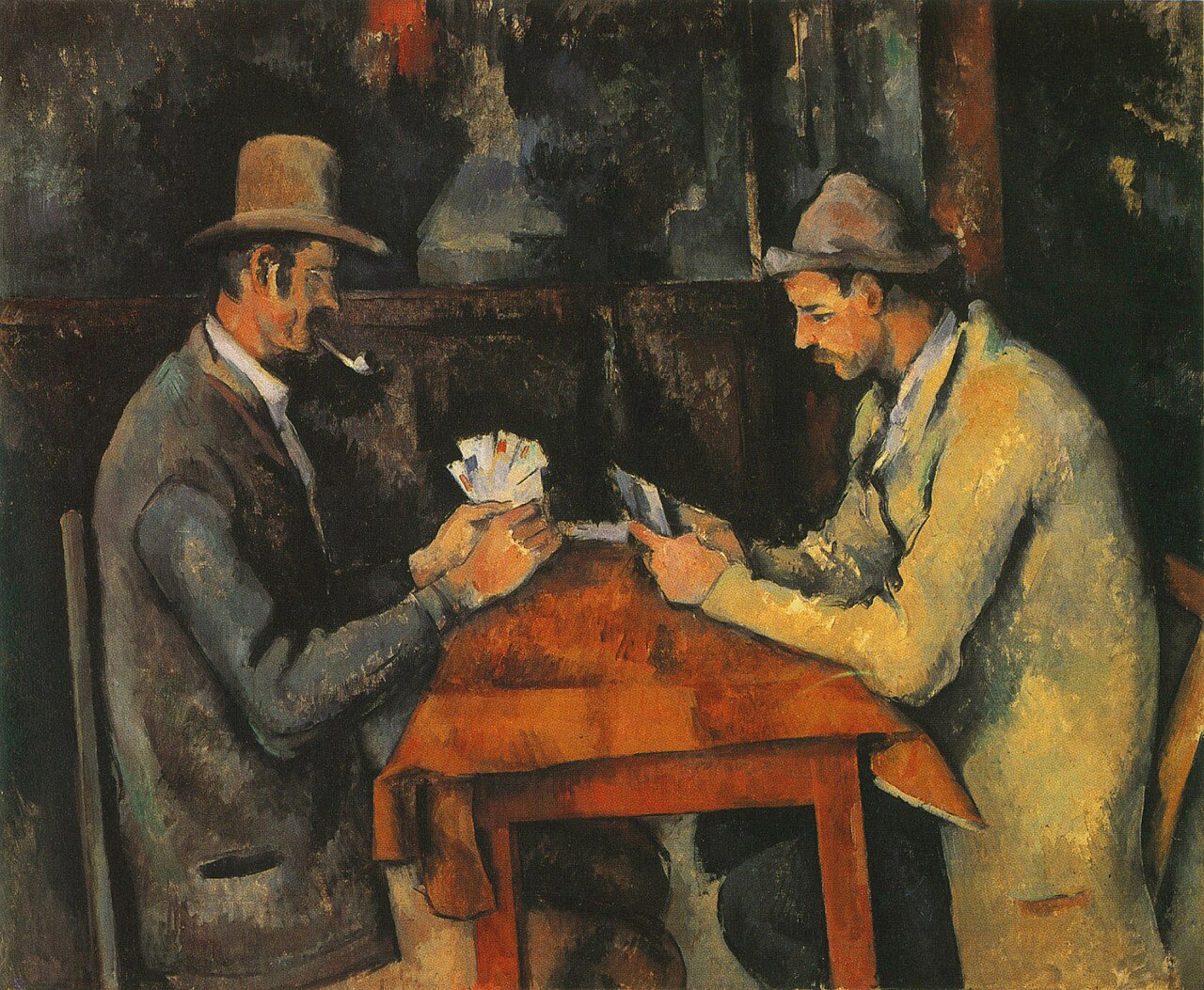 Painting
Primary source
The Card Players
Paul Cézanne · 1893
 Painting
Primary source
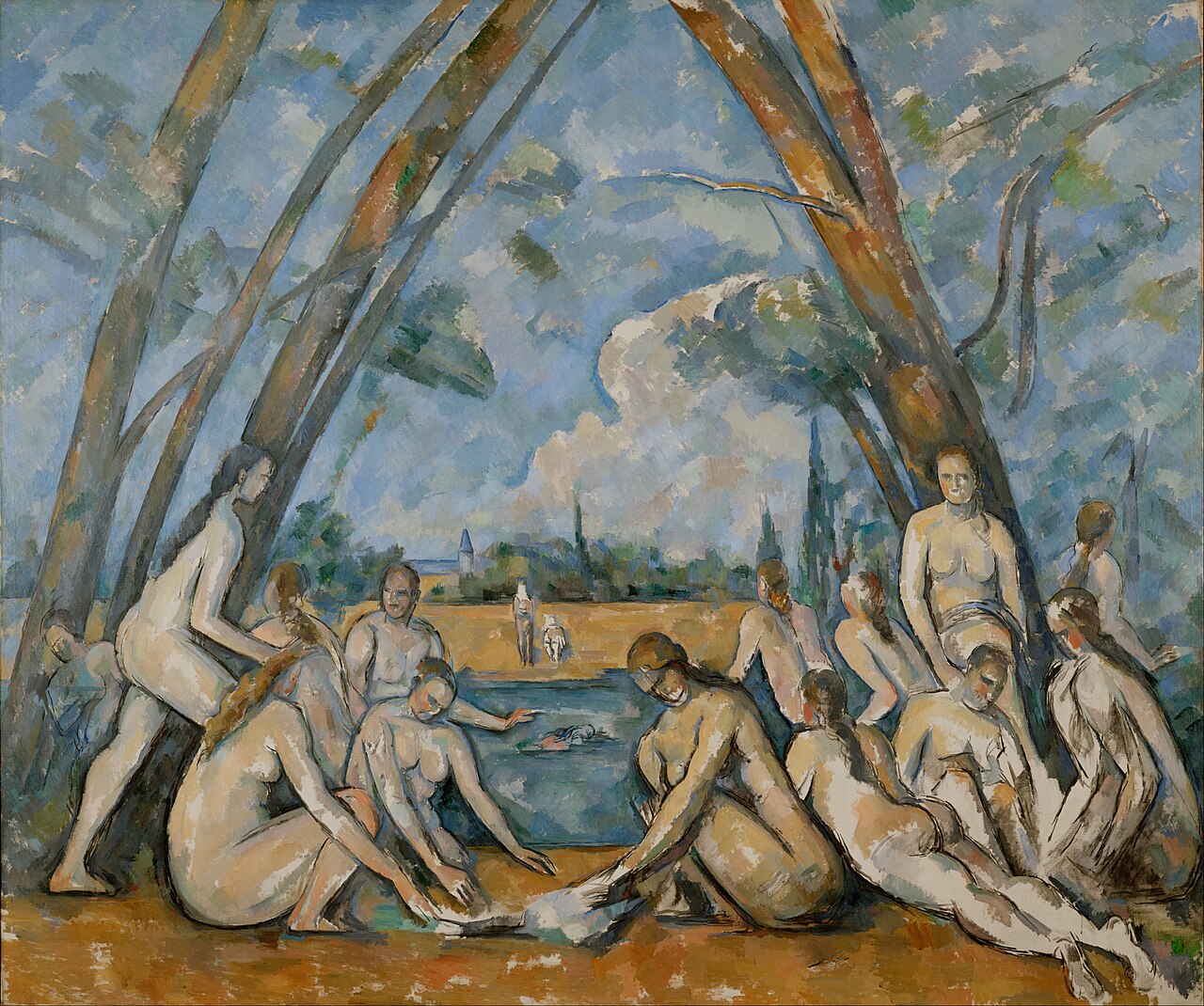
The Large Bathers
Paul Cézanne · 1898-1906
 Painting
Primary source
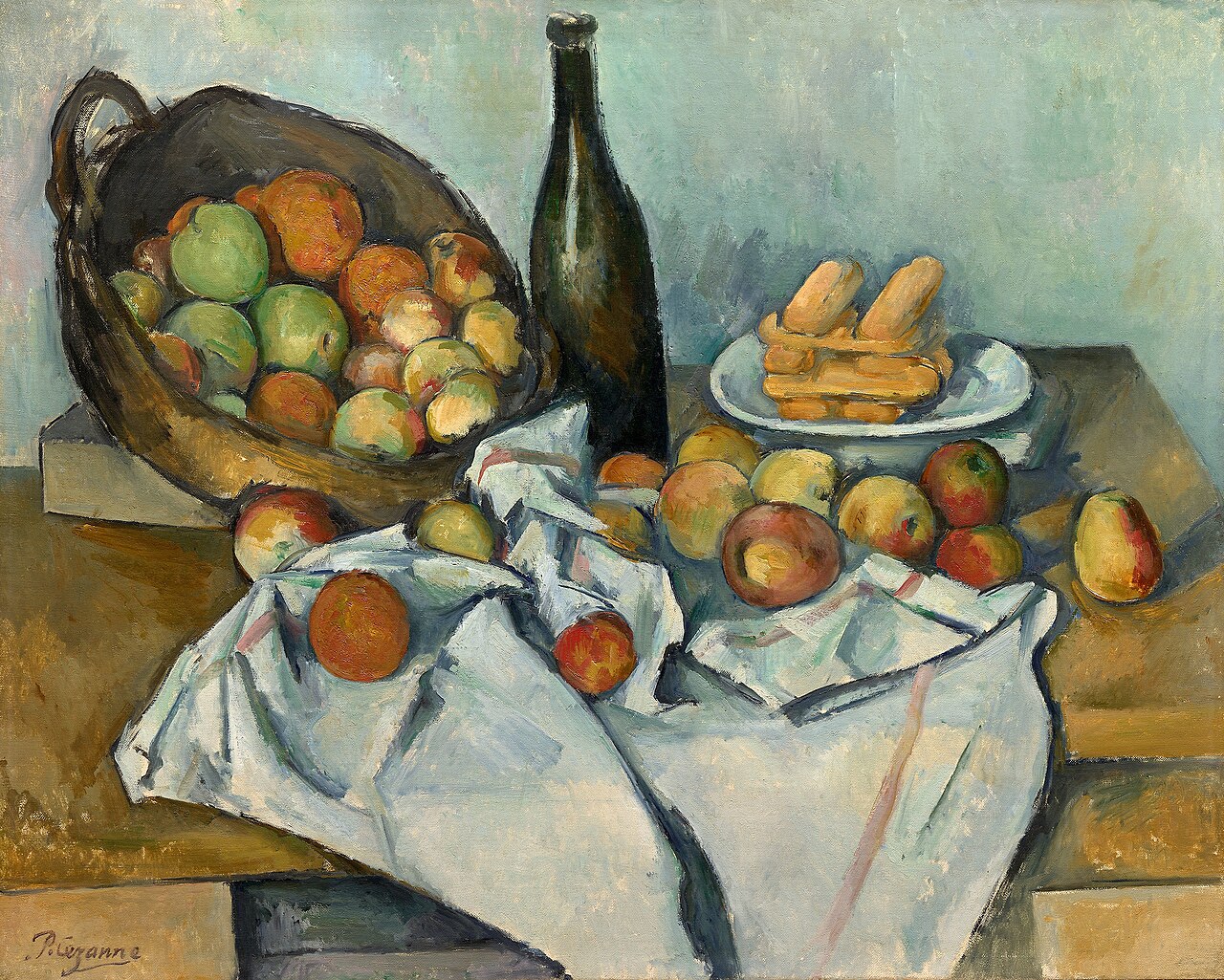
The Basket of Apples
Paul Cézanne · c. 1893
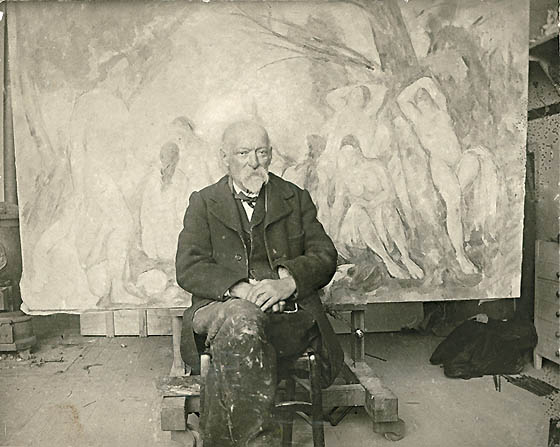 Photograph
Primary source
Paul Cézanne in his studio at Les Lauves, 1904
Émile Bernard · 1904
Free account
Read every Paul Cézanne source
Sign up free →
Ready when you are
Start chatting with Paul Cézanne now.
20 messages free · No credit card · Available in 50+ languages.