


Secondary sourceSculpture1856-1859
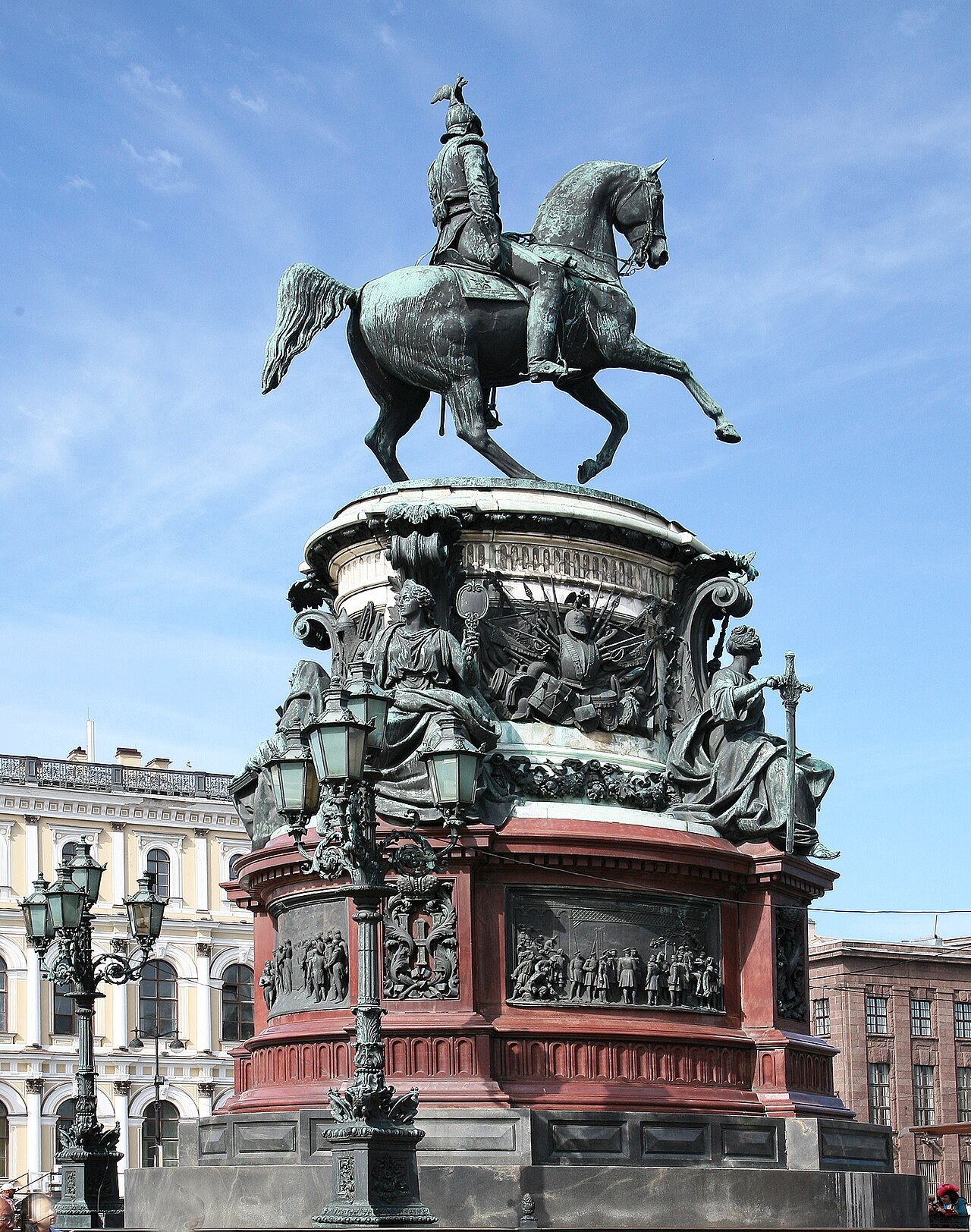
Monument to Nicholas I
Auguste de Montferrand · 1856-1859
An equestrian bronze statue of Nicholas I in Saint Petersburg, commissioned after his death to show him as a military horseman and ruler.
This monument, commissioned by his son after his death, presents Nicholas I as a disciplined military ruler.
About this source
What it is
This is a bronze equestrian statue of Nicholas I, designed by the French architect Auguste de Montferrand with the statue itself made by sculptor Peter Clodt von Jürgensburg. It stands on a tall decorated pedestal in Saint Isaac's Square in Saint Petersburg and was unveiled in 1859, a few years after the emperor's death.
Why it matters
Commissioned by Nicholas's son and successor Alexander II, the monument shows Nicholas in military uniform on a rearing horse, emphasizing his role as head of an elite cavalry regiment and as a disciplined, martial ruler. At the time it was considered an engineering marvel, balanced on only two points.
Look closer
- Why might Alexander II have wanted his father remembered as a soldier rather than in another way?
- What do the allegorical figures around the pedestal suggest about how the family wanted Nicholas remembered?
- What does a grand public monument tell us that a private letter or diary cannot?
This sculpture is part of the curated material that grounds the AI version of Nicholas I of Russia on Humy.ai — when students ask about related events, the AI can quote it and cite it.
More Nicholas I of Russia sources
Browse all 88 →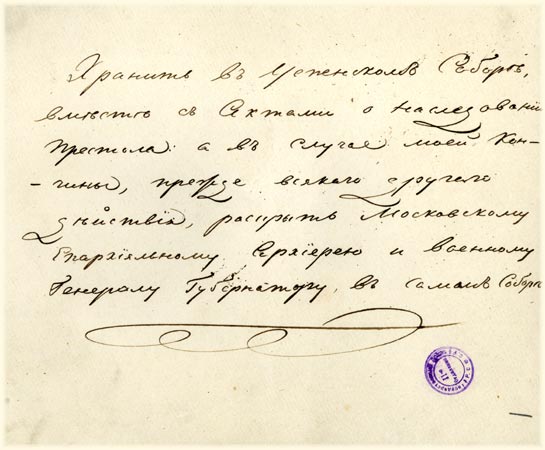 Document
Primary source
Envelope for the Manifesto on the Succession to Grand Duke Nicholas Pavlovich
Alexander I of Russia · August 1823
Secondary source
La Russie en 1839
Astolphe de Custine · 1843
 Document
Primary source
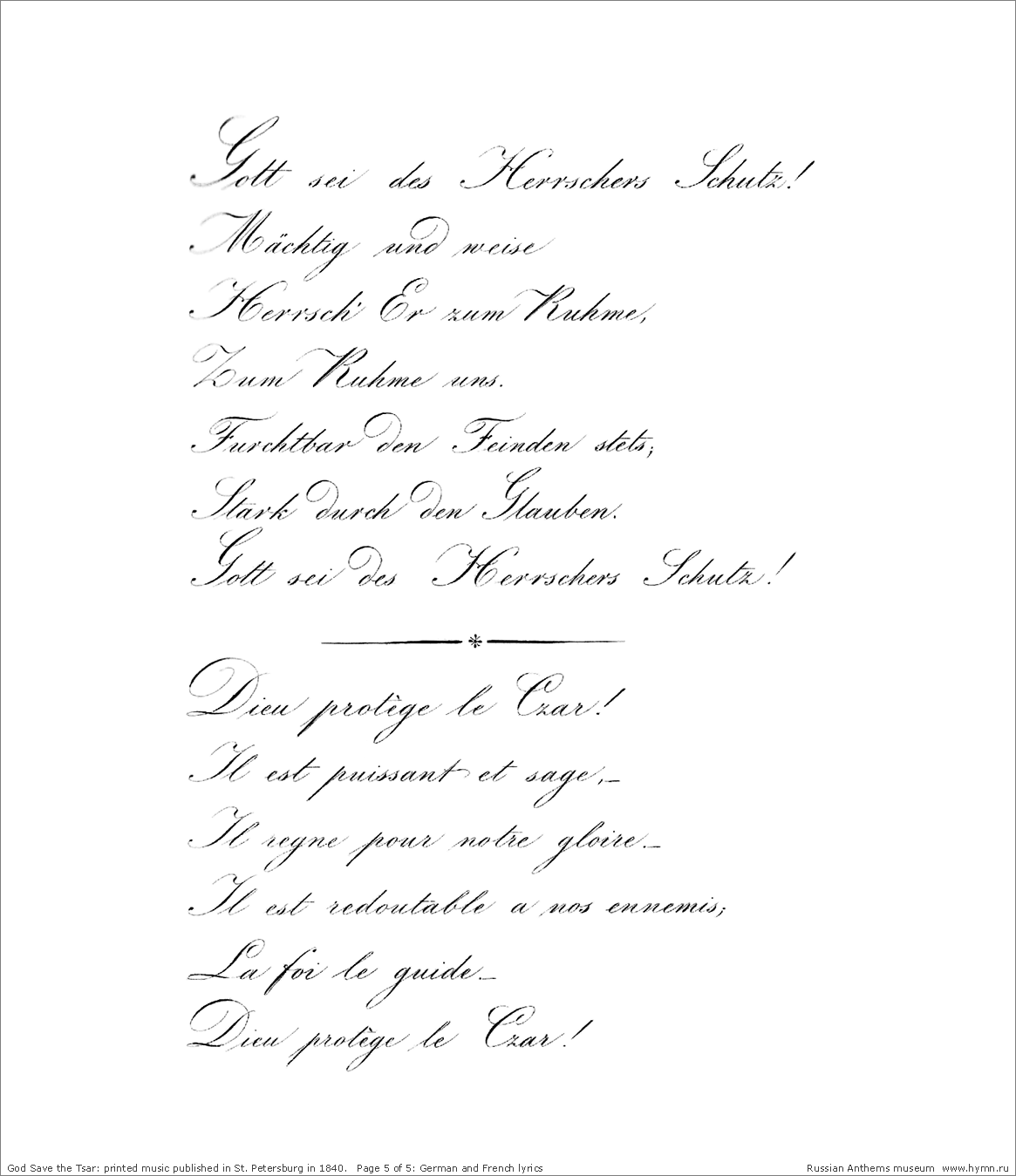
God Save the Tsar!
Alexei Lvov · 1833
 Document
Primary source
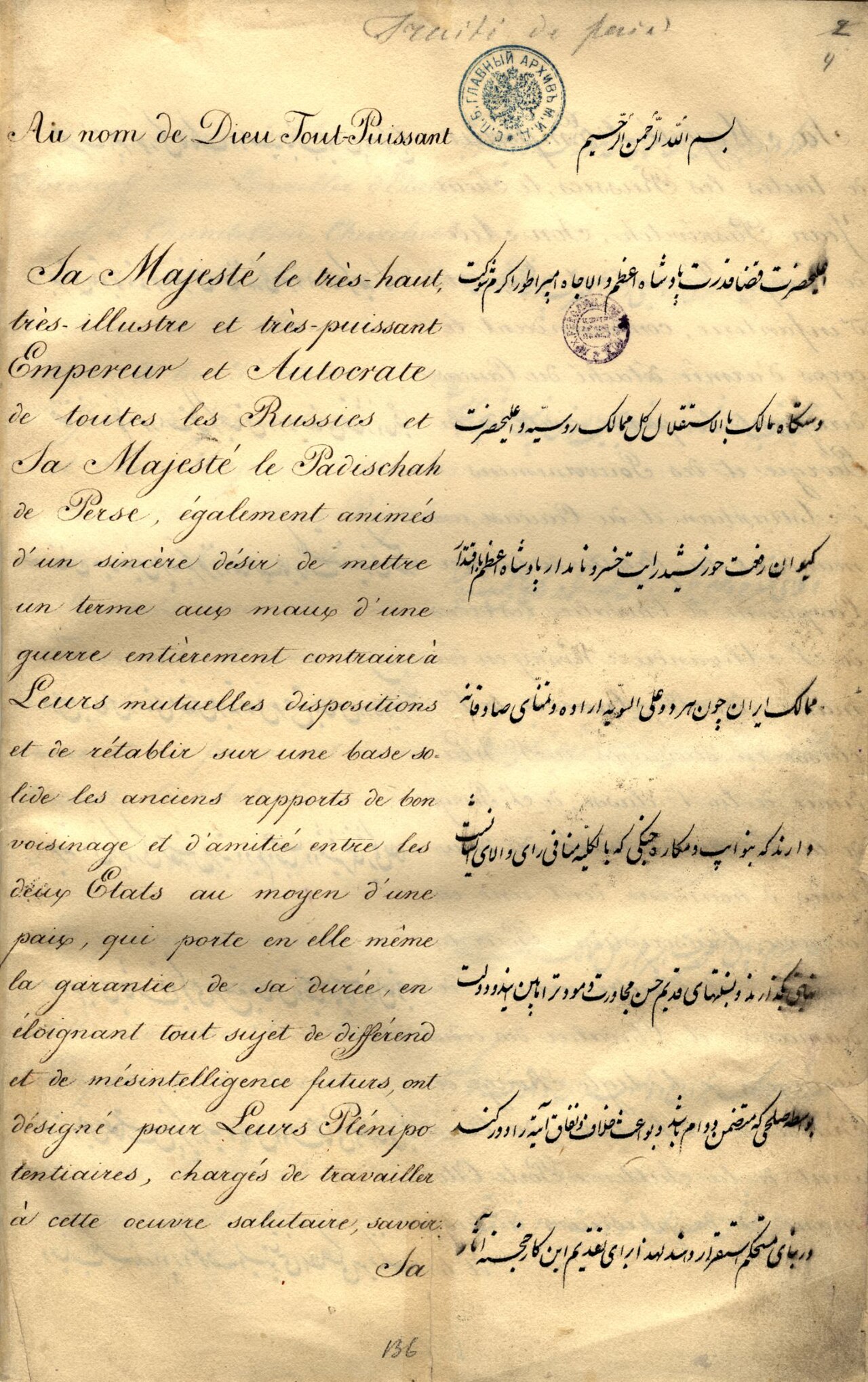
Treaty of Turkmenchay
22 February 1828
Free account
Read every Nicholas I of Russia source
Sign up free →
Ready when you are
Start chatting with Nicholas I of Russia now.
20 messages free · No credit card · Available in 50+ languages.