


Secondary sourcePainting1928 (mosaic); photo taken 2007
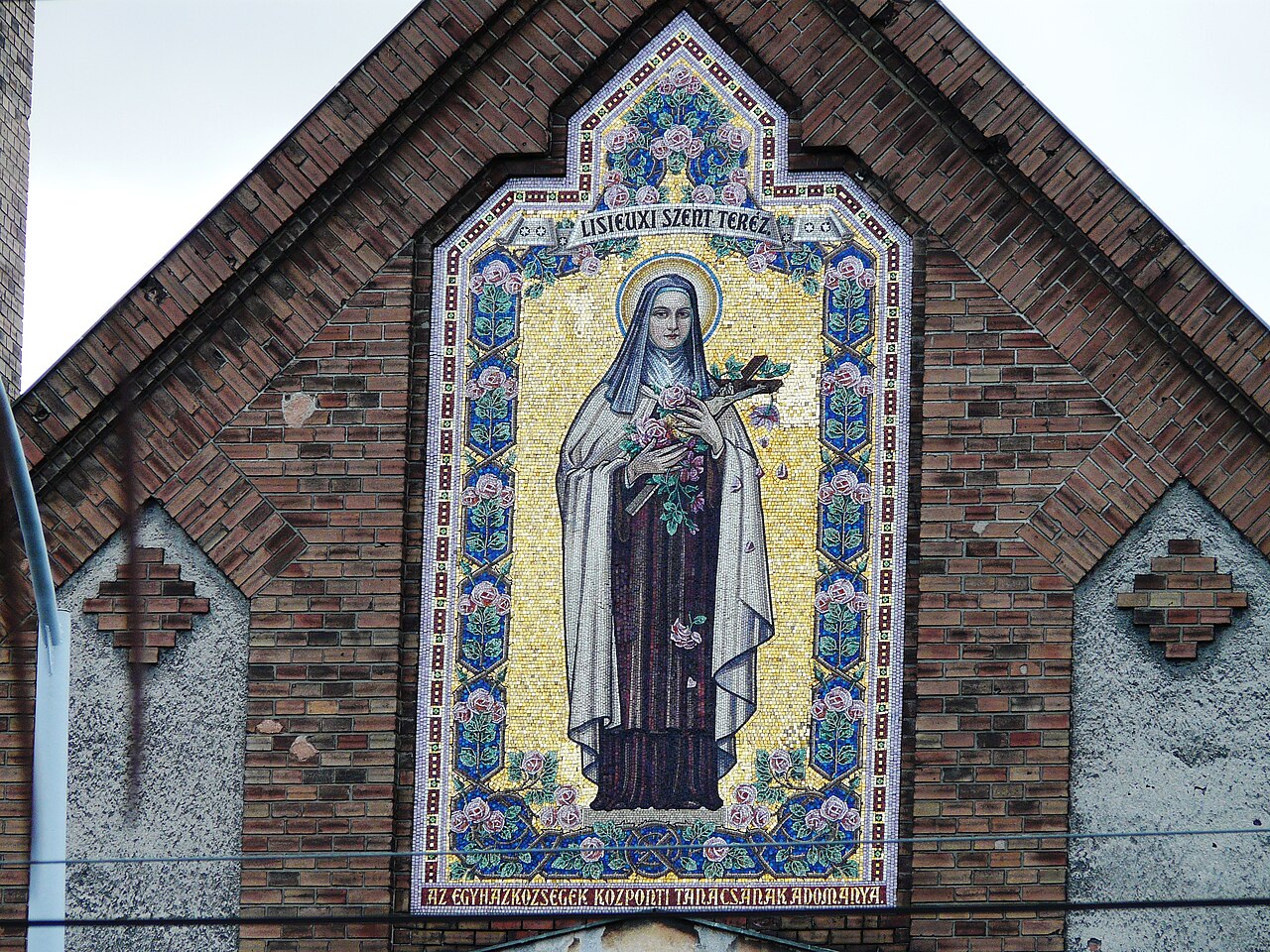
Mosaic of Saint Thérèse of Lisieux, Budapest
Zsellér Imre (maker), Petrovácz Gyula (designer) · 1928 (mosaic); photo taken 2007
A 1928 church mosaic in Budapest depicting Thérèse of Lisieux holding a crucifix and roses.
An international devotional artwork depicting Thérèse, showing the spread of her veneration beyond France.
About this source
What it is
This photograph, taken in 2007, shows a large mosaic on the gable of a church in Budapest, designed by Petrovácz Gyula and made by Zsellér Imre in 1928. It depicts Saint Thérèse of Lisieux in a brown Carmelite habit and white veil, holding a crucifix and roses, with a gold halo and background, framed by floral borders and Hungarian inscriptions.
Why it matters
The mosaic shows how quickly Thérèse's image spread internationally after her canonization, reaching Hungary within decades of her death. It reflects the artistic traditions used to depict saints and the symbols—roses, crucifix—associated with her.
Look closer
- Why do you think roses are a recurring symbol in images of Thérèse?
- What does the choice of a prominent gable location say about her importance to this community?
- What historical details about Thérèse's real life are missing from this religious image?
This painting is part of the curated material that grounds the AI version of Saint Therese on Humy.ai — when students ask about related events, the AI can quote it and cite it.
More Saint Therese sources
Meet the AI Saint Therese →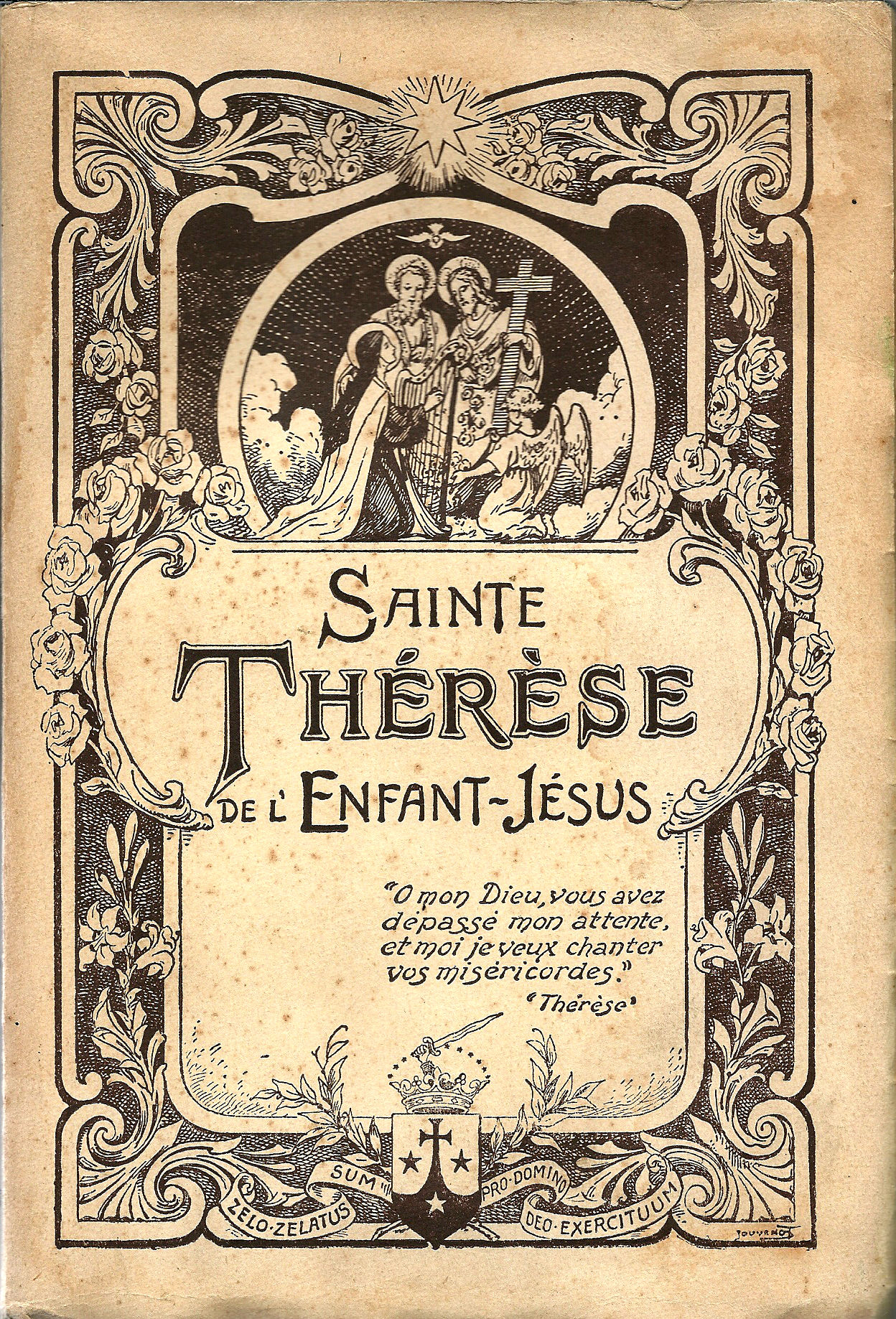 Book
Primary source
The Story of a Soul
Thérèse of Lisieux · 1898
Primary source
Act of Oblation to Merciful Love
Thérèse of Lisieux · 9 June 1895
 Photograph
Primary source
Portrait of Thérèse of Lisieux
15 April 1895
 Photograph
Primary source
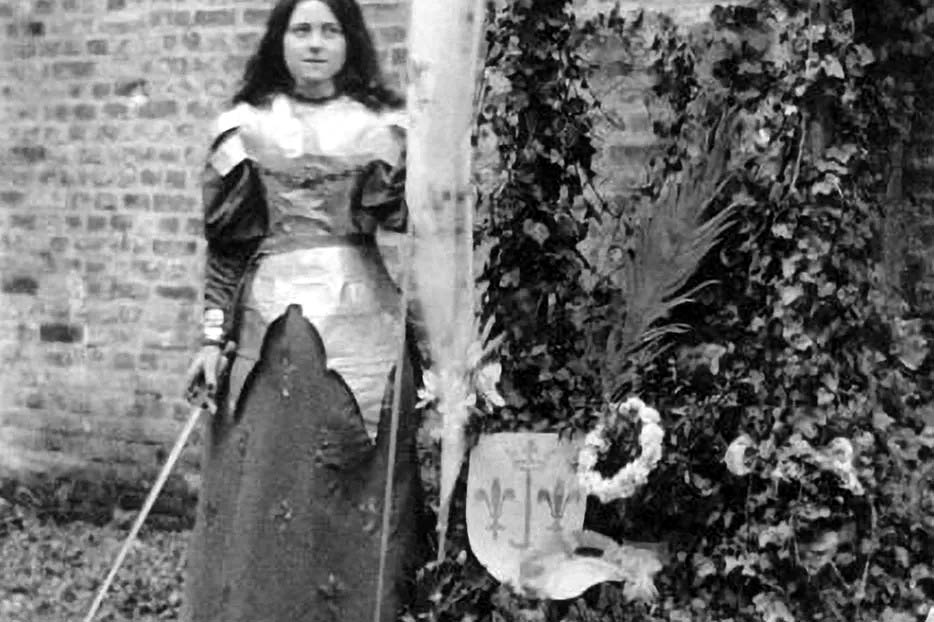
Photograph of Thérèse as Joan of Arc
Céline Martin (Sister Geneviève) · 1895
 Book
Primary source
Histoire d'une âme, first edition (1898)
Thérèse of Lisieux, ed. Pauline Martin (Mother Agnes of Jesus) · 30 September 1898
Ready when you are
Start chatting with Saint Therese now.
20 messages free · No credit card · Available in 50+ languages.