


Primary sourceSculpture1966
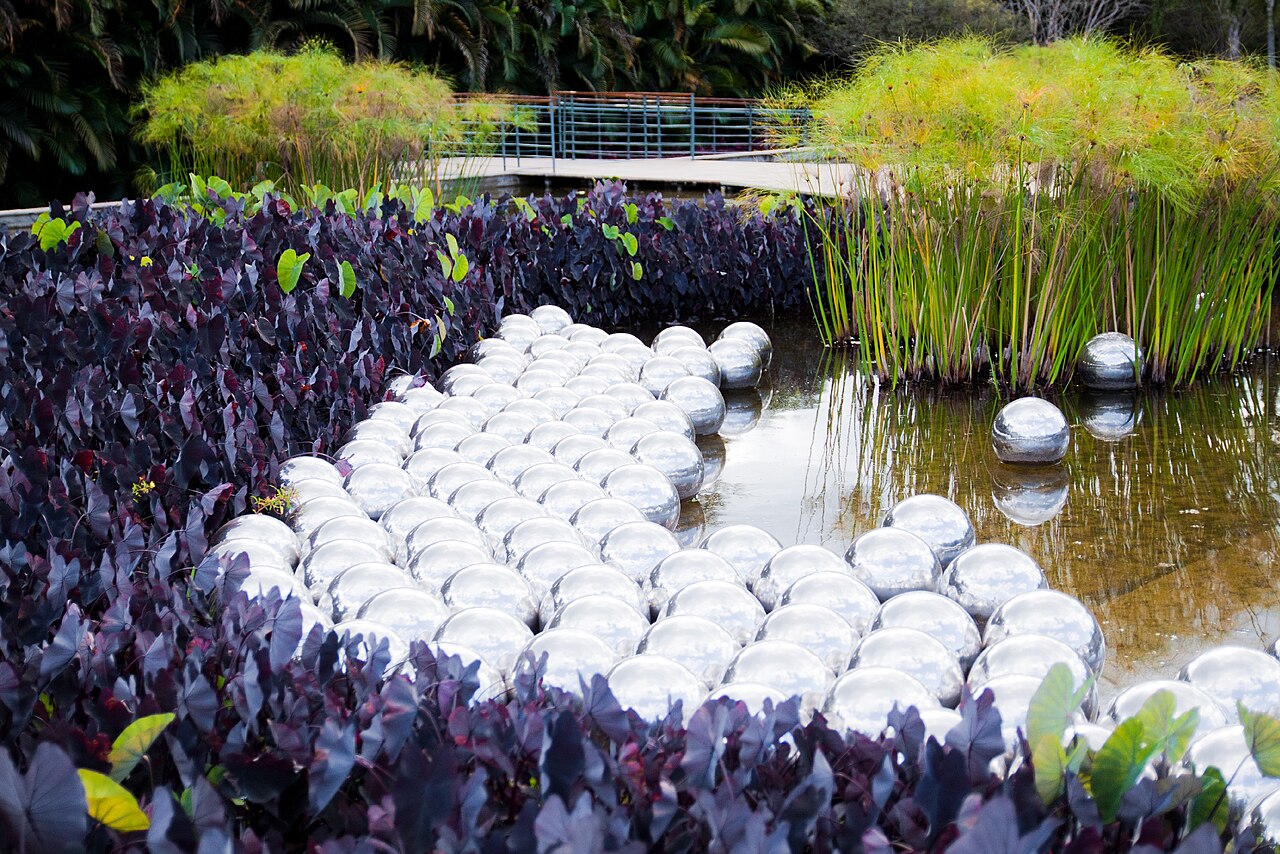
Narcissus Garden
Yayoi Kusama · 1966
An installation of 1,500 mirrored plastic spheres that Kusama sold individually at the 1966 Venice Biennale as an unofficial art-market critique.
Kusama created and personally sold this installation, using it to critique the art market and her own celebrity.
Free Humy account · No credit card · 65,431 sources to read
About this source
What it is
Narcissus Garden is an outdoor installation made by Yayoi Kusama of 1,500 mass-produced, reflective plastic spheres, which she called a "kinetic carpet". It was first shown at the 1966 Venice Biennale.
Why it matters
Kusama was not officially invited to exhibit, so she installed the spheres on the lawn outside the Italian pavilion herself. Dressed in a golden kimono, she sold each sphere for a small sum until Biennale organizers stopped her. The piece commented on the mechanization and commodification of the art market, while also promoting Kusama's own image through the media.
Look closer
- Why might Kusama have chosen to sell the spheres herself instead of waiting for the art world to recognize her?
- What does the shiny, repeated form of the spheres suggest about mass production?
- How does an installation outdoors, open to the public, change the meaning of an artwork compared to one in a gallery?
This sculpture is part of the curated material that grounds the AI version of Yayoi Kusama on Humy.ai — when students ask about related events, the AI can quote it and cite it.
More Yayoi Kusama sources
Browse all 47 →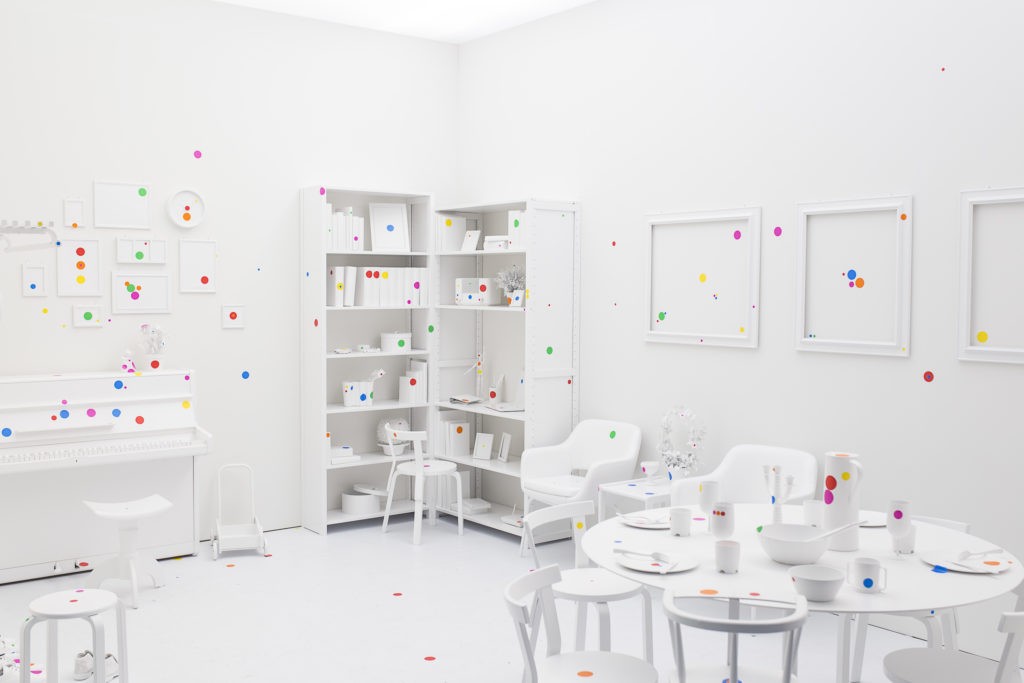 Artifact
Primary source
The Obliteration Room
Yayoi Kusama · 2002–present
 Photograph
Primary source
Yayoi Kusama circa 2004 (video still)
George Quasha · c. 2002-2005
 Sculpture
Primary source
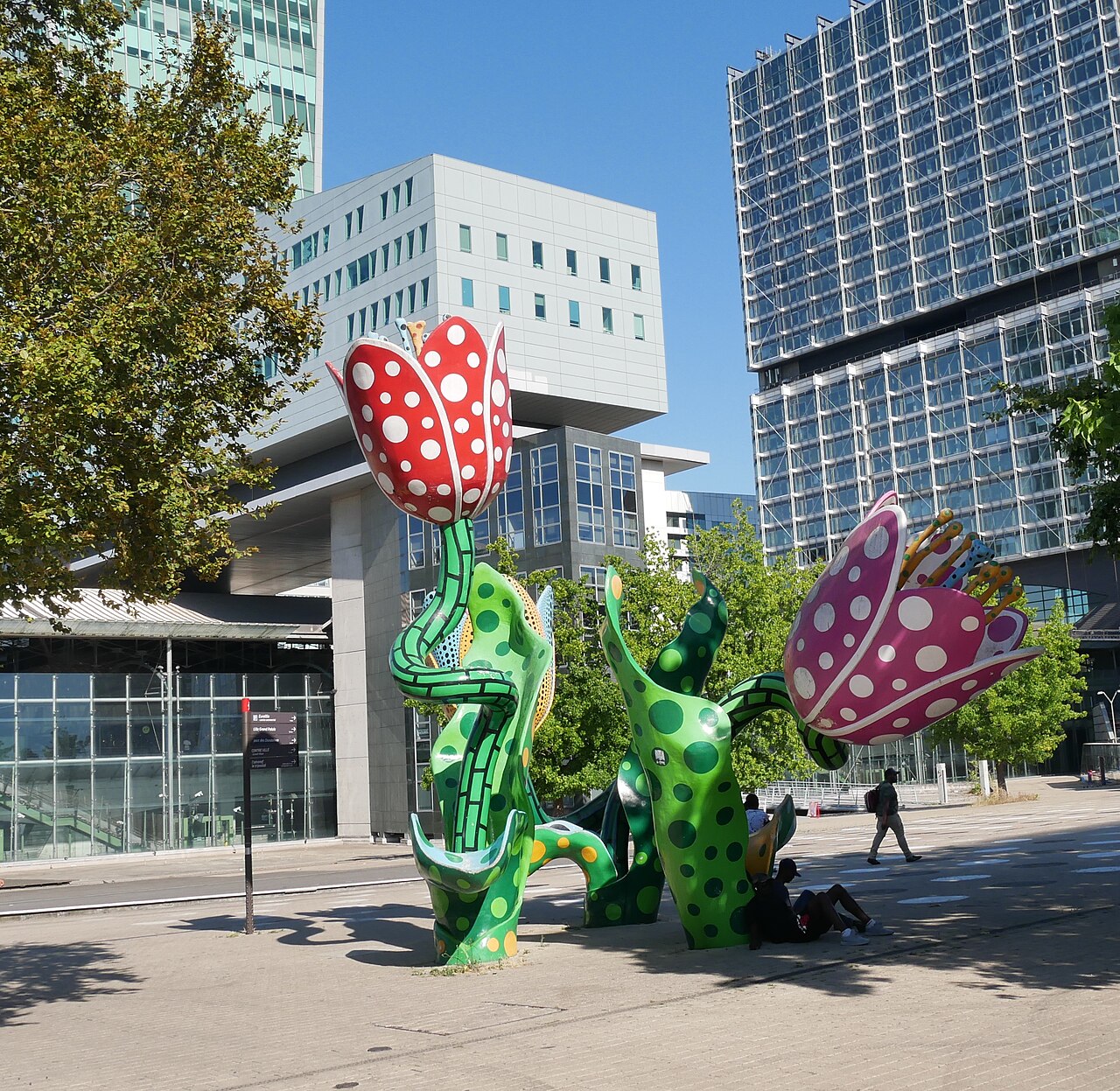
Shangri-La Tulips
Yayoi Kusama
 Photograph
Primary source
Portrait of Yayoi Kusama (2005)
2005


Free account
Read every Yayoi Kusama source
Sign up free →
Ready when you are
Start chatting with Yayoi Kusama now.
20 messages free · No credit card · Available in 50+ languages.