


Primary sourceDocument5 July 1935
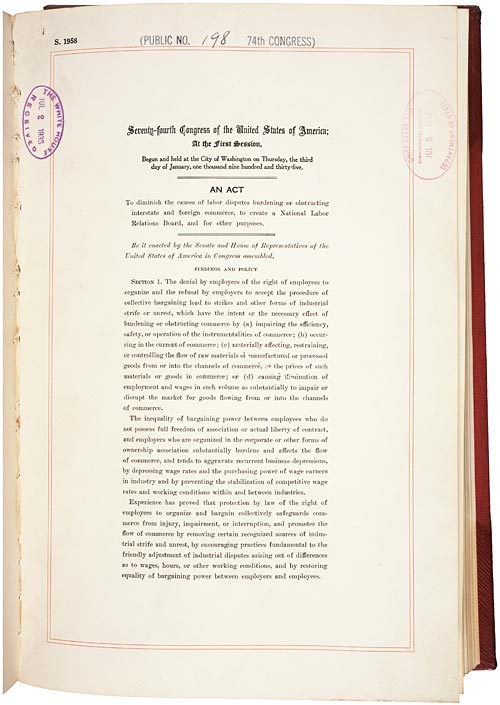
National Labor Relations Act of 1935
Senator Robert F. Wagner / United States Congress · 5 July 1935
The 1935 law, known as the Wagner Act, signed by FDR to guarantee workers the right to organize unions and bargain collectively.
Provides the legal backdrop for examining Walton's resistance to unionization at Walmart stores and warehouses.
About this source
What it is
This is the first page of the National Labor Relations Act, also called the Wagner Act, signed into law by President Franklin D. Roosevelt on July 5, 1935. It is held by the U.S. National Archives.
Why it matters
Written by Senator Robert F. Wagner, the act established the National Labor Relations Board and guaranteed employees the right to organize, join unions, and bargain collectively. It came after years of violent labor conflict and the Supreme Court's rejection of an earlier recovery law. By signing it, Roosevelt tied organized labor to his New Deal coalition, and the act contributed to a dramatic rise in union membership, including among women workers.
Look closer
- Why might workers in the 1930s have needed a law guaranteeing their right to organize?
- What does the act's language about 'unfair labor practices' tell you about the problems it was trying to fix?
- Whose interests does this kind of law protect, and whose might it leave out, such as certain groups of workers excluded from its coverage?
This document is part of the curated material that grounds the AI version of Sam Walton, Carlos Bulosan, Larry Itliong, Franklin D. Roosevelt, Huey Long, Frances Perkins, A. Philip Randolph and Woody Guthrie on Humy.ai — when students ask about related events, the AI can quote it and cite it.
More Sam Walton sources
Meet the AI Sam Walton → Artifact
Secondary source
Sam's Club
1983
 Photograph
Primary source
President Bush Presents the Medal of Freedom to Sam Walton
17 March 1992
 Photograph
Primary source
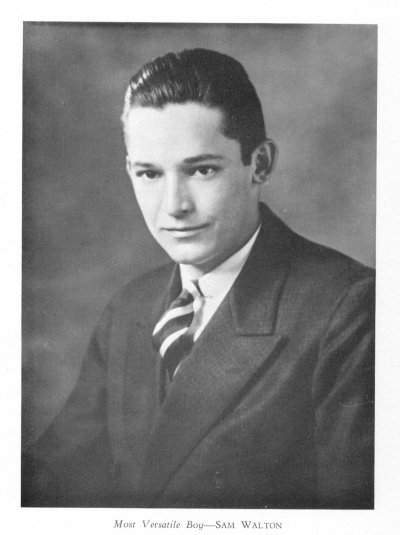
Sam Walton, 1936 Yearbook Portrait
Unknown · 1936
 Photograph
Primary source
Portrait of Sam Walton
 Document
Primary source
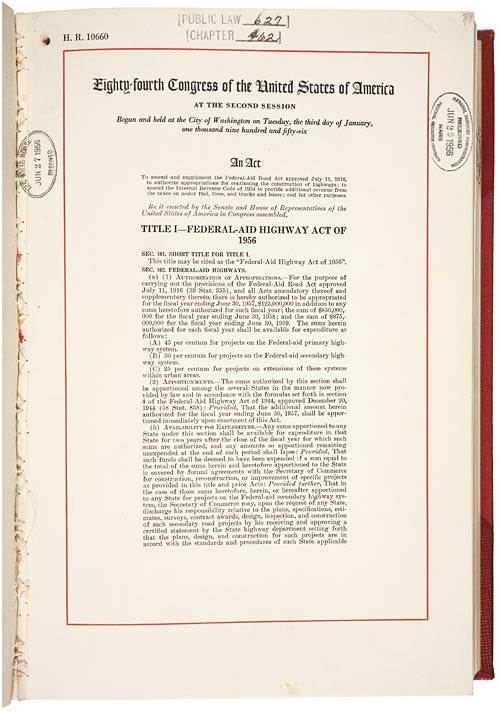
National Interstate and Defense Highways Act
29 June 1956
Ready when you are
Start chatting with Sam Walton now.
20 messages free · No credit card · Available in 50+ languages.