


Primary sourceSpeech1911
National Song
Sándor Petőfi · 1911
The English translation of Petőfi's 'Nemzeti dal,' the rallying poem that helped spark the 1848 Hungarian revolution.
This is a translation of Petőfi's own revolutionary poem, which he wrote and which helped ignite the 1848 uprising.
About this source
What it is
This is an English translation, made in 1911 by Nora de Vállyi and Dorothy M. Stuart, of Sándor Petőfi's poem Nemzeti dal (National Song). The original poem was written by Petőfi and became closely tied to the outbreak of the 1848 Hungarian revolution.
Why it matters
This poem is one of the most famous works connected to Petőfi, calling on Hungarians to choose between freedom and slavery and swearing to be free or die. It shows Petőfi not just as a poet but as a voice of revolutionary action, whose words were meant to move people to fight for independence.
Look closer
- What words and repeated lines make this poem feel like a call to action rather than a quiet poem?
- Why do you think this poem became linked with the start of a real revolution?
- This is an English translation, not Petőfi's original Hungarian—what might be lost or changed in translation?
This speech is part of the curated material that grounds the AI version of Sándor Petőfi on Humy.ai — when students ask about related events, the AI can quote it and cite it.
More Sándor Petőfi sources
Meet the AI Sándor Petőfi →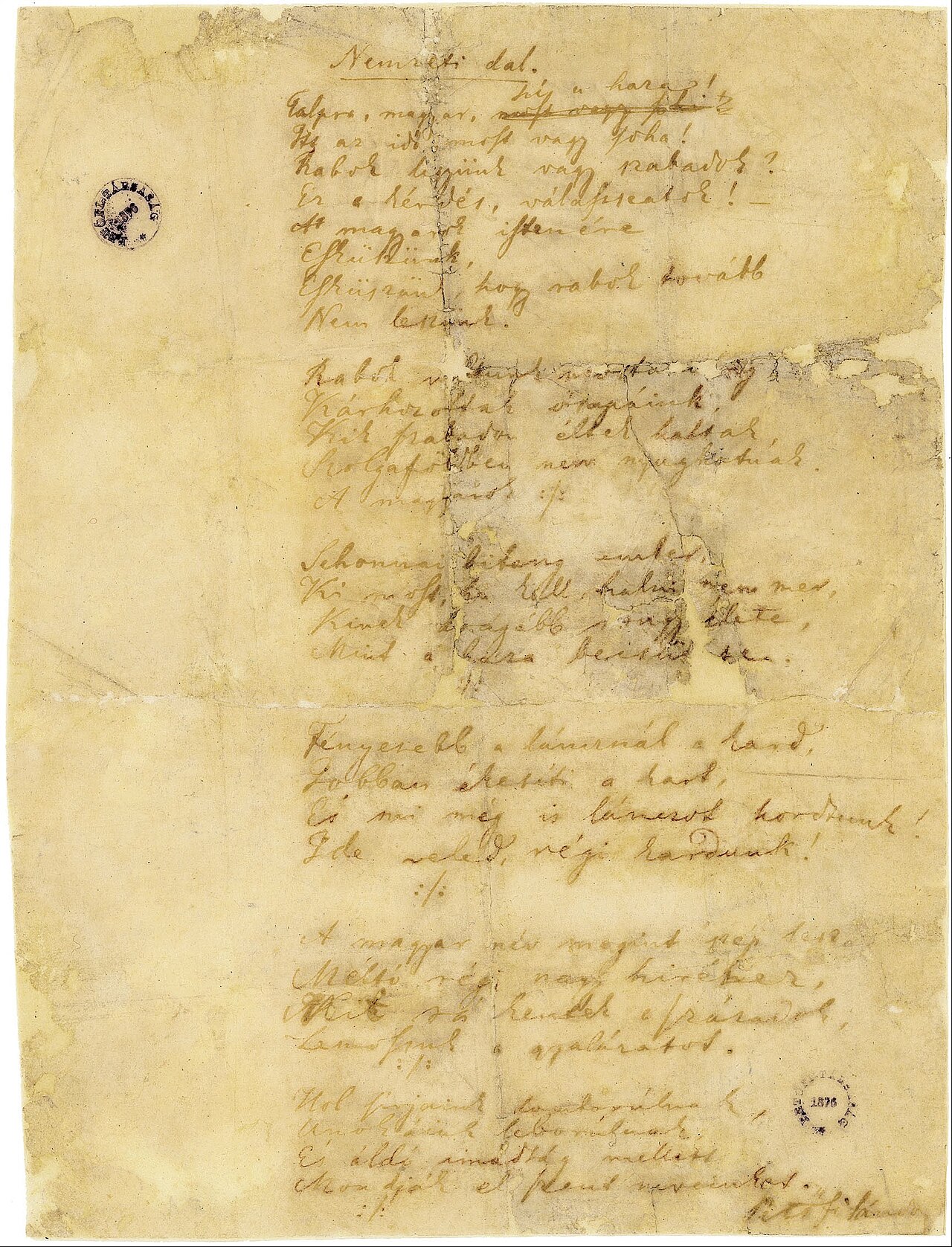 Book
Primary source
Nemzeti dal
Sándor Petőfi · 13 March 1848
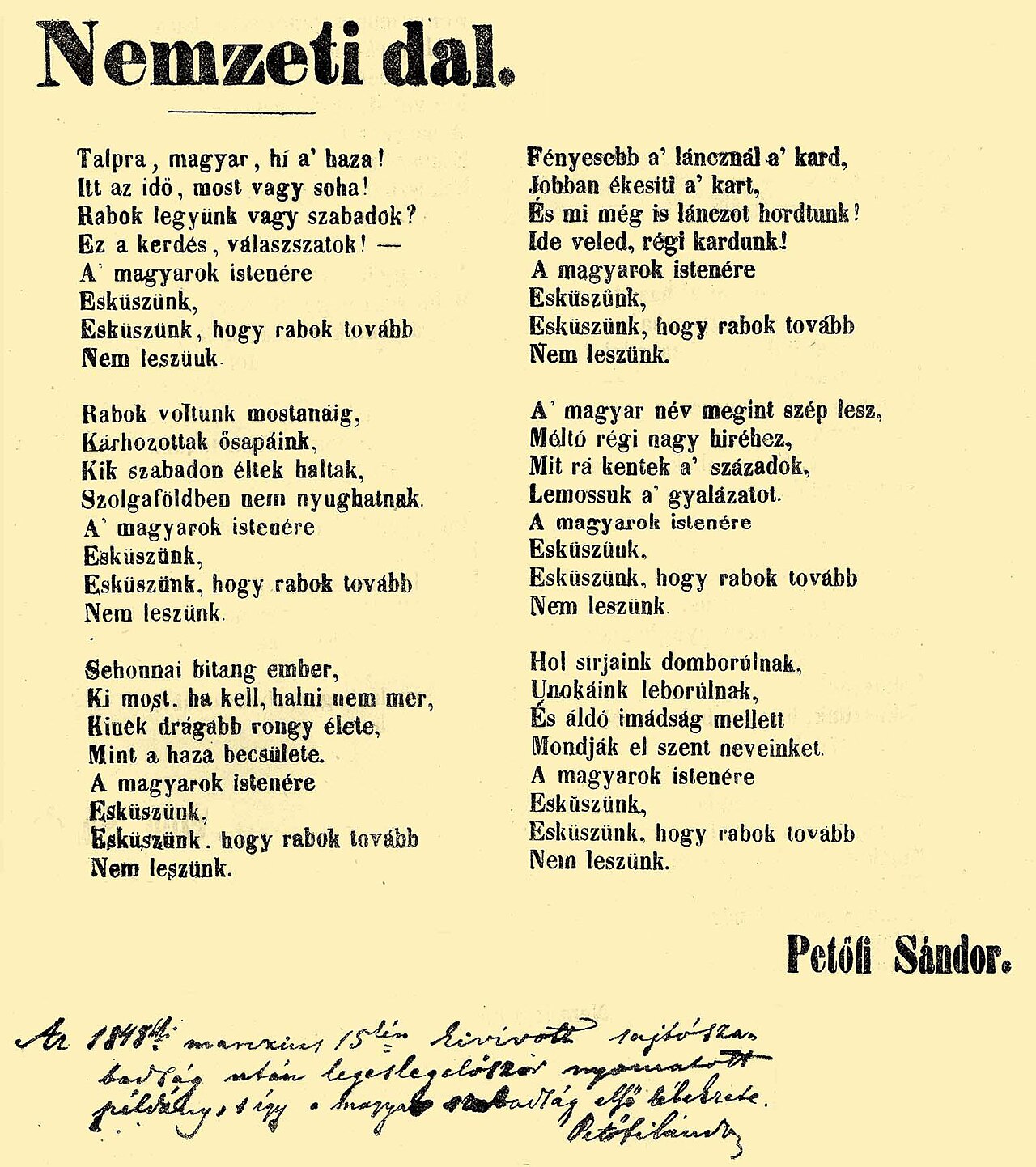 Document
Primary source
Nemzetidal broadside
Sándor Petőfi · 15 March 1848
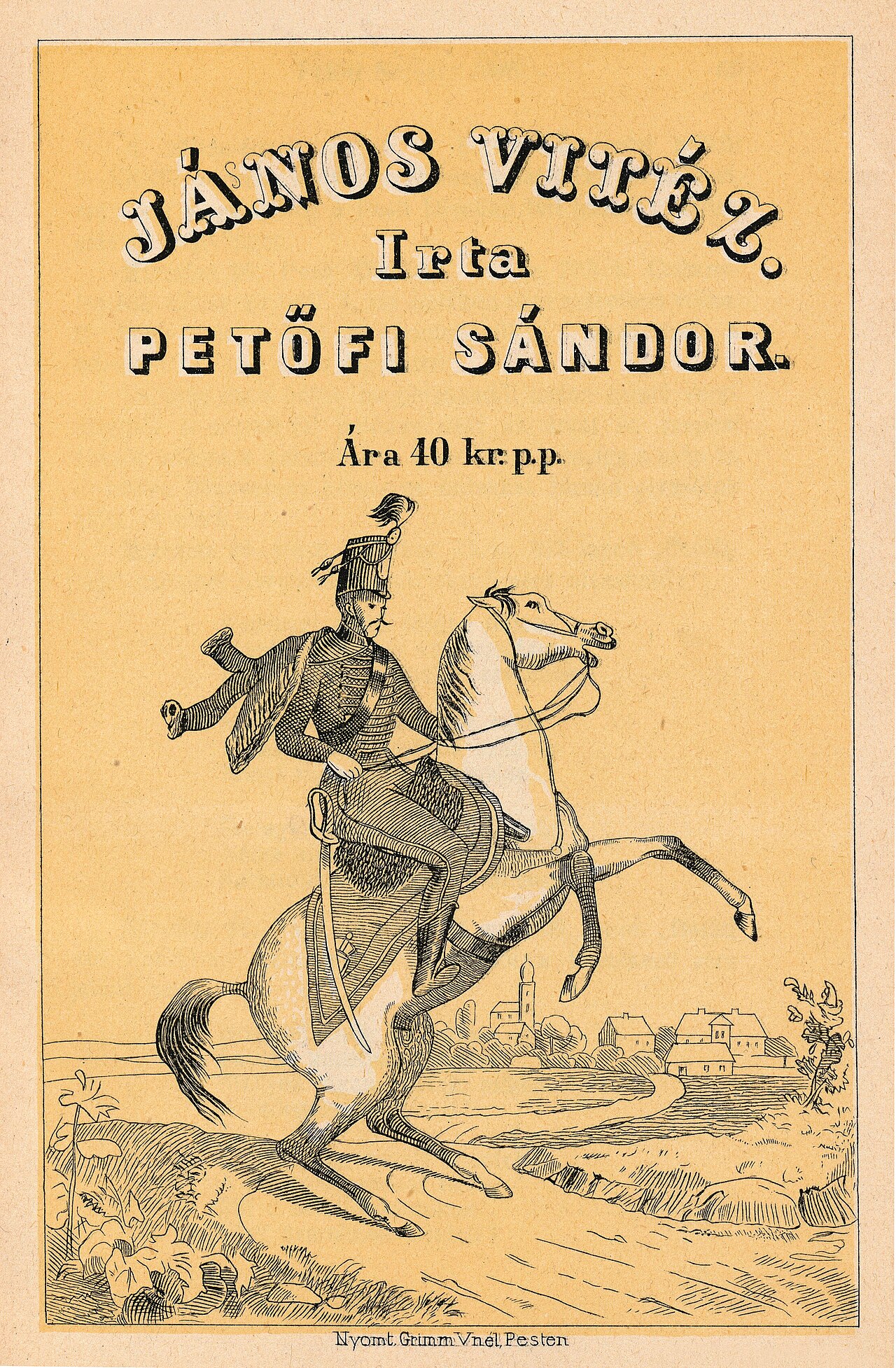 Book
Primary source
János vitéz
Sándor Petőfi · 1845 (written 1844)
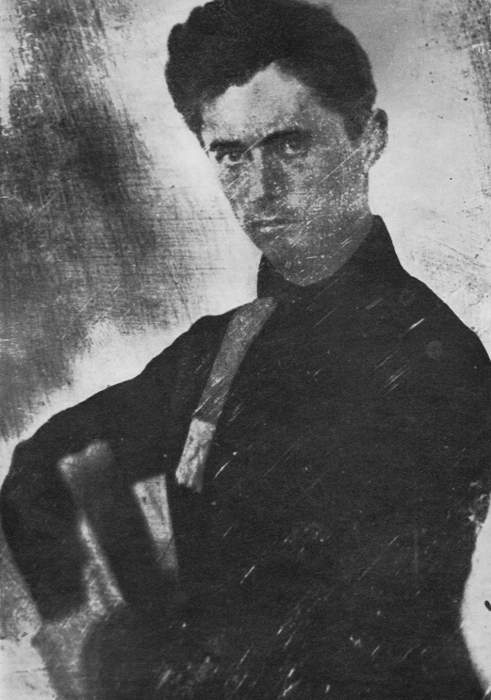 Photograph
Primary source
Sándor Petőfi
Gábor Egressy · 1844
 Painting
Primary source
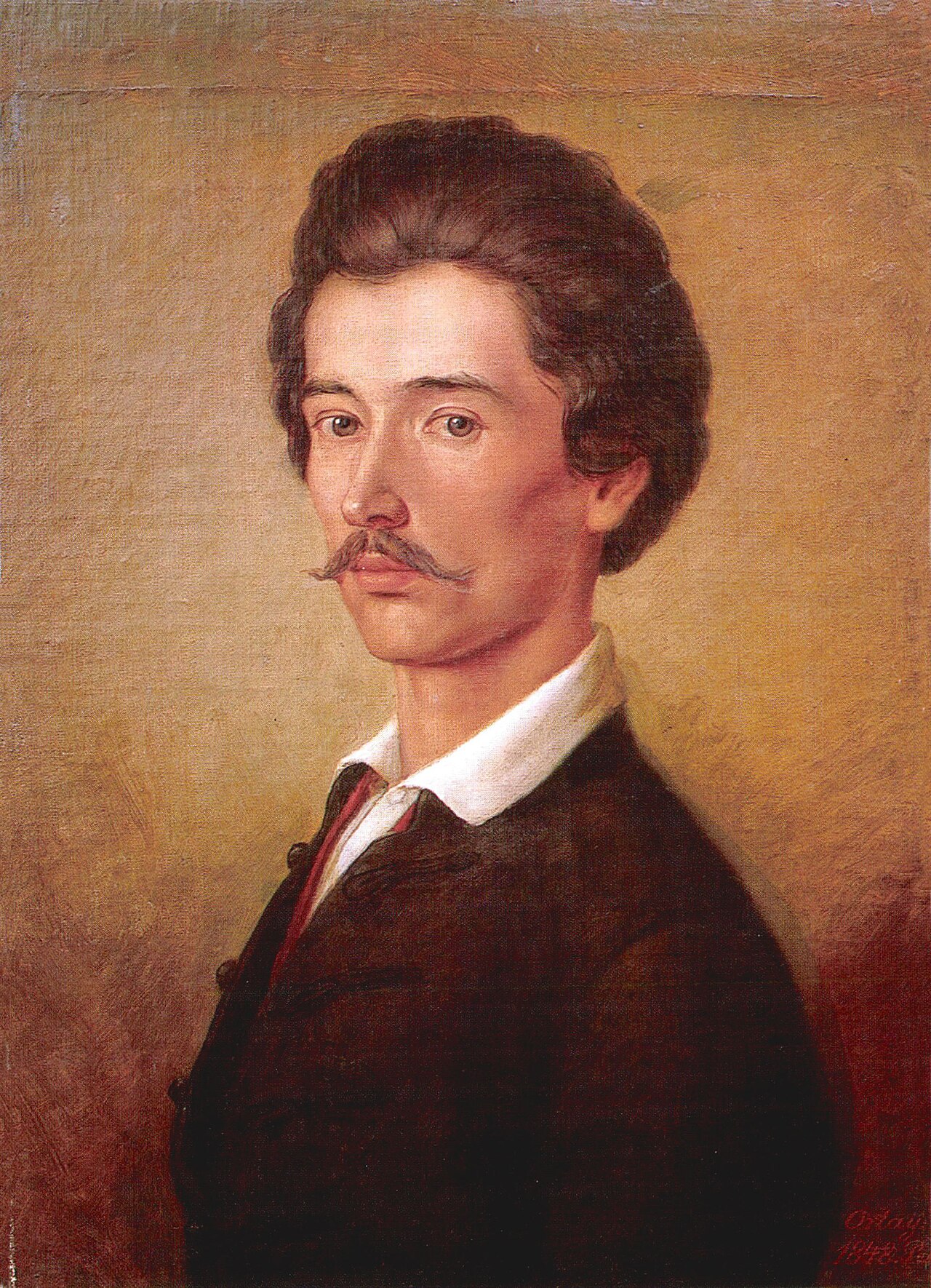
Portrait of Sándor Petőfi
Orlai Petrich Soma
Ready when you are
Start chatting with Sándor Petőfi now.
20 messages free · No credit card · Available in 50+ languages.