


Primary sourceSpeech20 August 1940
Never Was So Much Owed by So Many to So Few
Winston Churchill · 20 August 1940
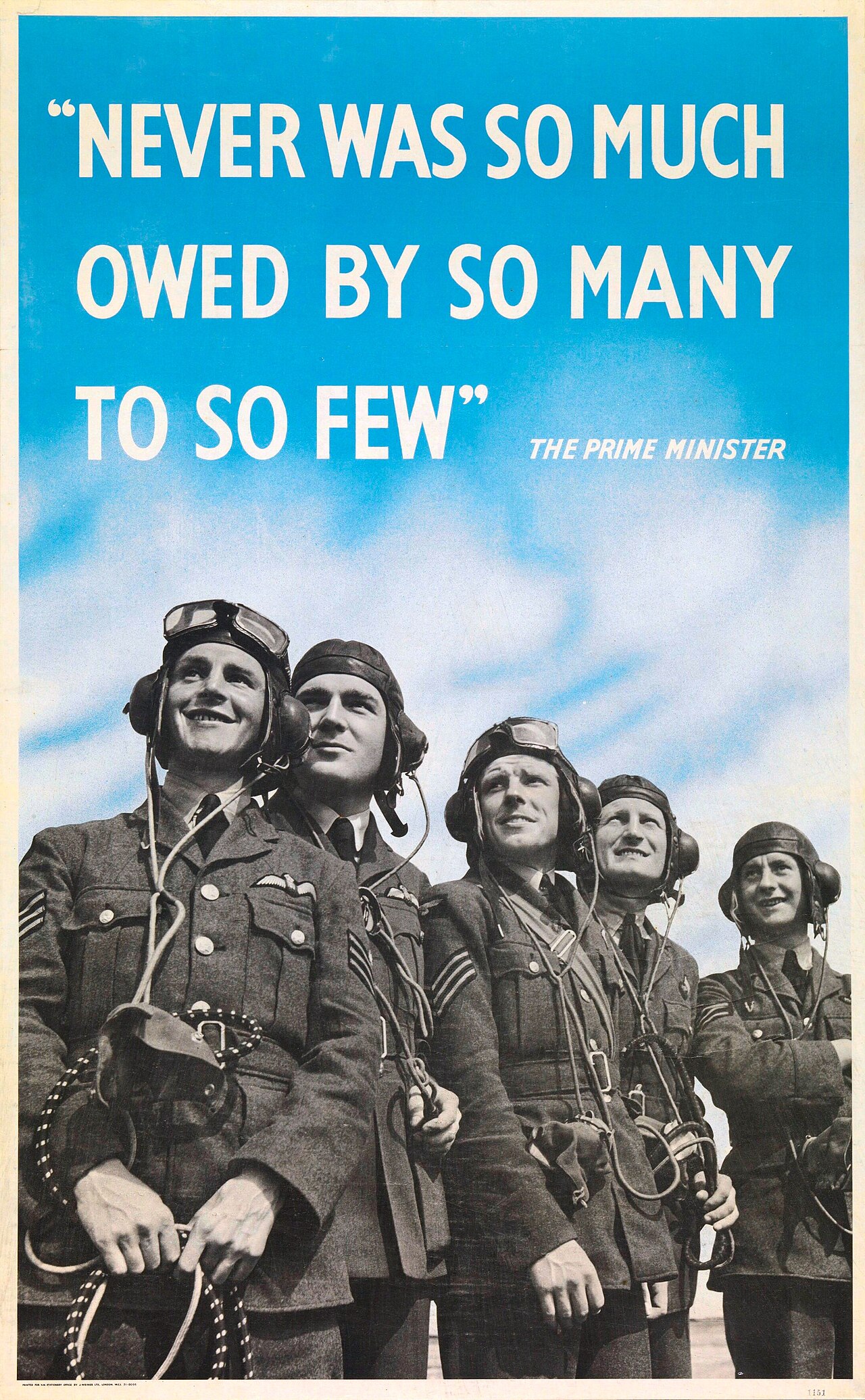
Churchill's speech of 20 August 1940 praising the RAF pilots fighting the Battle of Britain, later used on a wartime propaganda poster.
Churchill's own words praising RAF pilots were later used on this propaganda poster issued in his name.
About this source
What it is
This speech was delivered by Winston Churchill to the House of Commons on 20 August 1940, during the Battle of Britain. In it he reviewed the war so far and praised the Royal Air Force pilots defending Britain against the German Luftwaffe, coining the phrase that became the poster shown here: 'Never was so much owed by so many to so few'.
Why it matters
At the time, Britain faced the threat of invasion and was heavily outnumbered in the air. Churchill's words turned the RAF pilots into lasting national heroes, known ever since as 'the Few'. The speech, and the poster that quoted it, show how Churchill's language was used to build morale and shape how people would remember the battle.
Look closer
- Why might Churchill have compared this war's casualties to those of the First World War?
- How does the poster use Churchill's words differently from the original speech?
- What does the image of the pilots looking upward suggest the poster wants viewers to feel?
This speech is part of the curated material that grounds the AI version of Winston Churchill on Humy.ai — when students ask about related events, the AI can quote it and cite it.
More Winston Churchill sources
Meet the AI Winston Churchill → Speech
Primary source
Blood, Toil, Tears, and Sweat
Winston Churchill · 13 May 1940
Primary source
We Shall Fight on the Beaches
Winston Churchill · 4 June 1940
Primary source
This Was Their Finest Hour
Winston Churchill · 18 June 1940
 Speech
Primary source
The Sinews of Peace
Winston Churchill · 5 March 1946
Primary source
Atlantic Charter
Franklin D. Roosevelt and Winston Churchill · 14 August 1941
Ready when you are
Start chatting with Winston Churchill now.
20 messages free · No credit card · Available in 50+ languages.