


Primary sourceBook1923
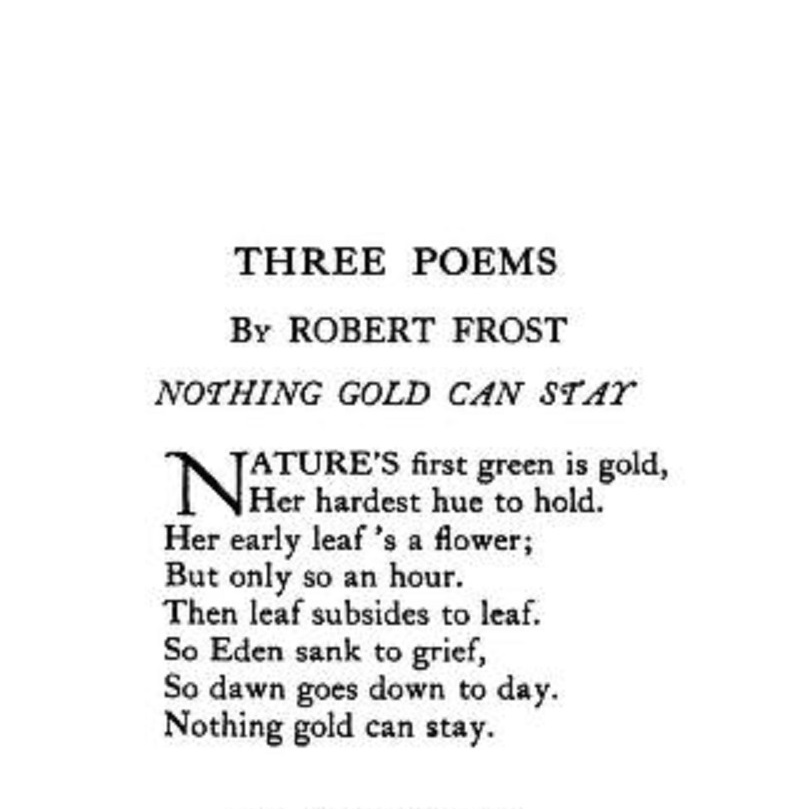
Nothing Gold Can Stay
Robert Frost · 1923
An eight-line poem by Robert Frost about the fleeting nature of beauty, linking a tree's changing leaves to the biblical Fall.
This compact poem by Frost reflects on impermanence and was published the same year he won the Pulitzer Prize.
About this source
What it is
Robert Frost wrote this short poem in 1923; it was published that October in The Yale Review and later included in his collection New Hampshire, which won the 1924 Pulitzer Prize for Poetry. The image shows the original magazine page where it first appeared.
Why it matters
In just eight rhymed lines, Frost moves from a simple observation about a tree's first green leaves turning to describe the loss of Eden and the passing of each day — showing how he could compress large ideas about change and loss into tiny poems. Critics have praised its tight structure and the way its sounds and rhymes reinforce its meaning.
Look closer
- How does the poem move from a detail about nature to a much bigger idea about human history?
- Why might such a short poem feel so weighty?
- What is
This book is part of the curated material that grounds the AI version of Robert Frost on Humy.ai — when students ask about related events, the AI can quote it and cite it.
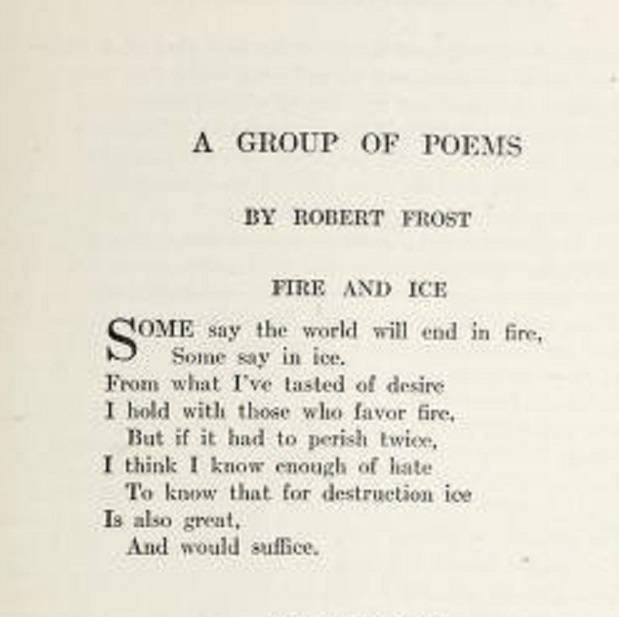
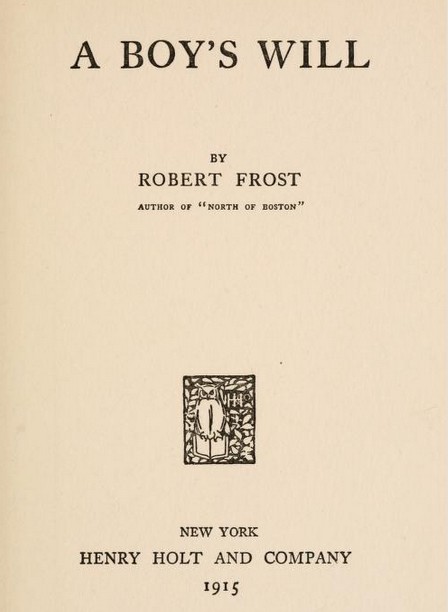
More Robert Frost sources
Meet the AI Robert Frost →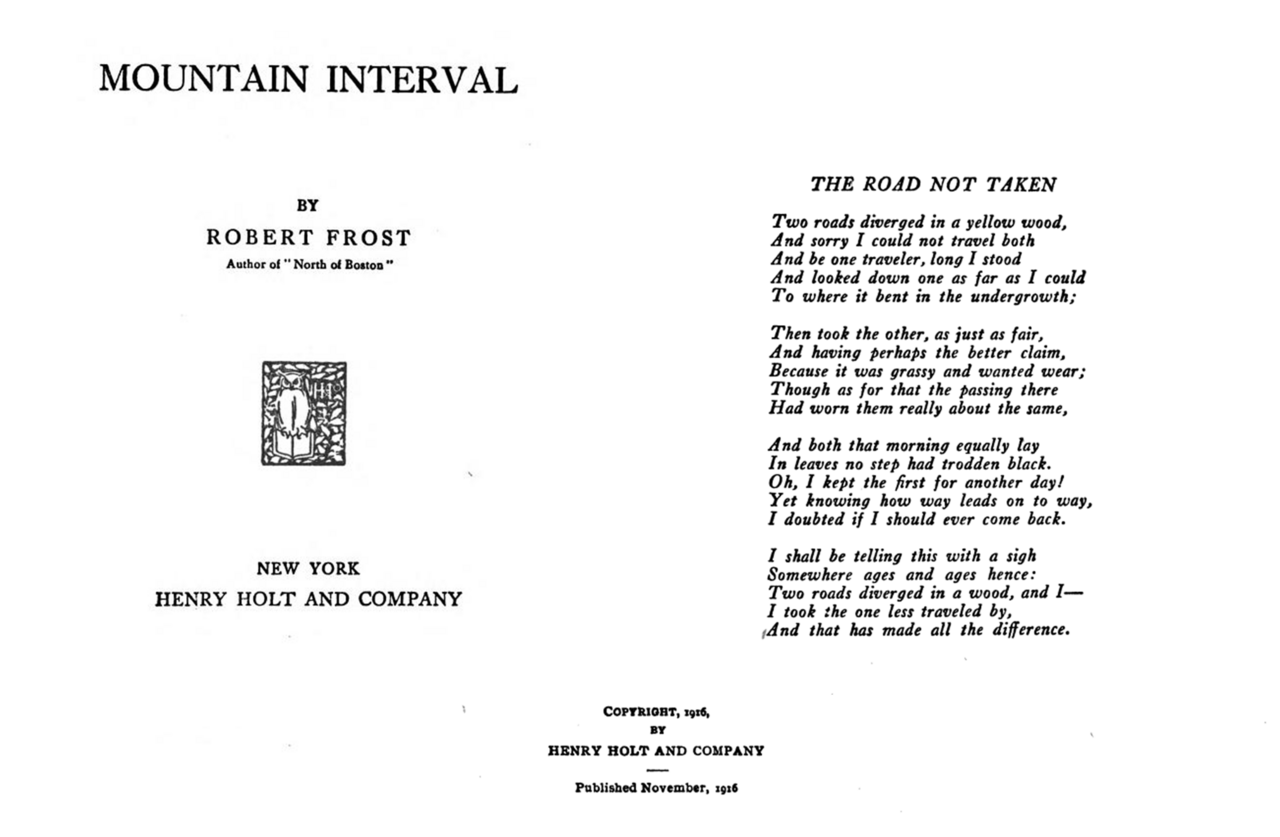
Ready when you are
Start chatting with Robert Frost now.
20 messages free · No credit card · Available in 50+ languages.