


Secondary sourcePainting1911
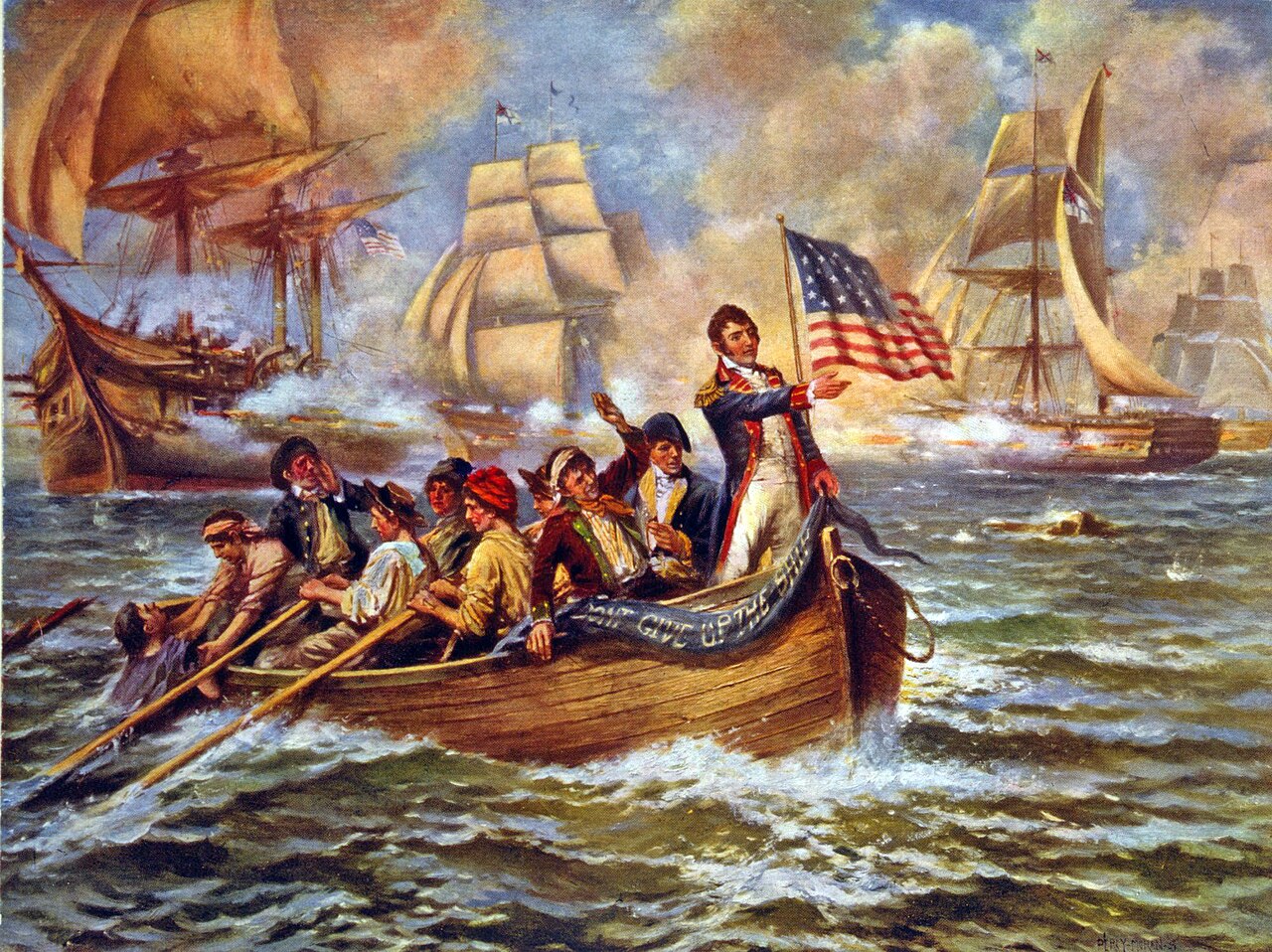
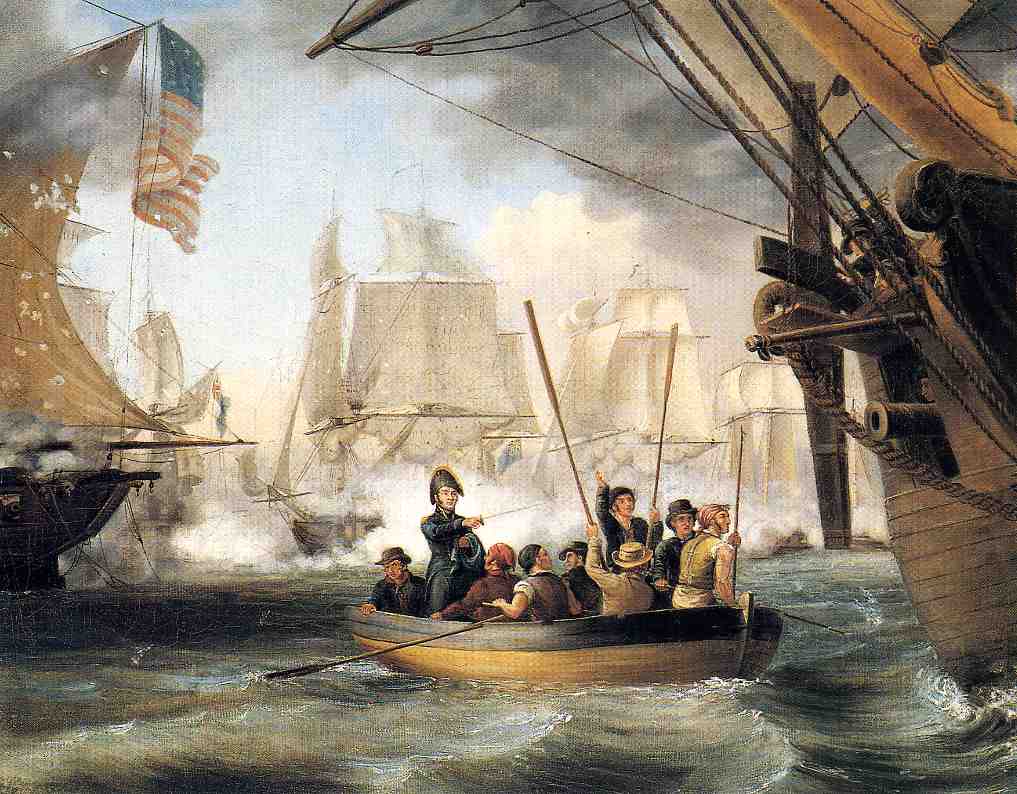
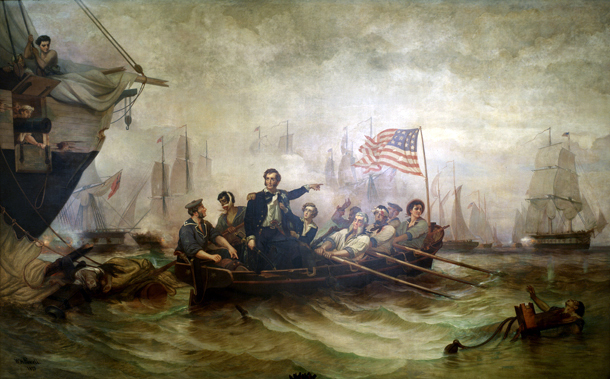
Oliver Hazard Perry Leaving the Flagship Lawrence
Edward Percy Moran · 1911
A 1911 print showing Perry rowing away from his damaged flagship Lawrence to continue the fight at the Battle of Lake Erie.
Depicts Perry's famous move from his sinking flagship Lawrence, a defining moment of his naval career.
About this source
What it is
This is a halftone color print made in 1911 by artist Edward Percy Moran. It shows Commodore Oliver Hazard Perry standing in a small rowboat crowded with sailors, after he abandoned his badly damaged flagship, the Lawrence, during the Battle of Lake Erie.
Why it matters
The scene shown is one of the most famous moments of the War of 1812: Perry moving under fire to a second ship so he could keep commanding the battle. The print was made almost a century after the event, so it is an artist's imagined reconstruction rather than an eyewitness image, but it shows how Perry was remembered as a heroic naval commander.
Look closer
- What does the banner reading "Don't Give Up the Ship" tell you about how Perry wanted to be remembered?
- Why might an artist in 1911 choose to paint this dramatic moment rather than a calmer scene?
- What details in the image might be invented rather than historically accurate?
This painting is part of the curated material that grounds the AI version of Oliver Hazard Perry on Humy.ai — when students ask about related events, the AI can quote it and cite it.
More Oliver Hazard Perry sources
Browse all 97 →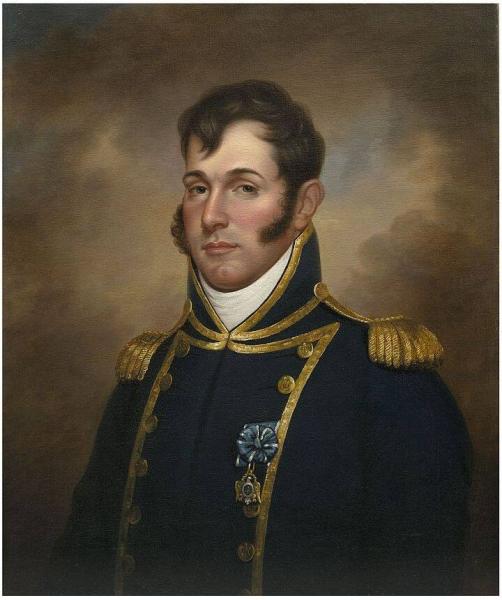 Painting
Primary source
Oliver Hazard Perry
Rembrandt Peale · 1813
 Artifact
Primary source
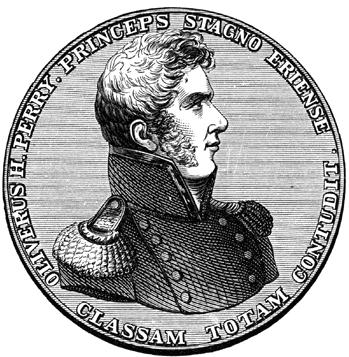
Congressional Gold Medal awarded to Oliver Hazard Perry
United States Mint (designed after Gilbert Stuart; engraved by Moritz Fürst) · 1814-1820
 Artifact
Primary source
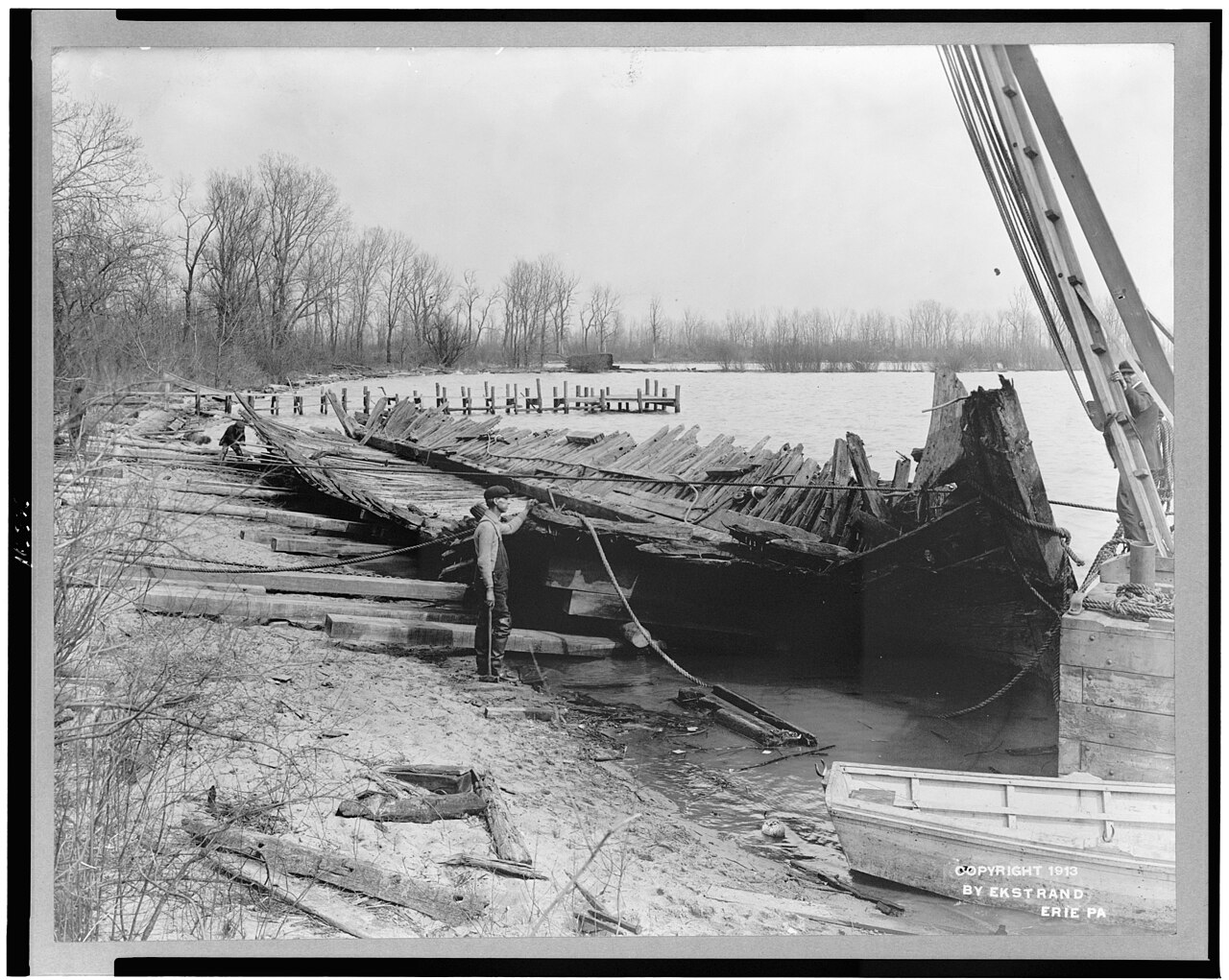
US Brig Niagara
Noah Brown and Daniel Dobbins · 1813
 Painting
Secondary source
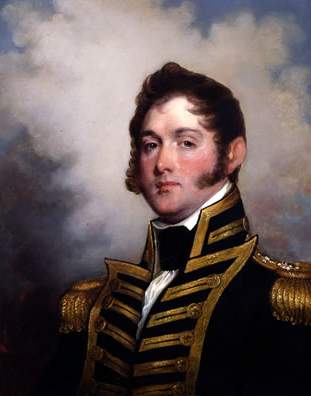
Portrait of Oliver Hazard Perry
Free account
Read every Oliver Hazard Perry source
Sign up free →
Ready when you are
Start chatting with Oliver Hazard Perry now.
20 messages free · No credit card · Available in 50+ languages.