


Primary sourceDocument13 March 1823
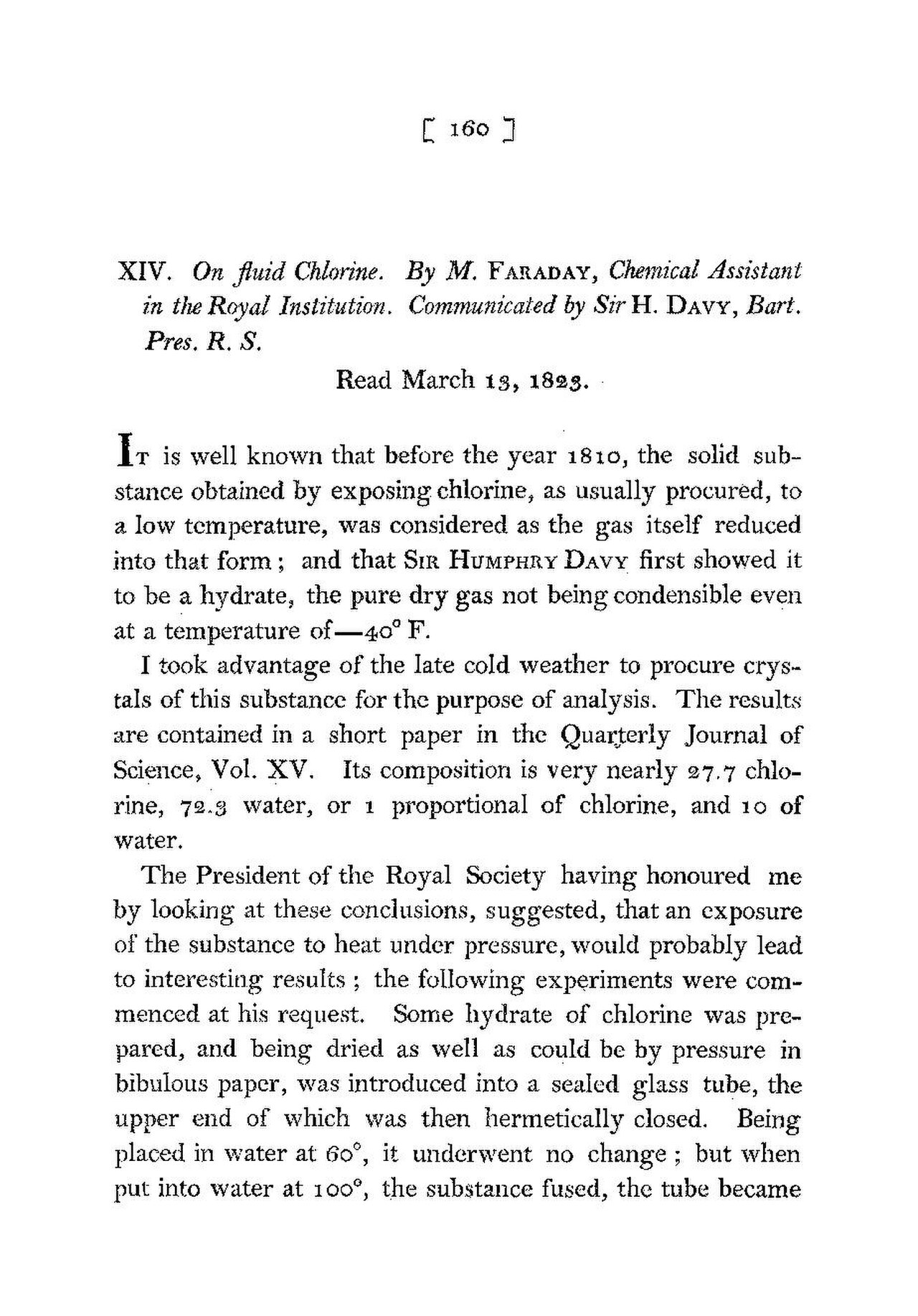
On Fluid Chlorine
Michael Faraday · 13 March 1823
Faraday's 1823 scientific paper reporting the first liquefaction of chlorine gas, written while he was Humphry Davy's assistant.
Faraday's own early chemistry paper, written while he was Humphry Davy's assistant, on the first liquefaction of chlorine.
Free Humy account · No credit card · 120,912 sources to read
About this source
What it is
This paper was read to the Royal Society on 13 March 1823 and published in its Philosophical Transactions. Written by Michael Faraday, then Chemical Assistant at the Royal Institution, it was communicated by Sir Humphry Davy. It describes experiments heating hydrate of chlorine in sealed glass tubes under pressure.
Why it matters
This paper records Faraday's early chemical work, carried out under Davy's guidance and at his suggestion, and shows the hazardous methods used in the hunt for liquefied gases. It marks an important early step in Faraday's rise from assistant to independent scientist.
Look closer
- Why does the paper credit Davy's suggestion so prominently?
- What risks can you imagine in heating a sealed glass tube of chemicals?
- What does the formal, careful language of the paper tell you about how scientific findings were reported to the Royal Society?
This document is part of the curated material that grounds the AI version of Michael Faraday on Humy.ai — when students ask about related events, the AI can quote it and cite it.
More Michael Faraday sources
Browse all 97 →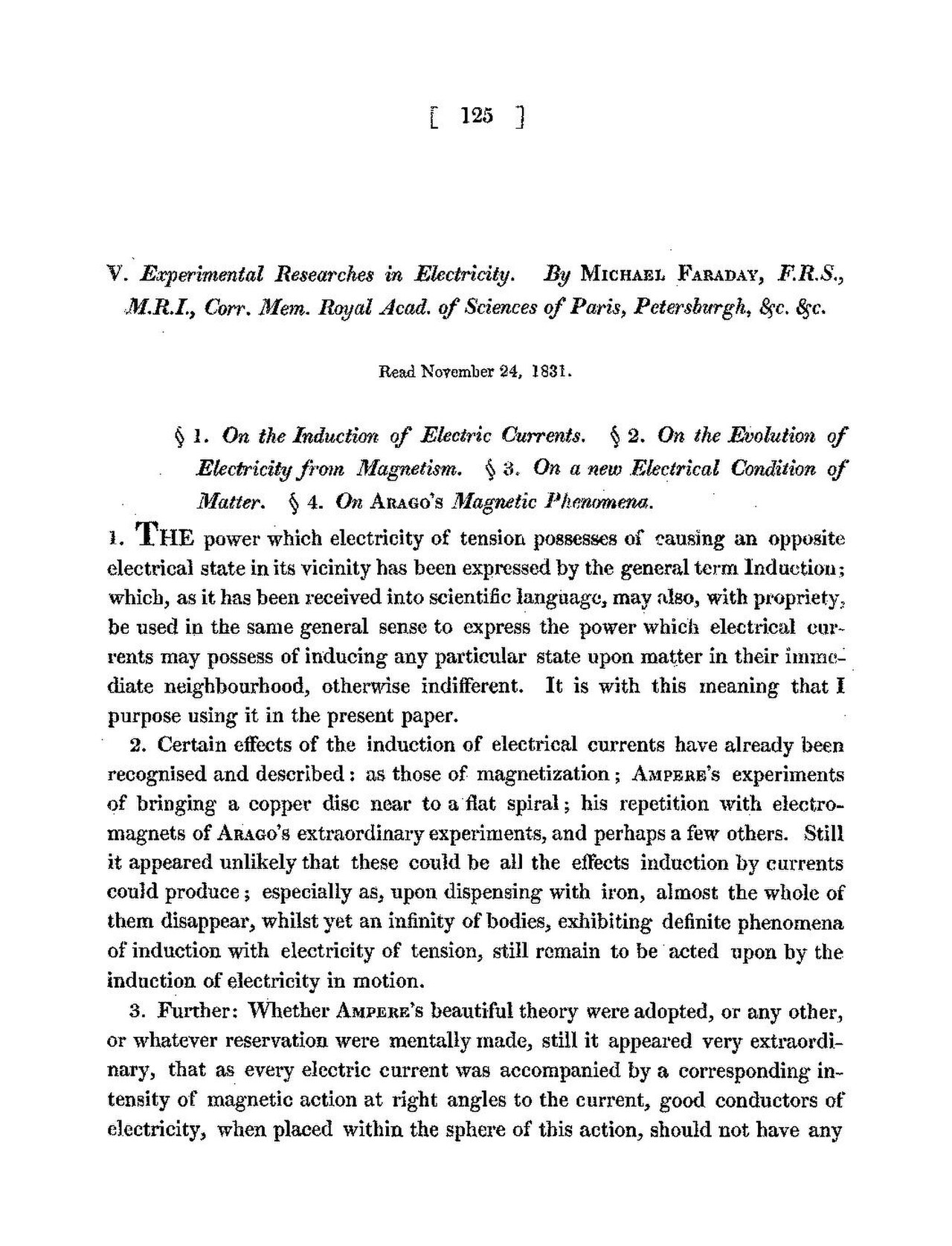 Document
Primary source
Experimental Researches in Electricity, First Series
Michael Faraday · 24 November 1831
 Artifact
Primary source
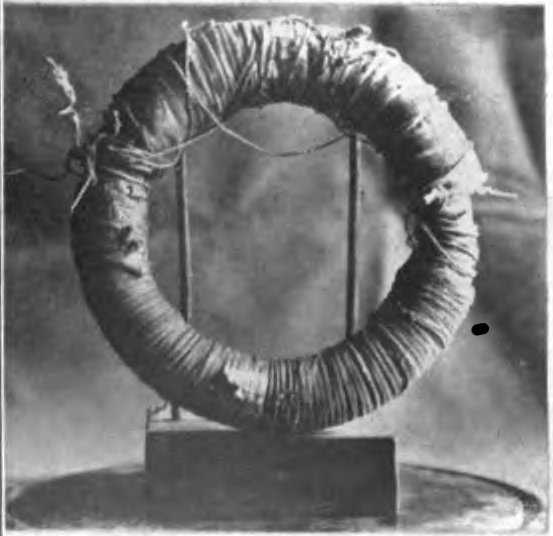
Faraday's Induction Ring
Michael Faraday · 1831
 Book
Primary source
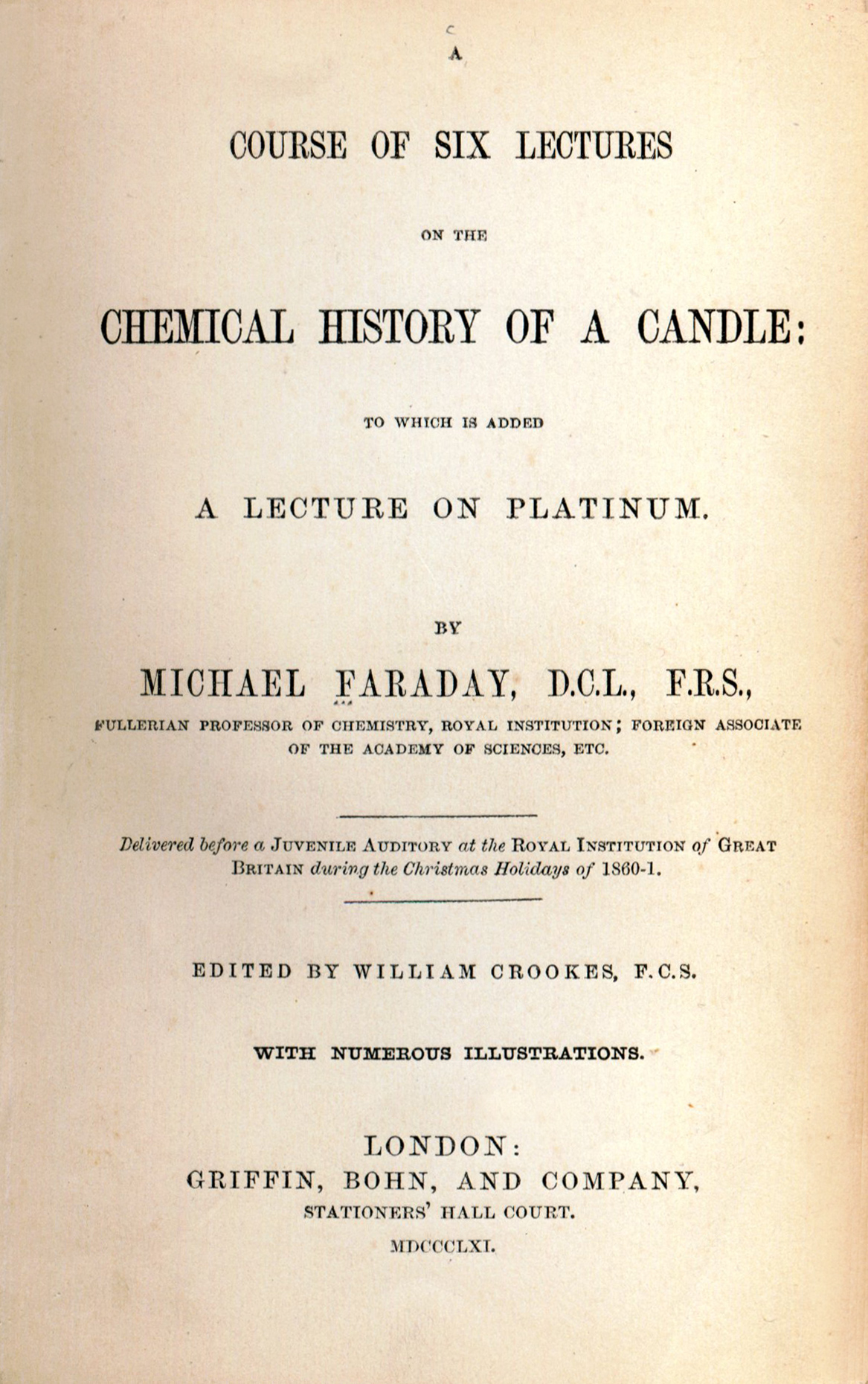
A Course of Six Lectures on the Chemical History of a Candle
Michael Faraday · 1861
 Painting
Primary source
Michael Faraday
Thomas Phillips · 1841–1842
Free account
Read every Michael Faraday source
Sign up free →
Ready when you are
Start chatting with Michael Faraday now.
20 messages free · No credit card · Available in 50+ languages.