


Primary sourceBook1929 (text written c. 1727-1728)
On the Use of the Letter e to Represent 2.718…
Leonhard Euler · 1929 (text written c. 1727-1728)
An excerpt from a Source Book in Mathematics presenting Euler's own writing on his choice of the letter e for the base of natural logarithms.
Shows Euler's own introduction of the letter e, one of his most lasting mathematical contributions.
Free Humy account · No credit card · 120,912 sources to read
About this source
What it is
This is an extract, translated by Florian Cajori, from Euler's manuscript on experiments with the firing of cannon. In it Euler used the letter e to represent the number 2.718…, the base of the natural logarithms. The manuscript was written around 1727-1728 and first printed decades after Euler's death.
Why it matters
This passage shows how one of the most common mathematical symbols still used today came from Euler's own notation choices. It reveals that Euler was already inventing lasting mathematical notation as a very young man.
Look closer
- Why might a scientist need a shorthand symbol like e?
- What does it tell you that this notation written almost 300 years ago is still used in classrooms today?
- What is missing from this short extract that might help you understand the original context?
This book is part of the curated material that grounds the AI version of Leonhard Euler on Humy.ai — when students ask about related events, the AI can quote it and cite it.
More Leonhard Euler sources
Browse all 78 →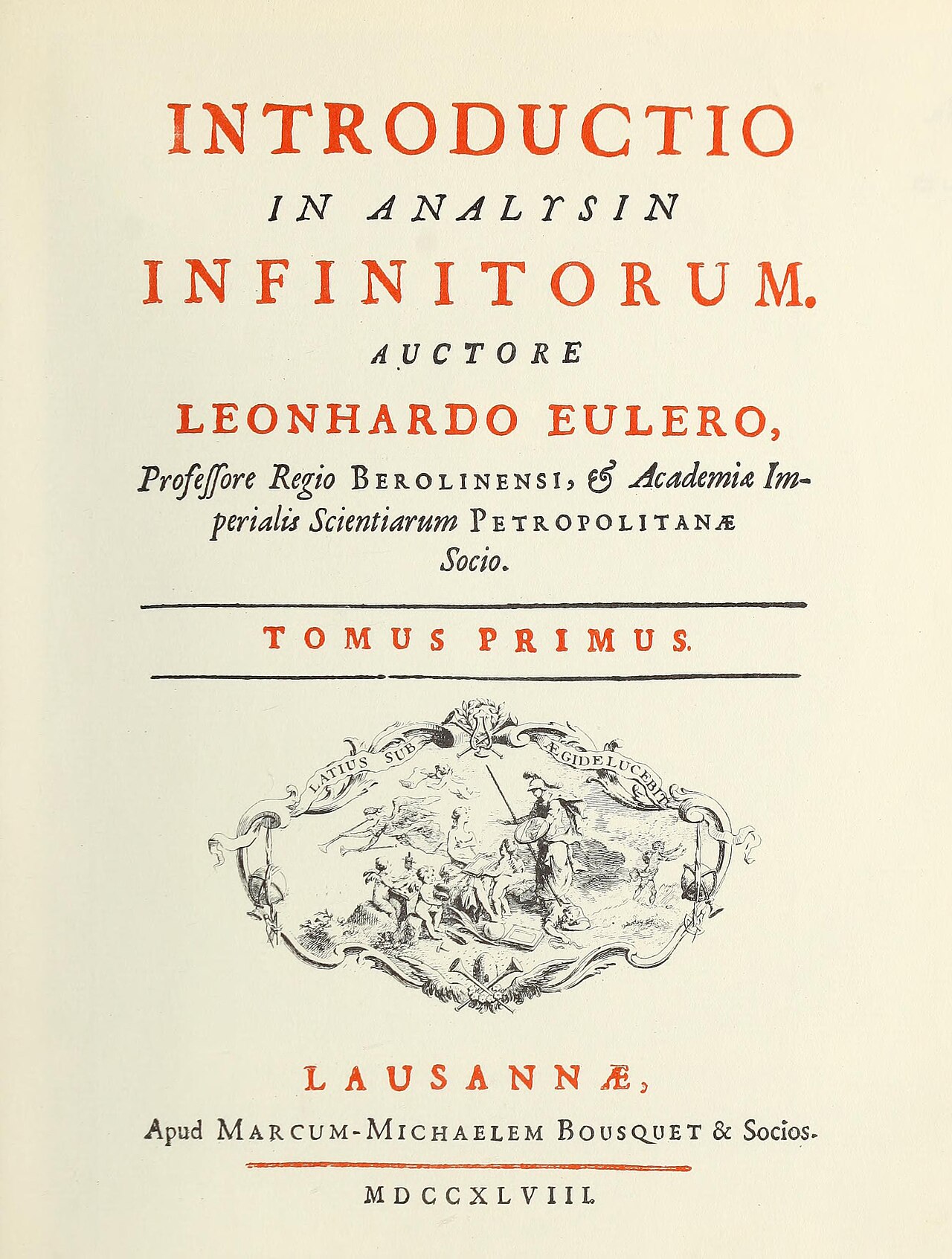 Book
Primary source
Introductio in analysin infinitorum
Leonhard Euler · 1748
 Painting
Primary source
Portrait of Leonhard Euler
Jakob Emanuel Handmann · 1753
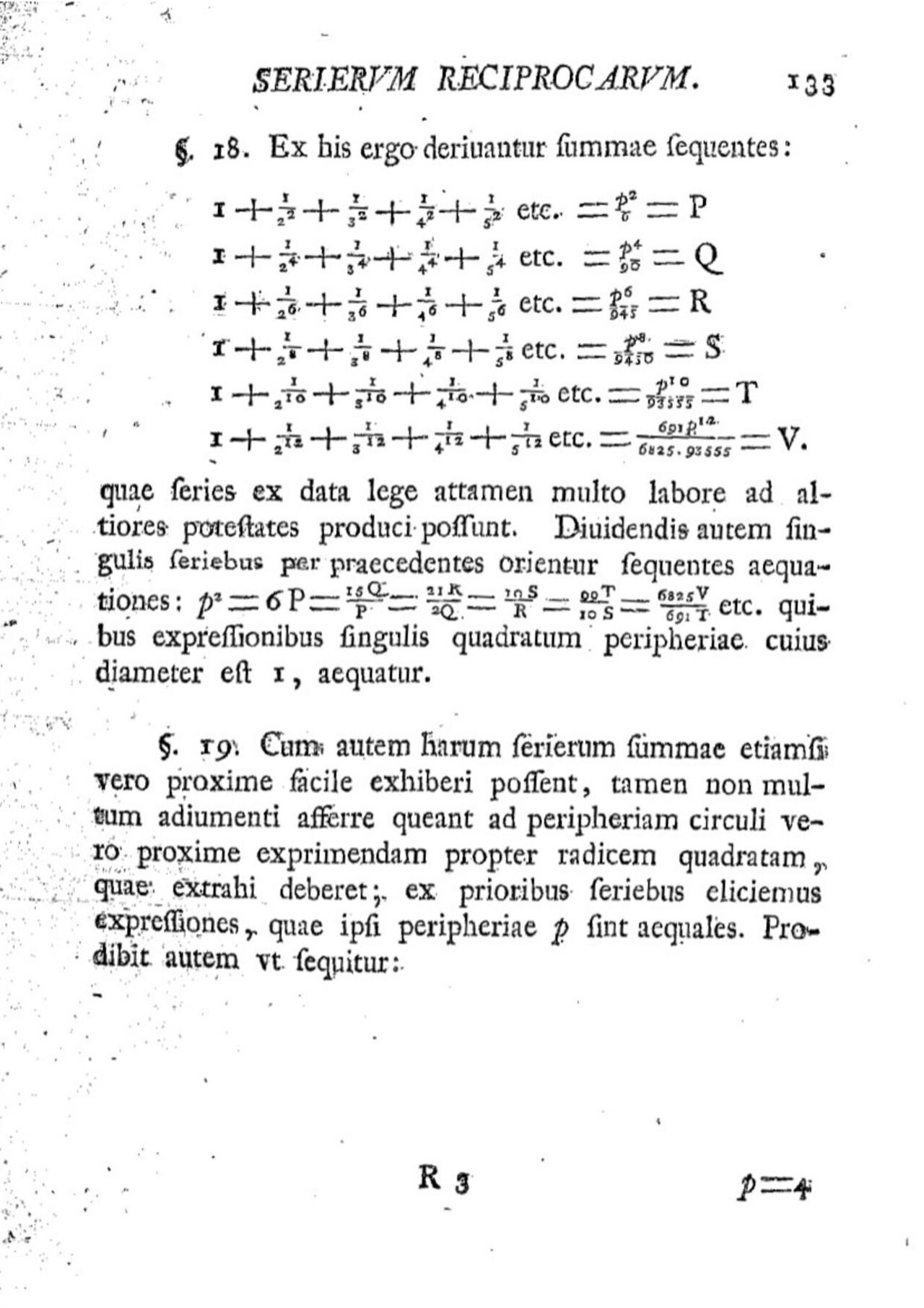 Document
Primary source
De summis serierum reciprocarum
Leonhard Euler
 Painting
Primary source
Leonhard Euler
Joseph Friedrich August Darbes · 1778

Free account
Read every Leonhard Euler source
Sign up free →
Ready when you are
Start chatting with Leonhard Euler now.
20 messages free · No credit card · Available in 50+ languages.