


Secondary sourcePainting1922
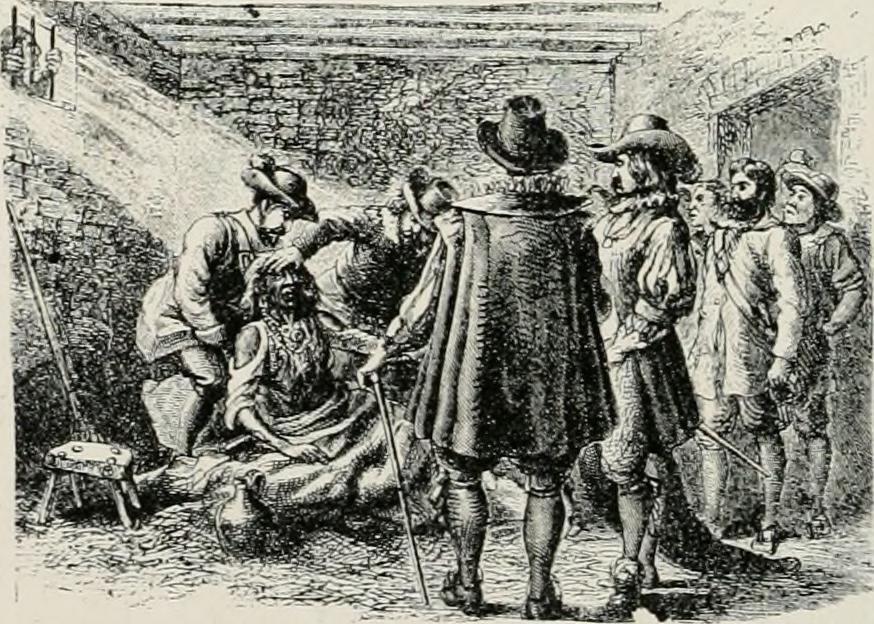
Opechancanough Dying in Prison
William de la Montagne Cary · 1922
A 1922 engraving imagining Opechancanough's death as a prisoner in an English jail.
Imagines Opechancanough's final days as a captive dying in an English prison cell.
About this source
What it is
This wood engraving by William de la Montagne Cary, engraved by J. Augustus Bogert, appeared in a 1922 book, 'History of the Pilgrims and Puritans.' It shows Opechancanough, elderly, seated on the ground of a prison cell surrounded by armed Englishmen.
Why it matters
The illustration reflects how, three centuries later, American authors still used Opechancanough's capture and death as a dramatic closing scene in histories centered on English colonists. It shows how his life was remembered mainly through English eyes, as an enemy finally subdued rather than as a leader in his own right.
Look closer
- What does the posture of the armed men around him suggest about the power relationship shown here?
- Why might an illustrator in 1922 choose to depict this particular moment of Opechancanough's life?
- Whose perspective is missing from this scene?
This painting is part of the curated material that grounds the AI version of Opechancanough on Humy.ai — when students ask about related events, the AI can quote it and cite it.
More Opechancanough sources
Browse all 30 →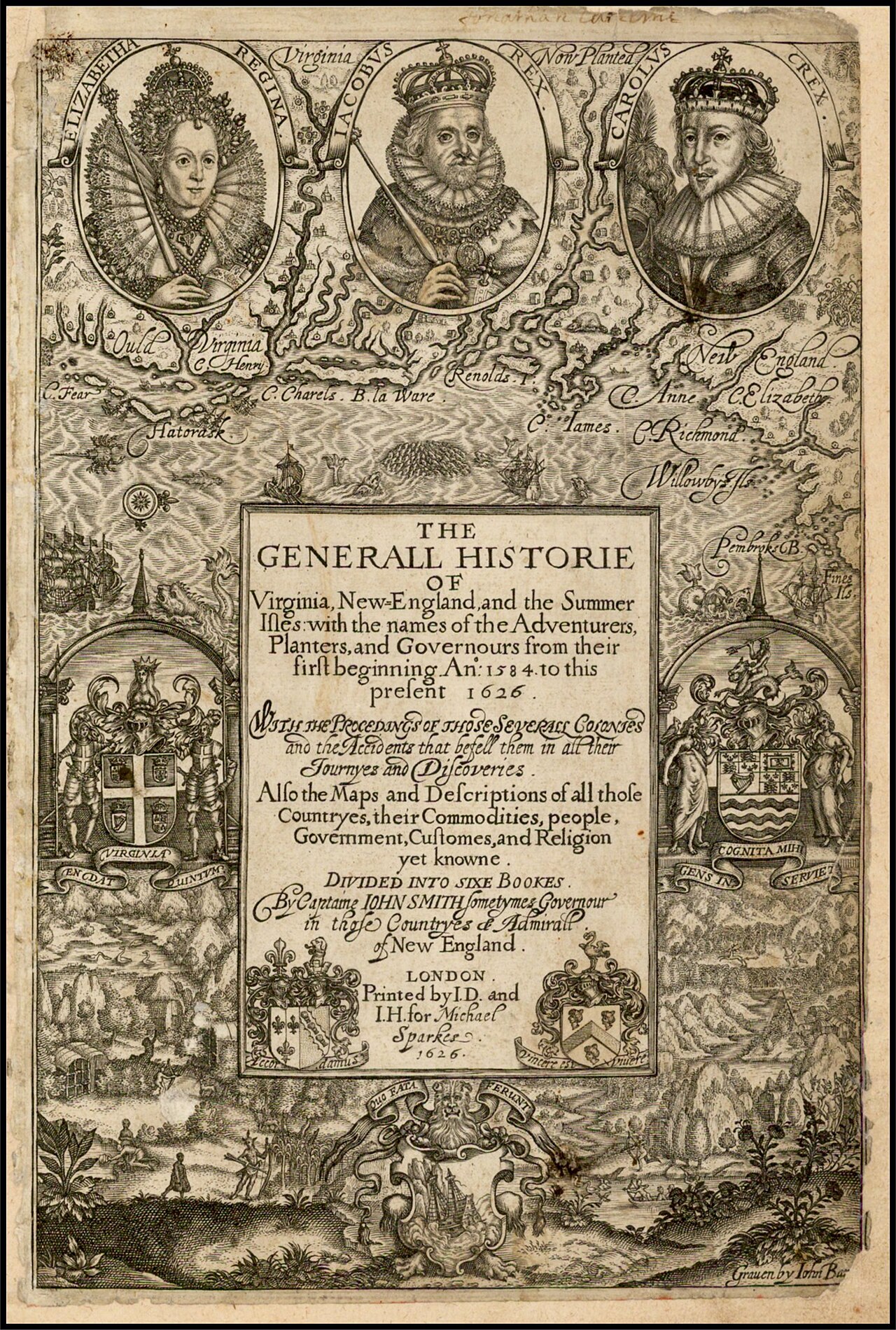 Book
Primary source
The Generall Historie of Virginia, New-England, and the Summer Isles
John Smith · 1624
 Painting
Primary source
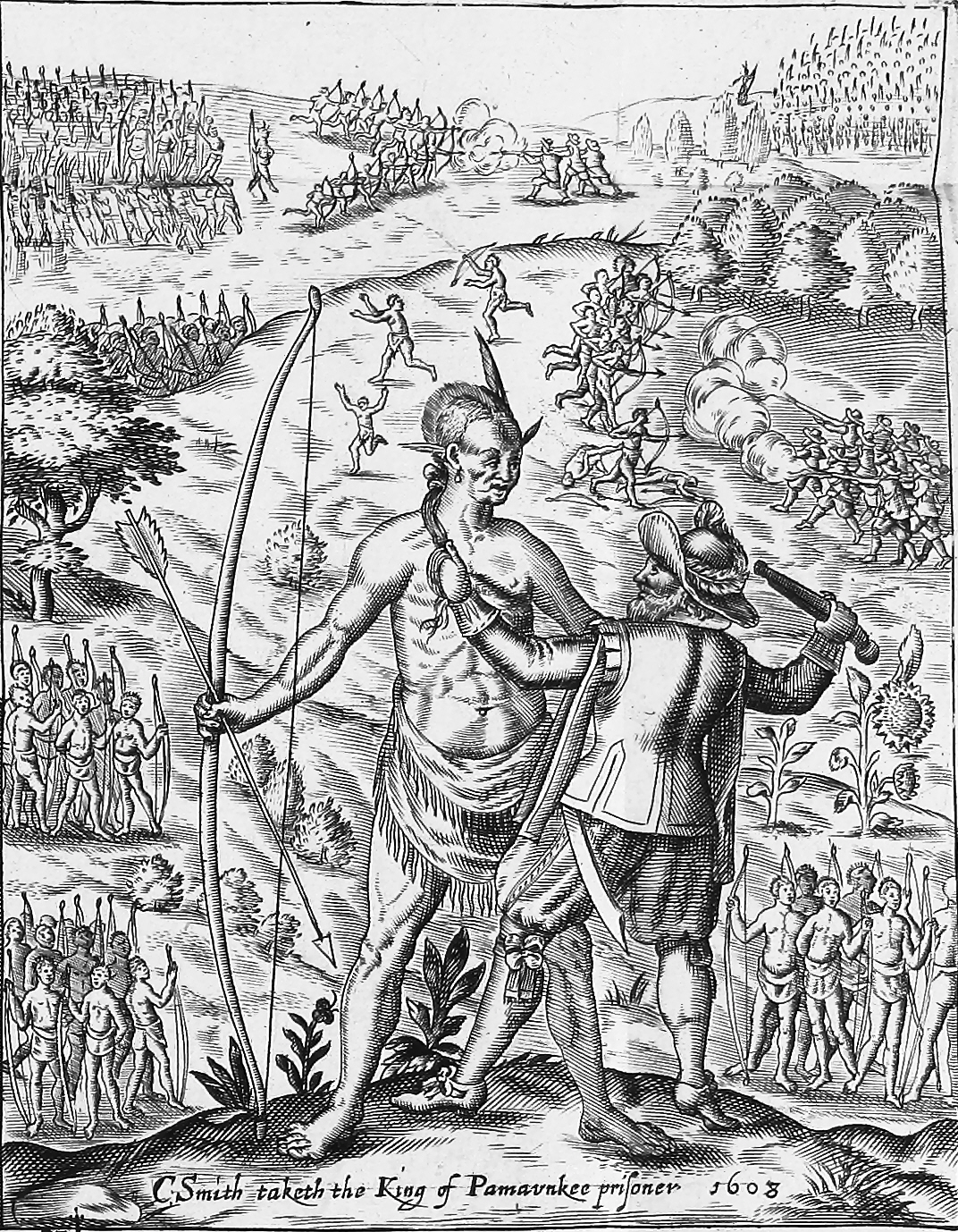
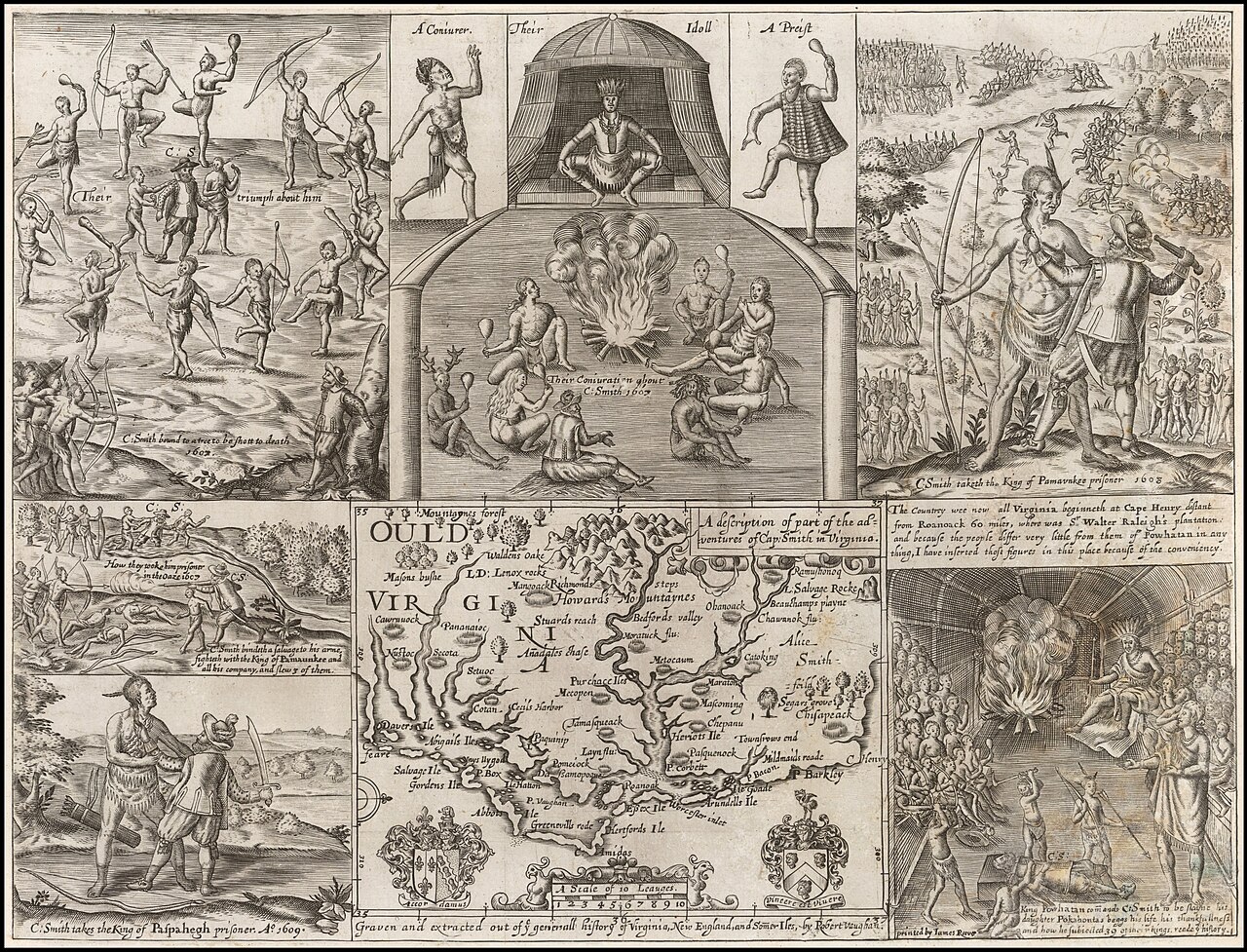
John Smith taking the King of Pamunkee prisoner
Robert Vaughan · 1624
Secondary source
The History and Present State of Virginia
Robert Beverley · 1705
Secondary source
The First Republic in America
Alexander Brown · 1898
Free account
Read every Opechancanough source
Sign up free →
Ready when you are
Start chatting with Opechancanough now.
20 messages free · No credit card · Available in 50+ languages.