


Secondary sourcePainting1880
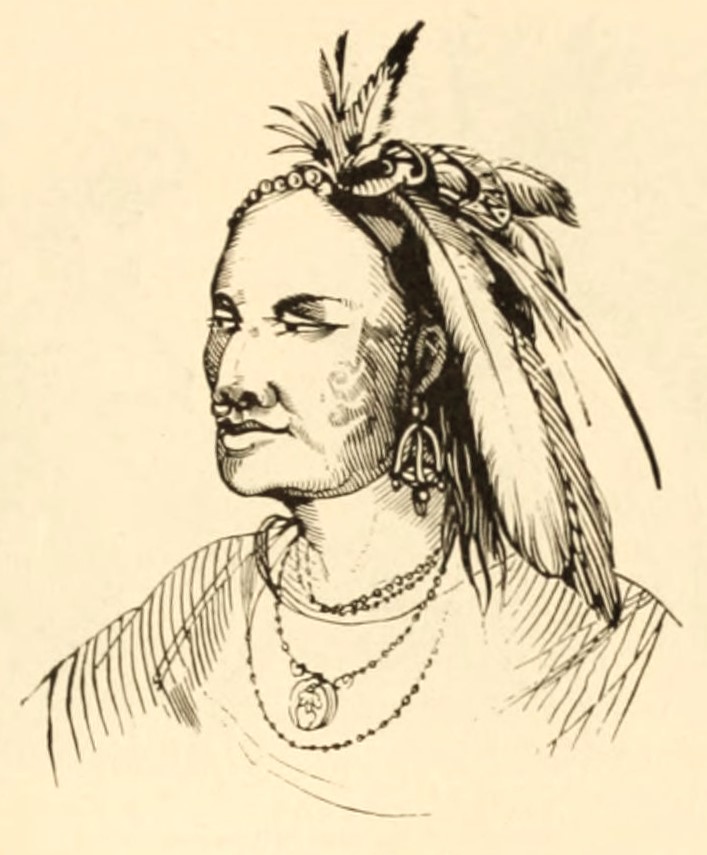
Opekankanough
Henry Clay Watson · 1880
An 1880 schoolbook engraving of Opechancanough tied to the story of Nemattanew's death, which preceded the 1622 attack on English settlers.
Connects Opechancanough's leadership to the killing of Nemattanew, a key spark for the 1622 uprising.
About this source
What it is
This engraving by Henry Clay Watson shows a profile portrait of a man with feathers and beads in his hair, published in an 1880 history book. It accompanies the story of Nemattanow, a warrior whose death at English hands helped spark the 1622 uprising led by Opechancanough.
Why it matters
The text alongside this image describes how Opechancanough used anger over Nemattanow's killing to unite Native groups against the expanding English colony. It shows both a key turning point in Opechancanough's leadership and how nineteenth-century textbooks framed Native resistance using charged language like 'ferocity' and 'savages.'
Look closer
- What words does the accompanying text use to describe the Native people, and how might that shape a reader's view?
- How does the image's styling—feathers, beads, profile pose—compare to other illustrations of Opechancanough in this archive?
- What does this episode suggest about how conflicts between colonists and Native nations could escalate?
This painting is part of the curated material that grounds the AI version of Opechancanough on Humy.ai — when students ask about related events, the AI can quote it and cite it.
More Opechancanough sources
Browse all 30 →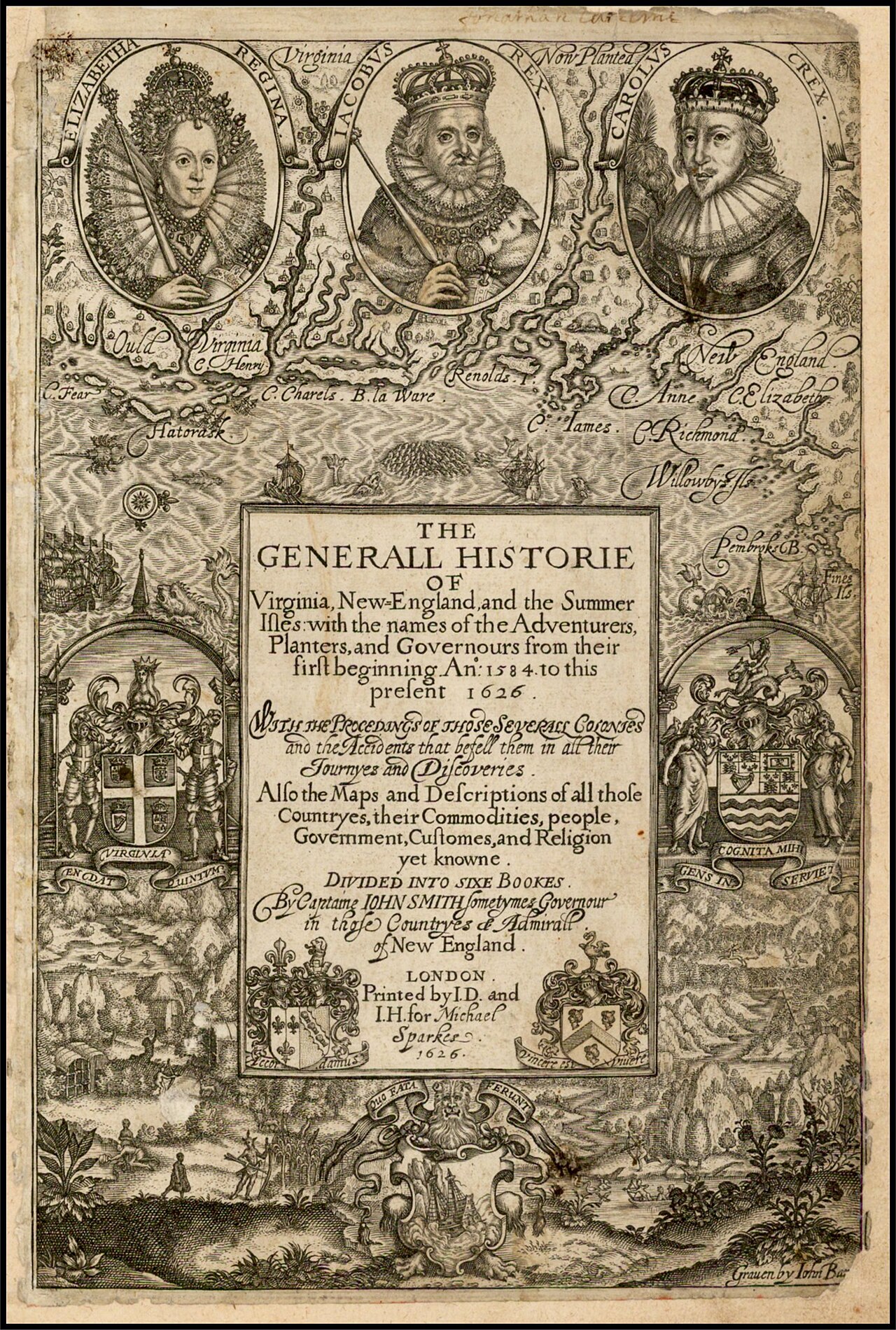 Book
Primary source
The Generall Historie of Virginia, New-England, and the Summer Isles
John Smith · 1624
 Painting
Primary source
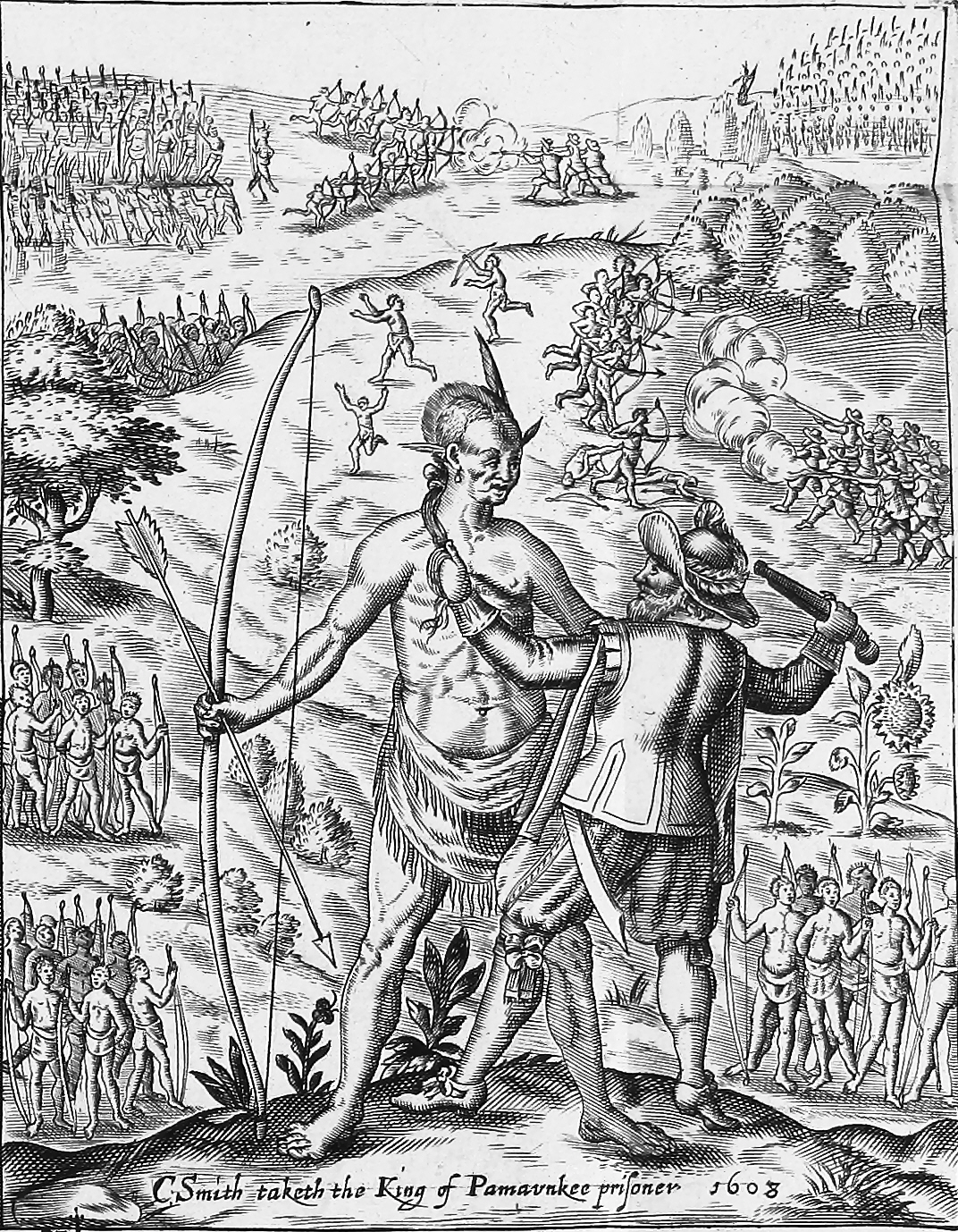
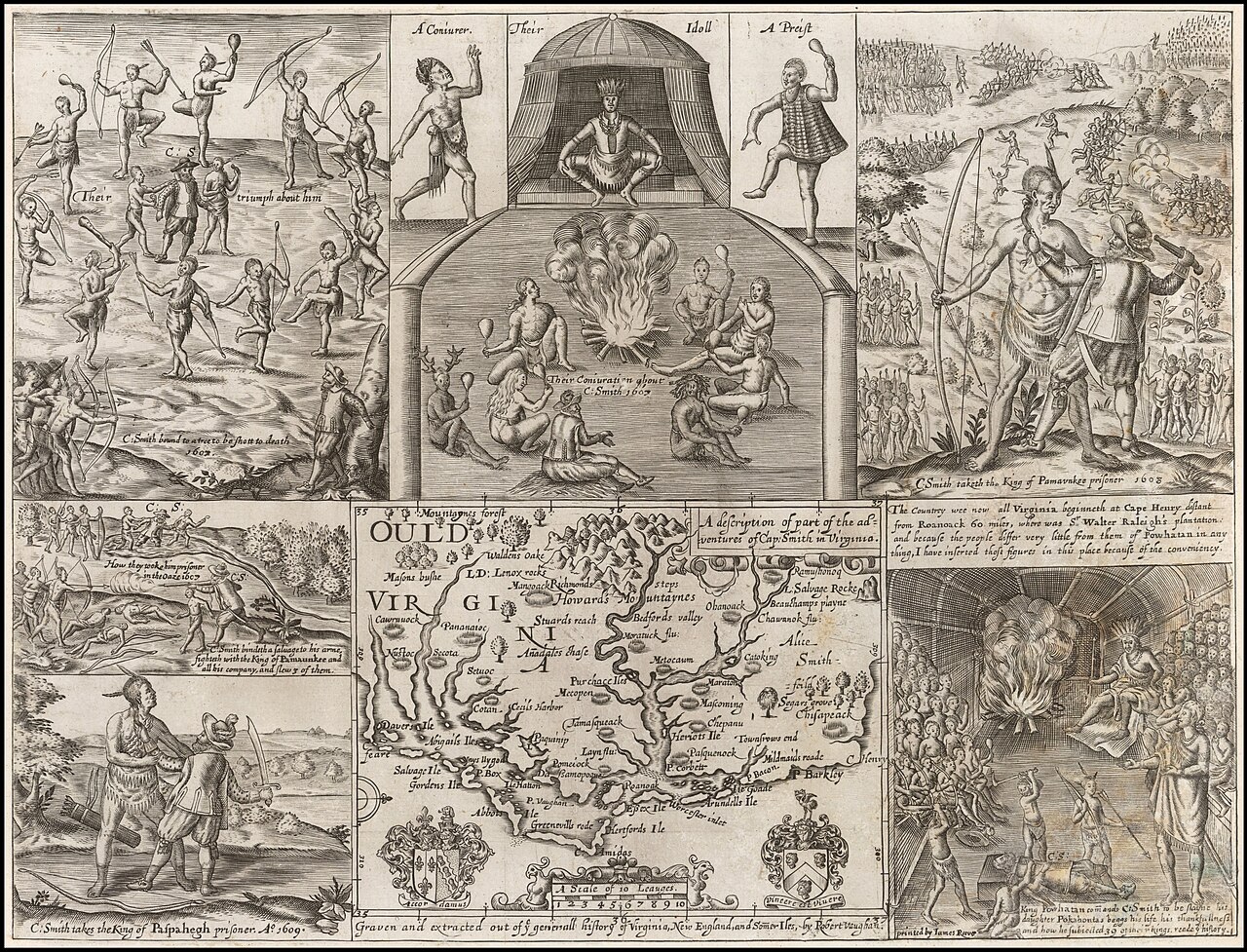
John Smith taking the King of Pamunkee prisoner
Robert Vaughan · 1624
Secondary source
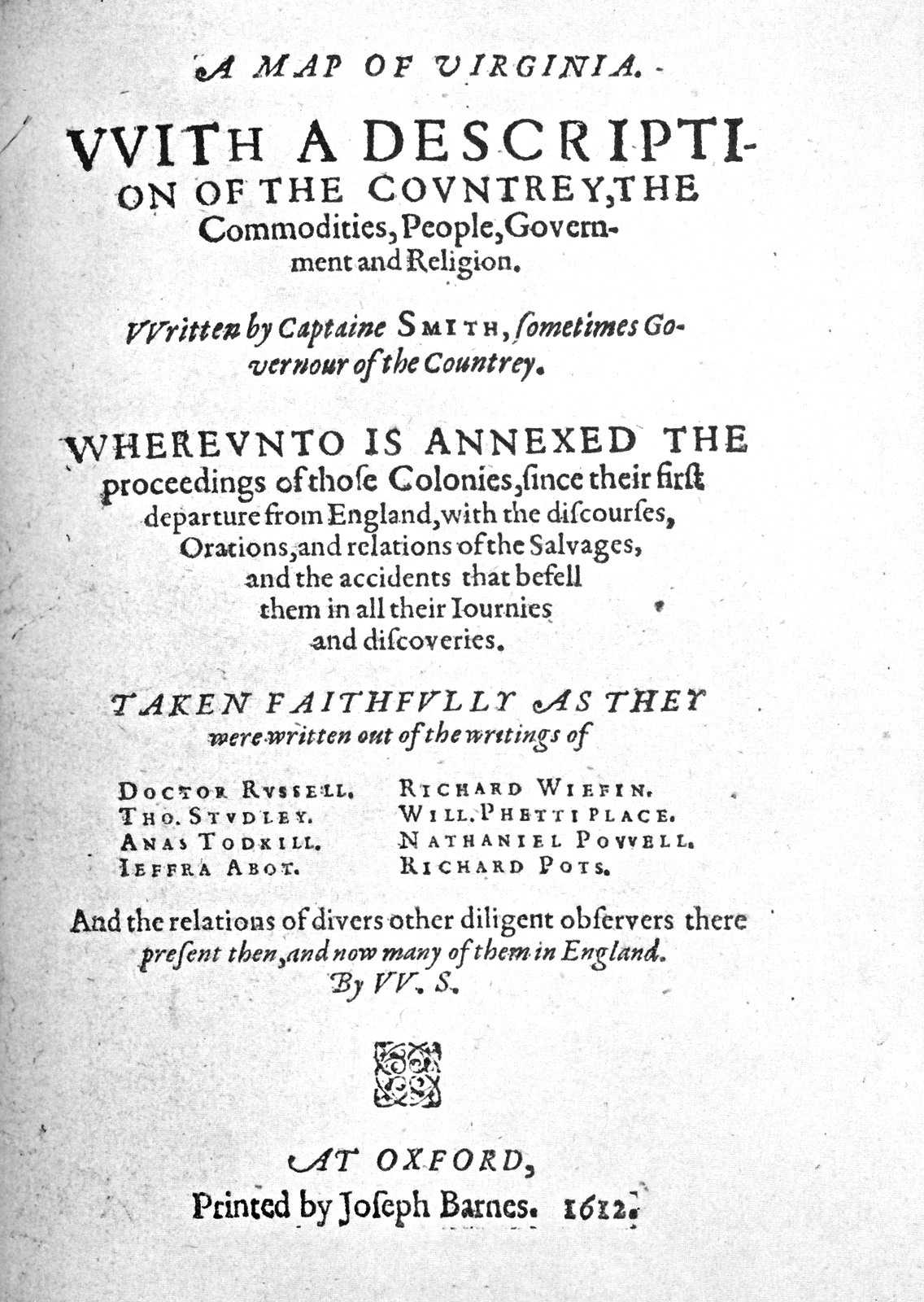
The History and Present State of Virginia
Robert Beverley · 1705
Secondary source
The First Republic in America
Alexander Brown · 1898
Free account
Read every Opechancanough source
Sign up free →
Ready when you are
Start chatting with Opechancanough now.
20 messages free · No credit card · Available in 50+ languages.