


Primary sourcePhotograph1454/55
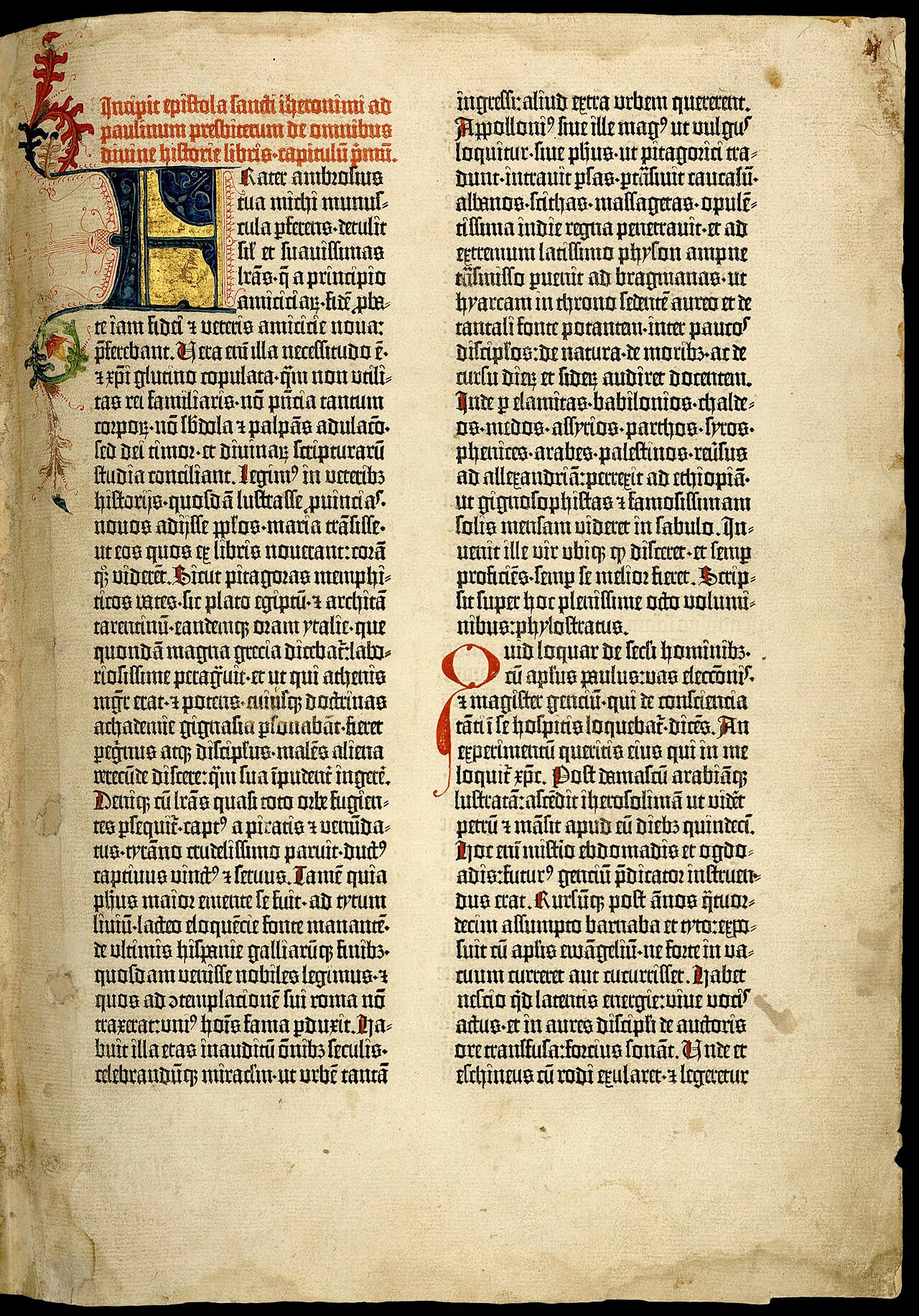
Opening page of the Gutenberg Bible Old Testament
Johannes Gutenberg · 1454/55
The first page of volume 1 of the Gutenberg Bible, printed in black Gothic type with red headings and a decorated initial. It was made by Johannes Gutenberg's workshop around 1454-55.
It shows Gutenberg's printed type and page design in the first volume of the Bible he printed, the work he is best known for.
About this source
What it is
This is the opening page of Volume 1, Old Testament, of the Gutenberg Bible, dated 1454/55. The image is held by the Harry Ransom Center at the University of Texas at Austin. The page is printed in black Gothic type. It has red headings and a large illuminated initial letter in blue and gold. The text opens with the Epistle of St. Jerome to Paulinus (letter 53). This epistle is not part of the Bible itself but is an introduction by Jerome, the translator of the Latin Vulgate, which this Bible is written in.
Why it matters
Johannes Gutenberg, a German inventor and craftsman, is credited as the creator of this printed book. The page shows printed type made to look like a handwritten manuscript. Red headings and painted initials were still added to the page, so the book blends new printing with older manuscript habits. Jerome's Latin text connects the book to a very old tradition of Bible translation.
Look closer
- Which parts of this page look printed, and which parts look like they were decorated by hand?
- Why might a printer want a book to look like a handwritten manuscript?
- What does this single page leave out about the workers, costs and readers behind the book?
This photograph is part of the curated material that grounds the AI version of Johannes Gutenberg on Humy.ai — when students ask about related events, the AI can quote it and cite it.
More Johannes Gutenberg sources
Browse all 81 →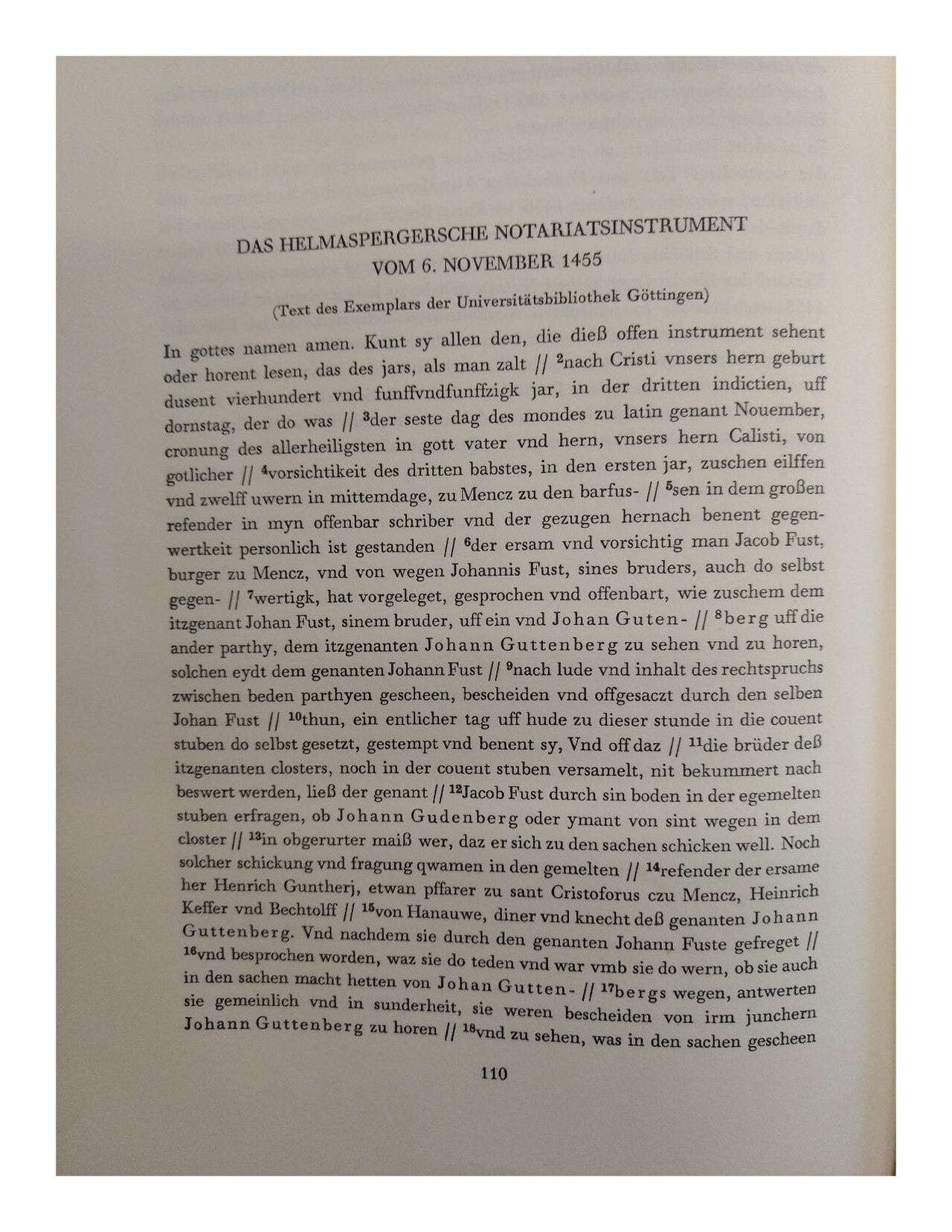 Document
Secondary source
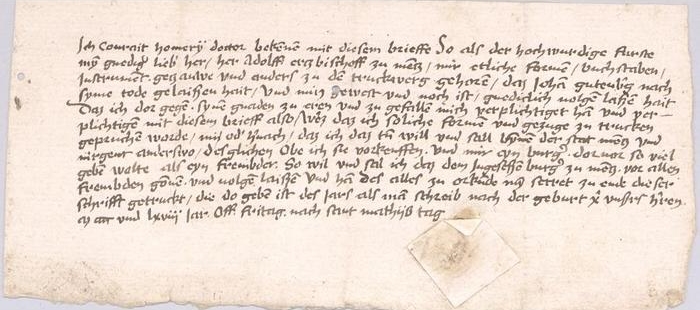
Helmaspergersche Notariatsinstrument
Ulrich Helmasperger · 6 November 1455
 Document
Primary source
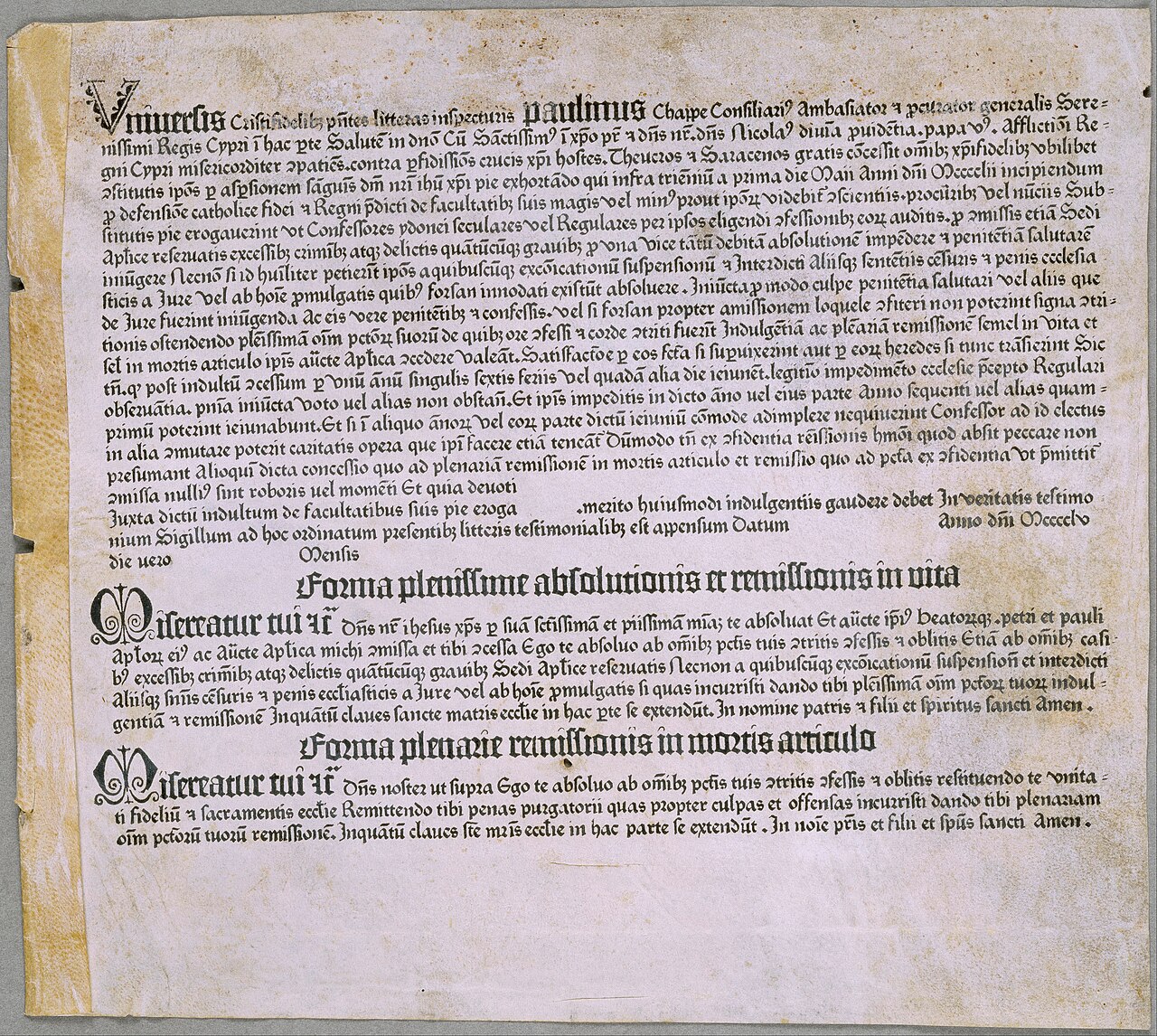
Lettre d'indulgence (Cyprus indulgence)
Johannes Gutenberg · 1454-1455
 Book
Primary source
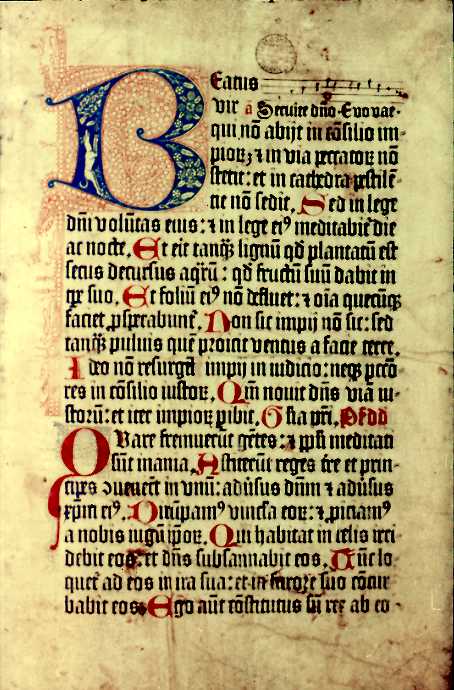
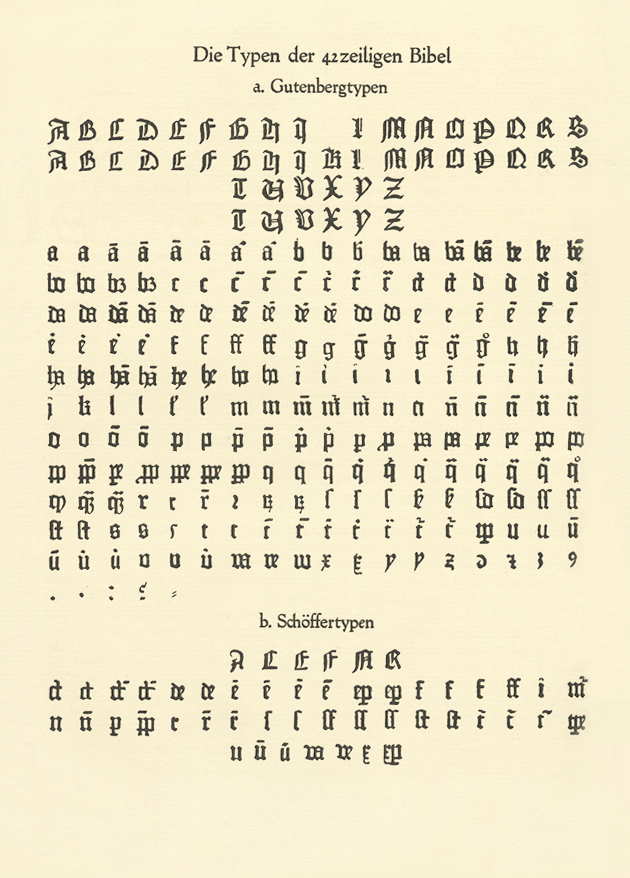
Mainz Psalter
Johann Fust and Peter Schöffer · 1457
 Document
Secondary source
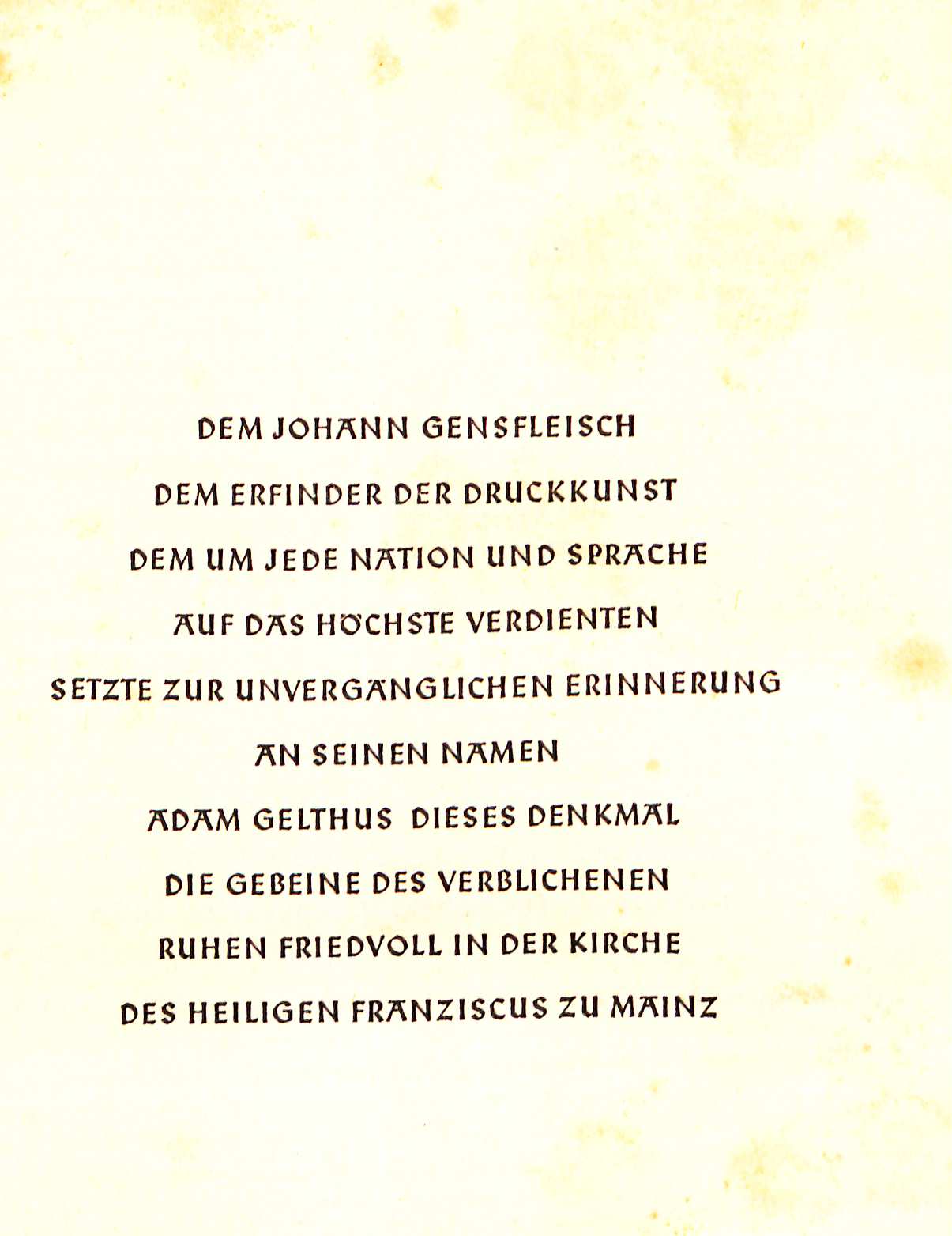
Gutenberg Epitaph
Adam Gelthus
Free account
Read every Johannes Gutenberg source
Sign up free →
Ready when you are
Start chatting with Johannes Gutenberg now.
20 messages free · No credit card · Available in 50+ languages.