


Primary sourceBookearly 14th century
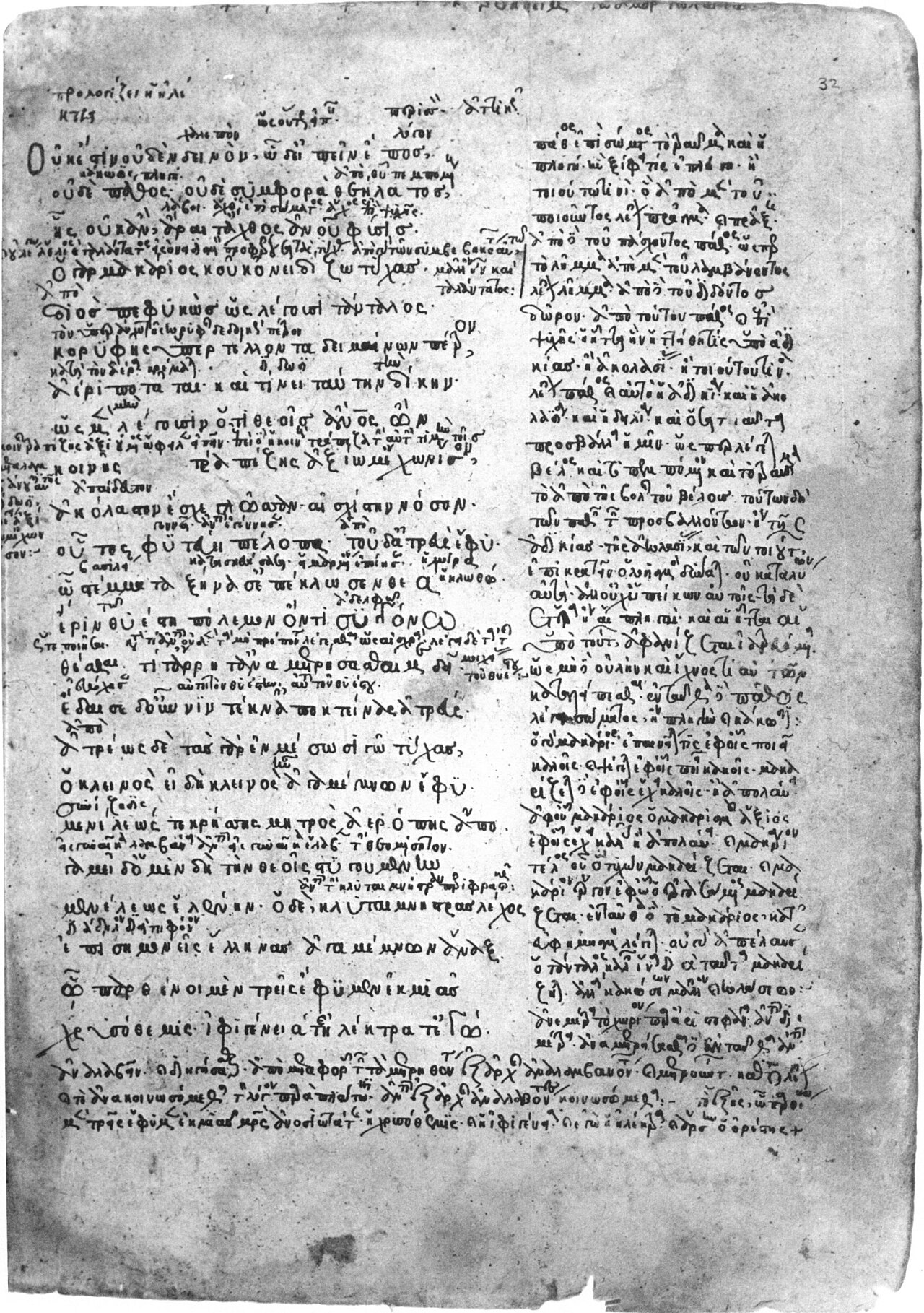
Orestes, Bodleian MS Barocci 120
Euripides · early 14th century
An early 14th-century manuscript copy of Euripides' play Orestes with scholarly notes, preserving the playwright's own text.
A medieval copy of Euripides' own play Orestes, showing how his text was preserved and studied.
About this source
What it is
This is a page from a medieval manuscript of Euripides' play Orestes, copied in the early 14th century. It contains the opening lines of the play along with scholia, scholarly notes added in the margins and between the lines. The manuscript is held today at the Bodleian Library in Oxford, as MS. Barocci 120.
Why it matters
Euripides wrote Orestes many centuries before this copy was made. Manuscripts like this one are how his plays survived into the modern world, carried forward by generations of scribes and scholars long after his death. The scholia show how later readers studied and explained his Greek, revealing how valued his work remained.
Look closer
- Why might scribes have added notes around the main text instead of just copying the play alone?
- What does the survival of this copy, made so long after Euripides lived, tell you about how ancient texts reach us today?
- What might be missing or changed after so many centuries of copying?
This book is part of the curated material that grounds the AI version of Euripides on Humy.ai — when students ask about related events, the AI can quote it and cite it.

Ready when you are
Start chatting with Euripides now.
20 messages free · No credit card · Available in 50+ languages.