


Primary sourceBook408 BCE
Orestes
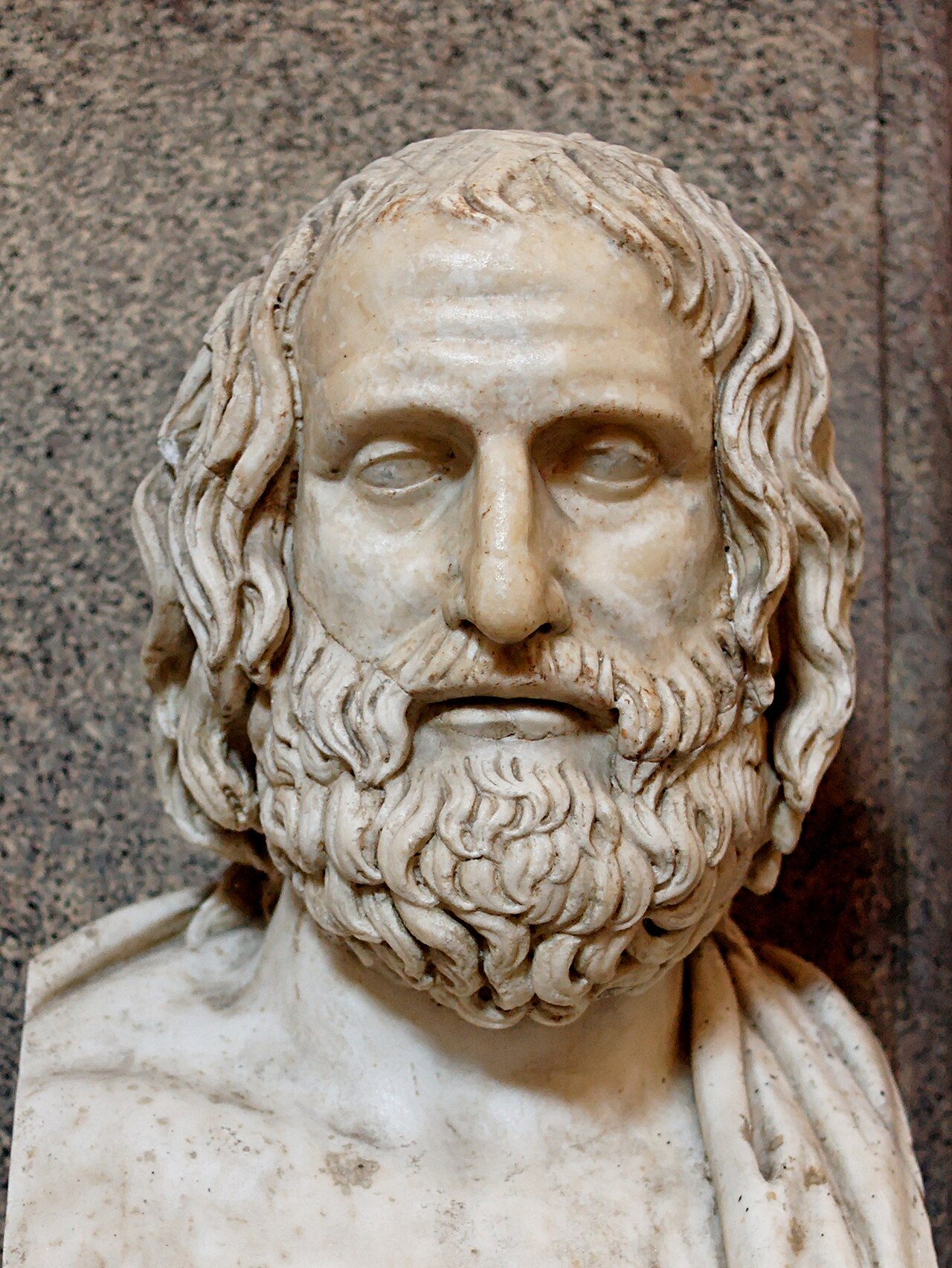
Euripides · 408 BCE
A late tragedy by Euripides from 408 BCE showing Orestes tormented after murdering his mother, one of his most popular and darkly chaotic plays.
Euripides' last Athenian tragedy, showing his late, dark dramatic style.
Free Humy account · No credit card · 120,288 sources to read
About this source
What it is
Orestes is a tragedy written by Euripides in 408 BCE, his last play performed in Athens. It follows Orestes after he kills his mother Clytemnestra to avenge his father Agamemnon, and the chaos, madness and political danger that follow.
Why it matters
The play was hugely popular in antiquity and shows Euripides' late style: dark, unstable, and sceptical of easy justice. Unlike Aeschylus's version, where Orestes is acquitted by a court, Euripides shows him condemned and resorting to violence and blackmail, raising hard questions about law, vengeance and politics during the Peloponnesian War.
Look closer
- How does Euripides's ending differ from the more hopeful resolution in Aeschylus's Eumenides?
- What does the play suggest about Athenian politics at the time it was written?
- Why might ancient audiences have found this version more troubling than earlier tellings of the myth?
This book is part of the curated material that grounds the AI version of Euripides on Humy.ai — when students ask about related events, the AI can quote it and cite it.


Ready when you are
Start chatting with Euripides now.
20 messages free · No credit card · Available in 50+ languages.