


Secondary sourcePhotograph24 January 2013
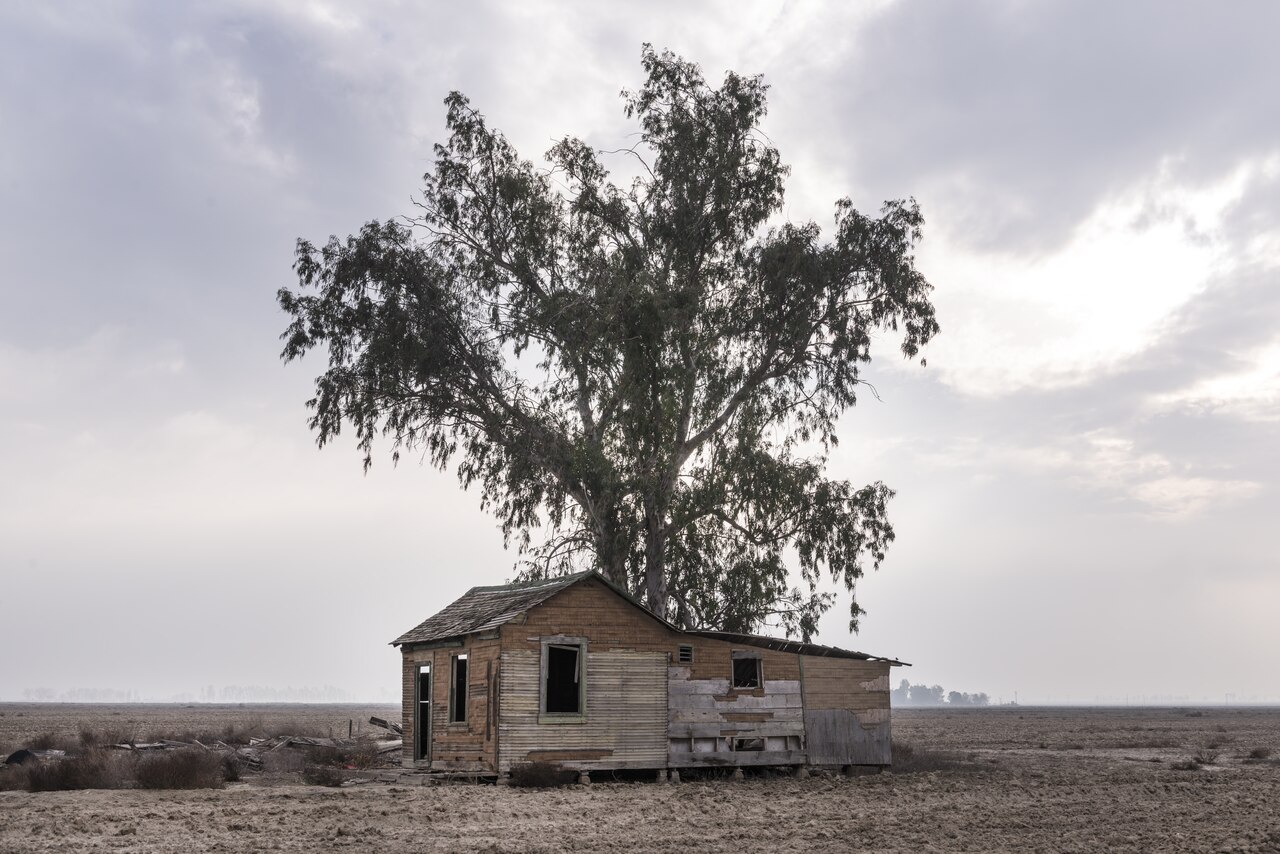
Original Cabin, Former Weedpatch Camp, Bakersfield
Carol M. Highsmith · 24 January 2013
A 2013 photo of an unrenovated original cabin at the former Weedpatch migrant camp, the Dust Bowl camp named in The Grapes of Wrath.
Shows the unrestored ruins of Weedpatch Camp, the Dust Bowl site Steinbeck named directly in The Grapes of Wrath.
About this source
What it is
This is a 2013 color photograph by Carol M. Highsmith showing an original, unrenovated cabin at the former Weedpatch camp near Bakersfield, California, meant for comparison with restored cabins at the same site.
Why it matters
Weedpatch Camp, officially the Arvin Federal Government Camp, sheltered Dust Bowl migrant workers who had fled the Great Plains. John Steinbeck referred to it as "Weed Patch Camp" in The Grapes of Wrath, and this decayed cabin gives a more direct sense of the hardship migrants actually faced than a restored building would.
Look closer
- How does this cabin's condition compare with the renovated shack photographed at the same camp?
- What do broken windows and scattered debris suggest about the lives of the people who lived here?
- Why might photographing both the ruined and restored cabins help historians understand the past better?
This photograph is part of the curated material that grounds the AI version of John Steinbeck on Humy.ai — when students ask about related events, the AI can quote it and cite it.
More John Steinbeck sources
Meet the AI John Steinbeck →


Ready when you are
Start chatting with John Steinbeck now.
20 messages free · No credit card · Available in 50+ languages.