


Primary sourceArtifact
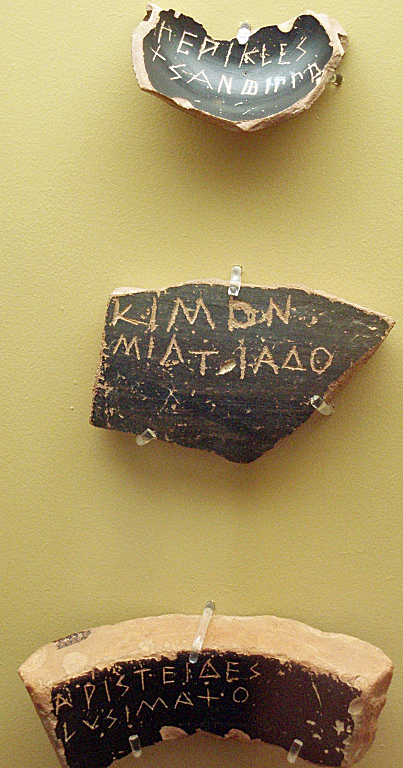
Ostraca naming Pericles, Cimon and Aristides
Three pieces of broken pottery inscribed with Greek names, used as voting tokens in ancient Athens. The top one reads a name resembling Pericles's.
Shows Pericles's name on a voting token, one of the ways Athenians could target a political leader through ostracism.
About this source
What it is
These are three broken pottery sherds, called ostraca, used as voting tokens in ancient Athens. Each bears a name written in Greek letters: from top to bottom, Pericles, Cimon and Aristides. The objects are shown at the Ancient Agora Museum in Athens.
Why it matters
Ostracism was a voting procedure in Athens, and these sherds show how citizens used everyday pottery as ballots. Pericles appears alongside two other Athenian leaders, Cimon and Aristides, which shows that all three were prominent enough to be named on ballots. The objects are direct traces of the voting itself, not a later account of it.
Look closer
- What do the three names have in common, and why might voters have written them?
- Who scratched these names, and what does it suggest about how ordinary citizens took part in politics?
- What do these objects leave out about the people who were not allowed to vote?
This artifact is part of the curated material that grounds the AI version of Pericles on Humy.ai — when students ask about related events, the AI can quote it and cite it.
More Pericles sources
Meet the AI Pericles →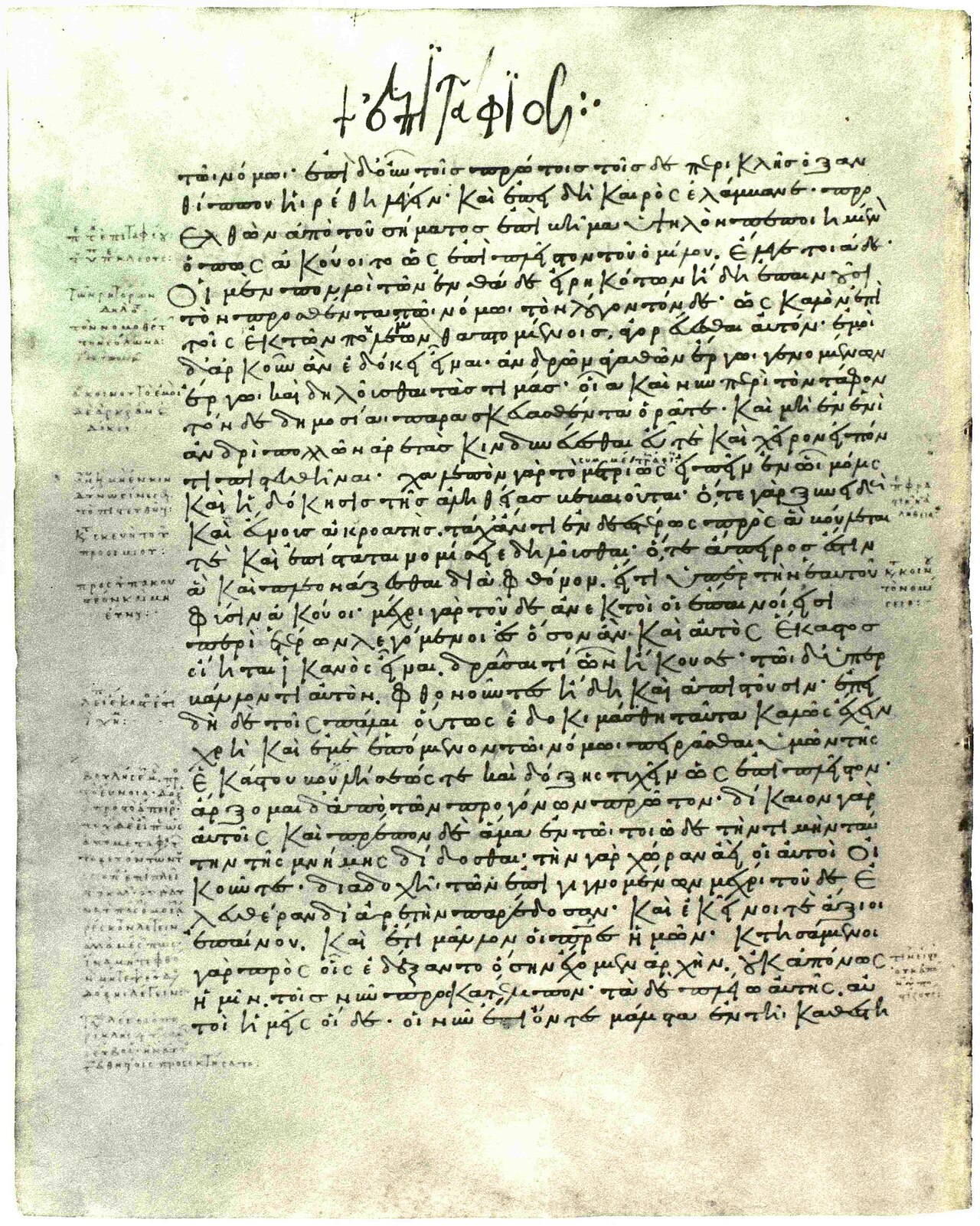 Speech
Secondary source
Pericles' Funeral Oration
Thucydides · 431/430 BCE
 Artifact
Primary source
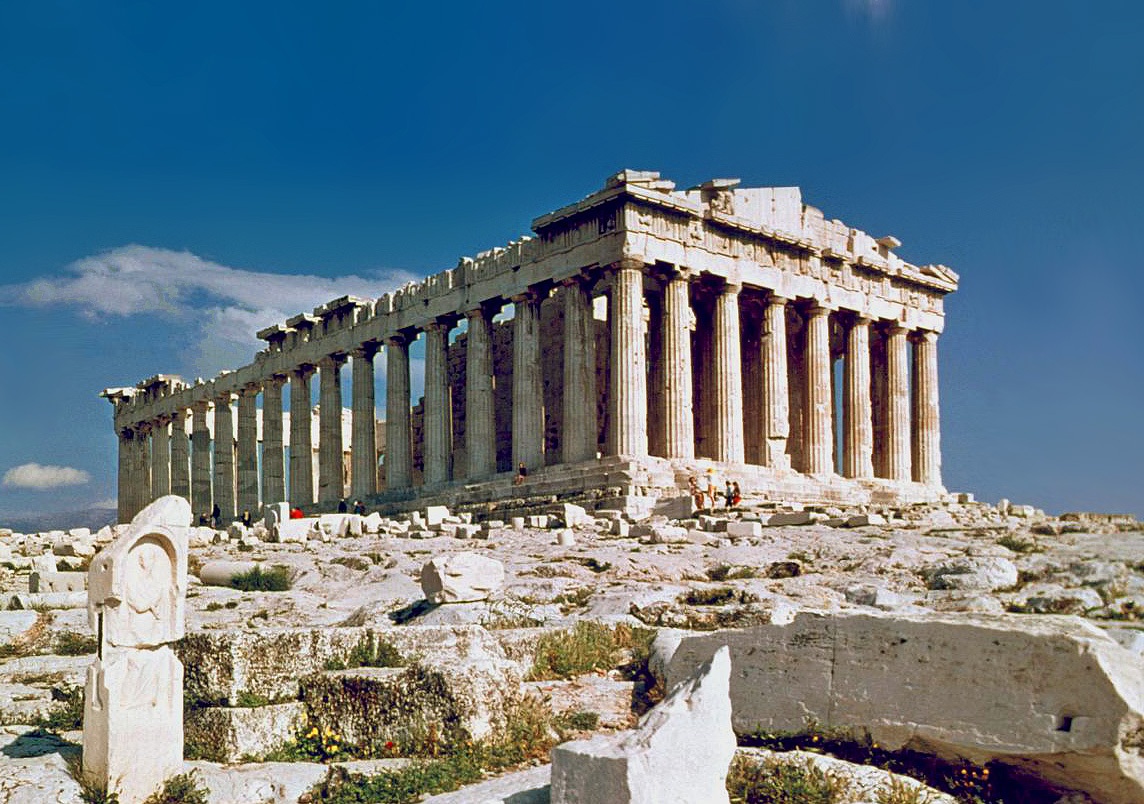
Parthenon
447-432 BCE
 Sculpture
Secondary source
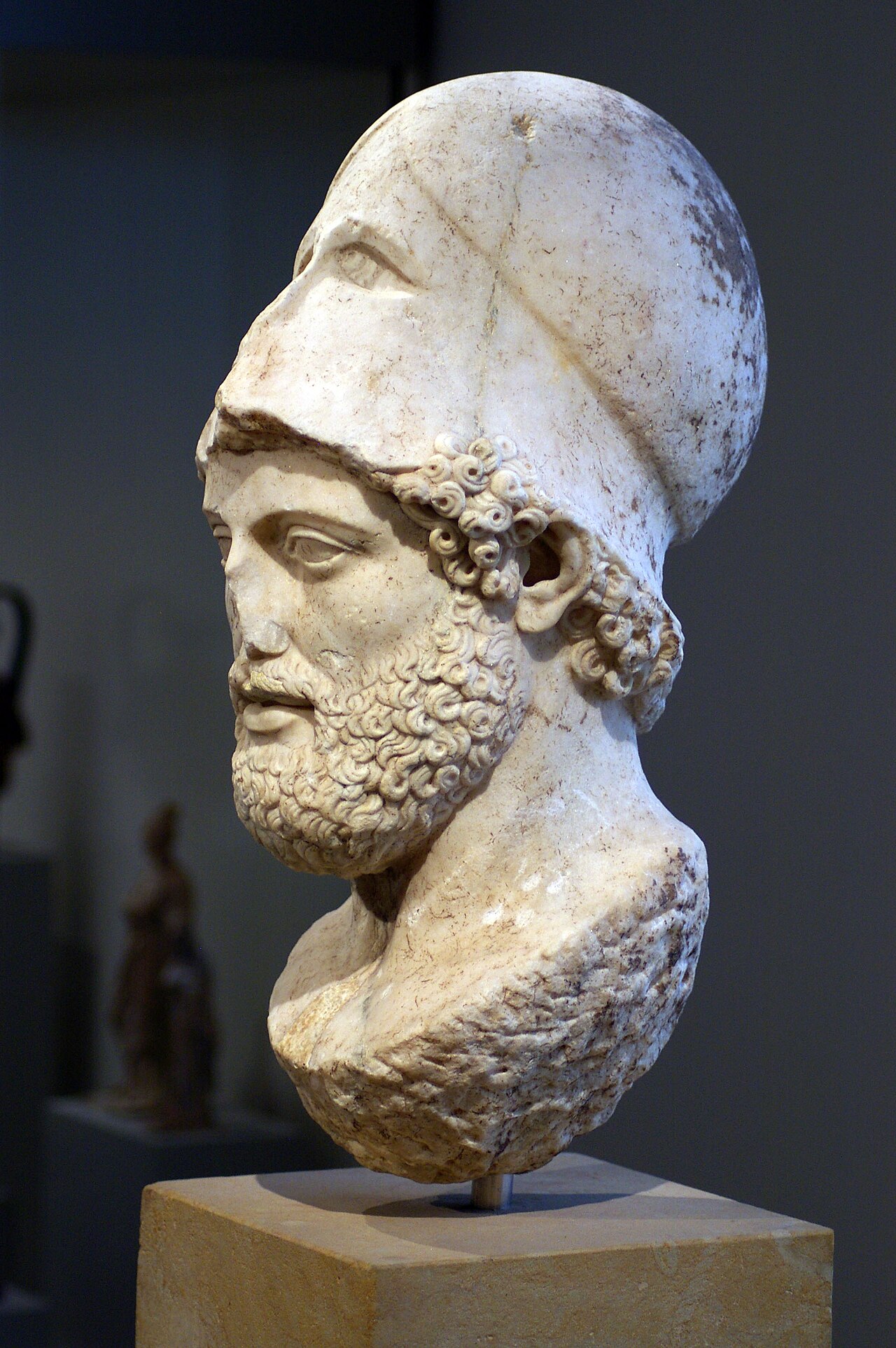
Pericles with the Corinthian Helmet
Kresilas · Roman copy, from a Greek original near Pericles' lifetime
 Book
Primary source
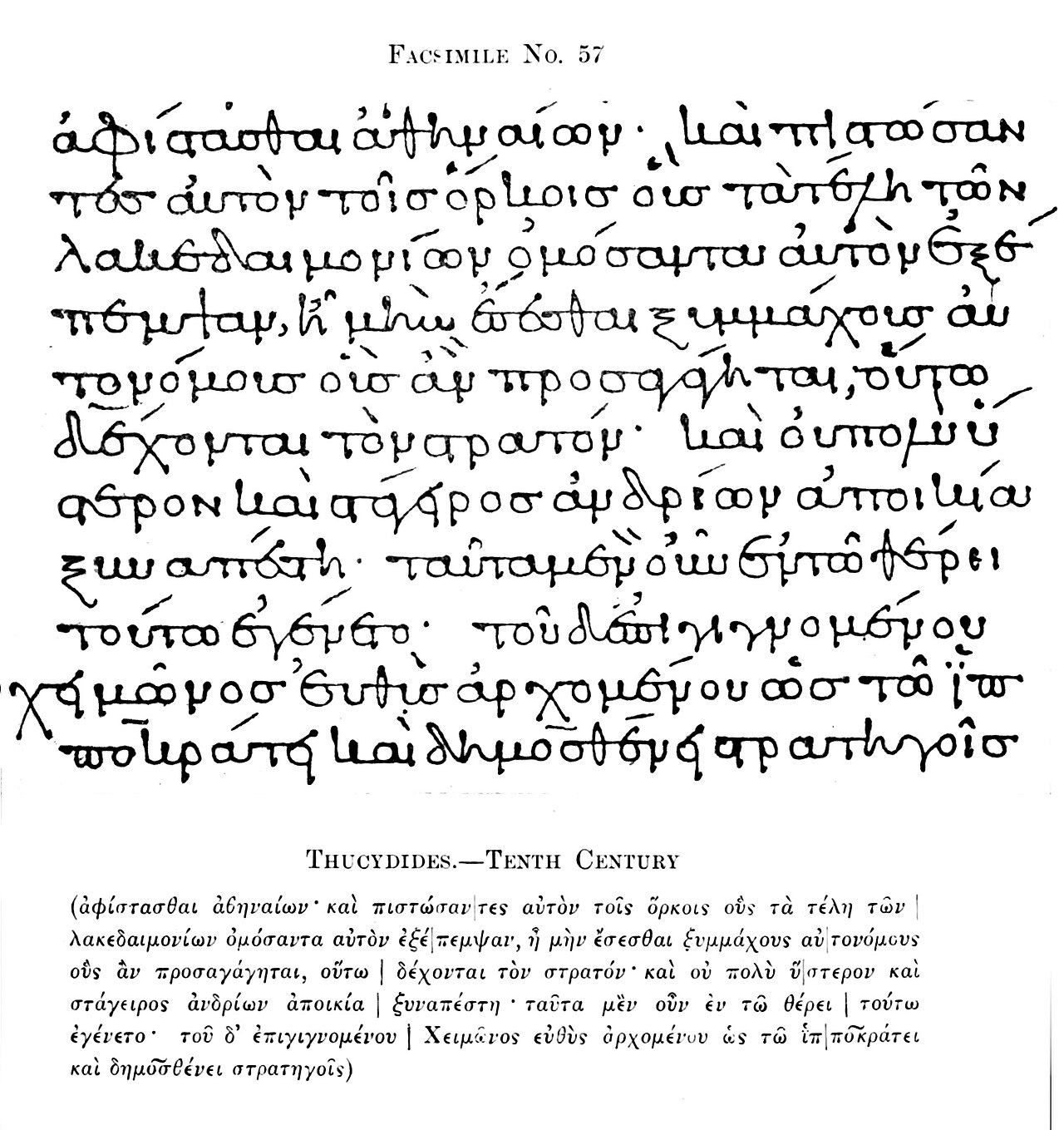
History of the Peloponnesian War
Thucydides · 5th century BCE
Secondary source
Life of Pericles
Plutarch
Ready when you are
Start chatting with Pericles now.
20 messages free · No credit card · Available in 50+ languages.