


Primary sourceArtifactc. 487-471 BC
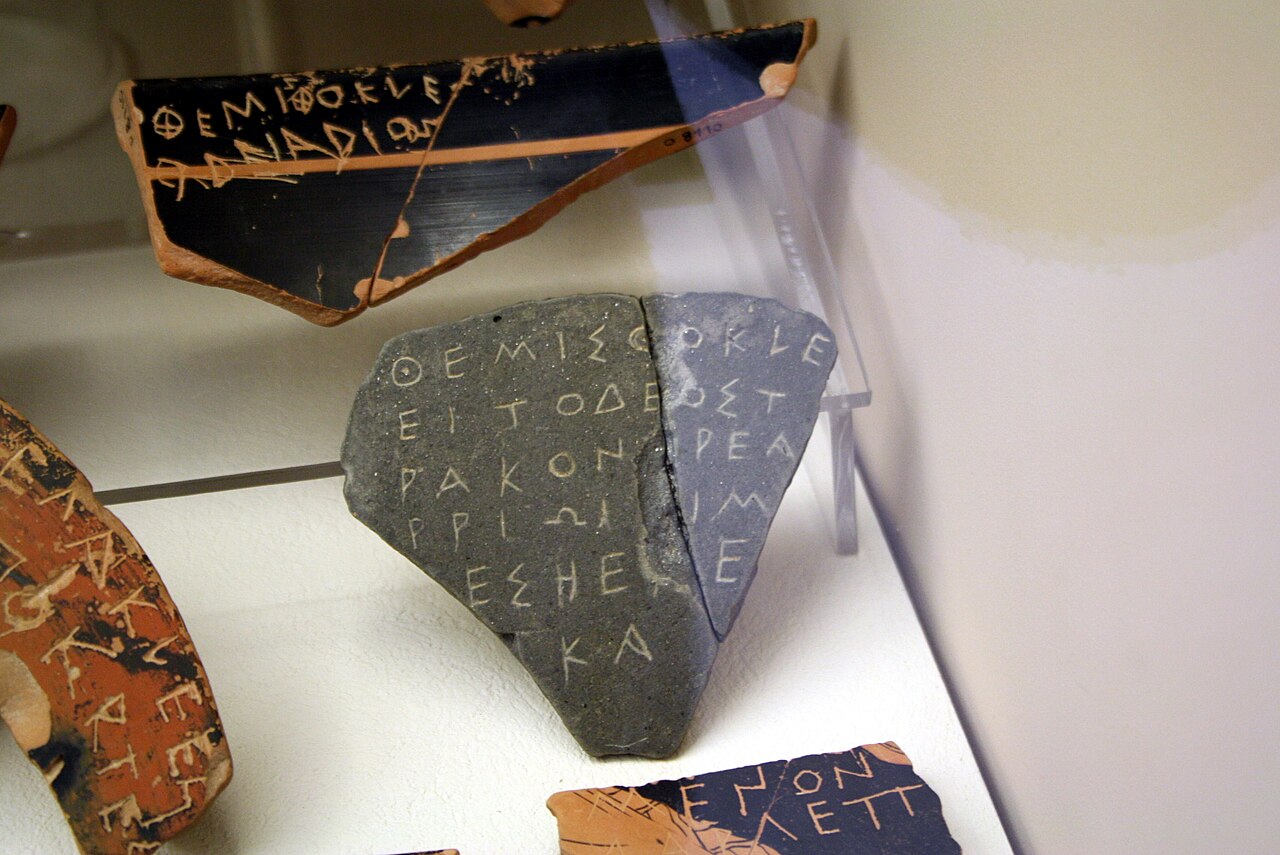
Ostraka inscribed with the name of Themistocles
Athenian citizens · c. 487-471 BC
Pottery sherds scratched by Athenian voters with Themistocles' name, used as ballots in the vote that eventually exiled him.
These ostraka are physical ballots from the vote that led to Themistocles' exile around 472/471 BC.
Free Humy account · No credit card · 120,912 sources to read
About this source
What it is
These are broken pieces of pottery, called ostraka, on which Athenian citizens scratched or painted the name 'Themistokles Neokleous' (Themistocles son of Neocles). They date from around 487 to 471 BC and were found in the Athenian Agora and the Kerameikos area. They are now held in the Museum of the Ancient Agora and the Kerameikos Museum in Athens.
Why it matters
Athenians used ostraka to vote each year on whether a powerful citizen should be exiled for ten years, a process called ostracism. These sherds are physical evidence of that practice, and of the vote that eventually sent Themistocles into exile around 472/471 BC. Thousands of similar ostraka naming other politicians have been found, showing how common and personal this political weapon was.
Look closer
- Why would citizens use broken pottery instead of paper to vote?
- What does it mean that ordinary people could vote to banish a famous leader?
- What does this object NOT tell us about why people voted against Themistocles?
This artifact is part of the curated material that grounds the AI version of Themistocles on Humy.ai — when students ask about related events, the AI can quote it and cite it.
More Themistocles sources
Browse all 92 →
Ready when you are
Start chatting with Themistocles now.
20 messages free · No credit card · Available in 50+ languages.