


Secondary sourcePhotograph27 September 2015
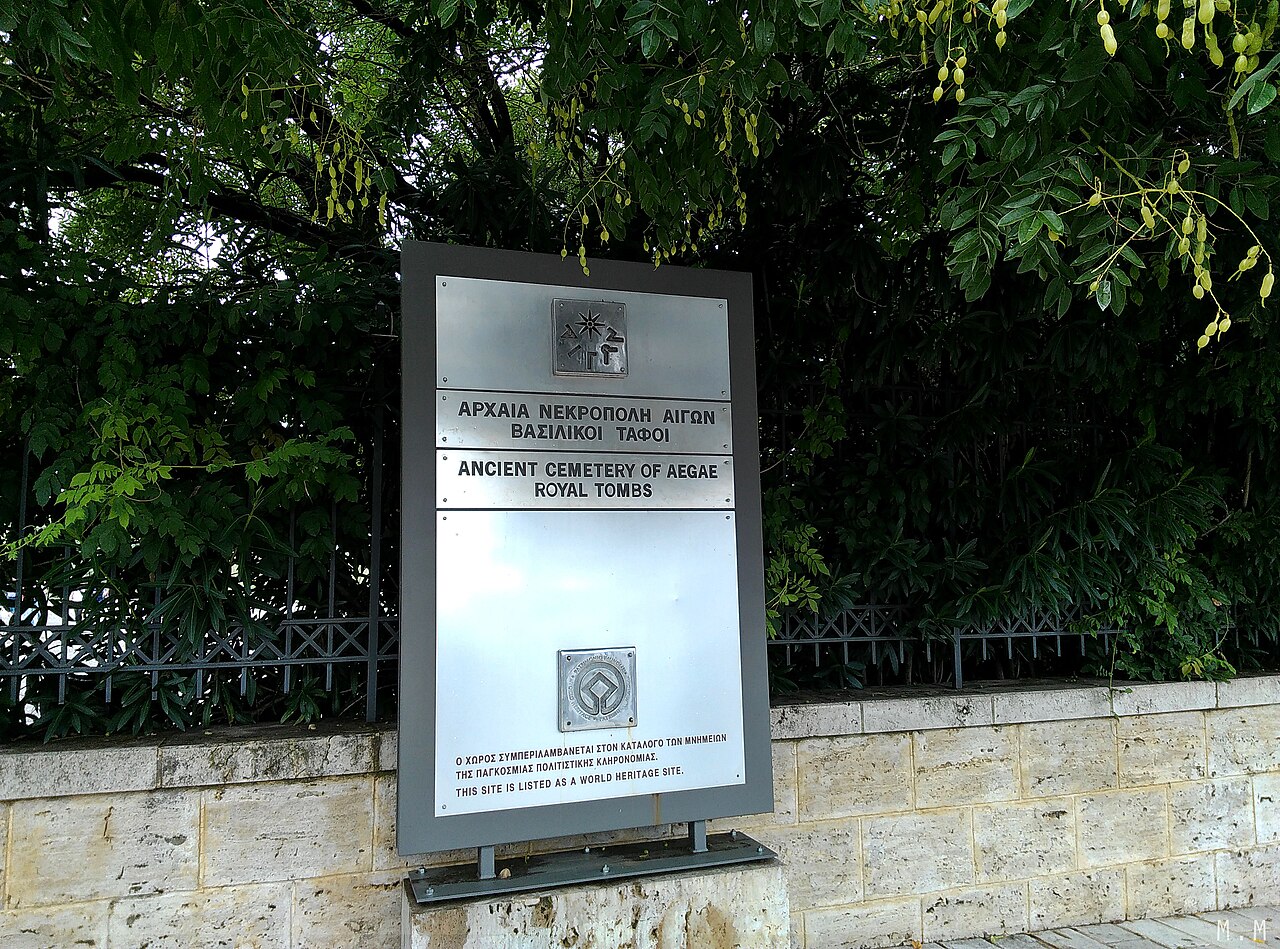
Outside the Royal Tombs, Aigai, 2015
Magda Mortisia · 27 September 2015
A 2015 photograph of an information sign outside the Royal Tombs at the ancient cemetery of Aigai, where Philip II was likely buried.
Shows a modern information sign at the royal tombs where Philip II was likely buried, showing how the site is presented today.
About this source
What it is
This is a photograph by Magda Mortisia, taken on 27 September 2015. It shows a dark grey metal information sign in front of a stone wall and an iron railing, with trees behind. The sign carries Greek and English text reading Ancient Cemetery of Aegae, Royal Tombs, and a World Heritage Site notice.
Why it matters
The sign names the site as the ancient cemetery of Aegae, the Macedonian capital. The site is a World Heritage Site, and the tombs are associated with the royal family of Philip II. The photograph shows how the place is explained to visitors today, in two languages.
Look closer
- Why might a site sign include both Greek and English text?
- What does the World Heritage notice suggest about how the site is valued today?
- What information about the tombs and their owners does the sign not give?
This photograph is part of the curated material that grounds the AI version of Philip II of Macedon on Humy.ai — when students ask about related events, the AI can quote it and cite it.
More Philip II of Macedon sources
Browse all 90 →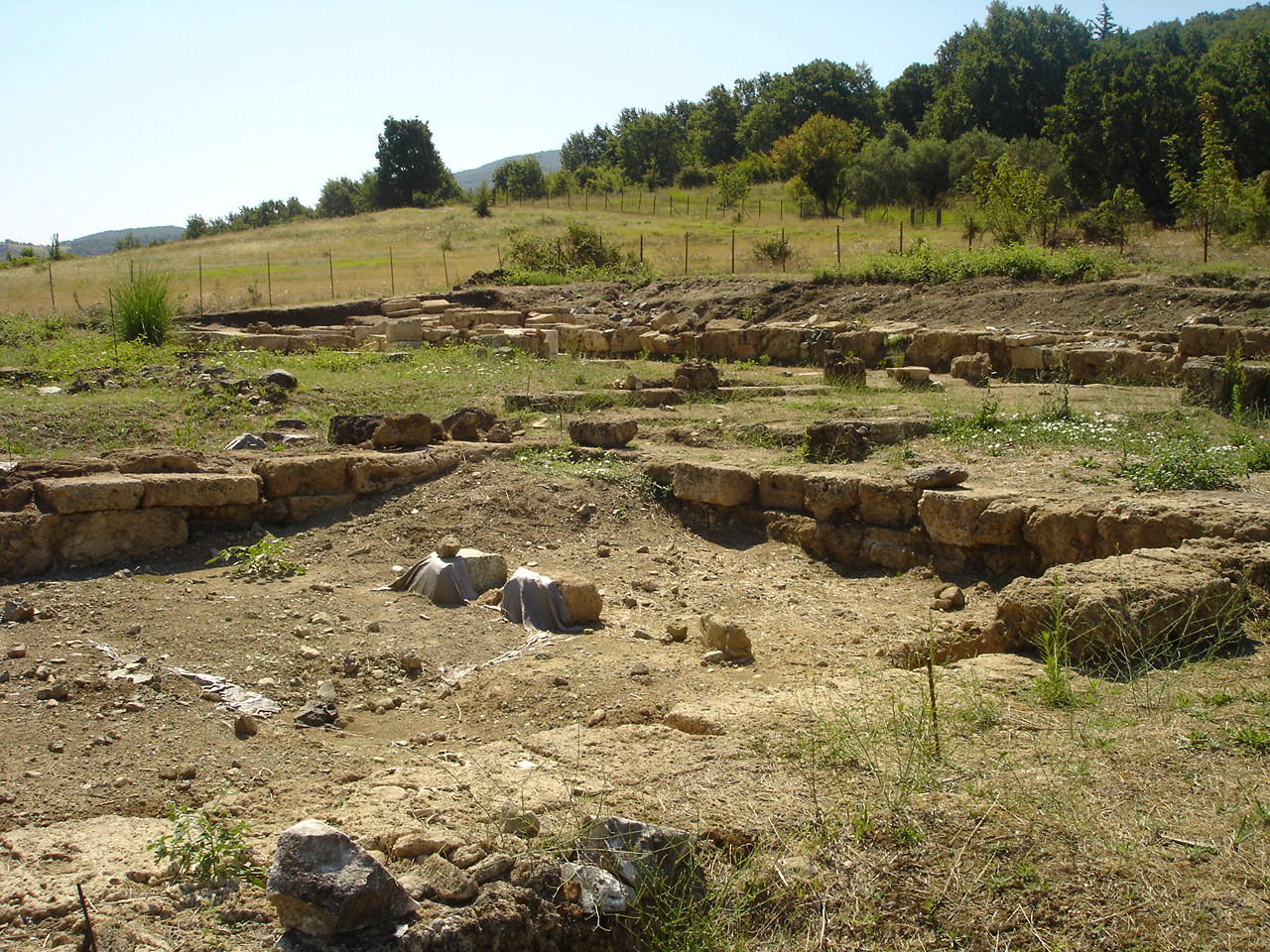 Artifact
Secondary source
Aigai
c. 750 BC onward; Philip's tomb c. 336 BC
 Speech
Primary source
First Philippic
Demosthenes · c. 351-350 BC
 Speech
Primary source
Third Philippic
Demosthenes · 341 BC
 Artifact
Primary source
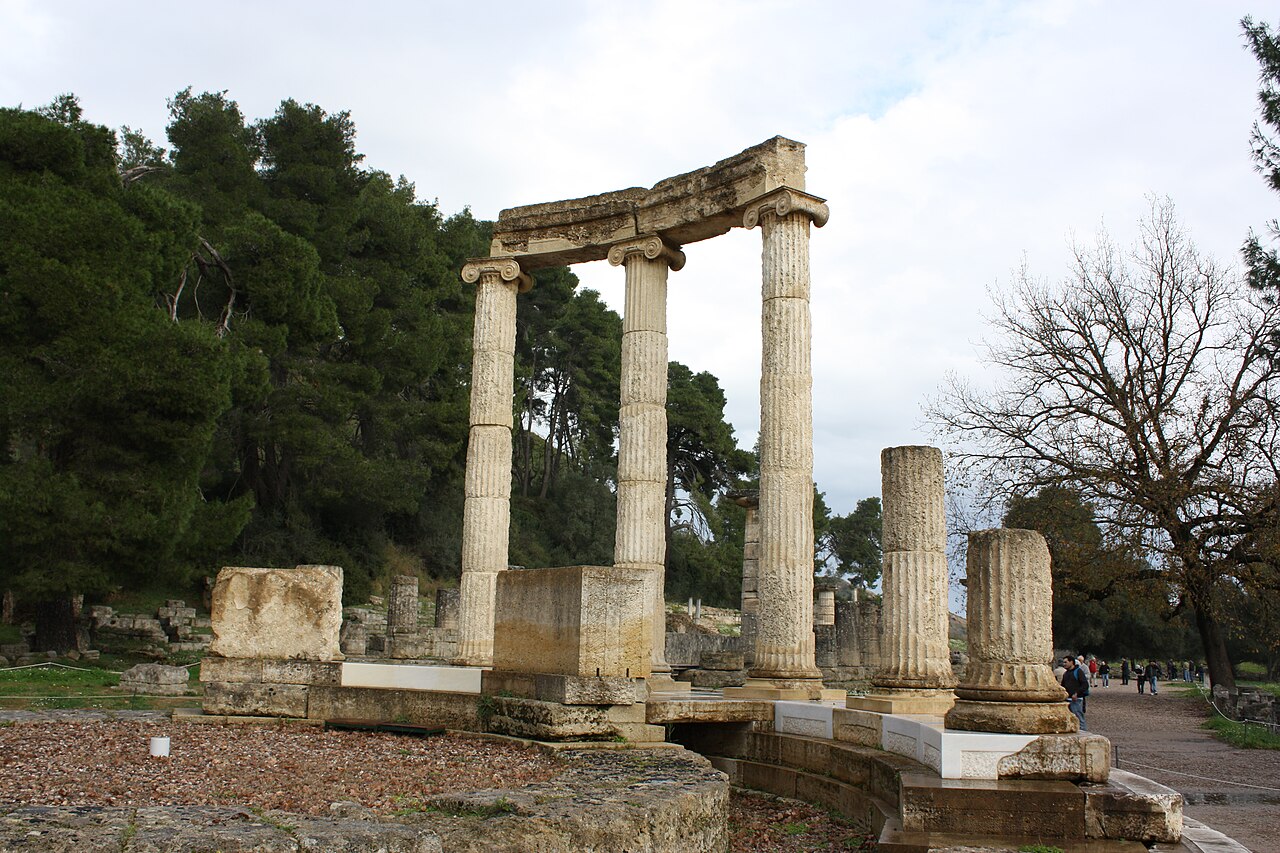
Philippeion
Leochares · begun 338/337 BC, completed under Alexander
Free account
Read every Philip II of Macedon source
Sign up free →
Ready when you are
Start chatting with Philip II of Macedon now.
20 messages free · No credit card · Available in 50+ languages.