


Secondary sourceArtifactFirst/Second century AD
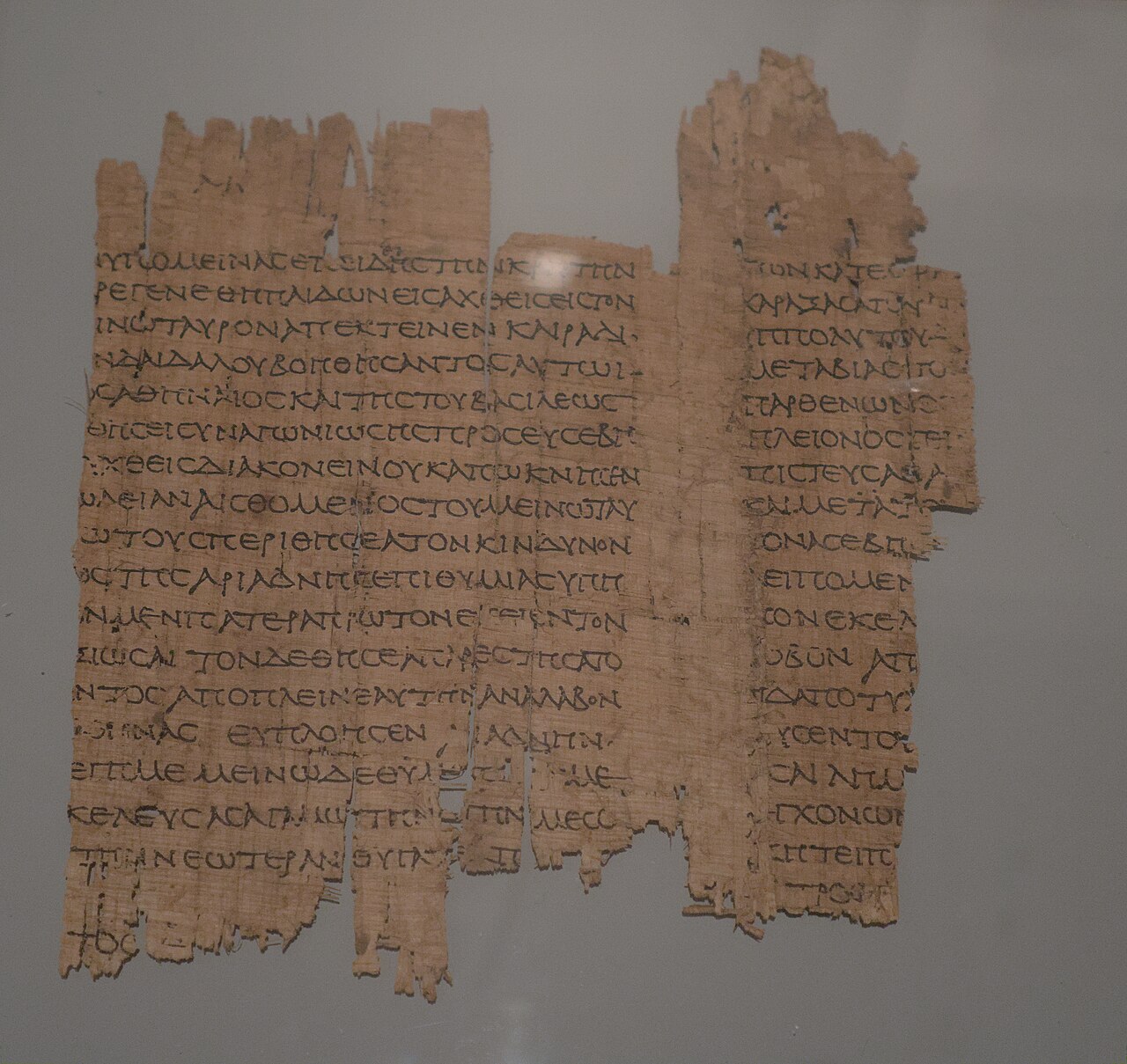
Oxyrhynchus Papyrus 4640: Hypothesis of Euripides' Theseus and Hippolytus
First/Second century AD
A fragment of ancient papyrus containing a summary of a lost Euripides play. It shows how his plays were read and preserved in antiquity.
Shows how Euripides' plays were summarised and read in antiquity, through a papyrus summary of a lost play.
About this source
What it is
This is a fragment of papyrus, catalogued as Papyrus Oxyrhynchus 4640. It is a first or second century AD papyrus roll and preserves part of a hypothesis, a summary, of Euripides' lost play Theseus and Hippolytus. The photograph shows a torn, irregular brown fragment with several columns of dark Greek uncial script, mounted behind glass against a grey background.
Why it matters
Euripides lived from about 480 to 406 BCE. This summary was written centuries after his death, so it does not come from his own hand. It still matters because it shows that his plays were read and explained in antiquity, and it survives only because the papyrus did. It connects Euripides to the readers and copyists who kept his work alive.
Look closer
- What do you see in the script, and why might the letters be hard to read?
- Who would have needed a summary like this, and what does that suggest about how plays were used?
- What does this fragment leave out about the play it describes?
This artifact is part of the curated material that grounds the AI version of Euripides on Humy.ai — when students ask about related events, the AI can quote it and cite it.
Ready when you are
Start chatting with Euripides now.
20 messages free · No credit card · Available in 50+ languages.