


Secondary sourcePainting1923
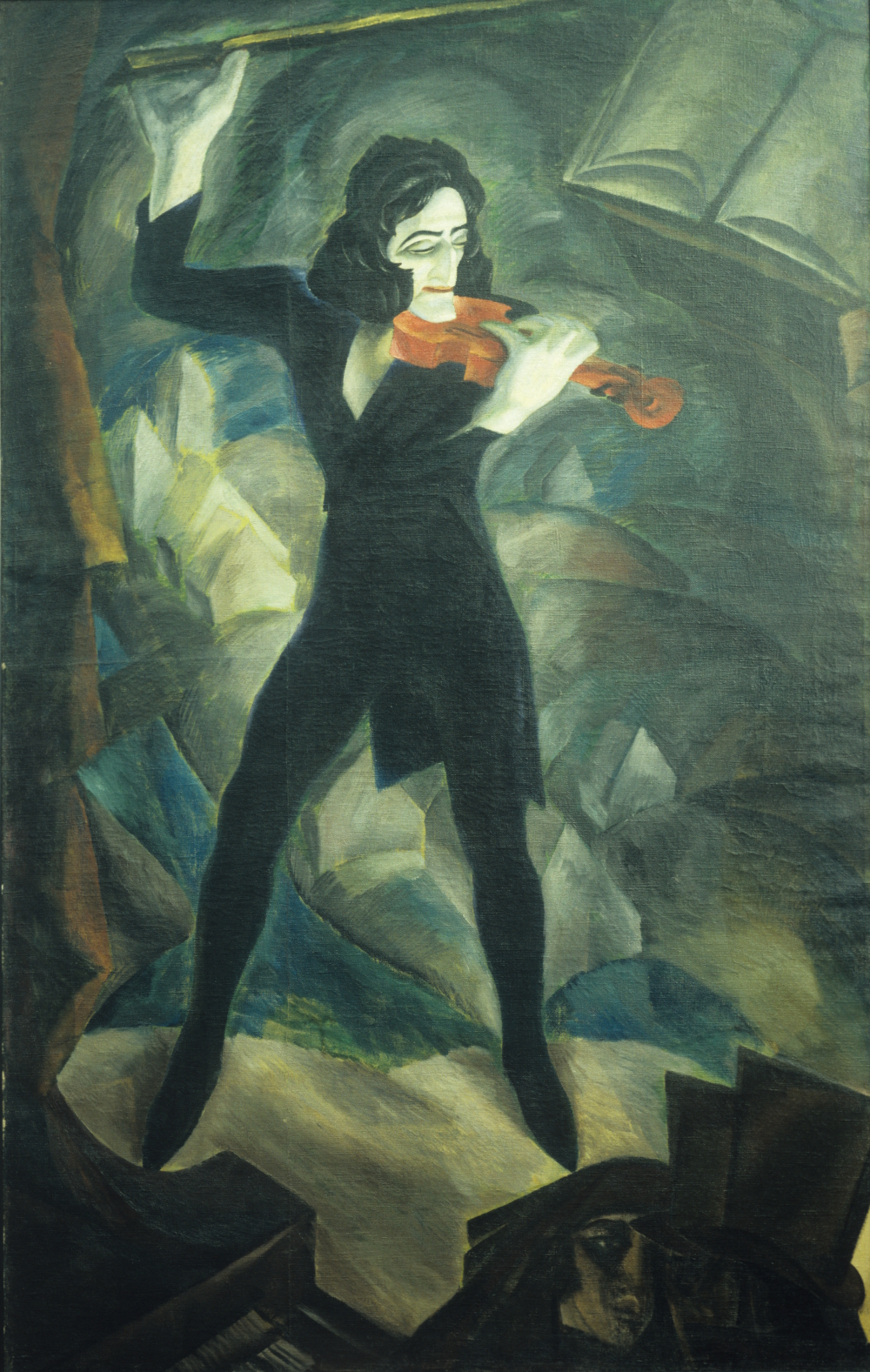
Paganini (Cubist Portrait by Kowarski)
Felicjan Szczęsny Kowarski · 1923
A 1923 Cubist-style portrait by Felicjan Szczęsny Kowarski showing Paganini as a thin violinist with a red violin. It was made long after his death.
It is a twentieth-century artistic portrait of Paganini, showing how later artists reinterpreted him as a subject.
About this source
What it is
This is a Cubist-style image of a pale, thin violinist in a black tailcoat playing a red violin, one arm raised with the bow held high. Angular dark-blue and green shapes surround him. Below, a shadowy hatted figure is partly visible, and a sheet of music or open book appears at upper right. It was made in 1923 by Felicjan Szczęsny Kowarski (1890–1948).
Why it matters
Kowarski was a twentieth-century artist, so this portrait reflects how a modern painter interpreted Paganini's legend rather than a record of his appearance. Cubism broke figures into angular shapes, a style that shows how the early twentieth century looked back on nineteenth-century virtuosos.
Look closer
- Which parts of the violinist are sharp and angular, and which parts are softer or hidden?
- Why might an artist in 1923 choose a Cubist style to show a musician from the 1800s?
- What might the shadowy hatted figure below suggest, and what does the picture leave unclear?
This painting is part of the curated material that grounds the AI version of Niccolò Paganini on Humy.ai — when students ask about related events, the AI can quote it and cite it.
More Niccolò Paganini sources
Browse all 93 →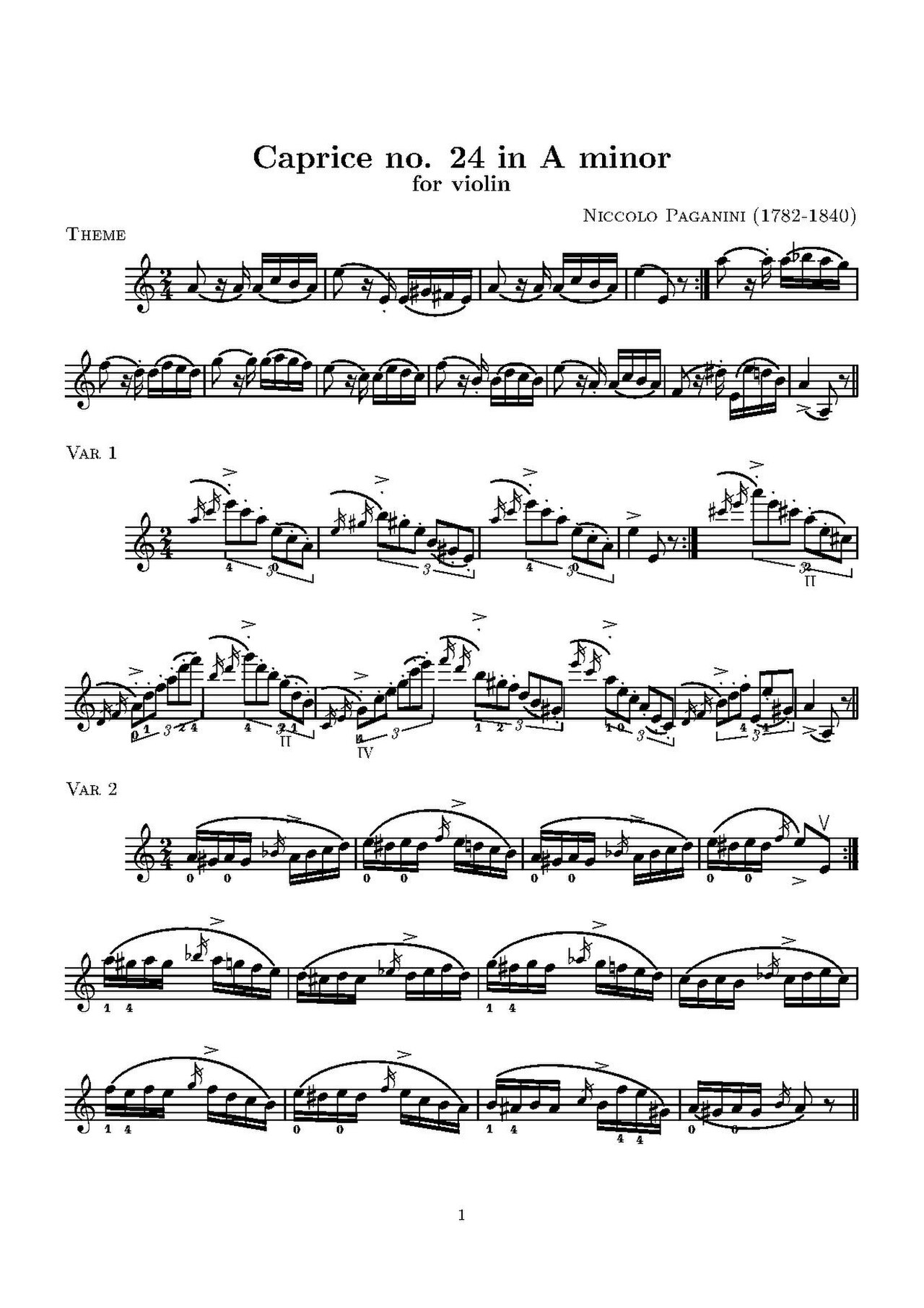 Book
Primary source
24 Caprices for Solo Violin
Niccolò Paganini · 1802–1817
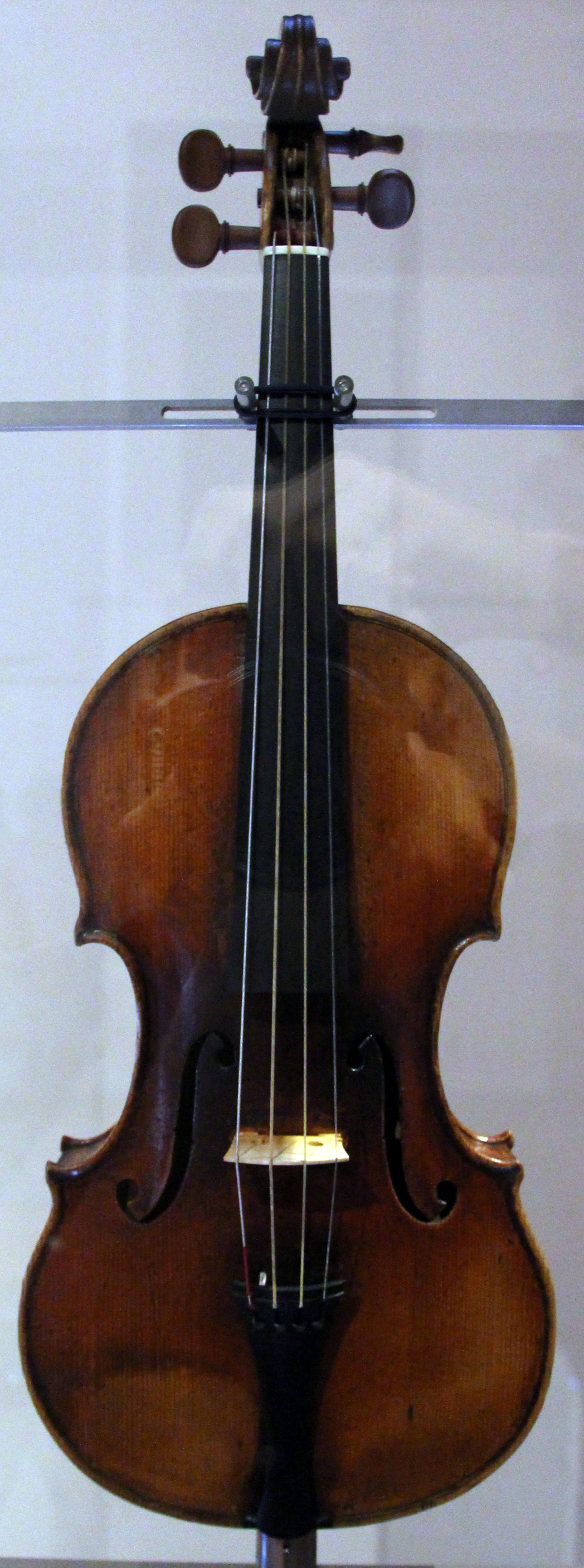 Artifact
Primary source
Il Cannone Guarnerius
Giuseppe Guarneri · 1743
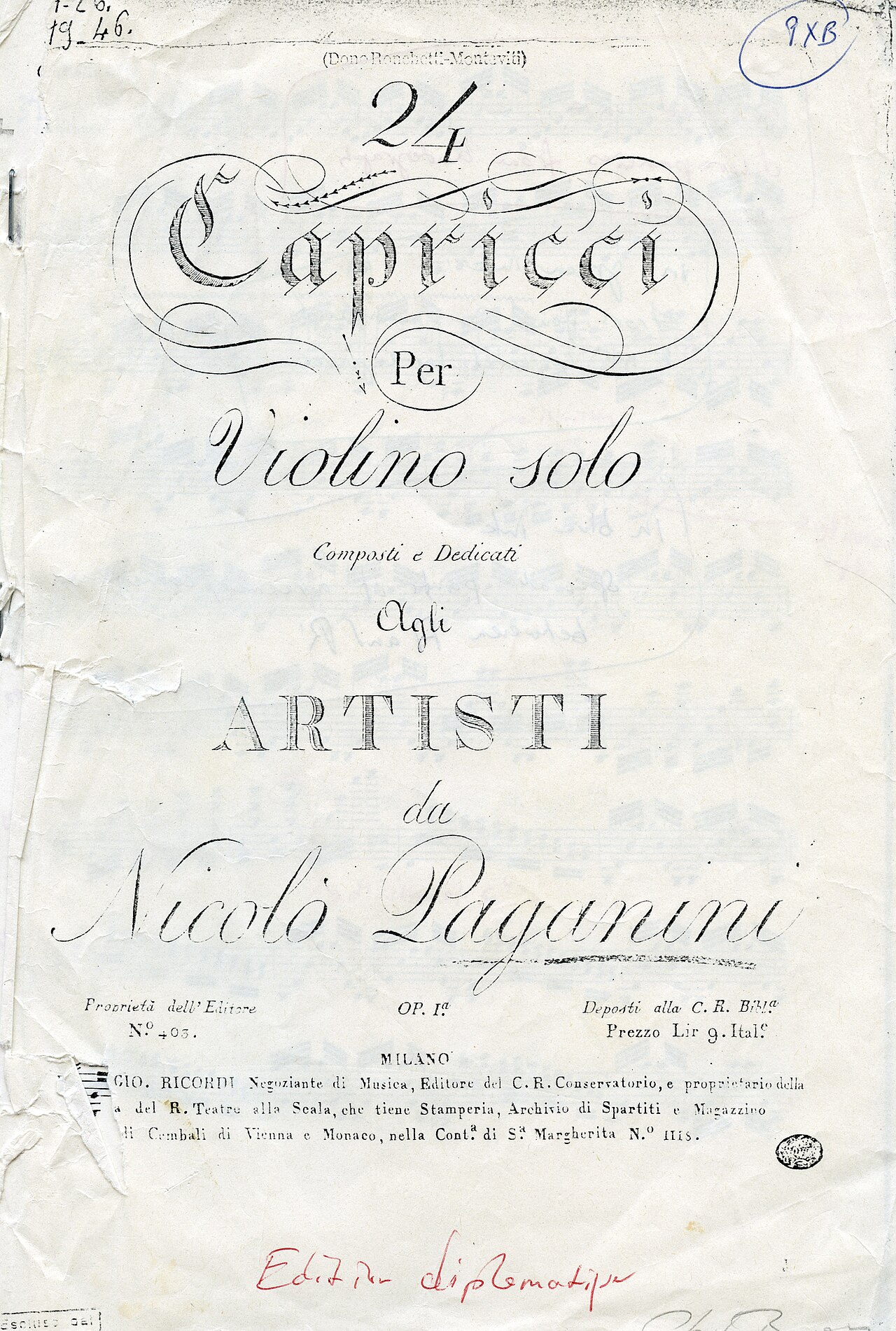 Document
Primary source
24 Capricci, prima edizione, Ricordi 1820
Niccolò Paganini · 1820
 Painting
Primary source
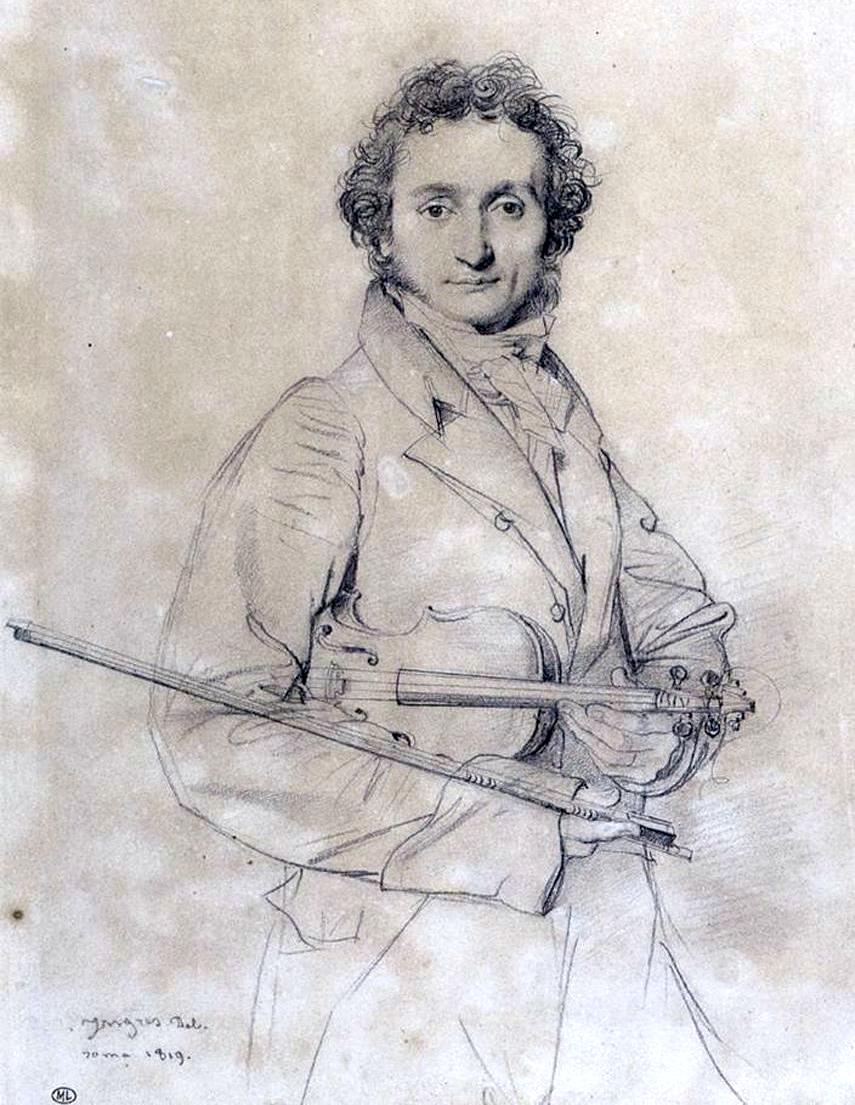
Portrait of Niccolò Paganini
Jean-Auguste-Dominique Ingres · 1819
Free account
Read every Niccolò Paganini source
Sign up free →
Ready when you are
Start chatting with Niccolò Paganini now.
20 messages free · No credit card · Available in 50+ languages.