


Secondary sourceArtifact1955
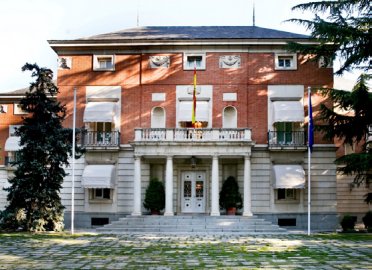
Palace of Moncloa
Diego Méndez (architect) · 1955
The official residence and workplace of the Spanish Prime Minister, made the seat of government by Adolfo Suárez in 1977.
Suárez made this palace the Prime Minister's official residence in 1977, and it gave its name to the Pacts negotiated there.
About this source
What it is
The Palace of Moncloa, in the Moncloa-Aravaca district of Madrid, is the official residence and workplace of the Prime Minister of Spain. The current building was constructed between 1949 and 1953 after the earlier palace was destroyed during the Spanish Civil War. In 1977 Adolfo Suárez moved the Presidency's headquarters here from the Villamejor Palace, reportedly for security reasons.
Why it matters
Moncloa has since become a symbol of the Spanish central government itself, its name used as shorthand for the national executive. Suárez's decision to relocate there, and the renovations he ordered, shaped how later prime ministers used and expanded the complex. The palace also gave its name to important political agreements negotiated there during the transition.
Look closer
- Why might security concerns have driven the choice of a more remote palace?
- How does a building's history reflect the history of the country more broadly, from Civil War destruction to post-war use?
- What changes did later prime ministers make, and what does that reveal about their different priorities?
This artifact is part of the curated material that grounds the AI version of Adolfo Suárez on Humy.ai — when students ask about related events, the AI can quote it and cite it.
More Adolfo Suárez sources
Browse all 99 →Primary source
Law for Political Reform
4 January 1977
 Speech
Primary source
Puedo prometer y prometo
Adolfo Suárez · 13 June 1977
Primary source
Statute of Autonomy of Catalonia of 1979
18 September 1979
 Photograph
Primary source
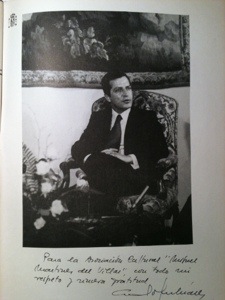
Portrait of Adolfo Suárez
30 March 1979
Free account
Read every Adolfo Suárez source
Sign up free →
Ready when you are
Start chatting with Adolfo Suárez now.
20 messages free · No credit card · Available in 50+ languages.