


Primary sourceArtifact1920
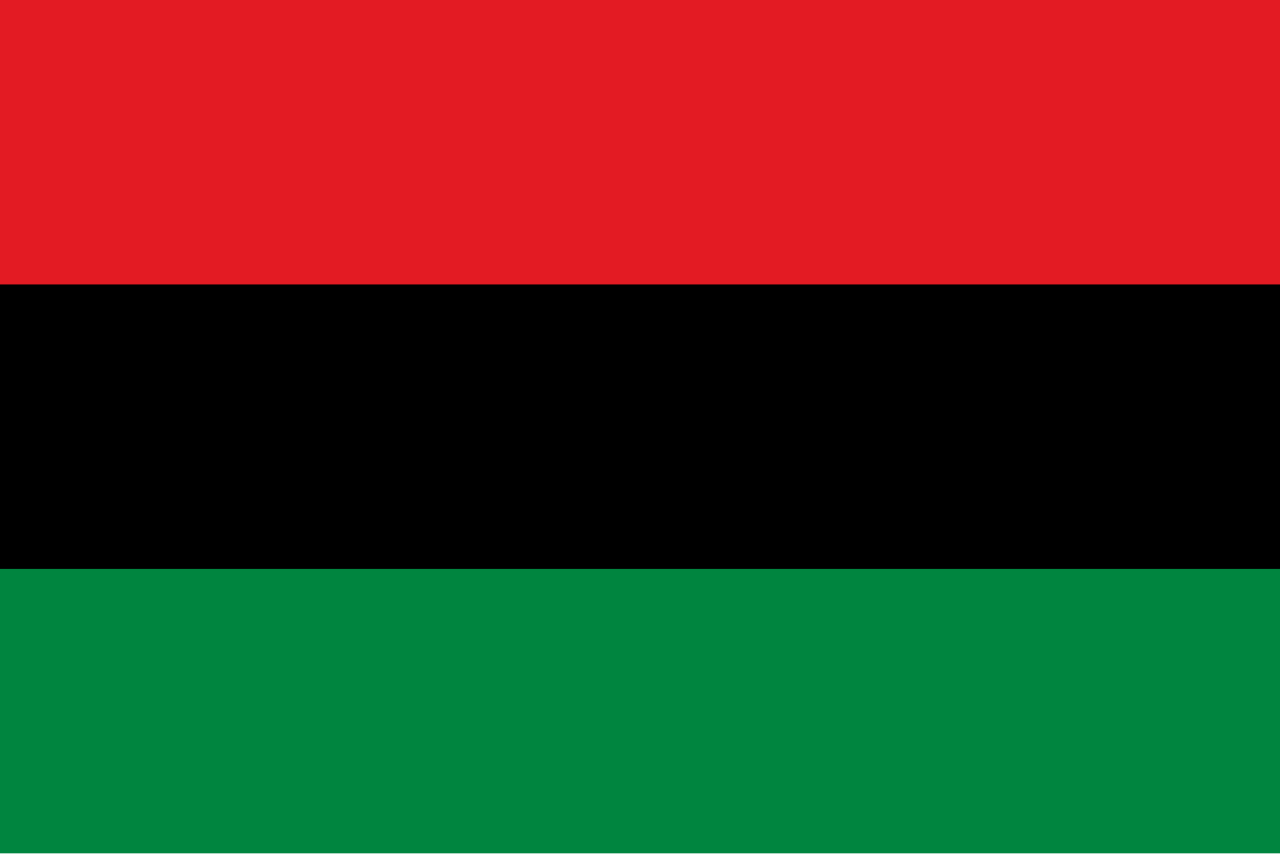
Pan-African Flag
1920
The red, black and green flag adopted by Garvey's UNIA in 1920 to represent and unify people of African descent worldwide.
This flag was commissioned and adopted by Garvey's UNIA as a unifying symbol for people of African descent.
Free Humy account · No credit card · 120,288 sources to read
About this source
What it is
This is the Pan-African flag, also called the Black Liberation flag or UNIA flag, made up of three equal horizontal bands of red, black, and green. The Universal Negro Improvement Association and African Communities League, led by Marcus Garvey, formally adopted it on August 13, 1920, during its convention at Madison Square Garden in New York City.
Why it matters
Garvey wanted a flag to promote racial pride and unite people of African descent, partly in response to a popular song that mocked Black people for lacking a flag. The colors were later explained as representing the blood shed for liberation, the people themselves, and the richness of Africa's land. The flag became a lasting symbol of Black nationalism and pride, used well beyond Garvey's own movement in later decades.
Look closer
- Why might having a flag matter so much to a political and social movement?
- What do the chosen colors seem meant to communicate?
- Why do you think this flag continued to be used long after Garvey's UNIA declined?
This artifact is part of the curated material that grounds the AI version of Marcus Garvey on Humy.ai — when students ask about related events, the AI can quote it and cite it.
More Marcus Garvey sources
Browse all 54 →Primary source
Philosophy and Opinions of Marcus Garvey
Marcus Garvey · 1923
 Newspaper article
Primary source
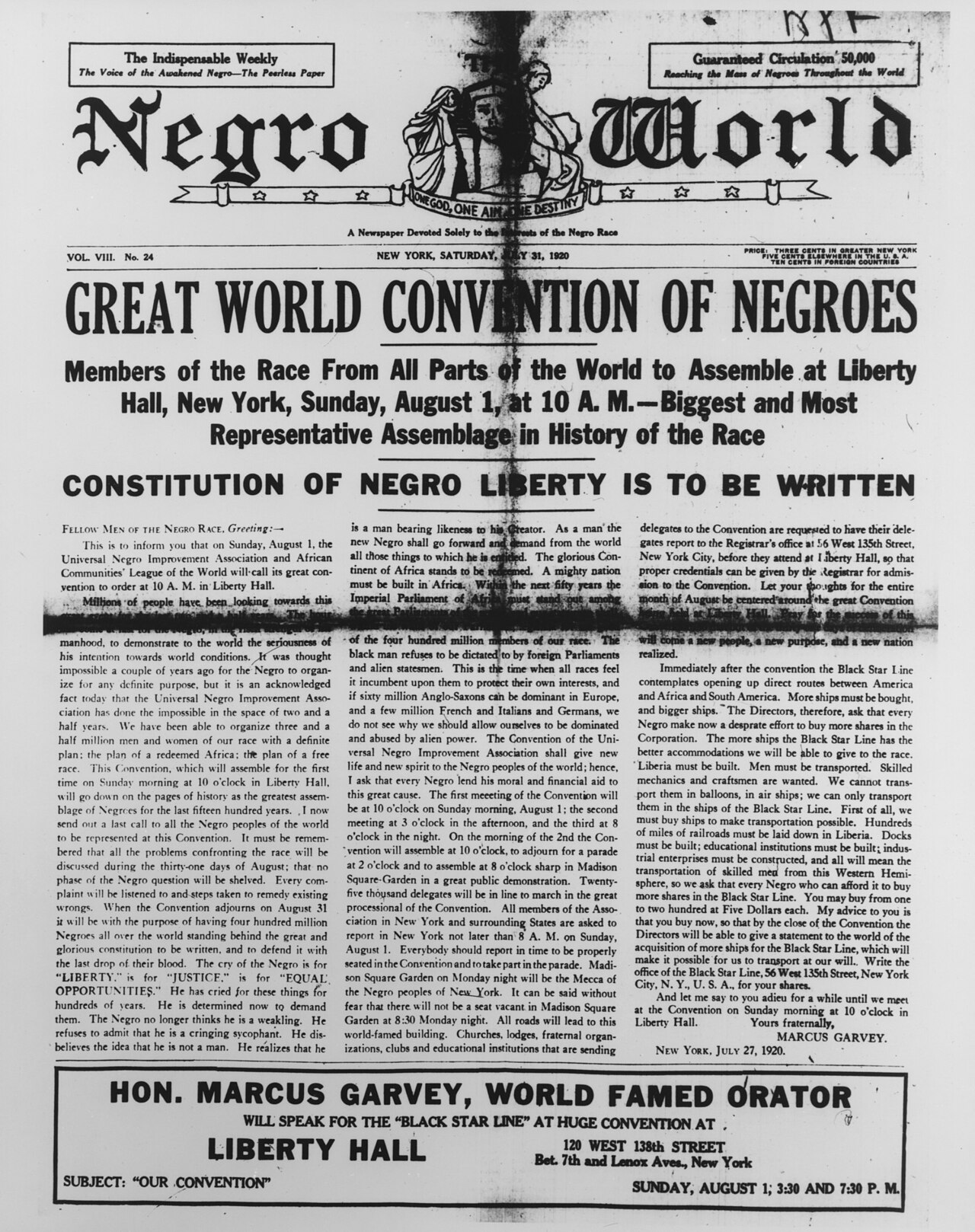
Negro World
Marcus Garvey · 1918
Primary source
Explanation of the Objects of the Universal Negro Improvement Association
Marcus Garvey · July 1921
Primary source
First Message to the Negroes of the World from Atlanta Prison
Marcus Garvey · 1925
Free account
Read every Marcus Garvey source
Sign up free →
Ready when you are
Start chatting with Marcus Garvey now.
20 messages free · No credit card · Available in 50+ languages.