


Primary sourceArtifactpublished 1911
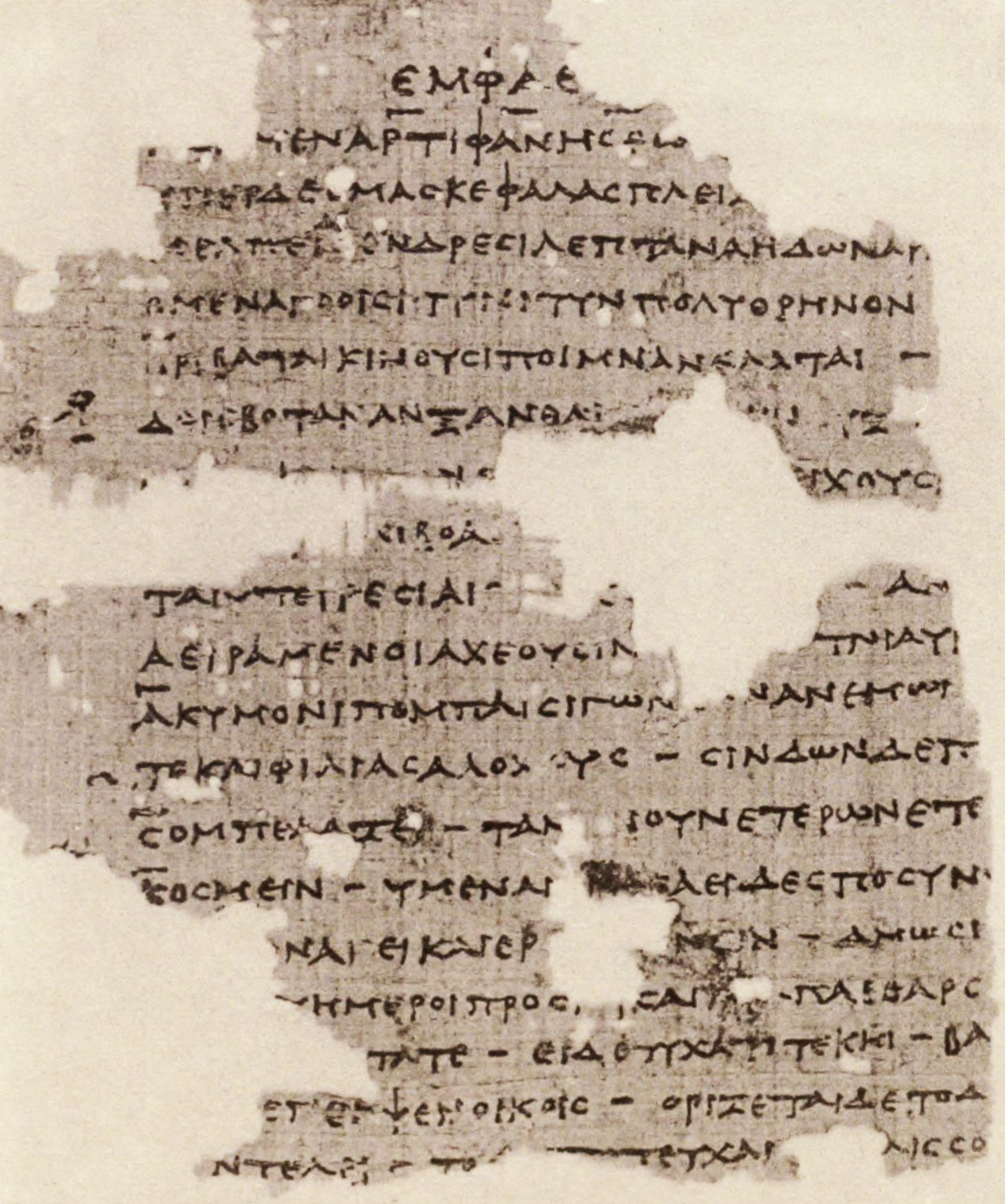
Papyrus Fragment of Euripides' Phaethon
Euripides · published 1911
A papyrus fragment preserving part of Euripides' lost play Phaethon, published in 1911.
A papyrus fragment preserving part of Euripides' own lost play Phaethon.
About this source
What it is
This brownish papyrus fragment contains several lines written in ancient Greek uncial script. It preserves part of Euripides' lost play Phaethon and was published by Schubart in 1911. It is held in Berlin as P.Berol. inv. 9771.
Why it matters
Phaethon is one of the plays by Euripides that did not survive complete into the modern era. Fragments like this one are the only physical evidence scholars have for its content and language. The work of editors such as Schubart in bringing such fragments to light has shaped what we can know about Euripides' lost works.
Look closer
- What can you tell about the condition of ancient papyrus from the torn and holed edges shown here?
- Why do you think only fragments, rather than whole plays, often survive from antiquity?
- What role did modern scholars play in making this ancient text available to read today?
This artifact is part of the curated material that grounds the AI version of Euripides on Humy.ai — when students ask about related events, the AI can quote it and cite it.
Ready when you are
Start chatting with Euripides now.
20 messages free · No credit card · Available in 50+ languages.