


Primary sourceArtifact2nd century AD
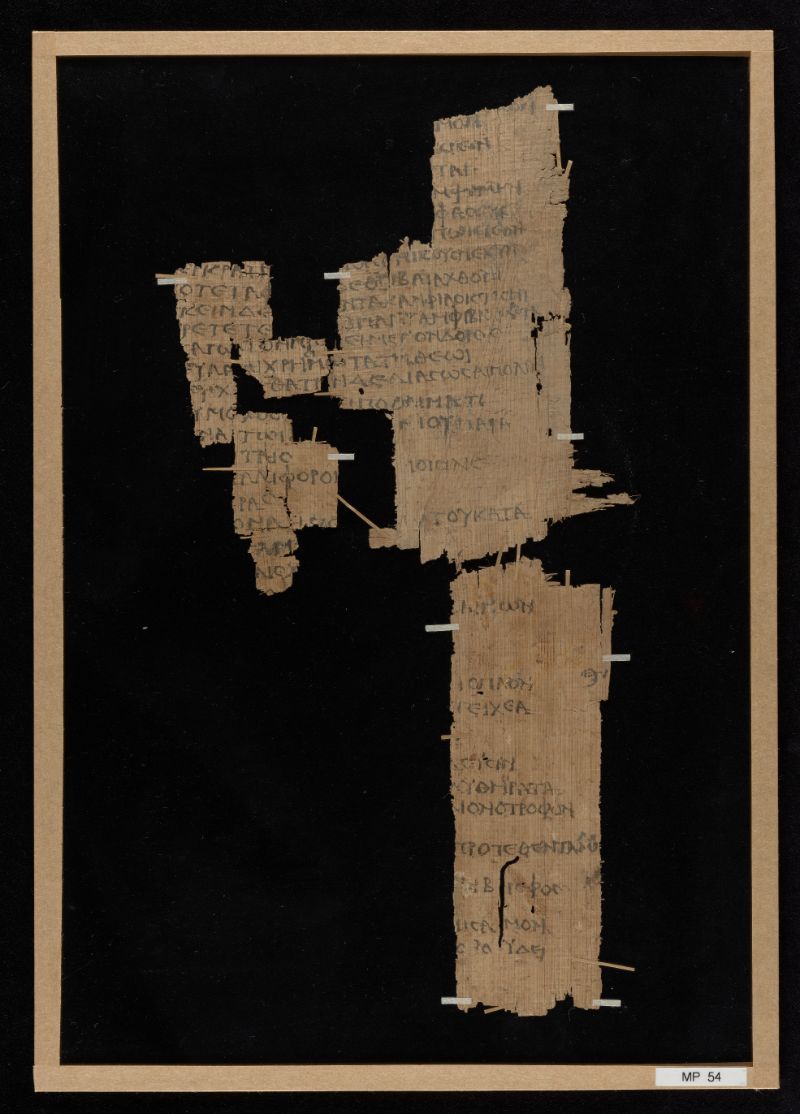
Papyrus Fragment of Euripides' Phoenissae
Unknown · 2nd century AD
A 2nd-century Greek papyrus fragment from Egypt preserving part of Euripides' play Phoenissae, possibly copied as a student exercise.
A papyrus fragment preserving part of Euripides' own play Phoenissae, found in Egypt.
About this source
What it is
This papyrus fragment, written in Greek in Egypt, preserves part of Euripides' play Phoenissae. Editors date it to the second century AD. The text may have been copied as a student exercise. On the other side of the papyrus is an unrelated list of persons connected with villages in the Arsinoite nome. It is held by the Chester Beatty in Ireland.
Why it matters
This fragment shows how Euripides' plays kept being copied and studied in Egypt centuries after his death, far from Athens where he wrote. If it really is a student's exercise, it suggests his plays were used to teach reading and writing Greek, showing how deeply his work had become part of education in the ancient world.
Look closer
- What does the unrelated list on the other side of the papyrus tell you about how papyrus was reused?
- Why might a student have been asked to copy out lines from Euripides?
- What does finding this fragment in Egypt suggest about how far Euripides' plays travelled?
This artifact is part of the curated material that grounds the AI version of Euripides on Humy.ai — when students ask about related events, the AI can quote it and cite it.
Ready when you are
Start chatting with Euripides now.
20 messages free · No credit card · Available in 50+ languages.