


Primary sourcePainting
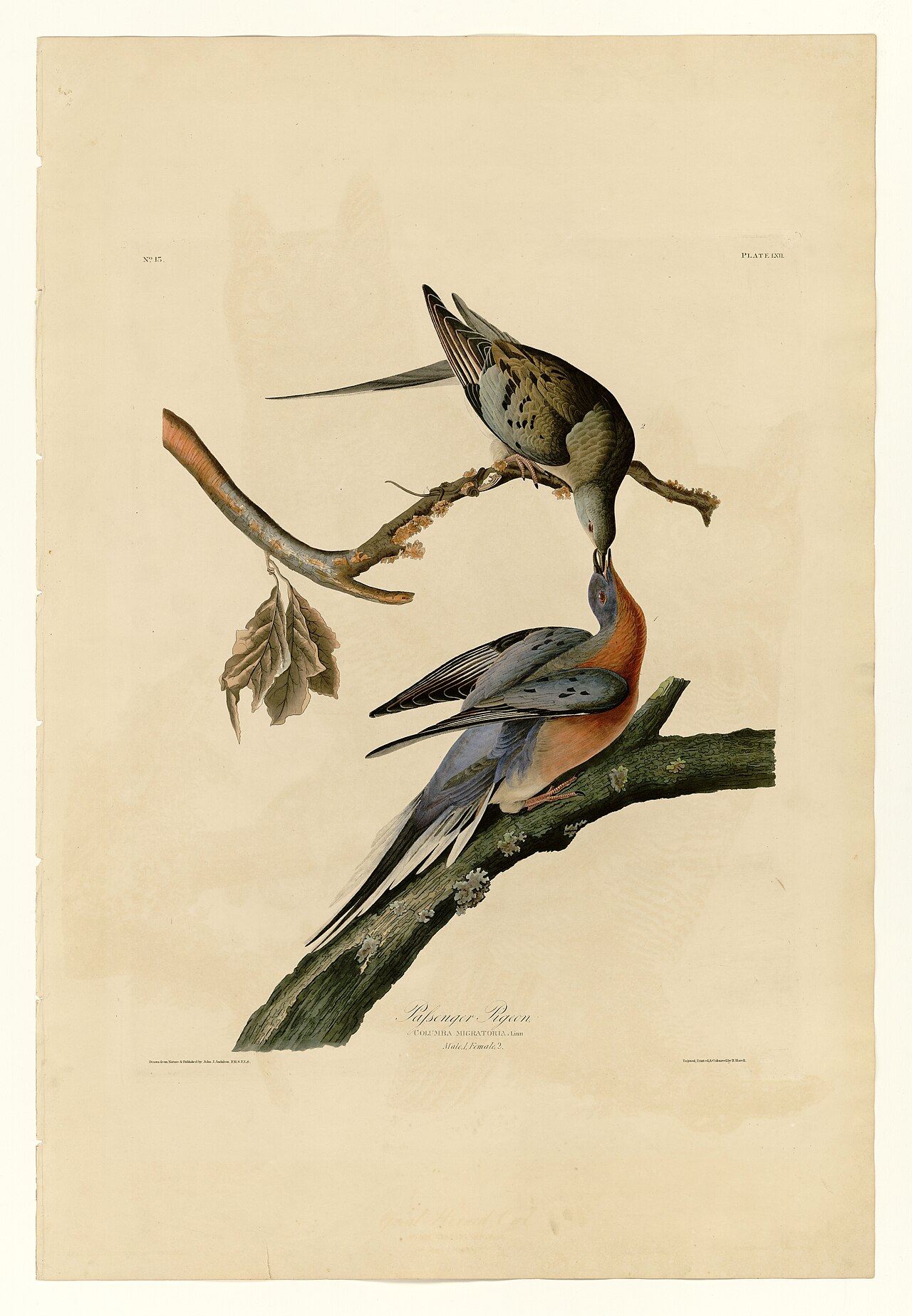
Passenger Pigeon
John James Audubon
Audubon's engraving of the once-abundant passenger pigeon, a species that went extinct in 1914.
Audubon's own engraving, documenting a species that later went extinct, reflecting his role as a naturalist-observer.
About this source
What it is
A hand-coloured engraving and aquatint by John James Audubon, published as Plate 62 of The Birds of America, showing a male and female passenger pigeon.
Why it matters
Audubon depicted the passenger pigeon when it still existed in enormous flocks across North America. The species later went extinct, making this image a valuable historical record of a bird that no longer exists and a powerful teaching tool about extinction and how quickly abundant species can disappear.
Look closer
- What does it mean that a bird once seen in huge flocks is now extinct?
- Why might an artist's record become one of the few ways future generations can see a vanished species?
- What can't a still image tell us about how this bird actually lived and behaved in large flocks?
This painting is part of the curated material that grounds the AI version of John James Audubon on Humy.ai — when students ask about related events, the AI can quote it and cite it.
More John James Audubon sources
Meet the AI John James Audubon →
Ready when you are
Start chatting with John James Audubon now.
20 messages free · No credit card · Available in 50+ languages.