


Primary sourceDocument1783
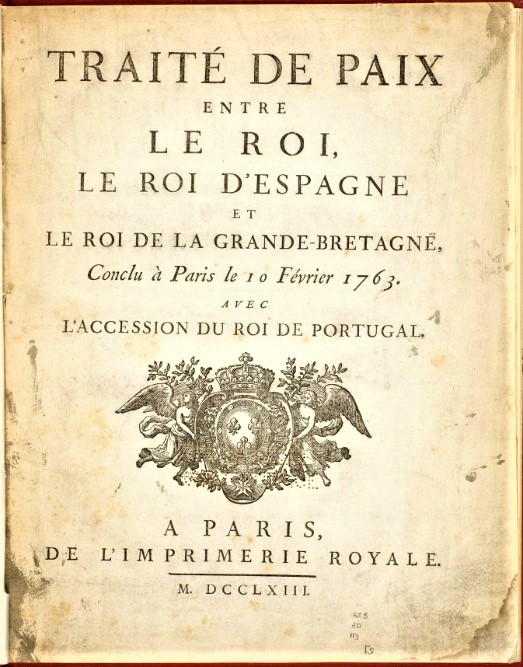
Peace of Paris (1783)
1783
The set of 1783 treaties ending the American Revolutionary War, through which Spain under Charles III regained Florida and Menorca.
This settlement returned Florida and Menorca to Spain under Charles III, his greatest diplomatic recovery.
Free Humy account · No credit card · 120,912 sources to read
About this source
What it is
The Peace of Paris of 1783 was a set of treaties ending the American Revolutionary War. Representatives of Great Britain signed a treaty with the United States in Paris, and separate treaties at Versailles with France and Spain, the latter representing King Charles III. The Dutch Republic's treaty followed in 1784.
Why it matters
For Charles III, the settlement was a major diplomatic success: Spain recovered Minorca and both West and East Florida from Britain, though not Gibraltar, which Spain had long sought. The treaties mark the end of Britain's first empire in North America and show how European rivalries, alliances, and colonial ambitions were tied together in a single negotiation involving Britain, France, Spain, the Dutch Republic, and the new United States.
Look closer
- Why might Spain have joined the war against Britain even though it was not one of the Thirteen Colonies?
- What does Spain's gain of Florida and Minorca, but not Gibraltar, suggest about the limits of its negotiating power?
- How did the interests of several different nations shape the final settlement?
This document is part of the curated material that grounds the AI version of Charles III of Spain on Humy.ai — when students ask about related events, the AI can quote it and cite it.
More Charles III of Spain sources
Browse all 94 →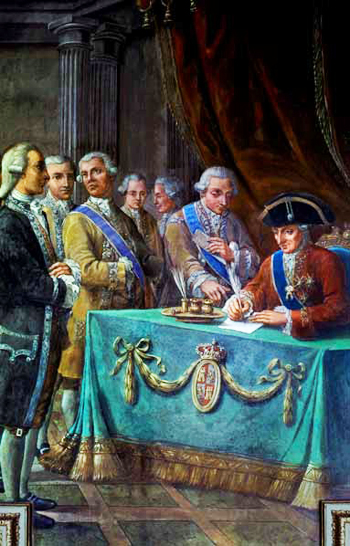 Document
Secondary source
Free Trade Regulations
Pere Pau Muntanya · 1778
 Painting
Primary source
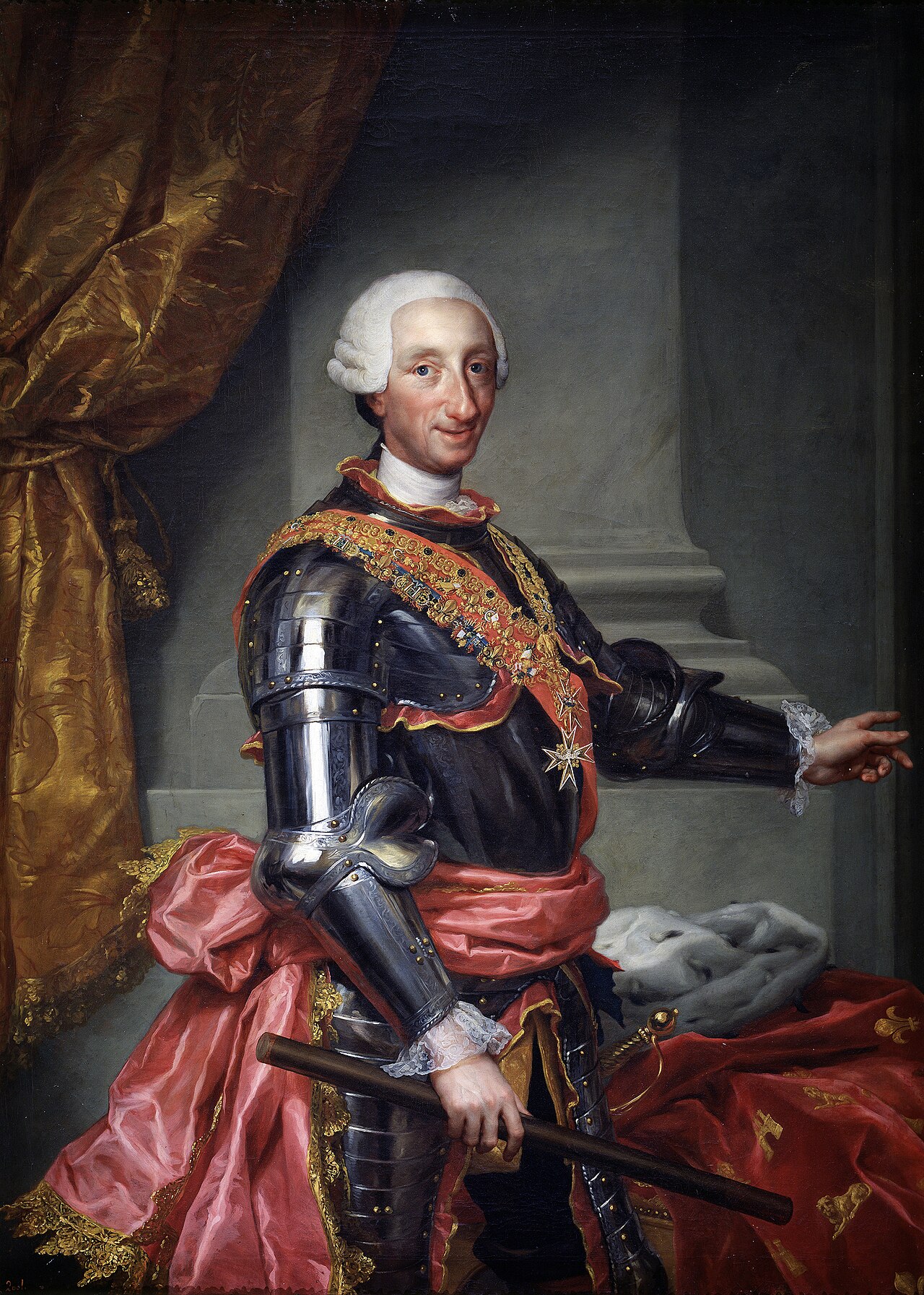
Charles III
Anton Raphael Mengs · 1767
 Painting
Primary source
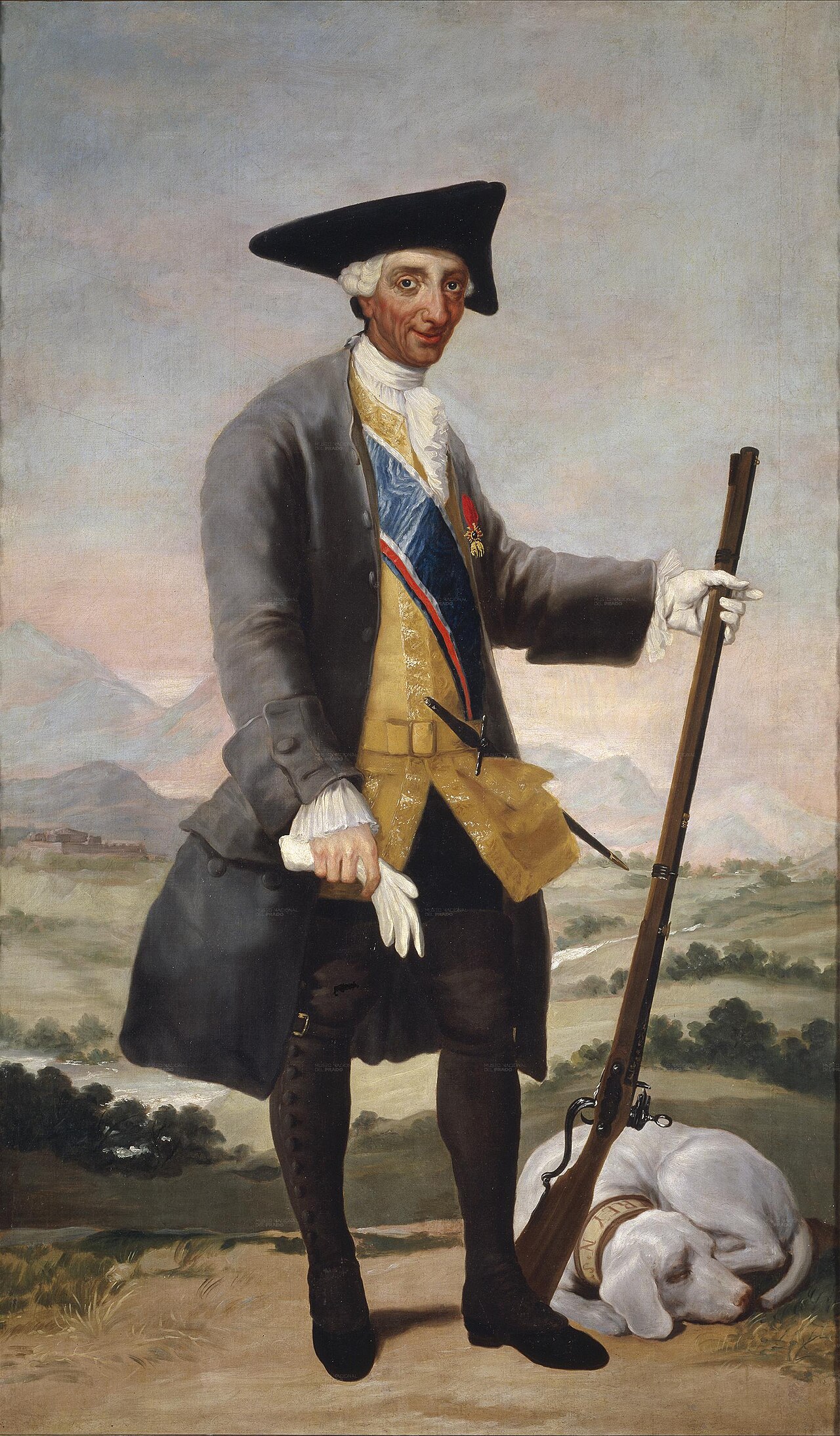
Charles III in Hunting Dress
Francisco Goya · 1786
 Painting
Primary source
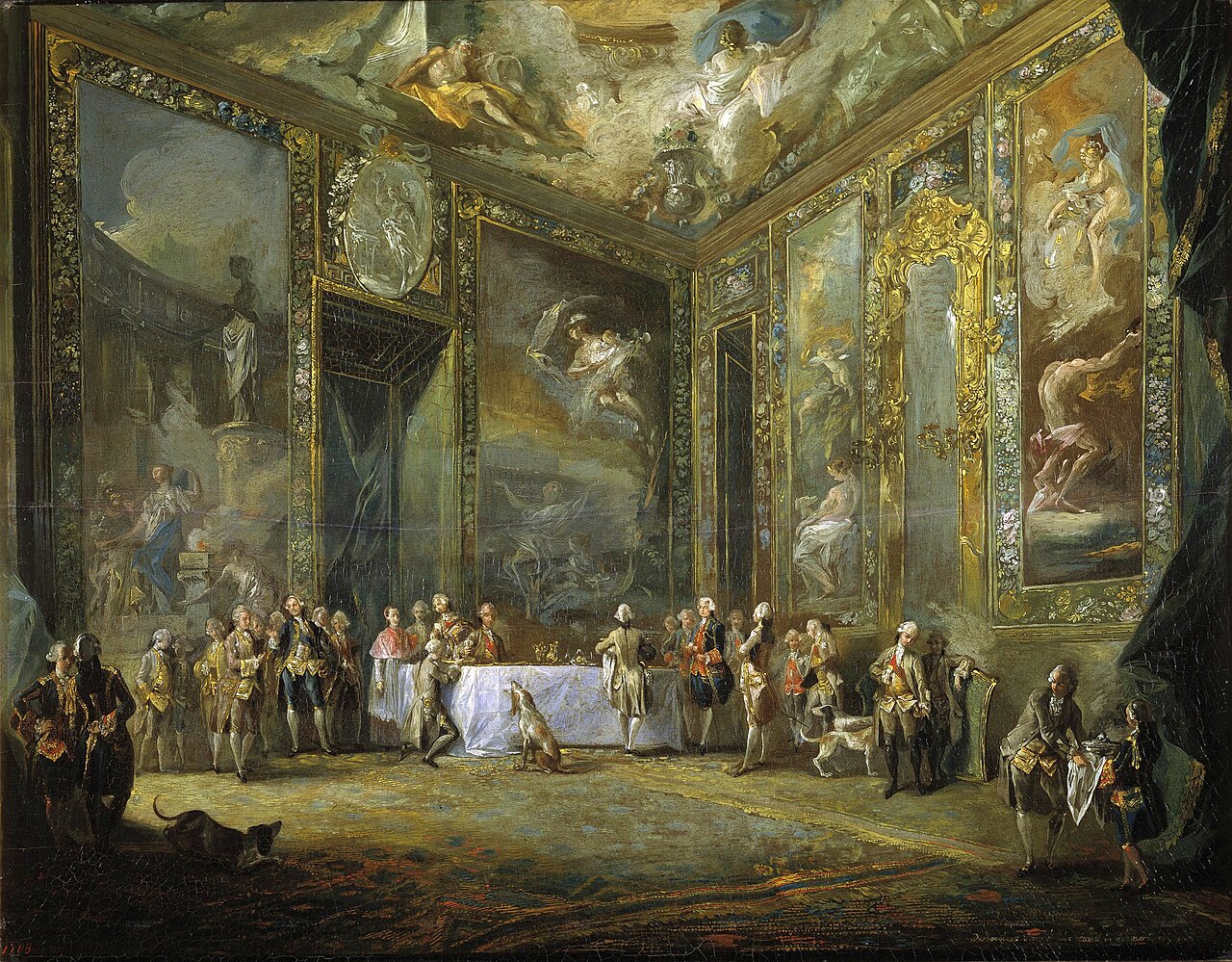
Charles III dining before the Court
Luis Paret y Alcázar · 1775


Free account
Read every Charles III of Spain source
Sign up free →
Ready when you are
Start chatting with Charles III of Spain now.
20 messages free · No credit card · Available in 50+ languages.