


Primary sourceDocument26 December 1805
Peace of Pressburg
26 December 1805
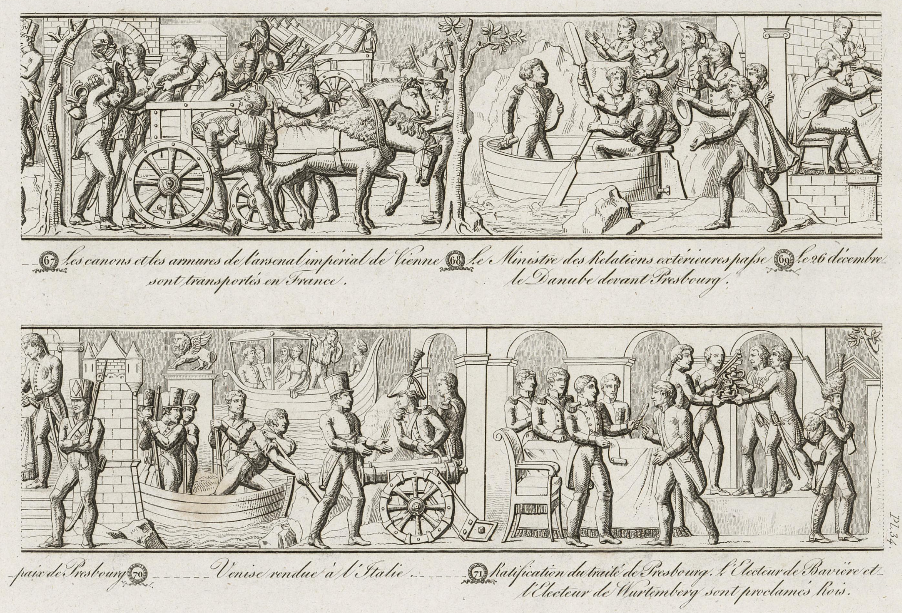
The 1805 treaty Francis was forced to sign with Napoleon after the defeat at Austerlitz, costing Austria major territories.
The treaty Francis signed after his defeat at Austerlitz, which set the stage for the empire's collapse.
About this source
What it is
This treaty was signed in Pressburg on 26 December 1805 between Napoleon Bonaparte and Francis II, following the French victory over the Austrians and Russians at Austerlitz. It was negotiated by representatives including Johann I Joseph, Prince of Liechtenstein, and Ignác Gyulay for Austria, and Talleyrand for France.
Why it matters
The treaty forced Austria to give up large territories in Italy and southern Germany and to recognise new kingly titles among German rulers, which undermined the structure of the Holy Roman Empire. Within months, Francis renounced his title as Holy Roman Emperor, making this treaty a direct cause of the empire's end.
Look closer
- What does the list of territorial losses suggest about Austria's position after the battle?
- Why might an artist later choose to show this treaty-signing in a decorative engraving?
- What does this treaty leave out about how ordinary people in the ceded territories were affected?
This document is part of the curated material that grounds the AI version of Francis II, Holy Roman Emperor on Humy.ai — when students ask about related events, the AI can quote it and cite it.
More Francis II, Holy Roman Emperor sources
Browse all 91 →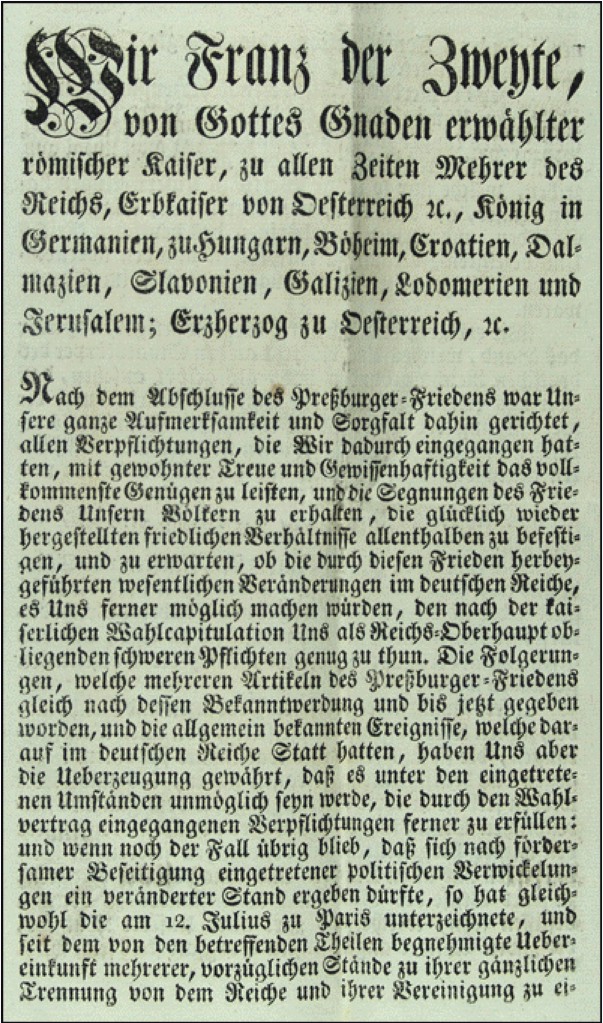 Document
Primary source
Declaration of the Laying Down of the Imperial Crown
Francis II, Holy Roman Emperor · 6 August 1806
 Document
Primary source
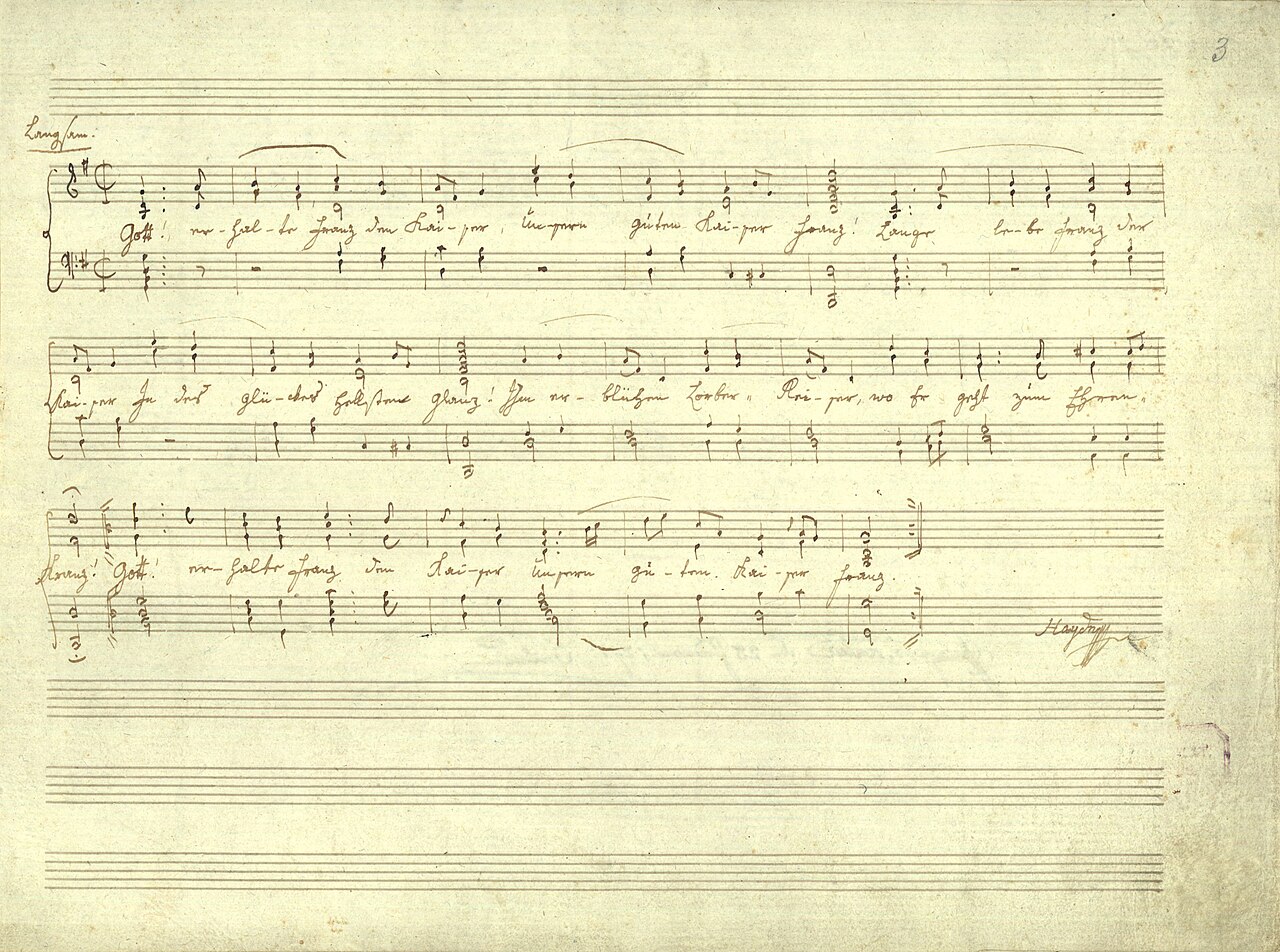
Gott erhalte Franz den Kaiser
Joseph Haydn · 1797
 Document
Primary source
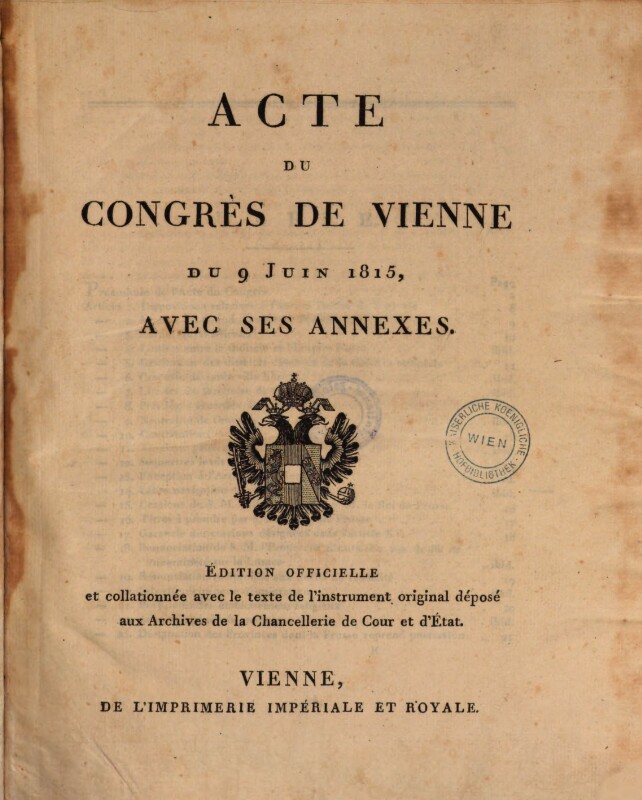
Final Act of the Congress of Vienna
9 June 1815
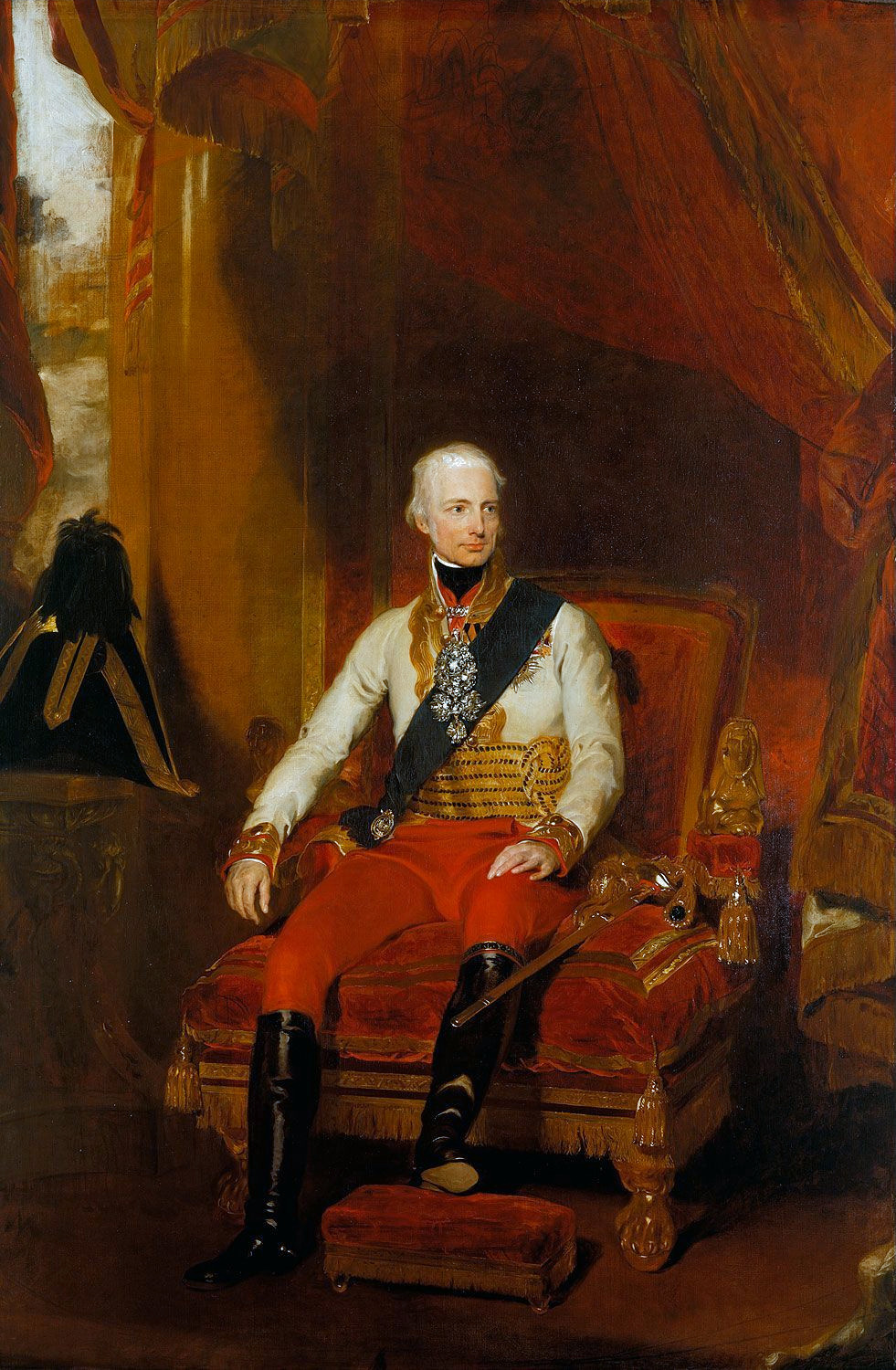 Painting
Primary source
Francis I, Emperor of Austria
Thomas Lawrence · 1818-1819
Free account
Read every Francis II, Holy Roman Emperor source
Sign up free →
Ready when you are
Start chatting with Francis II, Holy Roman Emperor now.
20 messages free · No credit card · Available in 50+ languages.