


Tertiary sourceBook1910
Penn, William entry in A Short Biographical Dictionary of English Literature, 1910
John William Cousin · 1910
A short literary dictionary entry on William Penn as a Quaker writer, from John William Cousin's 1910 dictionary of English literature.
This literary dictionary entry presents Penn as a Quaker writer whose books and imprisonment led to the land grant that founded Pennsylvania.
Free Humy account · No credit card · 120,912 sources to read
About this source
What it is
This is a short entry on William Penn in A Short Biographical Dictionary of English Literature, by John William Cousin, published in London by J. M. Dent and Sons in 1910. It is a reference entry, not a work written by Penn. It describes him as a Quaker apologist, a writer who defended his faith. The entry lists some of his works, including The Sandy Foundation Shaken, c. 1668, and No Cross, No Crown, 1668, and it notes that he was imprisoned in the Tower of London.
Why it matters
The entry links Penn's writing to his religious beliefs. It explains that his change of views led to a quarrel with his father, and that his writing career began after this break. It also records that he succeeded to a fortune in 1670 and that a claim against the government was settled in 1681 by a grant of territory that became Pennsylvania. This shows how his literary work and his political fortunes were connected.
Look closer
- Which of Penn's books does the entry name, and what do their titles suggest about his beliefs?
- How does the entry explain the link between Penn's writing and the land grant he received?
- What would you need to read in Penn's own books to test the entry's summary of them?
This book is part of the curated material that grounds the AI version of William Penn on Humy.ai — when students ask about related events, the AI can quote it and cite it.
More William Penn sources
Browse all 88 →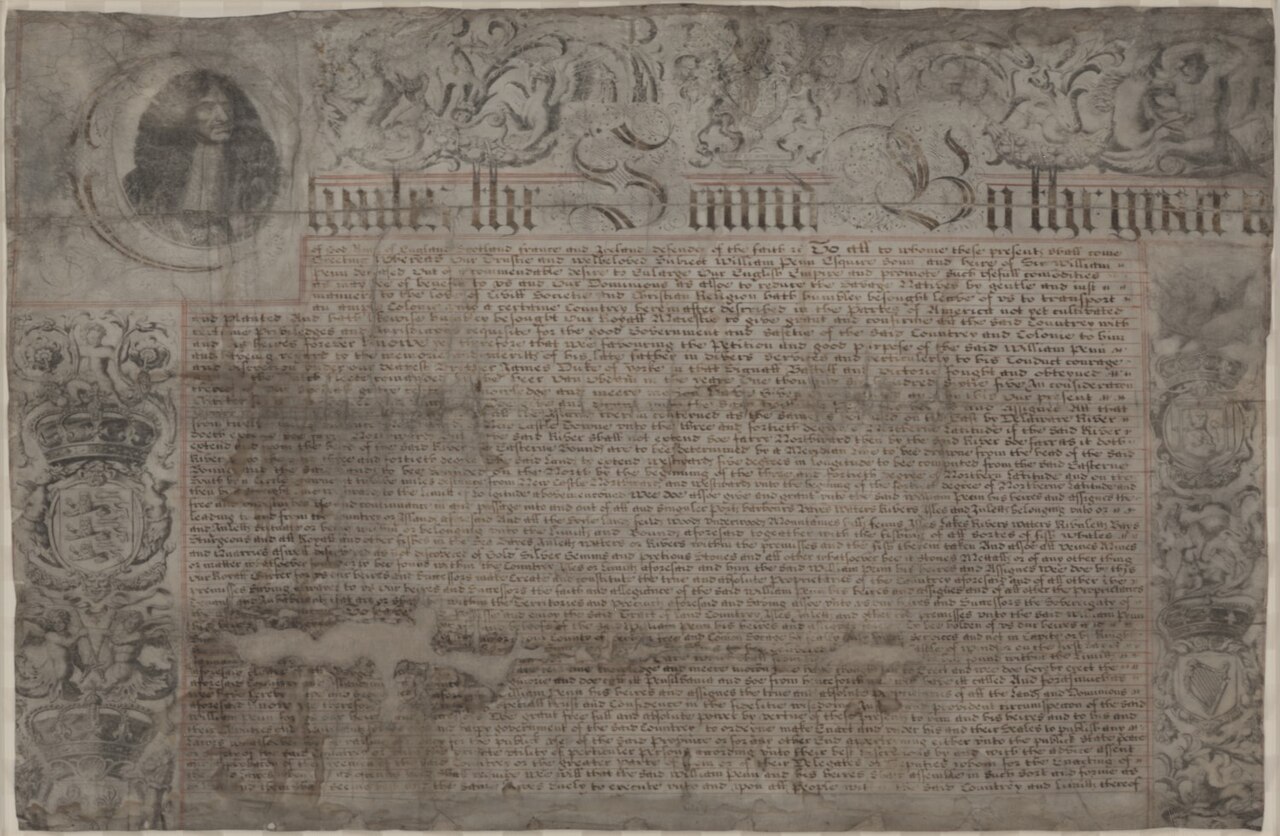 Document
Primary source
Charter for the Province of Pennsylvania
King Charles II of England · 4 March 1681
 Document
Primary source
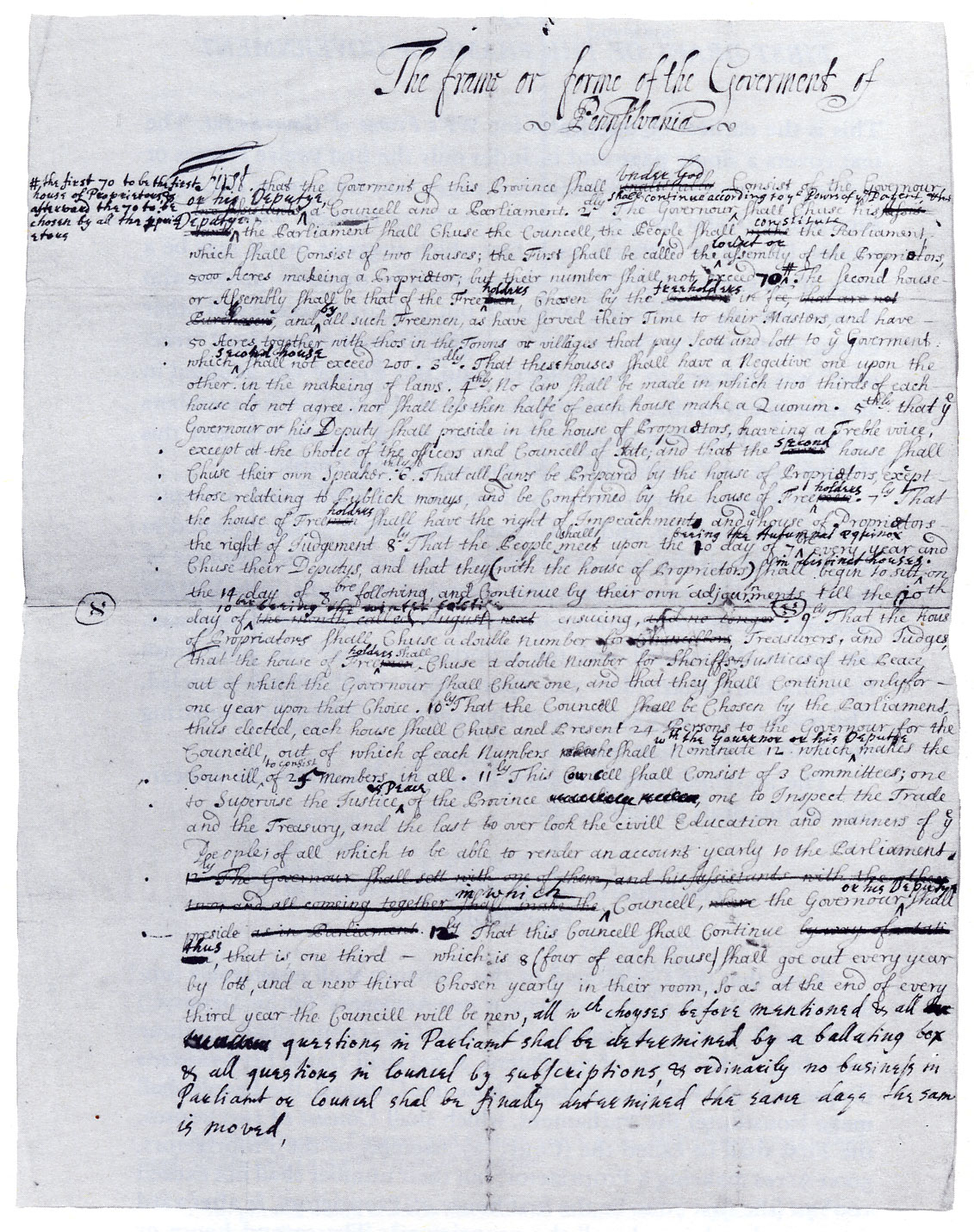
Frame of Government of Pennsylvania
William Penn · 1682
 Document
Primary source
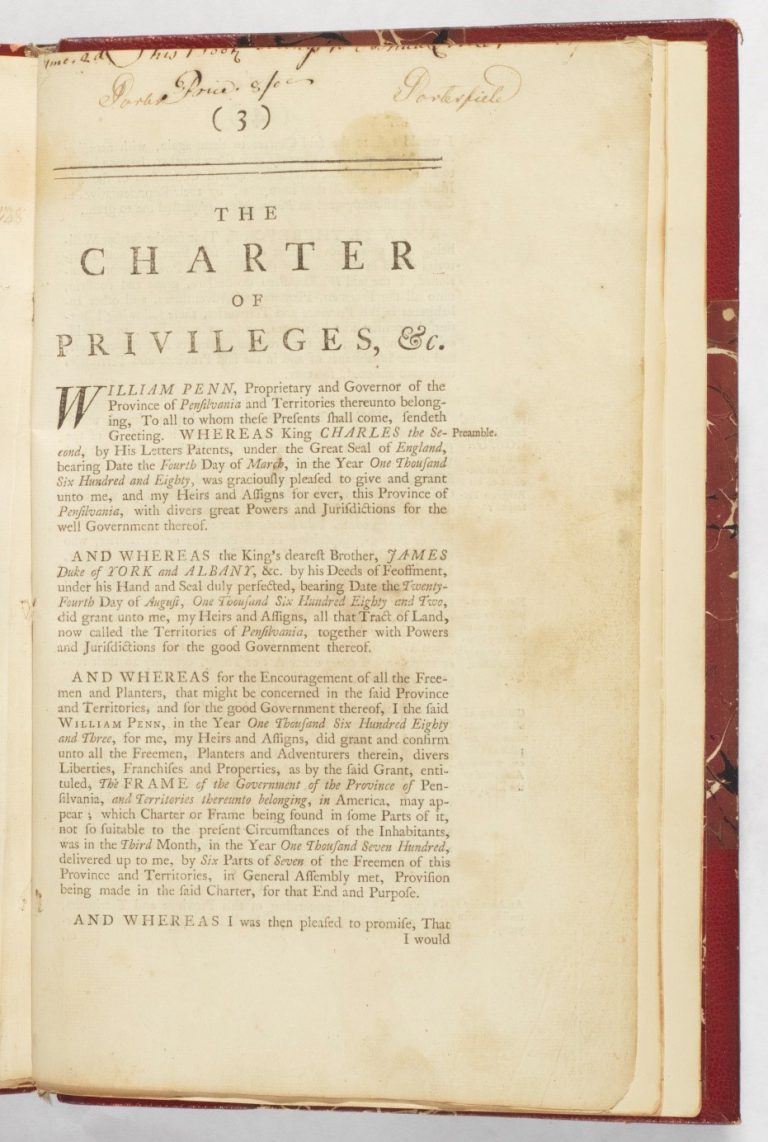
Charter of Privileges
William Penn · 28 October 1701
 Artifact
Primary source
Wampum Belt Presented to William Penn at the Great Treaty
Free account
Read every William Penn source
Sign up free →
Ready when you are
Start chatting with William Penn now.
20 messages free · No credit card · Available in 50+ languages.