


Tertiary sourceBook1905
Penn, William entry in The New International Encyclopaedia, 1905
1905
An encyclopedia article on William Penn, the English Quaker and founder of Pennsylvania, published in 1905. It is a later summary of his life.
This encyclopedia article describes Penn's conversion to Quakerism and his troubled youth, which shaped the figure the archive studies.
Free Humy account · No credit card · 120,912 sources to read
About this source
What it is
This is an encyclopedia article on William Penn in The New International Encyclopaedia, published in New York by Dodd, Mead and Co. in 1905. It is a reference entry, not a work written by Penn. It describes him as a celebrated English Quaker and the founder of Pennsylvania, educated chiefly at Christ's Church, Oxford, where he became a Quaker. The article tells how he and some companions attacked fellow-students and tore the robes from their backs, and how he was expelled from the university for this conduct.
Why it matters
The article shows how an early twentieth-century reference work presented Penn: as a zealous convert whose enthusiasm sometimes turned into conflict. It also records his father, Sir William Penn, who was angry at his behaviour and sent him to travel on the Continent and to Ireland. The article's own text notes that Penn spent time at the court of Louis XIV and was imprisoned in Cork for attending a Quaker meeting.
Look closer
- How does the article describe Penn's early faith, and what words does it use to judge his conduct?
- What does the article leave out about the Quakers and their treatment in England?
- Who wrote this entry, and what might they have wanted readers to think of Penn?
This book is part of the curated material that grounds the AI version of William Penn on Humy.ai — when students ask about related events, the AI can quote it and cite it.
More William Penn sources
Browse all 88 →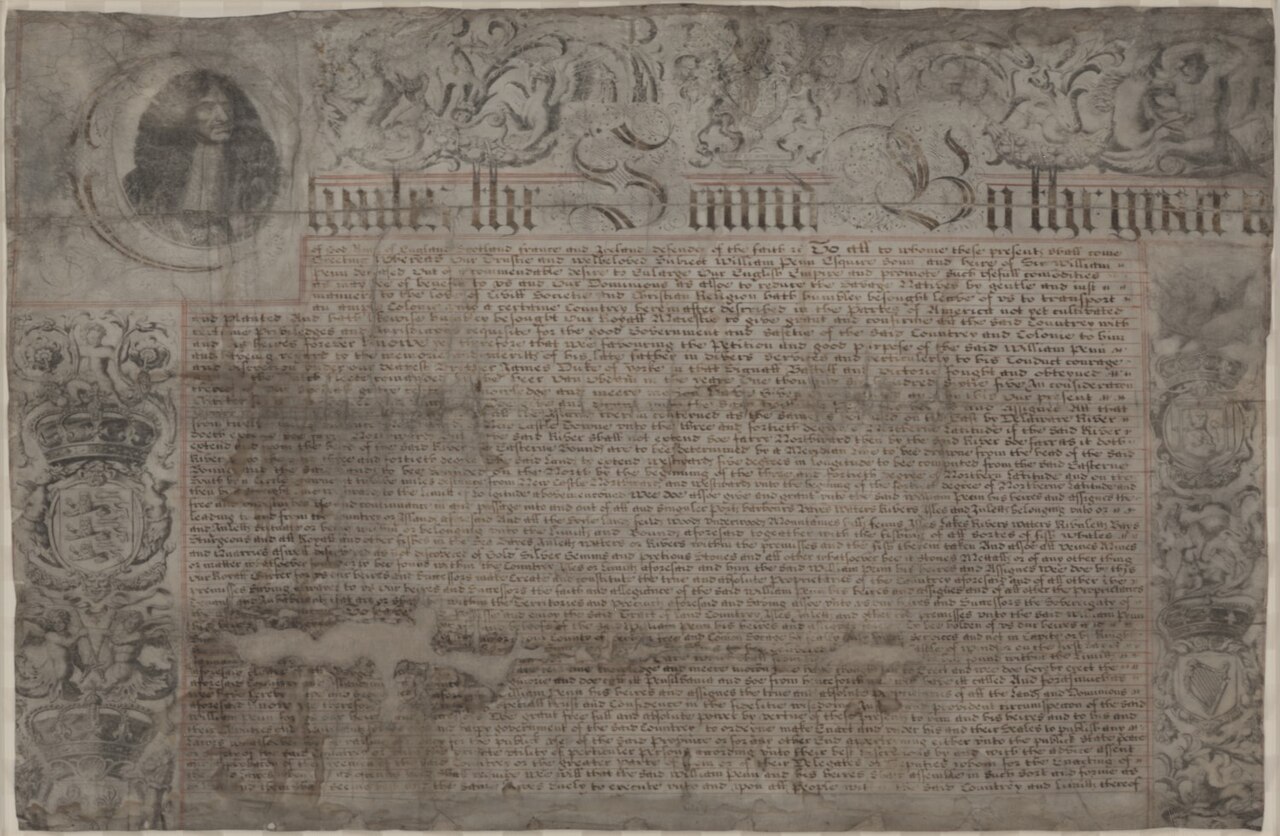 Document
Primary source
Charter for the Province of Pennsylvania
King Charles II of England · 4 March 1681
 Document
Primary source
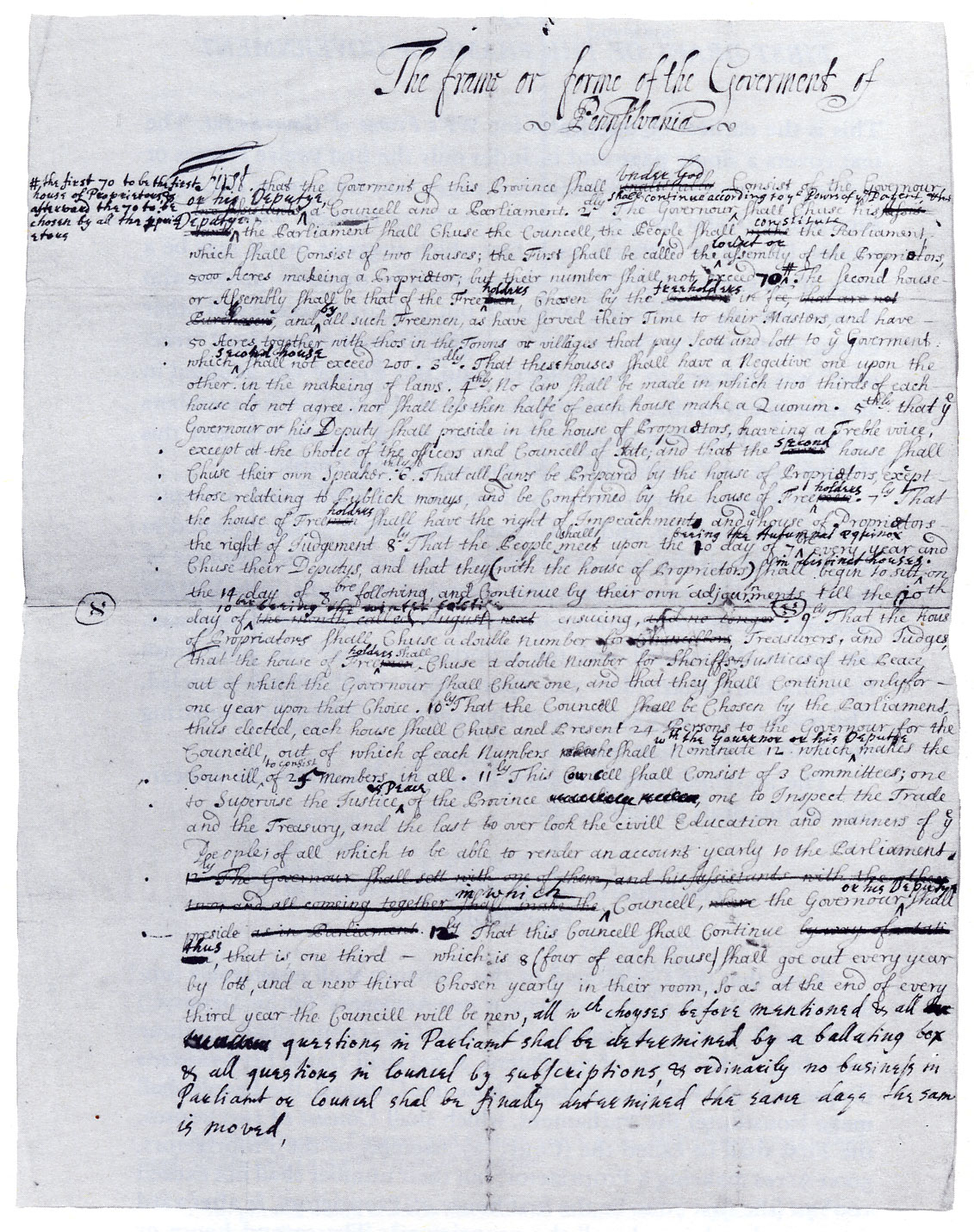
Frame of Government of Pennsylvania
William Penn · 1682
 Document
Primary source
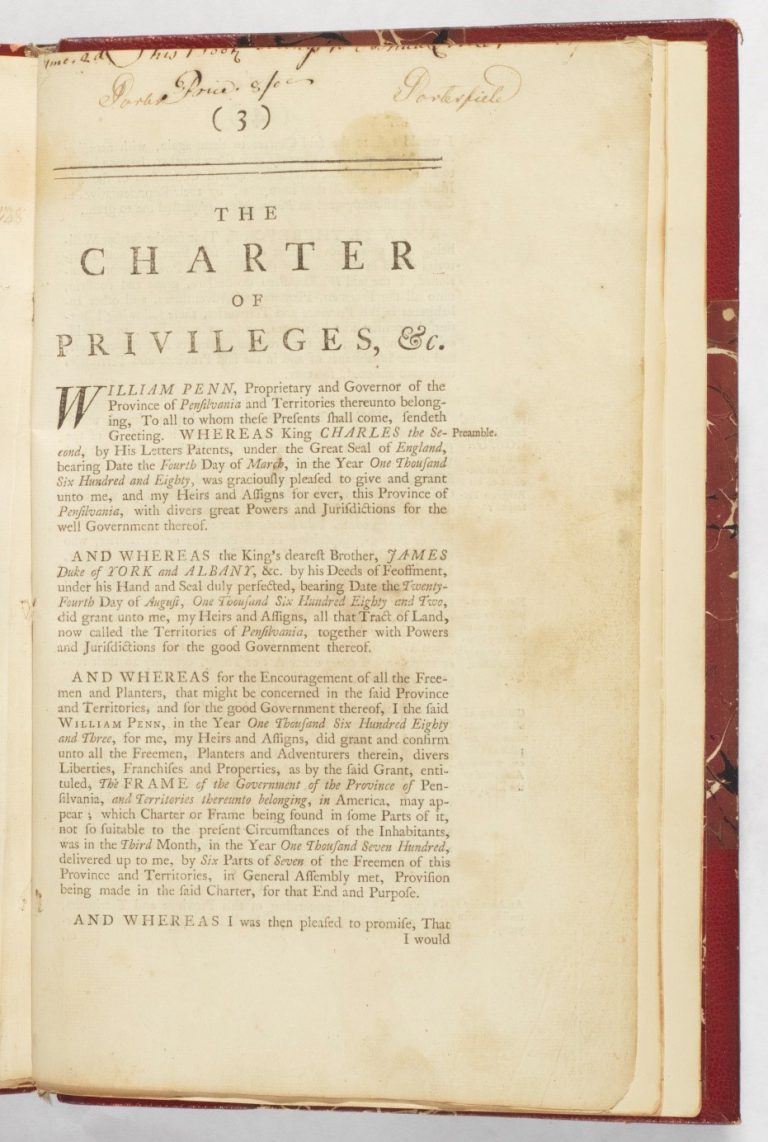
Charter of Privileges
William Penn · 28 October 1701
 Artifact
Primary source
Wampum Belt Presented to William Penn at the Great Treaty
Free account
Read every William Penn source
Sign up free →
Ready when you are
Start chatting with William Penn now.
20 messages free · No credit card · Available in 50+ languages.