


Primary sourcePhotograph20 April 1963
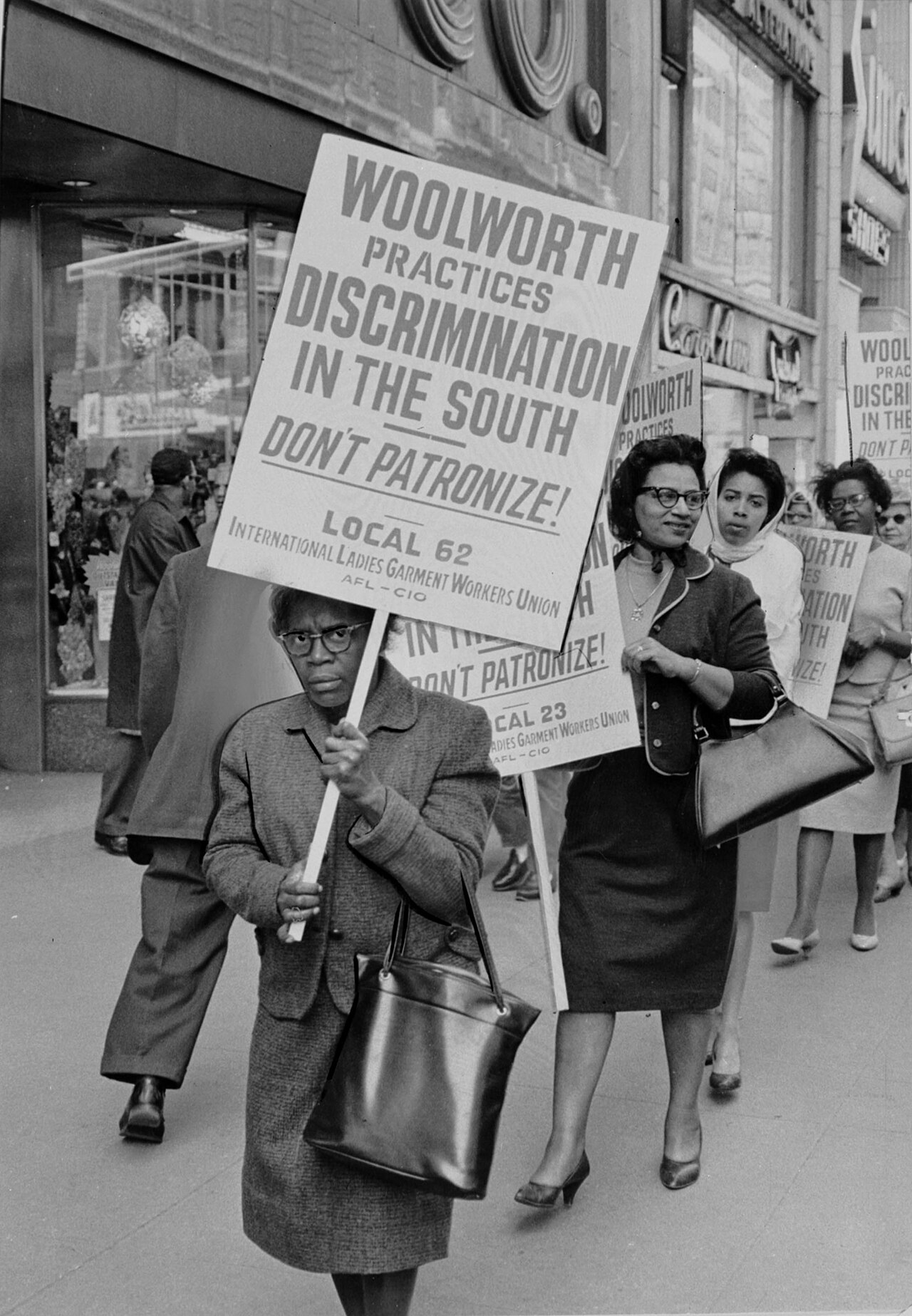
People picket against Woolworth's segregation practice, April 20, 1963
Kheel Center · 20 April 1963
A 1963 black-and-white photograph of picketers protesting segregation at Woolworth's stores. The signs name Birmingham, Alabama, linking the protest to the South that Wallace governed.
Shows a 1963 protest against segregation in the South, the same fight Wallace defended as governor, though the photo does not show him.
About this source
What it is
This is a black-and-white photograph of a street protest, held by the Kheel Center for Labor-Management Documentation and Archives at Cornell University. A woman in a tweed coat and glasses holds a sign reading "Woolworth Practices Discrimination in the South, Don't Patronize!" from Local 62 of the International Ladies Garment Workers Union. Other marchers carry similar signs, and a storefront is visible on the left. The archive notes say that hundreds of ILGWU members from New York City locals marched on picket lines on April 20 to protest segregation at stores in Southern cities, particularly Birmingham, Alabama. The photographer is unknown.
Why it matters
Segregation in Southern stores was one of the issues that drew protests from unions and civil rights groups in 1963. Birmingham, Alabama, was a center of these protests. Wallace defended segregation during his time as governor. This photograph shows that the protest reached beyond the South, with union members in New York taking part.
Look closer
- What do the words on the signs ask people to do, and why?
- Why might the archive describe the protest as being about Southern cities, and who is not shown in this picture?
This photograph is part of the curated material that grounds the AI version of George Wallace on Humy.ai — when students ask about related events, the AI can quote it and cite it.
More George Wallace sources
Browse all 73 →Primary source
Inaugural Address of Governor George C. Wallace
George C. Wallace · 14 January 1963
Primary source
Statement and Proclamation at the University of Alabama
George C. Wallace · 11 June 1963
 Document
Primary source
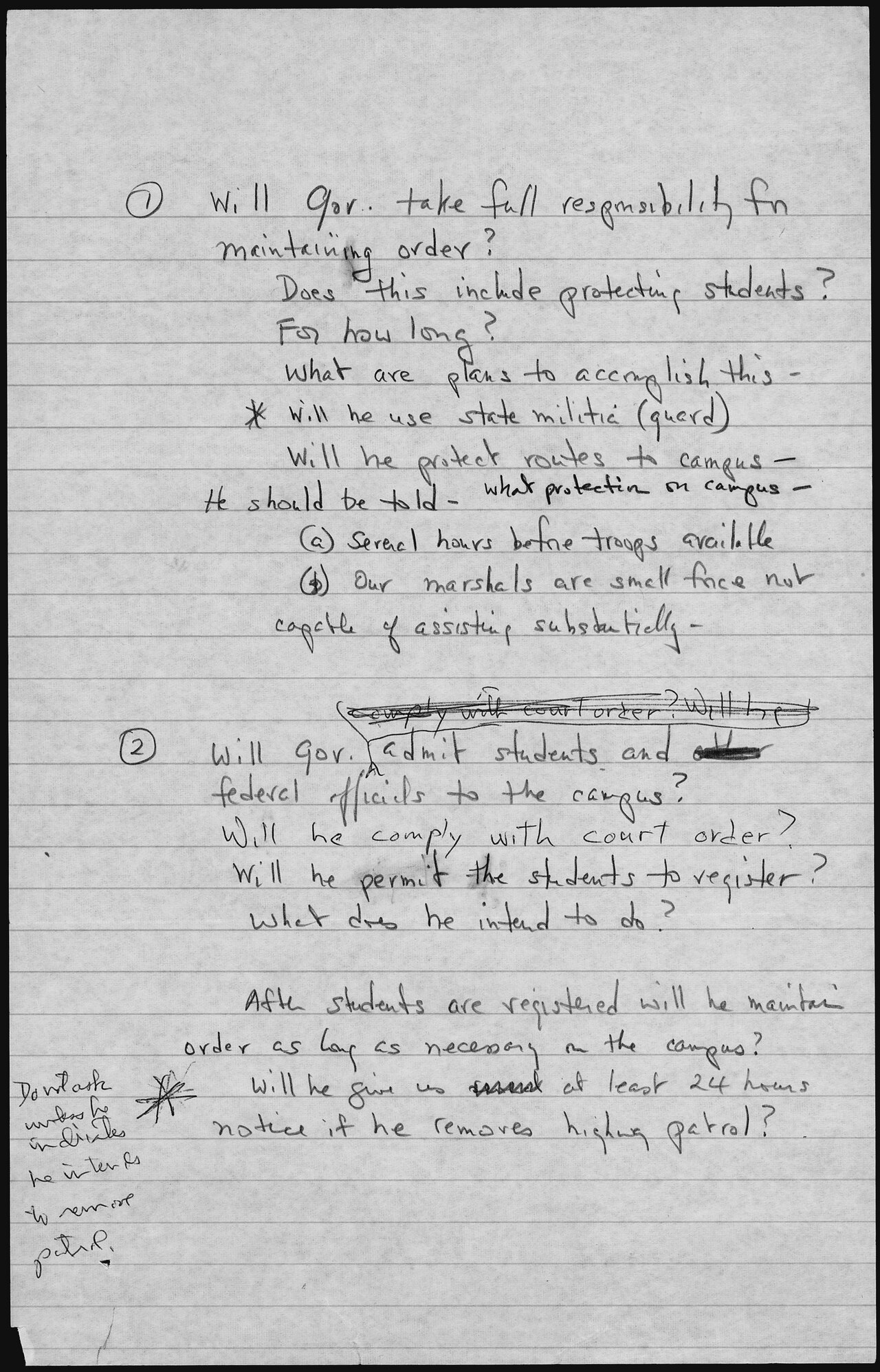
Integration of the University of Alabama: Notes on Governor Wallace's Position
1963
 Speech
Primary source
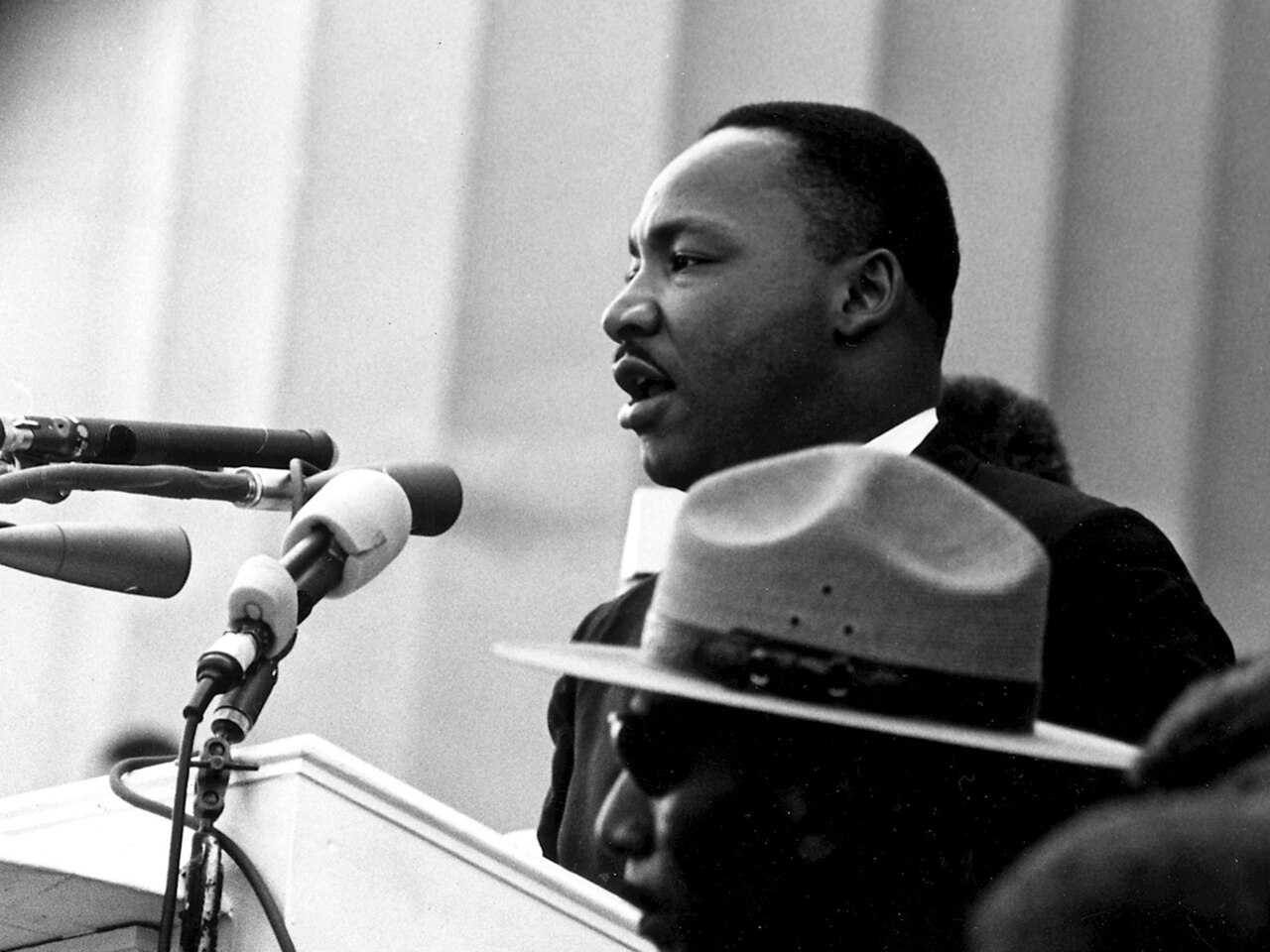
I Have a Dream
Martin Luther King Jr. · 28 August 1963
Free account
Read every George Wallace source
Sign up free →
Ready when you are
Start chatting with George Wallace now.
20 messages free · No credit card · Available in 50+ languages.