


Primary sourcePainting1480-1490
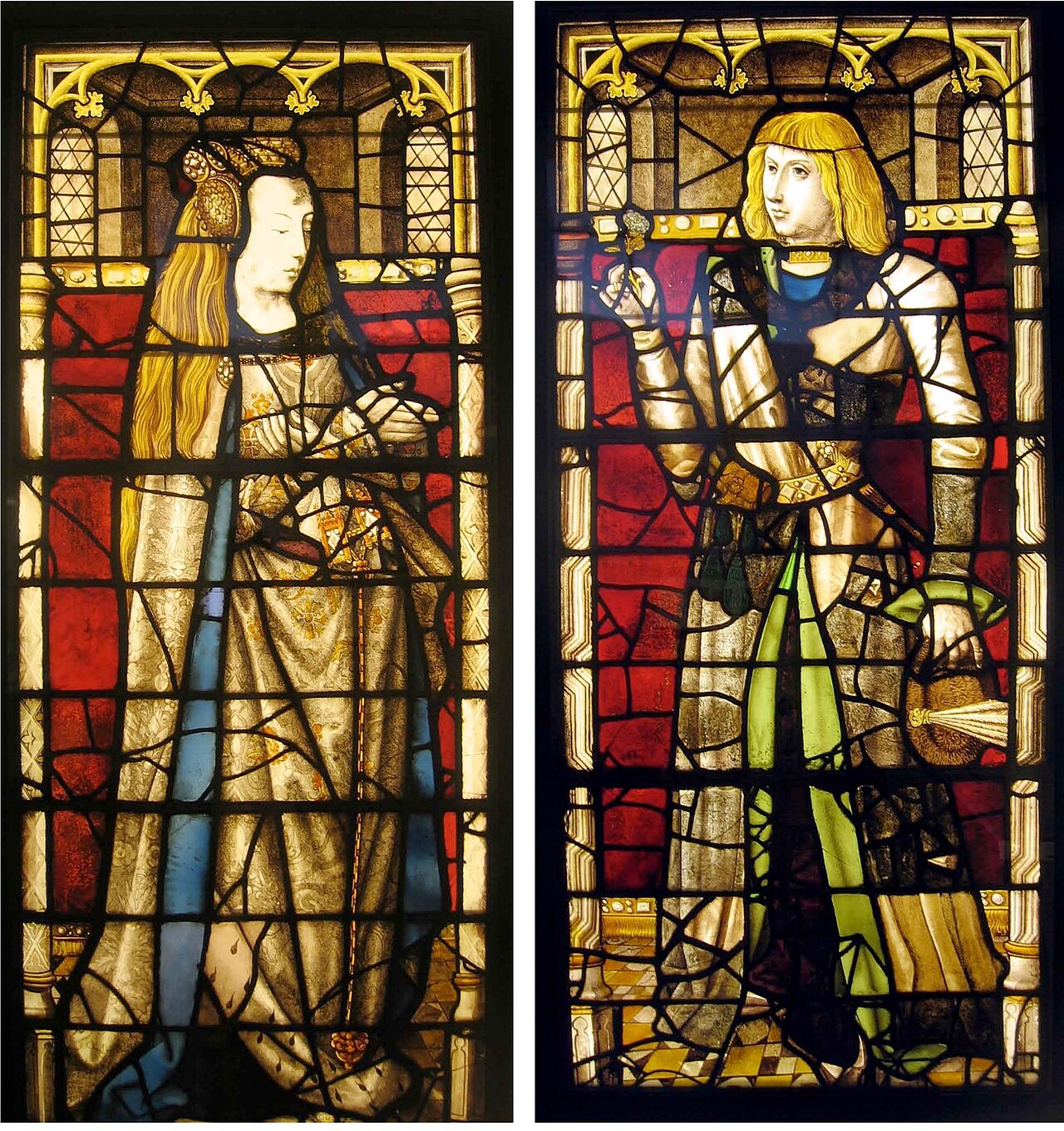
Philip the Fair and Joanna of Castile, Stained Glass
Unknown author · 1480-1490
A pair of stained glass panels from Bruges showing Philip the Fair and Joanna of Castile around the time of their betrothal.
These stained glass panels show Joanna of Castile alongside Philip the Fair around the time of their betrothal.
About this source
What it is
These two stained glass panels, made by an unknown artist in Bruges between about 1480 and 1490, show Philip the Fair and Joanna of Castile. They were originally part of the Basilica of the Holy Blood in Bruges and are now held at the Victoria and Albert Museum.
Why it matters
Created around the time of the couple's betrothal, these panels are an early visual record of Joanna, showing how she and her future husband were presented in a religious and dynastic setting. Stained glass like this was often commissioned by or for noble families to display status and piety in churches.
Look closer
- What details of clothing and setting mark these figures as royalty?
- Why might a church be chosen as the place to display images of a royal betrothal?
- What is missing from this image that a modern biography might include?
This painting is part of the curated material that grounds the AI version of Joanna of Castile on Humy.ai — when students ask about related events, the AI can quote it and cite it.
More Joanna of Castile sources
Browse all 90 →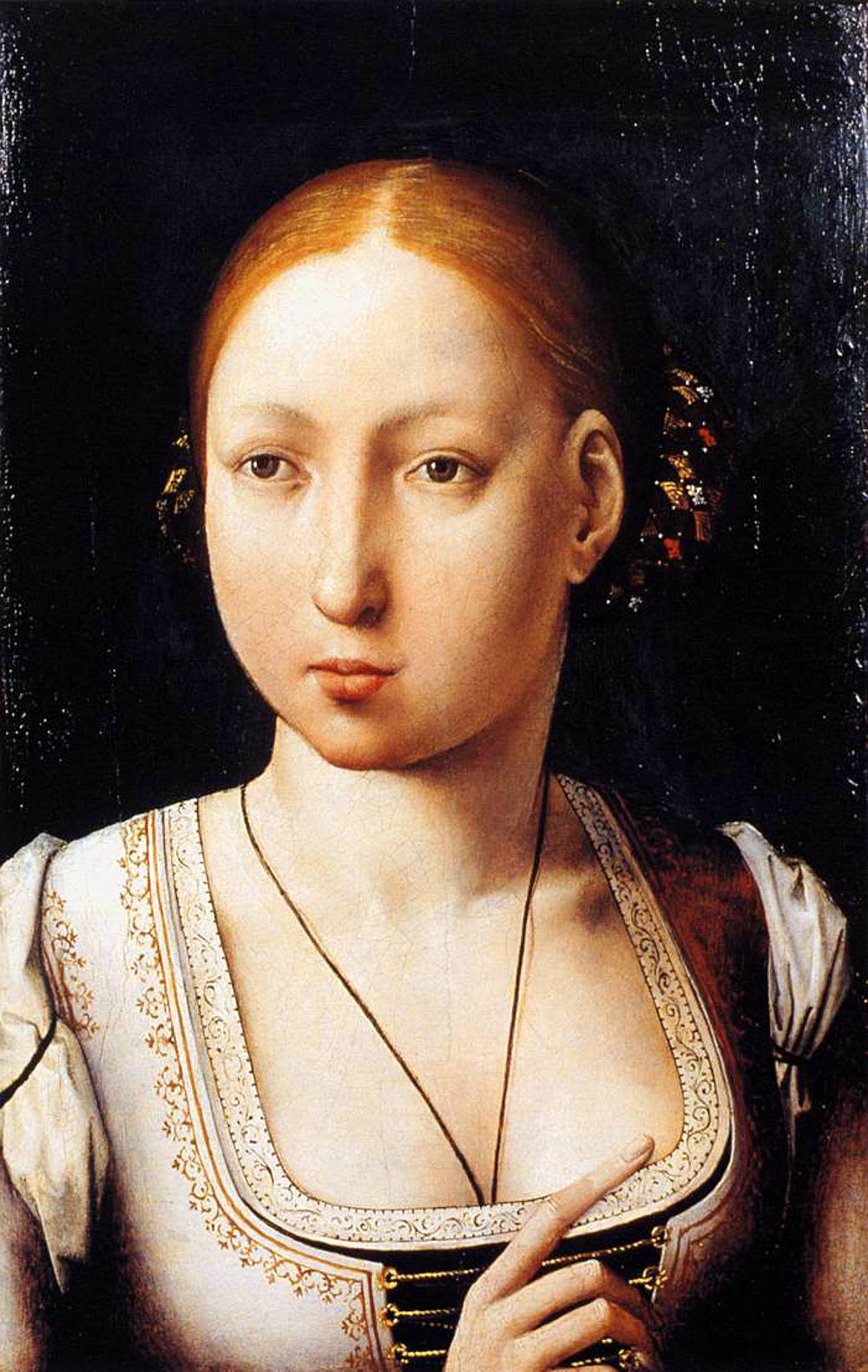 Painting
Primary source
Portrait of Joan the Mad
Juan de Flandes
 Artifact
Primary source
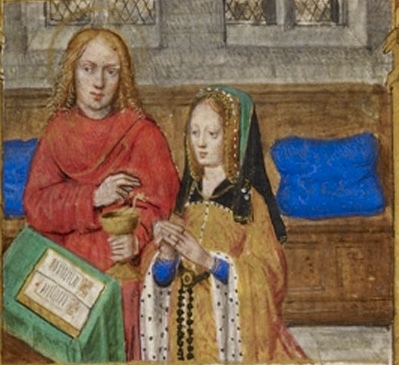
Hours of Joanna of Castile
Flemish illuminators (Ghent-Bruges school) · c. 1496-1506
Primary source
Testament of Isabella I of Castile
Isabella I of Castile · 12 October 1504
 Document
Primary source
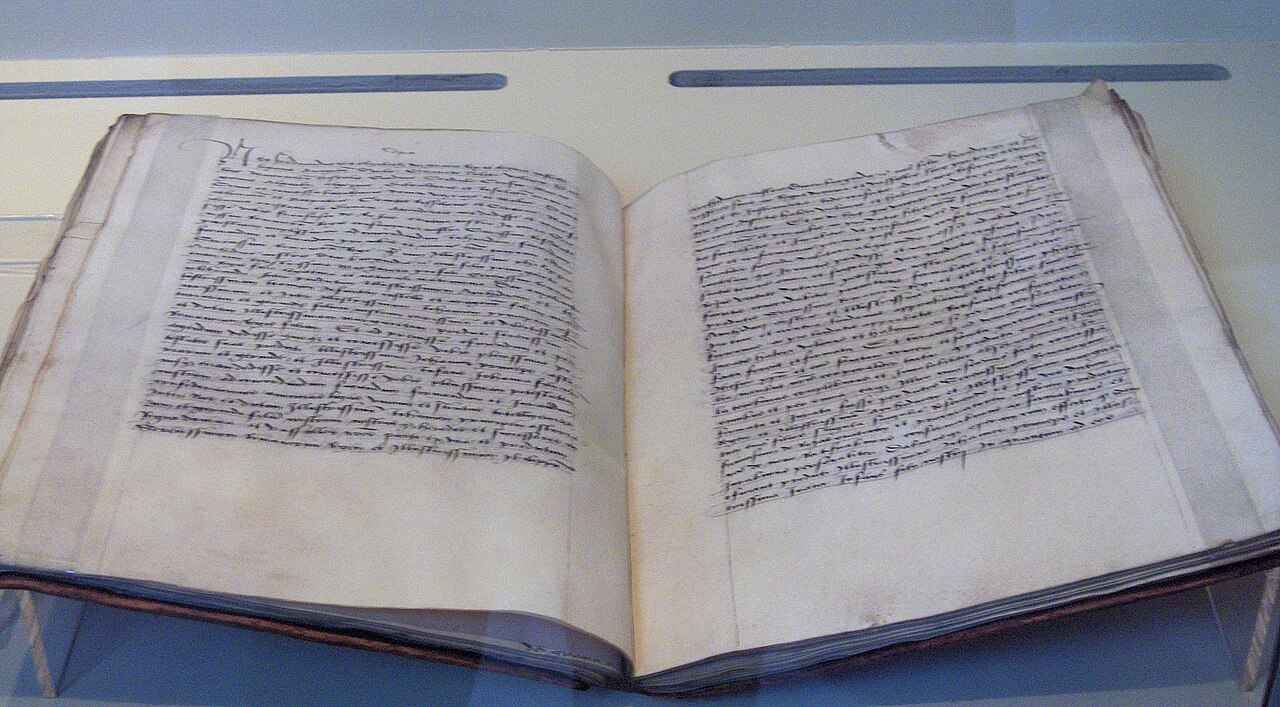
Marriage Articles of Philip the Handsome and Joanna of Castile
1495
Free account
Read every Joanna of Castile source
Sign up free →
Ready when you are
Start chatting with Joanna of Castile now.
20 messages free · No credit card · Available in 50+ languages.