


Secondary sourceArtifact1992 (inscription dated 5 August 1992); photographed 7 April 2009
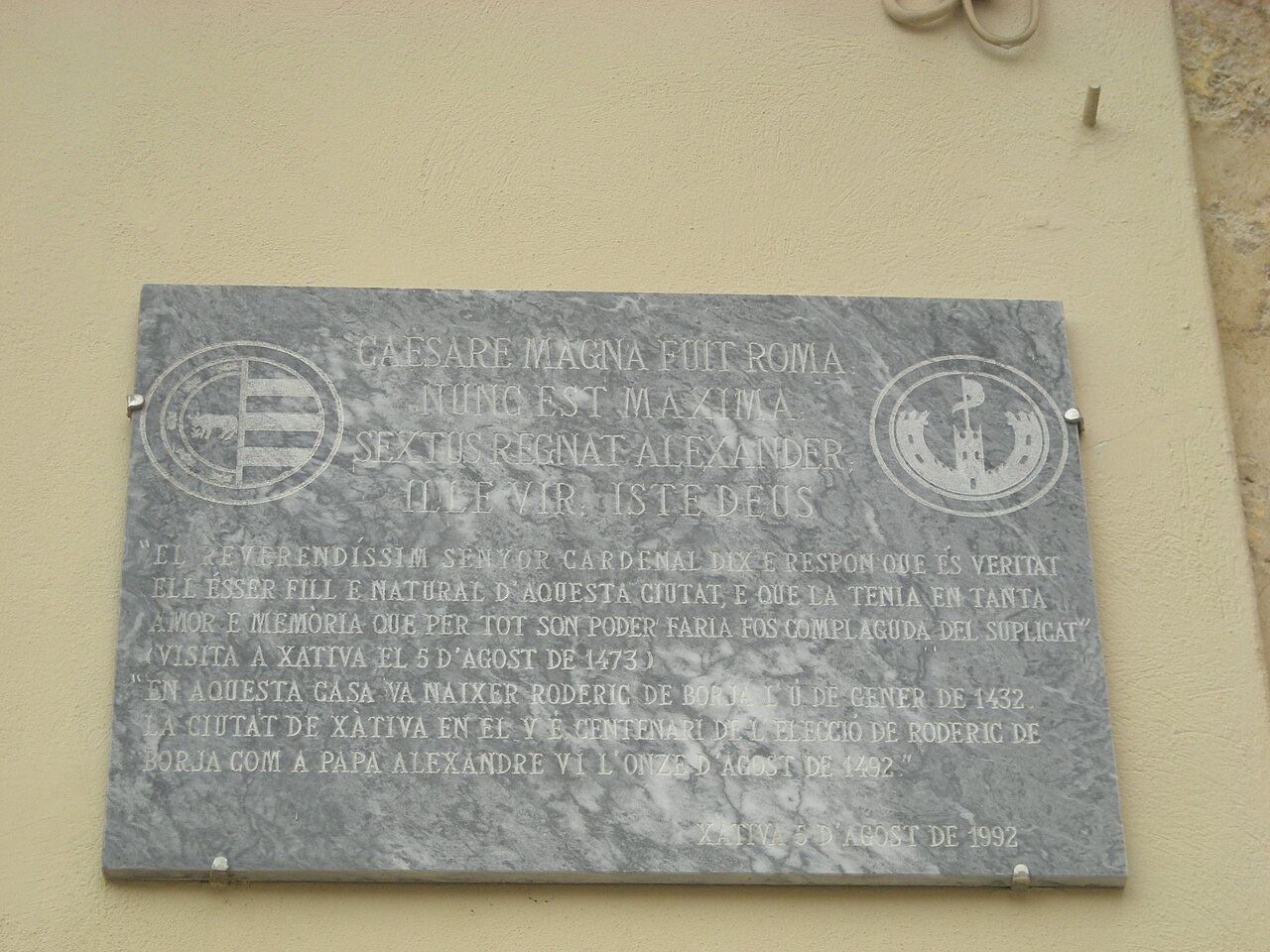
Plaque on the House of Alexander VI's Birth, Xàtiva
1992 (inscription dated 5 August 1992); photographed 7 April 2009
A grey marble plaque on the wall of the house in Xàtiva where Roderic de Borja, later Pope Alexander VI, was born. It was photographed in 2009 and dedicates the house to him.
Shows how Xàtiva commemorates Alexander VI as a local son, marking the place where his early life began.
About this source
What it is
This is a grey marble plaque on a cream-coloured wall in Xàtiva, marking the house where Roderic de Borja, later Pope Alexander VI, was born. Its carved Latin and Valencian inscriptions dedicate the house as his birthplace and are dated 5 August 1992. Two heraldic coat-of-arms roundels appear on the plaque. The photograph was taken on 7 April 2009 by Enrique Íñiguez Rodríguez.
Why it matters
The inscription states that Roderic de Borja was born in this house on 1 January 1432. The plaque marks the fifth centenary of his election as pope in 1492, which the city of Xàtiva commemorated. It shows how the town remembers a local son who became head of the Catholic Church. It is a modern memorial, not a record from his own time. Its Latin verse, given in the commons record with a translation, says that Rome was great under Caesar but is now greatest, and that Alexander VI reigns. The verse is praise, so students should read it as the town's view.
Look closer
- What does the plaque choose to say about Alexander VI, and what does it leave out?
- Why might a town put up a memorial like this in 1992, almost five centuries after his birth?
- How does the Latin praise compare with what historians say about his years in power?
This artifact is part of the curated material that grounds the AI version of Pope Alexander VI on Humy.ai — when students ask about related events, the AI can quote it and cite it.
More Pope Alexander VI sources
Browse all 89 →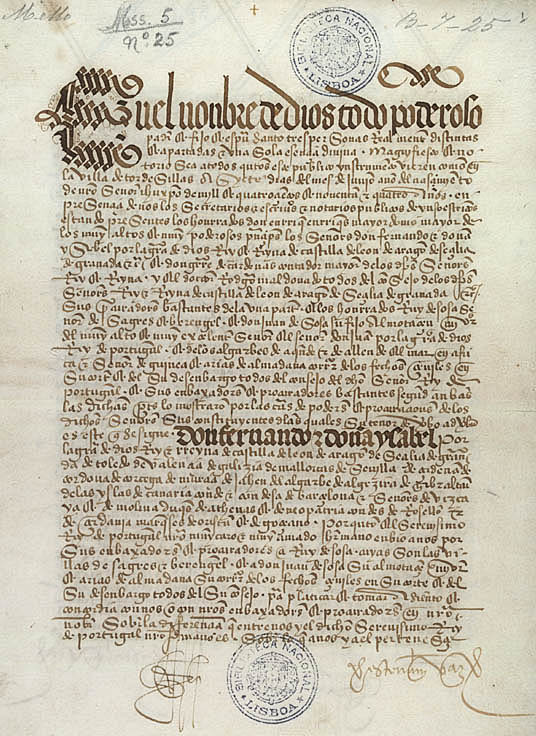 Document
Primary source
Treaty of Tordesillas
7 June 1494
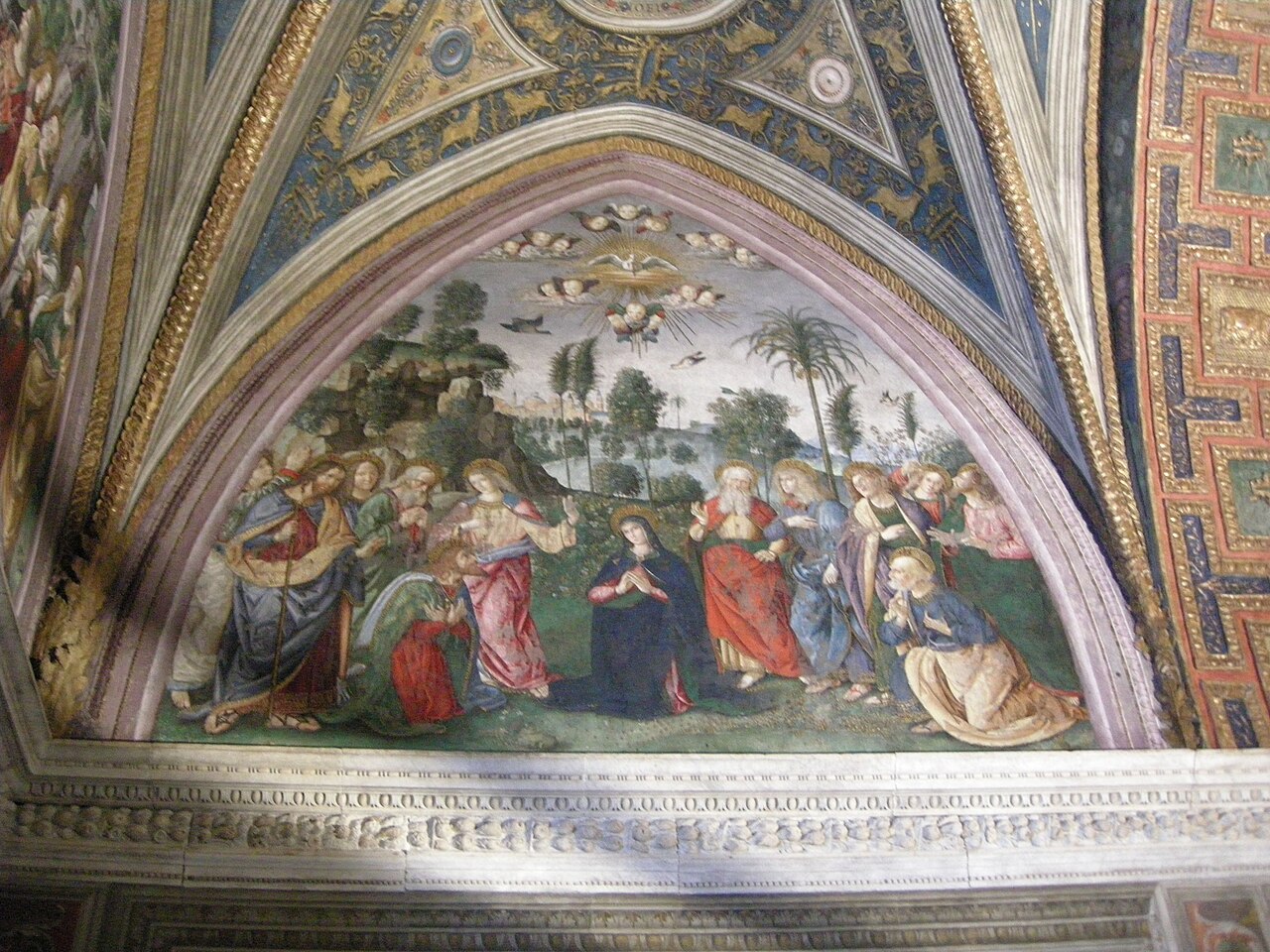 Artifact
Primary source
Borgia Apartment
Pinturicchio · 1492-1494
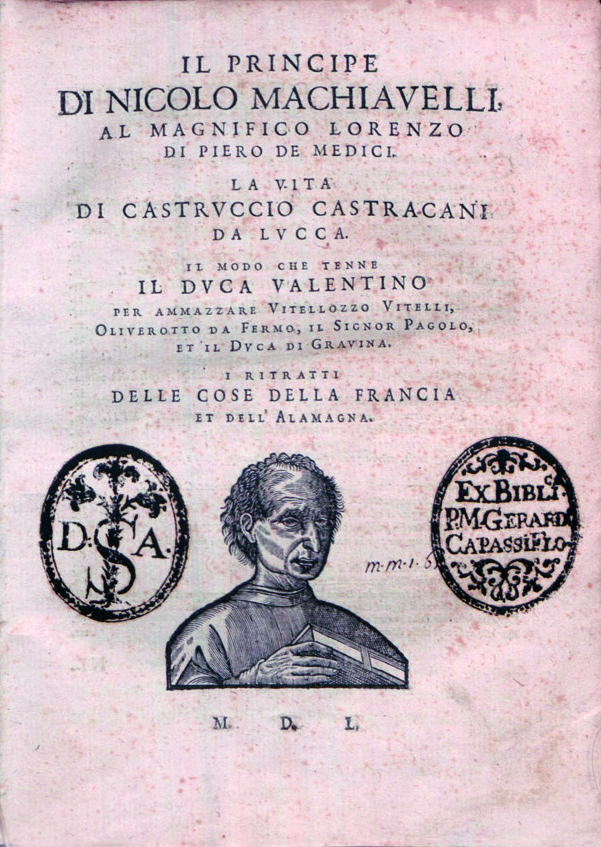 Book
Primary source
The Prince
Niccolò Machiavelli · 1513
 Painting
Primary source
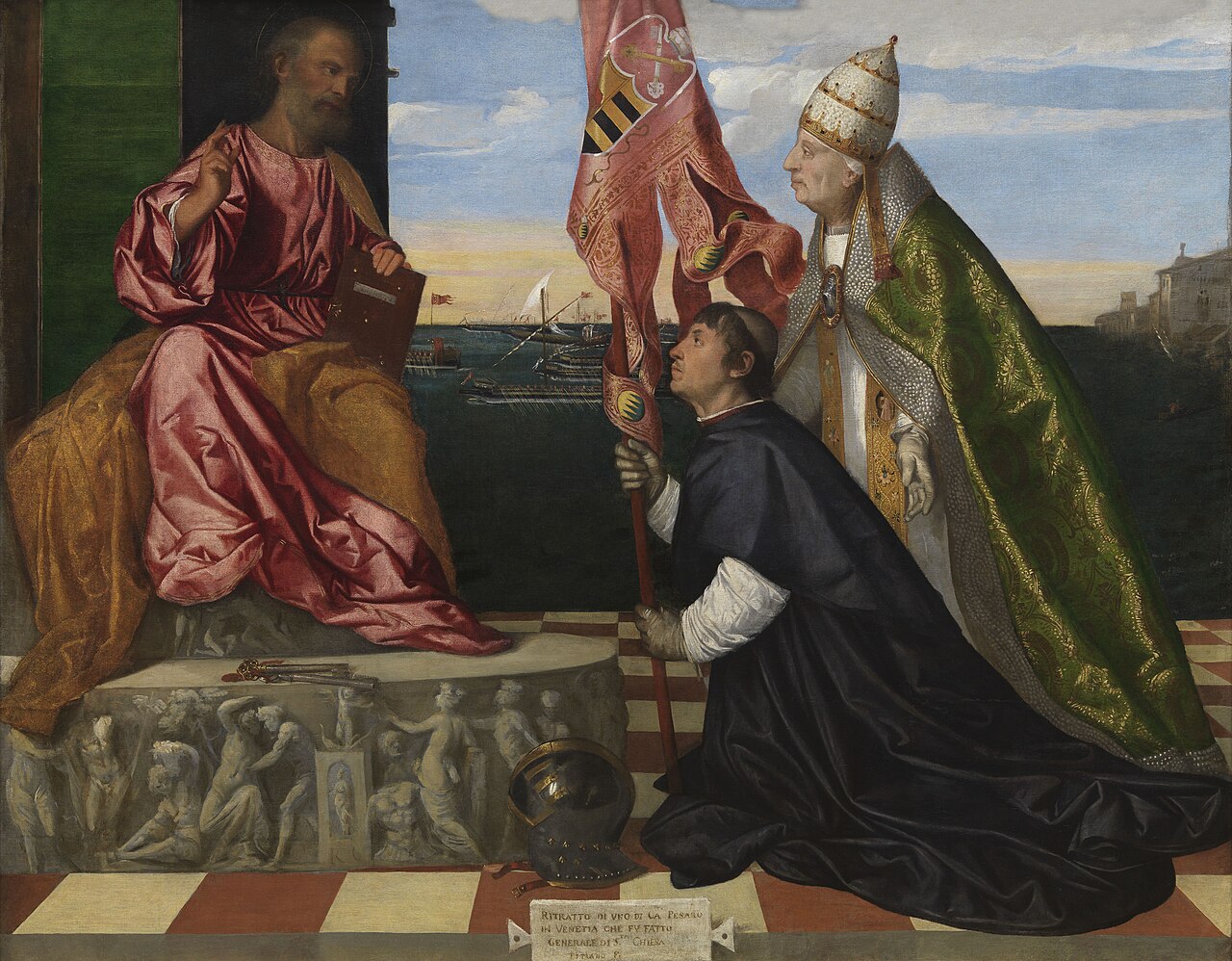
Jacopo Pesaro, Bishop of Paphos, being presented by Pope Alexander VI to Saint Peter
Titian · c. 1503-1511
Free account
Read every Pope Alexander VI source
Sign up free →
Ready when you are
Start chatting with Pope Alexander VI now.
20 messages free · No credit card · Available in 50+ languages.