


Secondary sourceArtifact1827
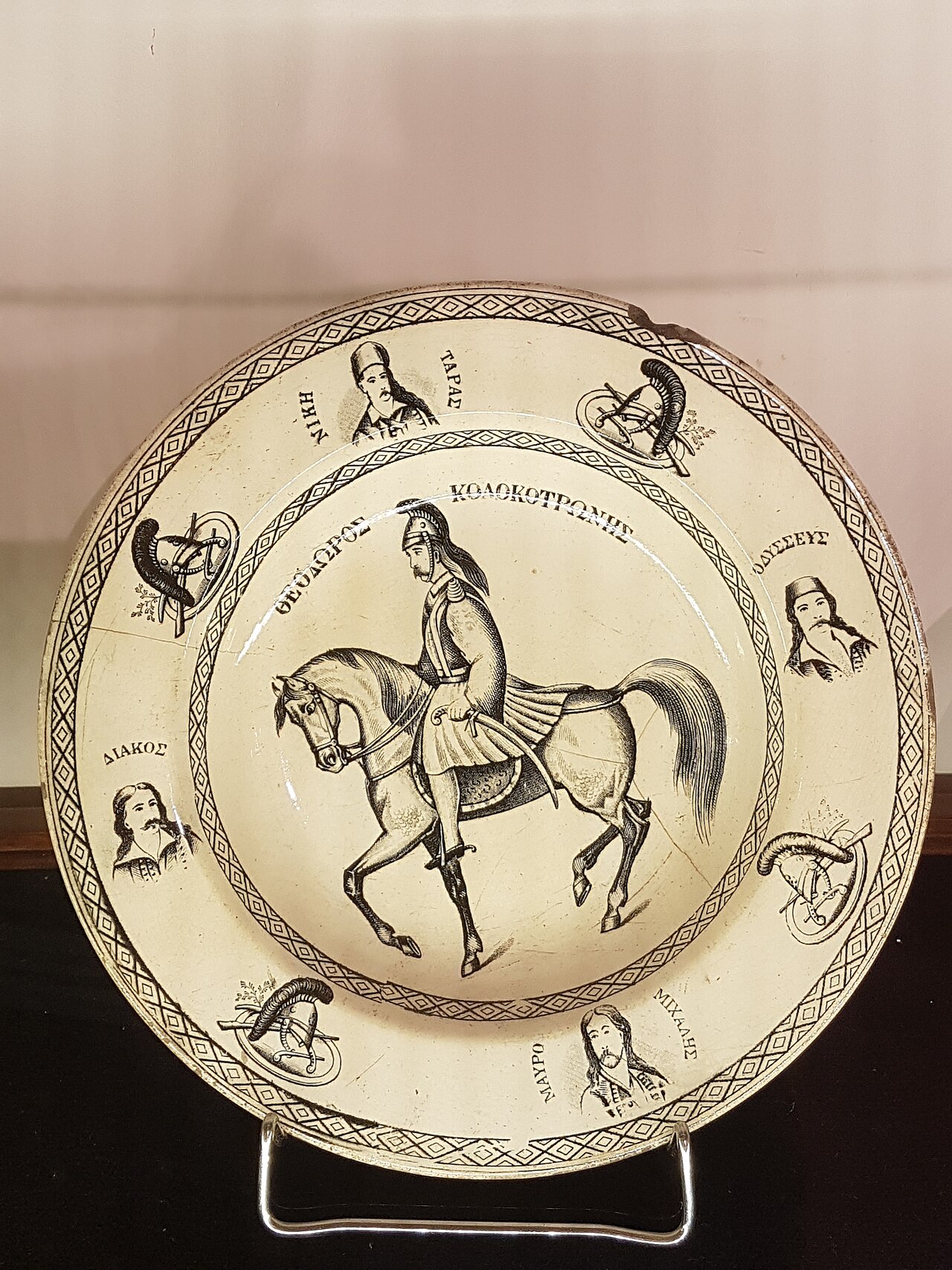
Plate with Philhellenic Theme
1827
A French ceramic plate from 1827 made to raise funds for the Greek War of Independence, showing the philhellenic culture that made leaders like Kolokotronis famous abroad.
This fundraising plate reflects the philhellenic culture abroad that helped make leaders like Kolokotronis widely known.
About this source
What it is
This ceramic plate, decorated with a philhellenic theme, was made in France in 1827 to raise funds supporting the Greek War of Independence. It is held at the Museum of Ali Pasha of Ioannina.
Why it matters
The plate shows a mounted warrior in traditional Greek dress surrounded by portrait medallions, reflecting how European supporters of Greek independence, known as philhellenes, popularised the struggle and its leaders through everyday objects. It is context for understanding the fame Kolokotronis gained abroad during the war.
Look closer
- Why might ordinary objects like plates be used to raise money for a political and military cause?
- What does the choice of imagery (a warrior on horseback, portrait medallions) tell us about how Europeans saw the Greek struggle?
- What does this plate not tell us about the actual experience of fighting in the war?
This artifact is part of the curated material that grounds the AI version of Theodoros Kolokotronis on Humy.ai — when students ask about related events, the AI can quote it and cite it.
More Theodoros Kolokotronis sources
Browse all 62 →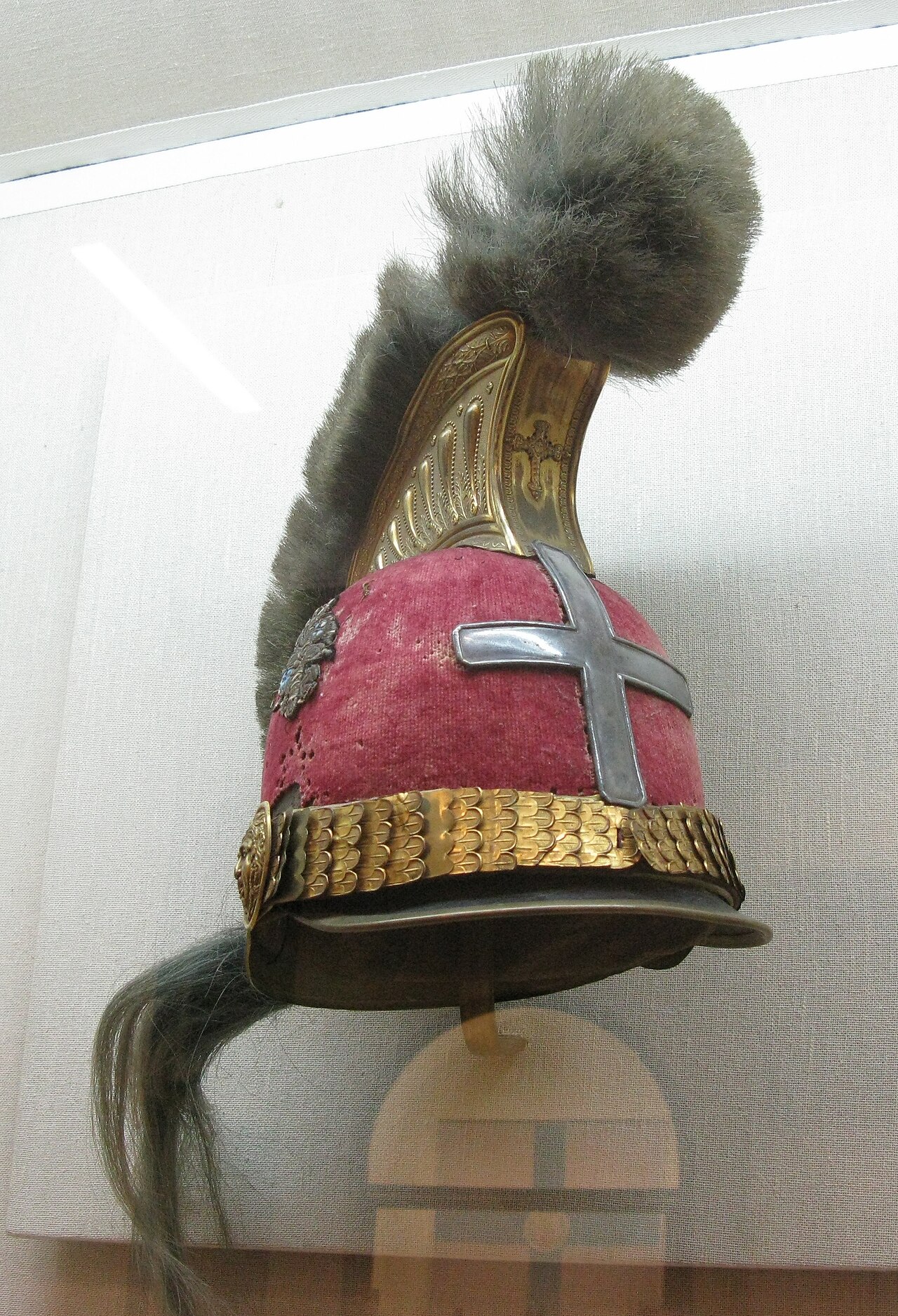 Artifact
Primary source
Helmet of Theodoros Kolokotronis
 Painting
Primary source
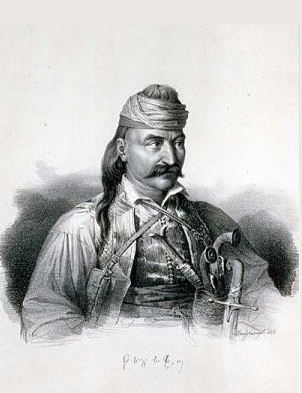
Portrait of Kolokotronis by Karl Krazeisen
Karl Krazeisen · 1827
 Letter
Primary source
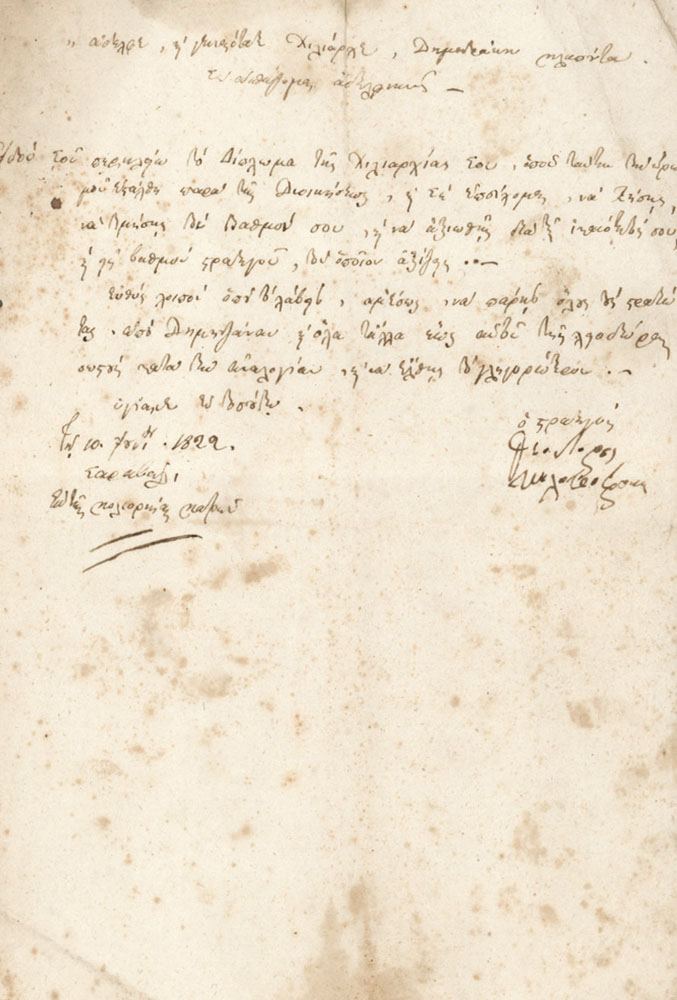
Letter to Dimitrakis Plapoutas
Theodoros Kolokotronis · 10 June 1822
 Document
Primary source
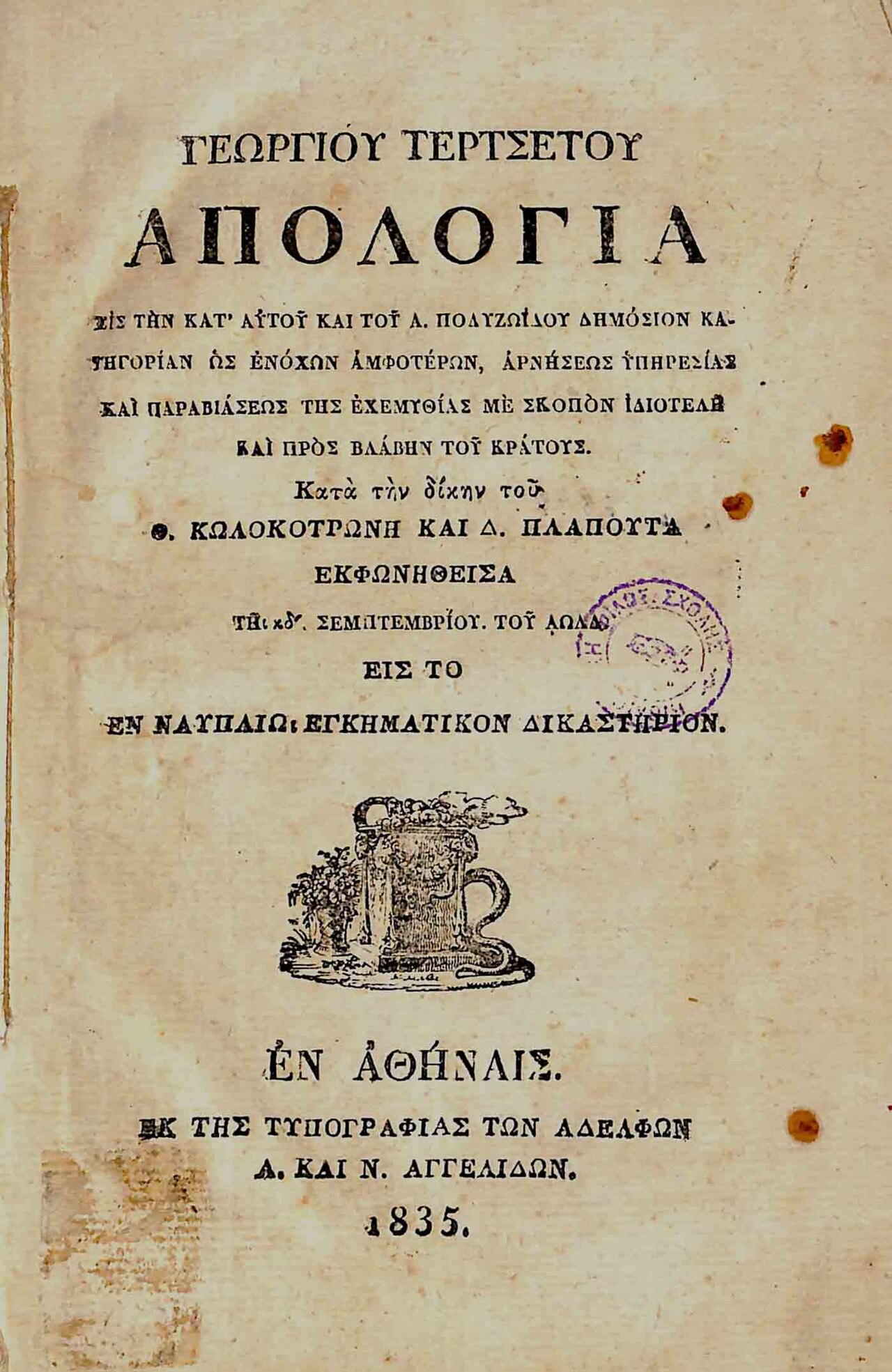
Apology of Kolokotronis and Plapoutas
Georgios Tertsetis · 1835
Free account
Read every Theodoros Kolokotronis source
Sign up free →
Ready when you are
Start chatting with Theodoros Kolokotronis now.
20 messages free · No credit card · Available in 50+ languages.