


Primary sourceArtifact1629
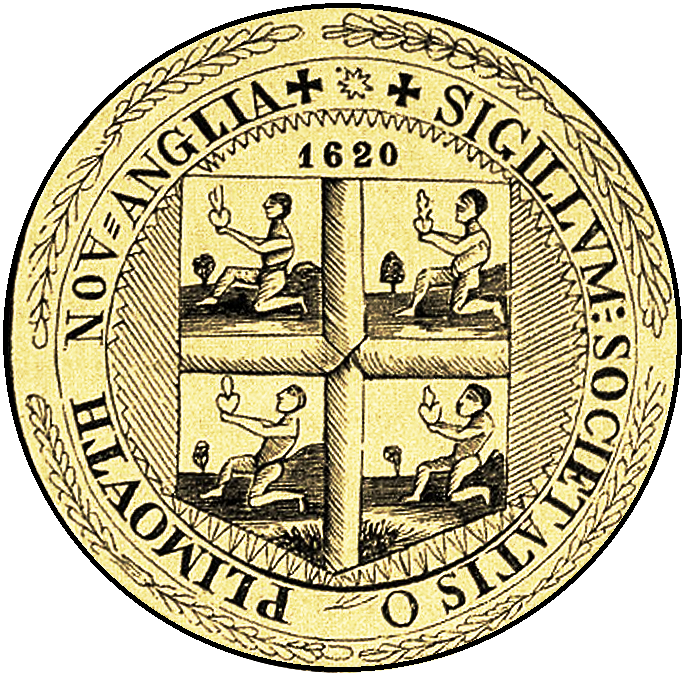
Plymouth Colony Seal
1629
The 1629 seal of Plymouth Colony, the government Squanto served as interpreter and guide, showing four figures in Native American-style dress.
The seal represents the Plymouth Colony government that Squanto served as an interpreter and guide.
About this source
What it is
This is the official seal of Plymouth Colony, designed in 1629. It shows four figures dressed in what looks like Native American style clothing, arranged within a shield marked with St George's Cross, each holding a burning heart symbol associated with John Calvin. The seal was later used by Plymouth County until 1931 and is still used by the town of Plymouth today.
Why it matters
The seal represents the government of the colony that Squanto helped survive by acting as an interpreter and guide between the English settlers and local Native peoples. Its imagery, mixing English religious symbols with figures in Native dress, shows how the colonists represented their new world and their relationship to the people already living there.
Look closer
- Why might the colony's seal include figures dressed in Native American style?
- Who do you think designed this seal, and whose perspective does it represent?
- What might this image leave out about the real relationship between colonists and Native peoples?
This artifact is part of the curated material that grounds the AI version of Tisquantum (Squanto) and Metacomet on Humy.ai — when students ask about related events, the AI can quote it and cite it.
More Tisquantum (Squanto) sources
Meet the AI Tisquantum (Squanto) →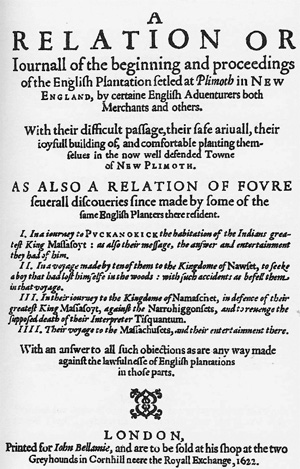 Book
Primary source
Mourt's Relation
Edward Winslow · 1622
Primary source
Good Newes from New England
Edward Winslow · 1624
 Book
Primary source
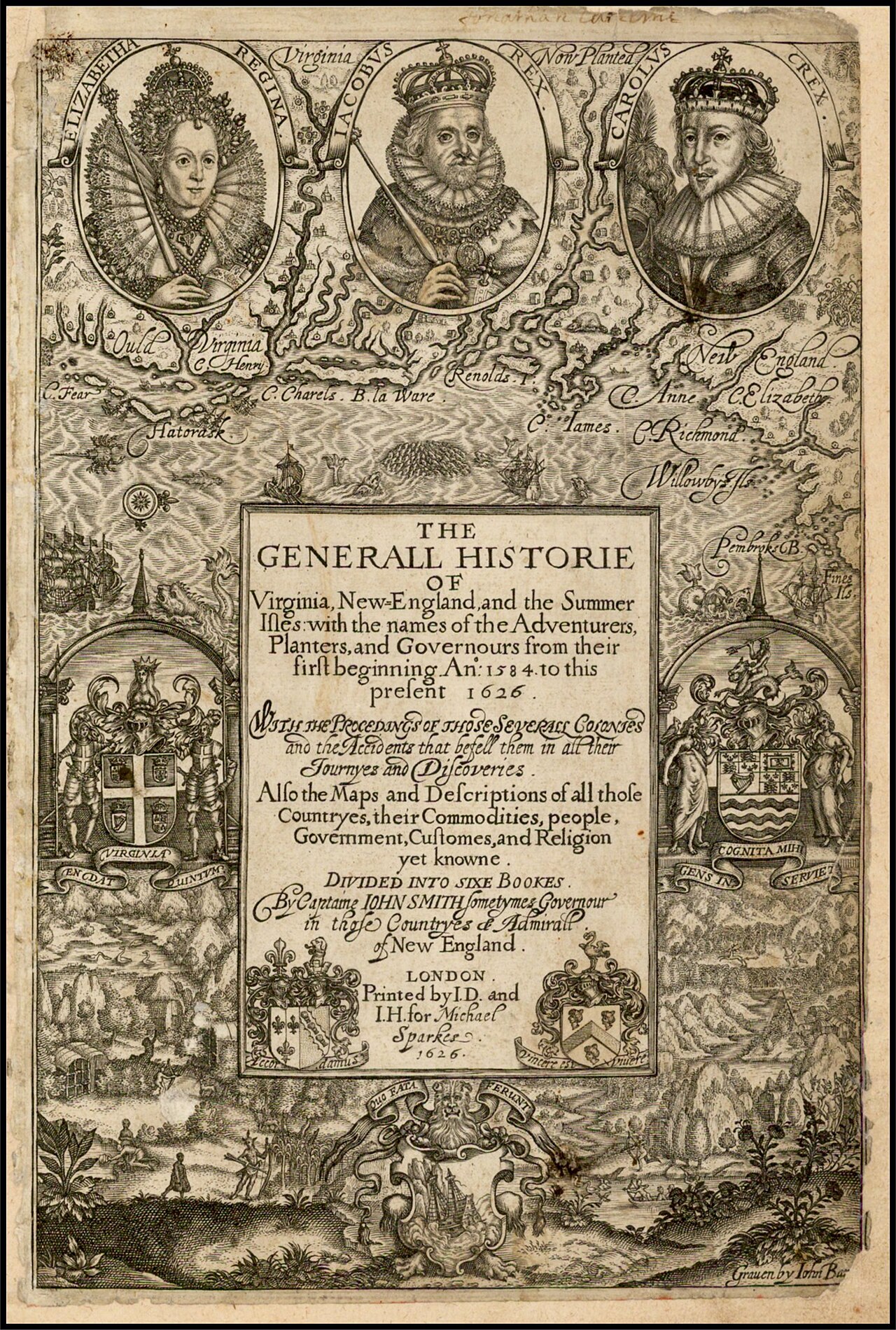
The Generall Historie of Virginia, New-England, and the Summer Isles
John Smith · 1624
 Book
Primary source
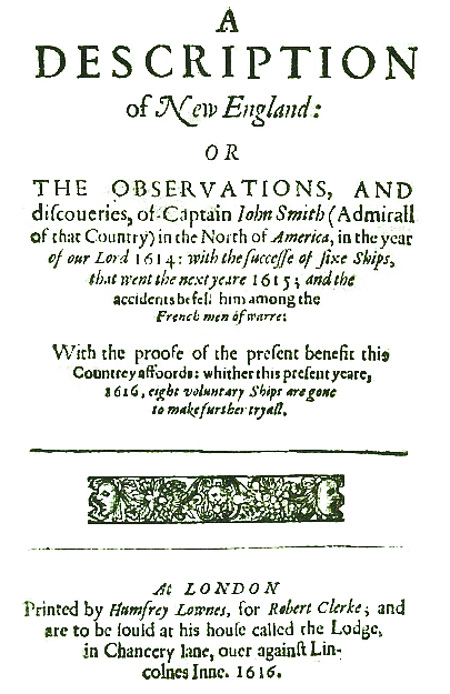
A Description of New England
John Smith · 1616
Primary source
Mayflower Compact
1620
Ready when you are
Start chatting with Tisquantum (Squanto) now.
20 messages free · No credit card · Available in 50+ languages.