


Secondary sourcePaintingc. 1872
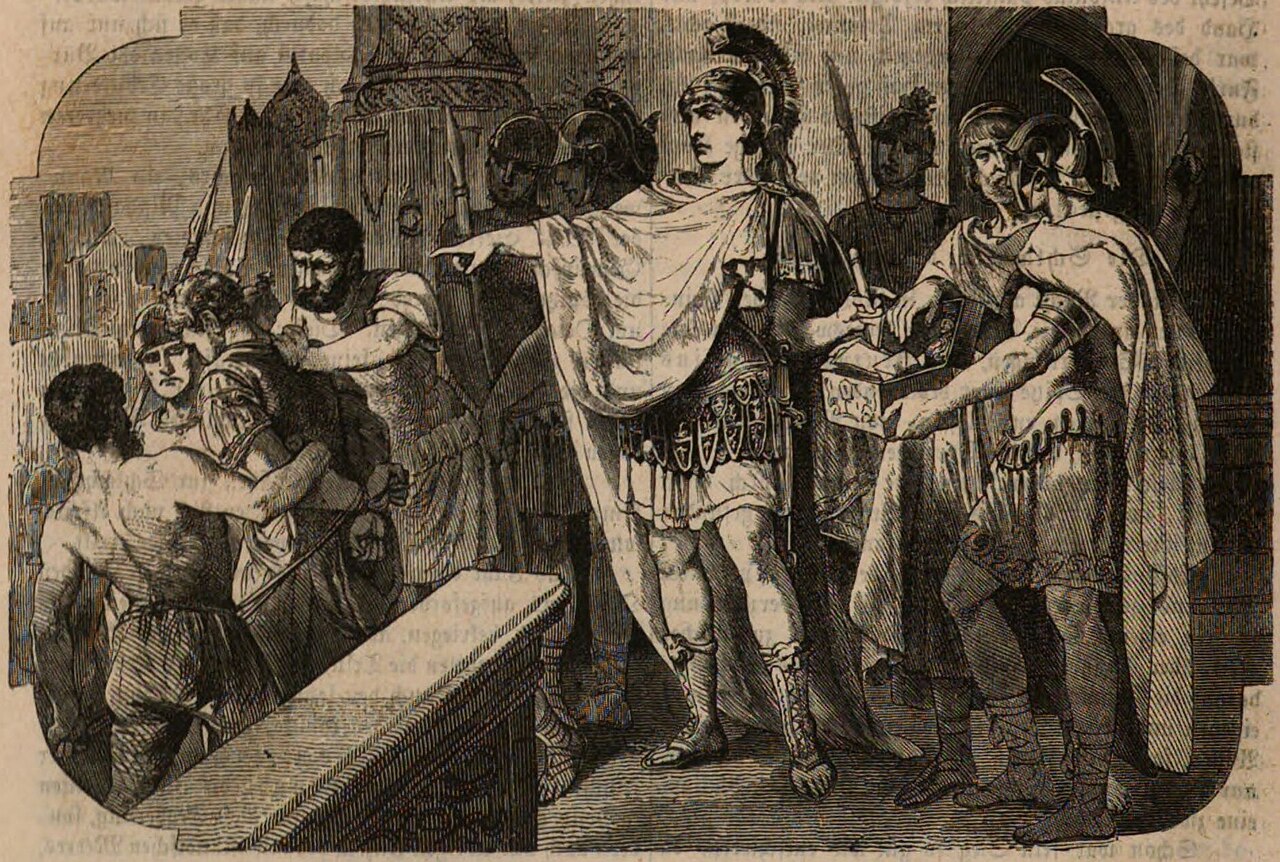
Pompey burns letters about Sertorius's assassination
c. 1872
A nineteenth-century engraving imagining Pompey destroying letters during the Sertorian War in Spain.
This engraving imagines Pompey's actions during the Sertorian War, showing his caution as a commander.
About this source
What it is
This engraving, made around 1872 by an unknown artist, imagines a scene from the Sertorian War. It shows a Roman commander, understood to be Pompey, holding an open box of papers while soldiers restrain a captured man, believed to represent Marcus Perperna Veiento, who was connected to the assassination of the rebel leader Sertorius.
Why it matters
Created many centuries after the events, this image reflects how later artists imagined episodes from Pompey's campaigns in Spain. Burning the letters was meant to show restraint or caution, protecting the names of those implicated and preventing further unrest.
Look closer
- What does Pompey's gesture and posture suggest about his authority in the scene?
- Why might the artist choose to depict this moment of destroying letters rather than a battle?
- Since this was created about 1,900 years after the event, what artistic choices might not reflect historical accuracy?
This painting is part of the curated material that grounds the AI version of Pompey on Humy.ai — when students ask about related events, the AI can quote it and cite it.
More Pompey sources
Browse all 82 →
Ready when you are
Start chatting with Pompey now.
20 messages free · No credit card · Available in 50+ languages.