


Primary sourcePainting1400-1410
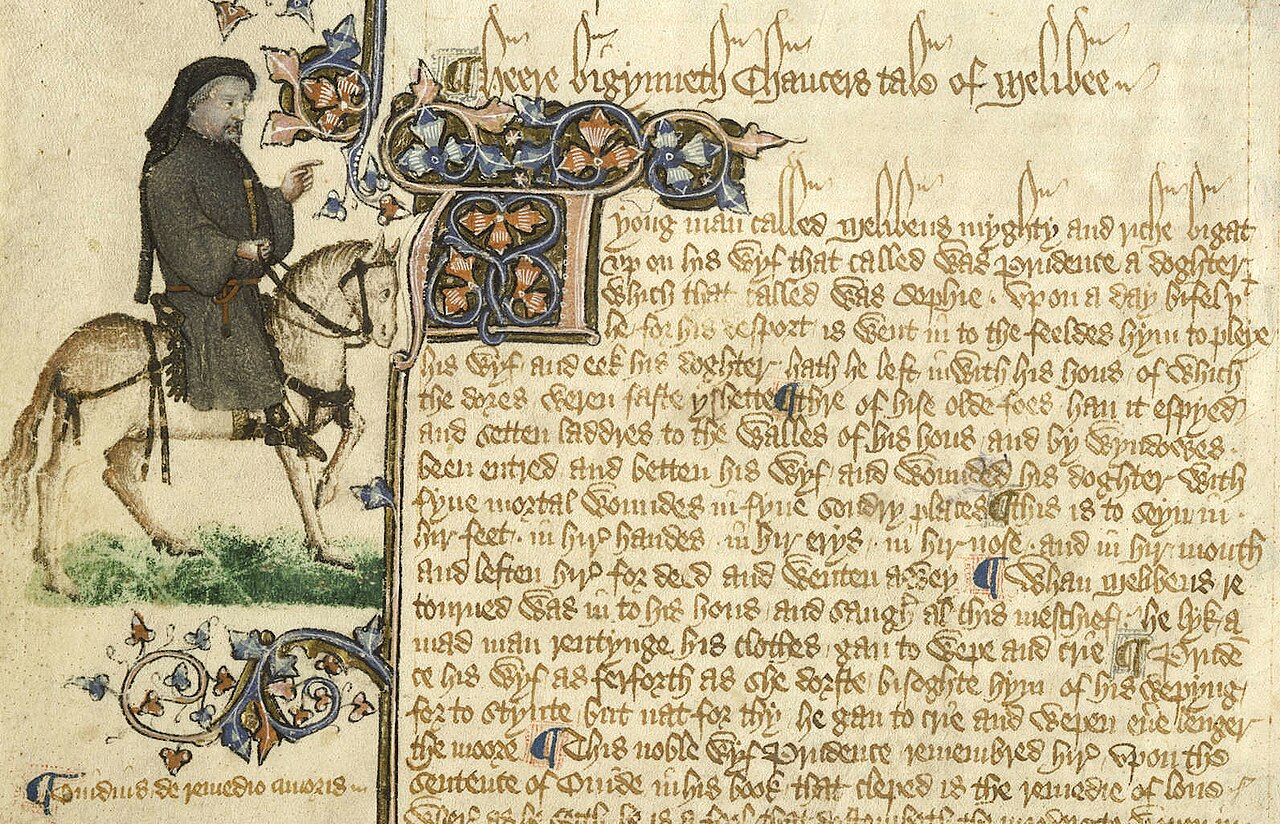
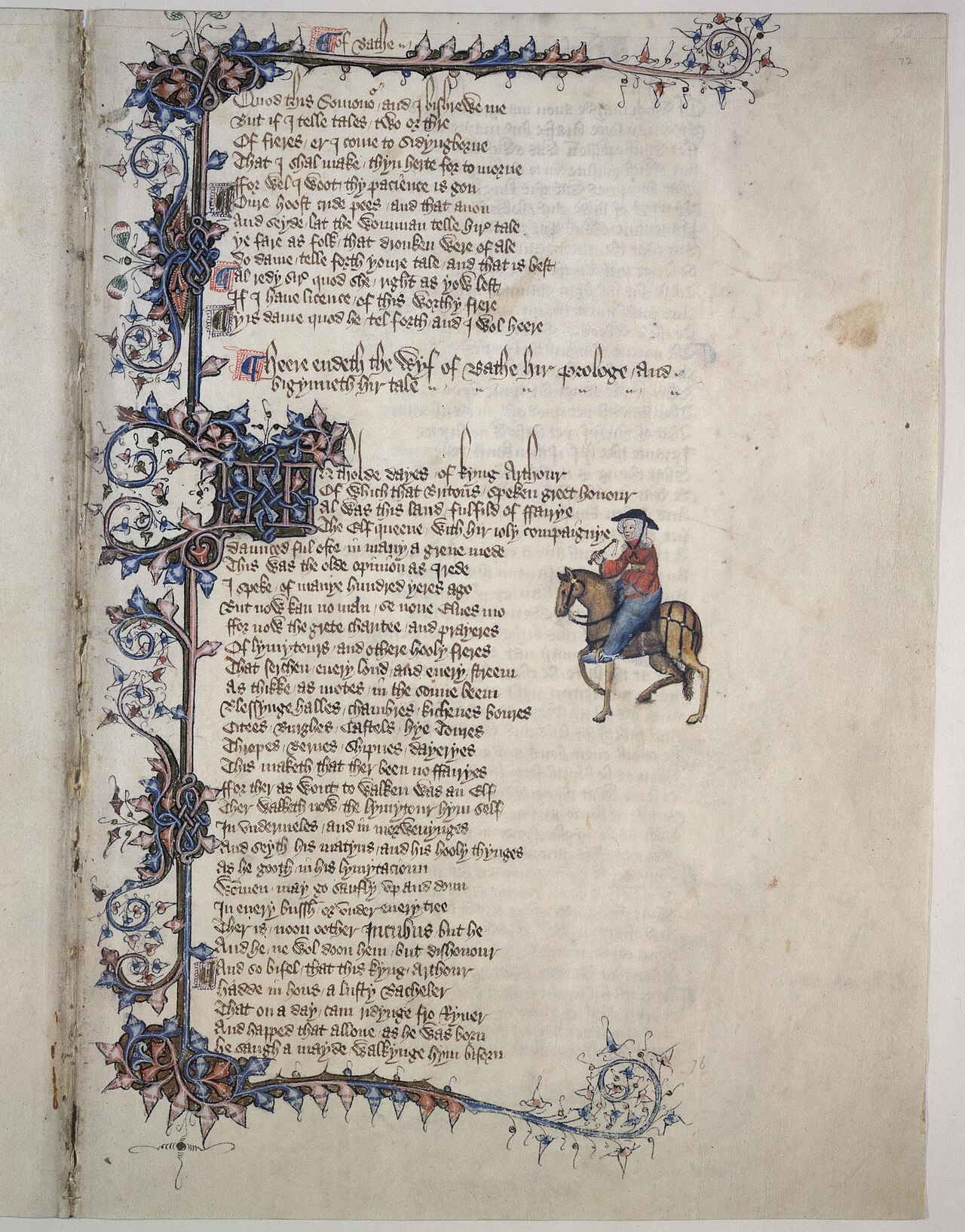
Portrait of Chaucer as a Canterbury Pilgrim, Ellesmere Manuscript
Unknown artist · 1400-1410
A manuscript illustration showing Chaucer as one of the pilgrims riding to Canterbury, from the Ellesmere Chaucer.
Shows Chaucer depicted as a pilgrim-narrator within his own Canterbury Tales, in a manuscript made soon after his death.
About this source
What it is
This image, painted by an unknown artist around 1400-1410 in England, shows Geoffrey Chaucer on horseback as a pilgrim-narrator. It appears in the Ellesmere manuscript of The Canterbury Tales, beside the Tale of Melibee, one of the stories told by Chaucer's own pilgrim character.
Why it matters
This is the best-known early image of Chaucer and shows how he was remembered shortly after his death, as both author and character within his own great work. It reveals how medieval readers imagined the poet among the very pilgrims he created.
Look closer
- Why might the artist have shown Chaucer as one of his own characters rather than as a separate author?
- What might the choice of a pale horse and the decorated page tell us about how valued this manuscript was?
- How does this image compare with other portraits of Chaucer?
This painting is part of the curated material that grounds the AI version of Geoffrey Chaucer on Humy.ai — when students ask about related events, the AI can quote it and cite it.
More Geoffrey Chaucer sources
Browse all 95 → Book
Primary source
The Canterbury Tales
Geoffrey Chaucer · 1387-1400
 Book
Secondary source
General Prologue
Geoffrey Chaucer · 1389
 Book
Secondary source
Ellesmere Chaucer
c. 1405
BookPrimary source
Hengwrt Chaucer
Geoffrey Chaucer · c. 1400
Free account
Read every Geoffrey Chaucer source
Sign up free →
Ready when you are
Start chatting with Geoffrey Chaucer now.
20 messages free · No credit card · Available in 50+ languages.