


Primary sourcePaintingc. 1750
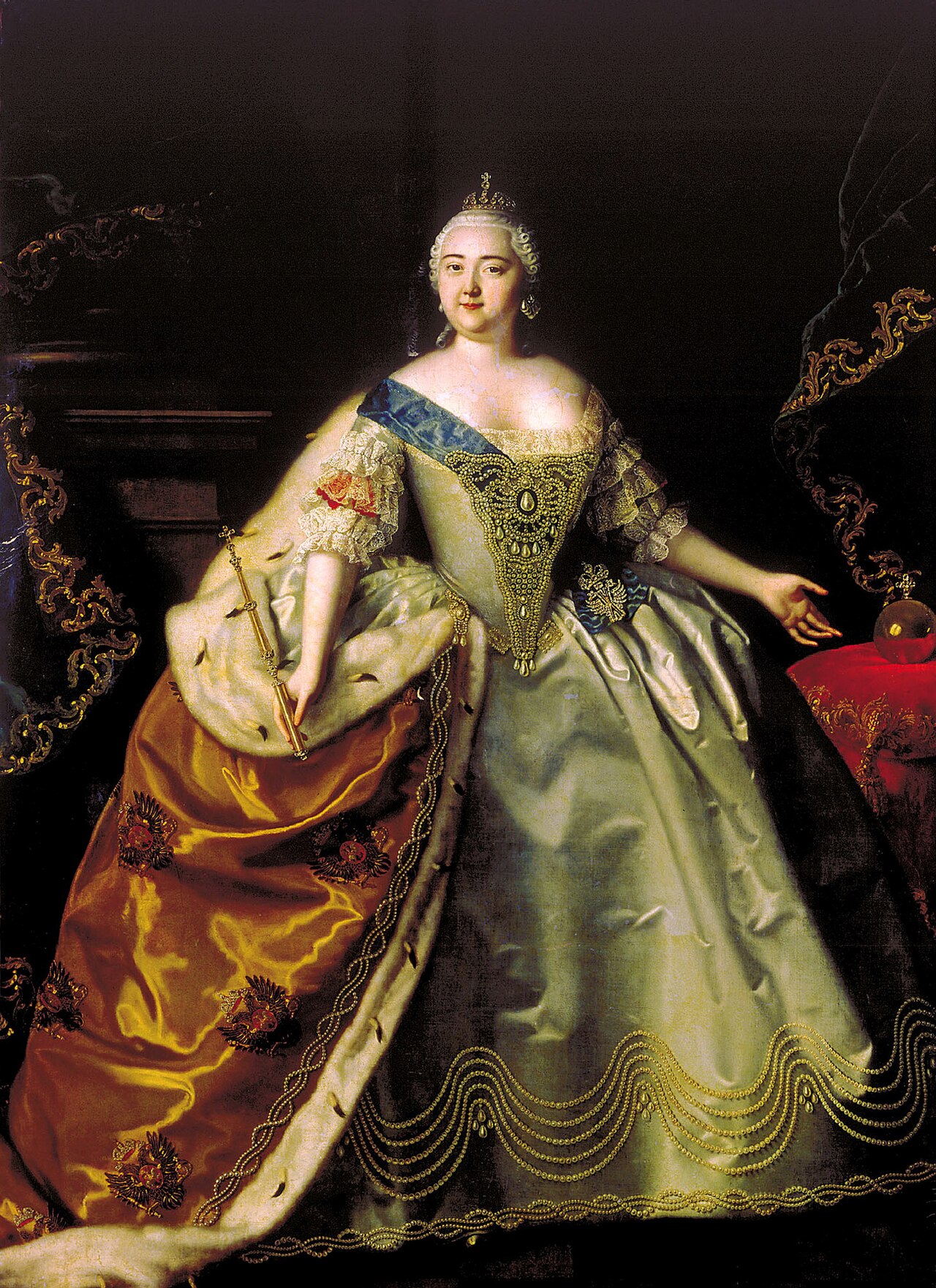
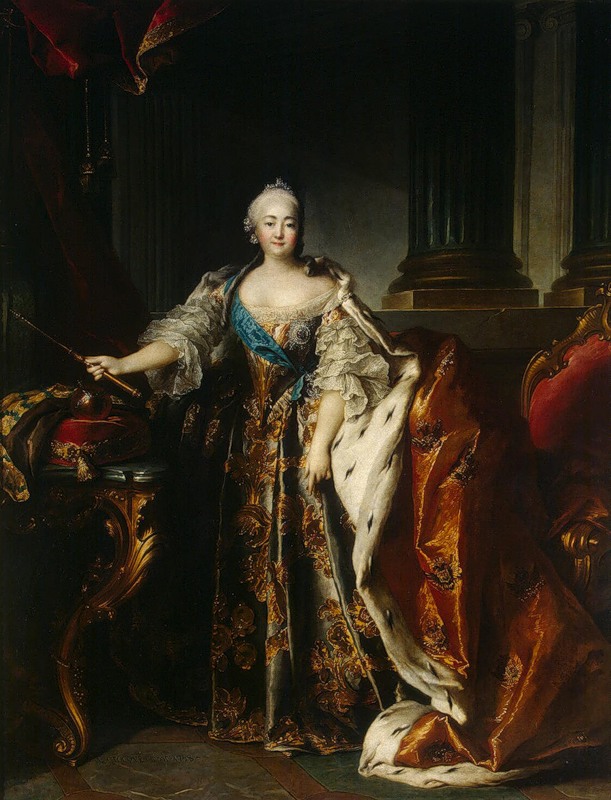
Portrait of Elizabeth of Russia
Louis Caravaque · c. 1750
A state portrait of Empress Elizabeth from the early years of her reign, shown in full imperial regalia.
An official state portrait of Elizabeth as reigning empress, displaying her imperial power and status.
About this source
What it is
This full-length state portrait of Empress Elizabeth was painted around 1750 by Louis Caravaque. It is held today at the Tretyakov Gallery.
She is shown wearing a silver-grey satin gown with a blue sash, an ermine-lined crimson and gold robe, and a jeweled crown, holding a gold sceptre beside a cushion with an orb. She also wears the ribbon, star and cross of the Order of St Andrew.
Why it matters
State portraits like this were official images designed to show a ruler's power and legitimacy. Painted early in Elizabeth's reign, this image presents her authority as empress through the symbols of crown, sceptre and orb, and the highest Russian order of chivalry.
Look closer
- What do the crown, sceptre and orb tell you about how rulers wanted to be seen?
- Why might an empress want to be shown wearing a chivalric order?
- What is left out of this carefully staged image of power?
This painting is part of the curated material that grounds the AI version of Elizabeth of Russia on Humy.ai — when students ask about related events, the AI can quote it and cite it.
More Elizabeth of Russia sources
Browse all 84 →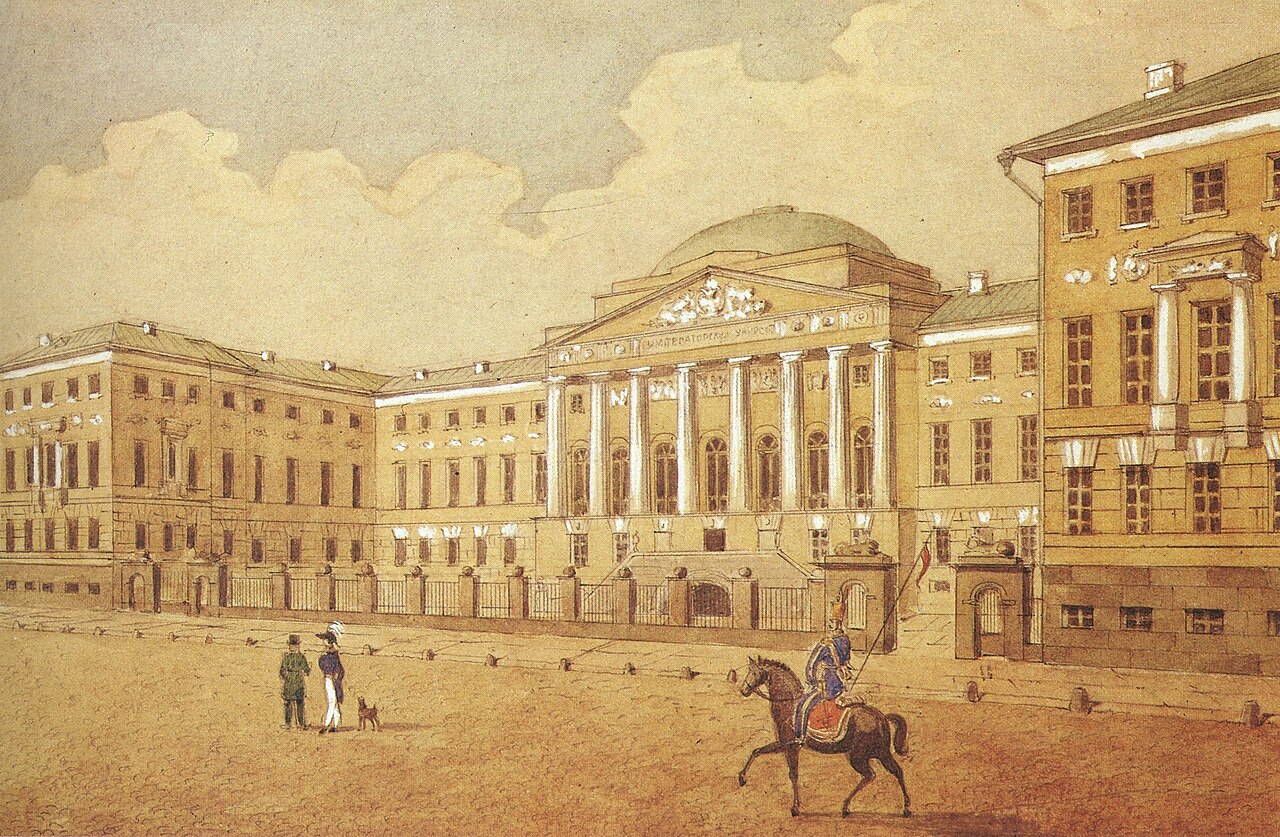 Document
Primary source
Imperial Moscow University
Elizabeth of Russia · 1755
 Artifact
Primary source
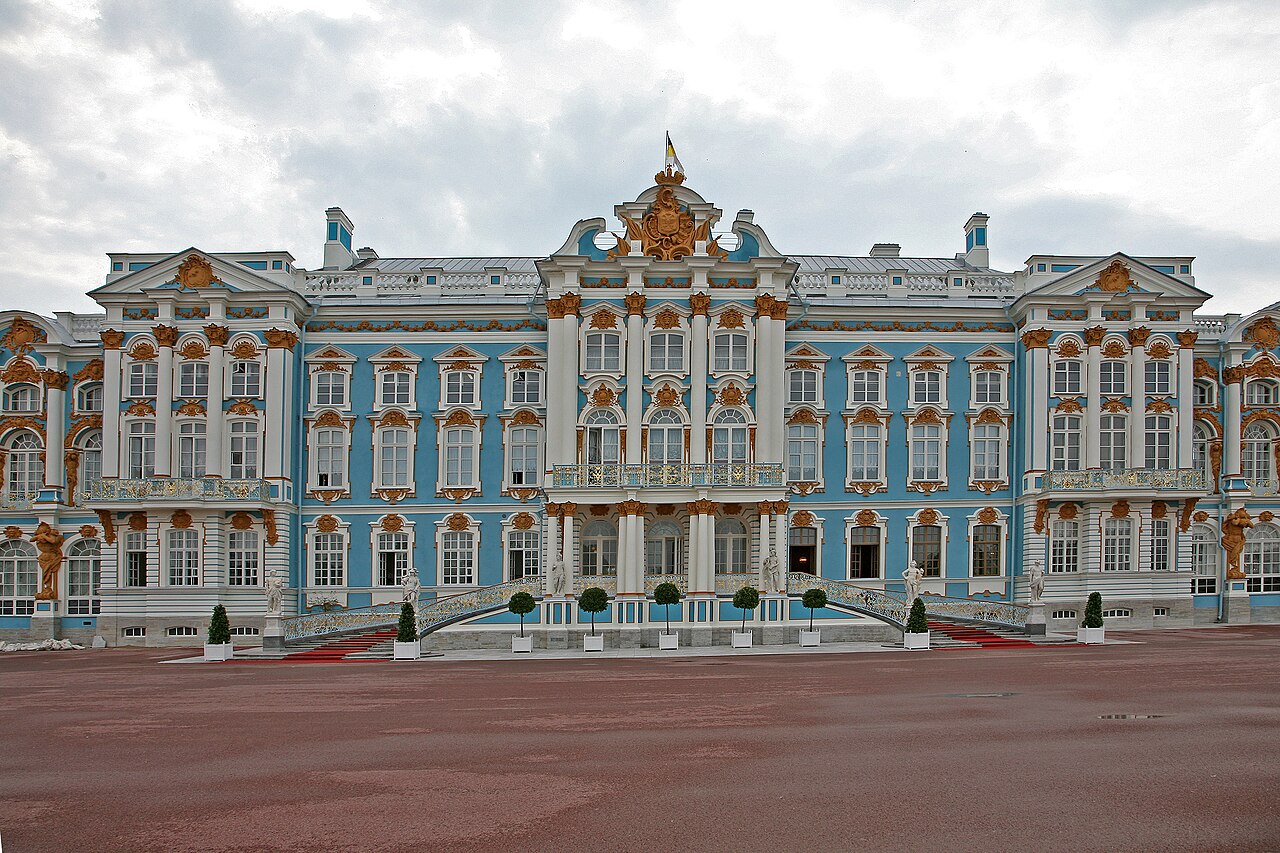
Catherine Palace
Bartolomeo Rastrelli · 1752-1756 (rebuilding)
 Artifact
Primary source
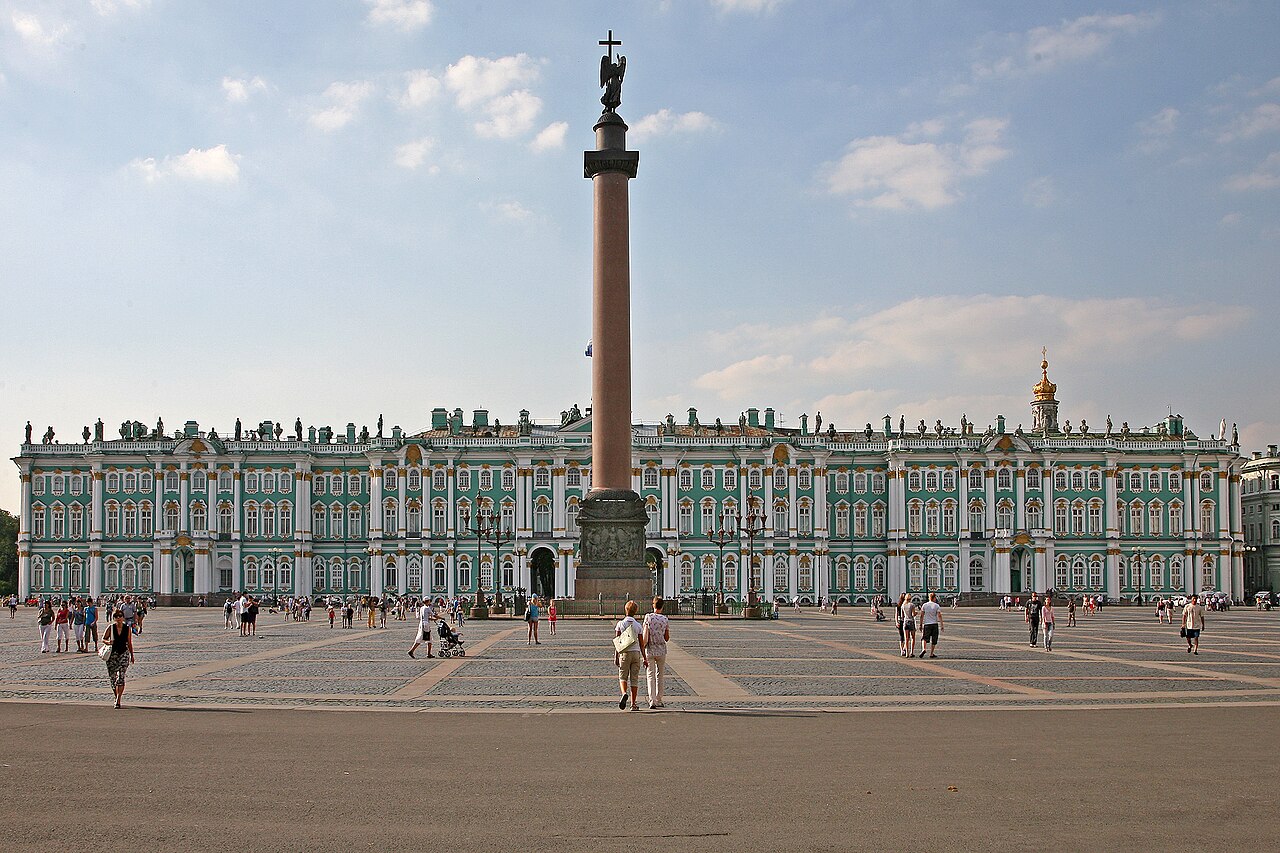
Winter Palace
Bartolomeo Rastrelli · 1754, rebuilt 1837-1838
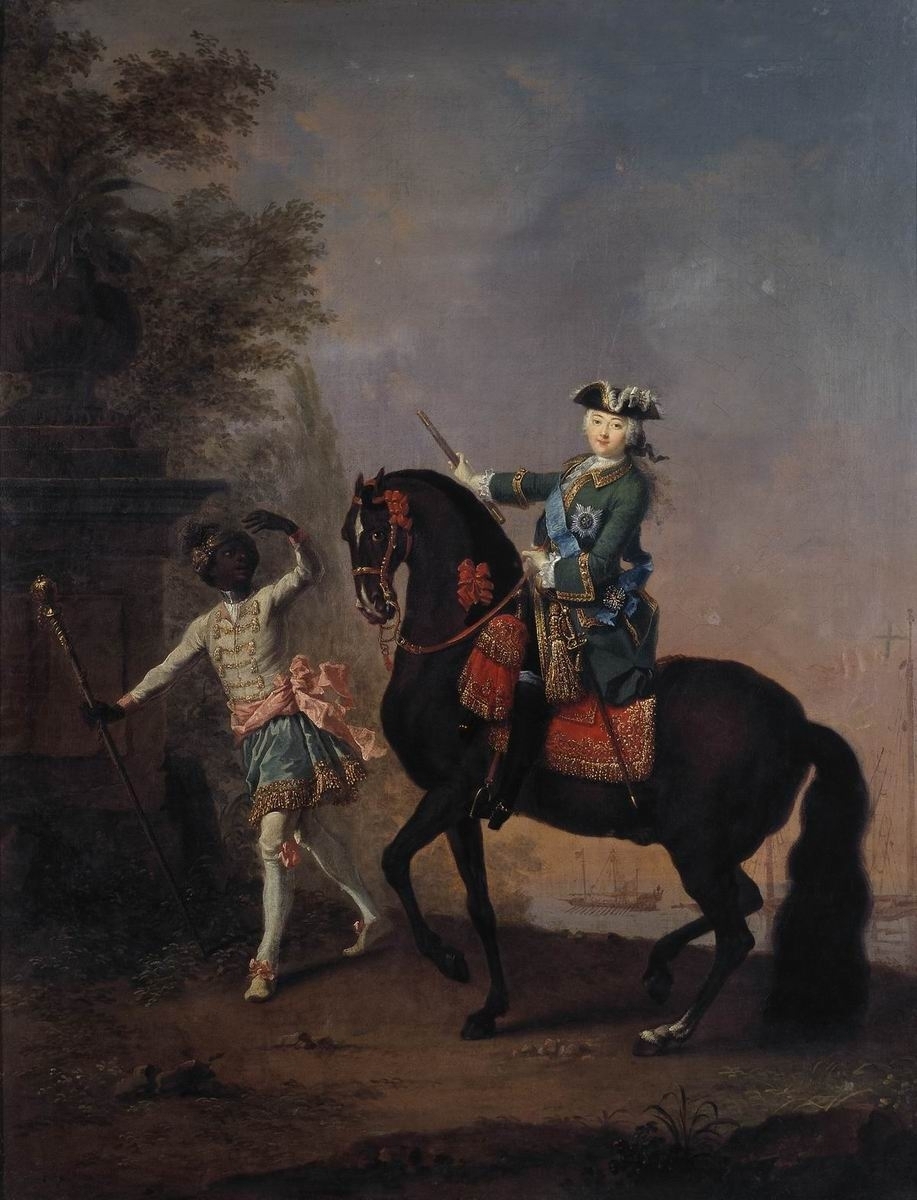 Painting
Primary source
The Empress Elizabeth of Russia on Horseback, Attended by a Page
Georg Christoph Grooth · 1743
Free account
Read every Elizabeth of Russia source
Sign up free →
Ready when you are
Start chatting with Elizabeth of Russia now.
20 messages free · No credit card · Available in 50+ languages.