


Secondary sourceSculptureRoman copy after a Greek original of c. 330 BCE
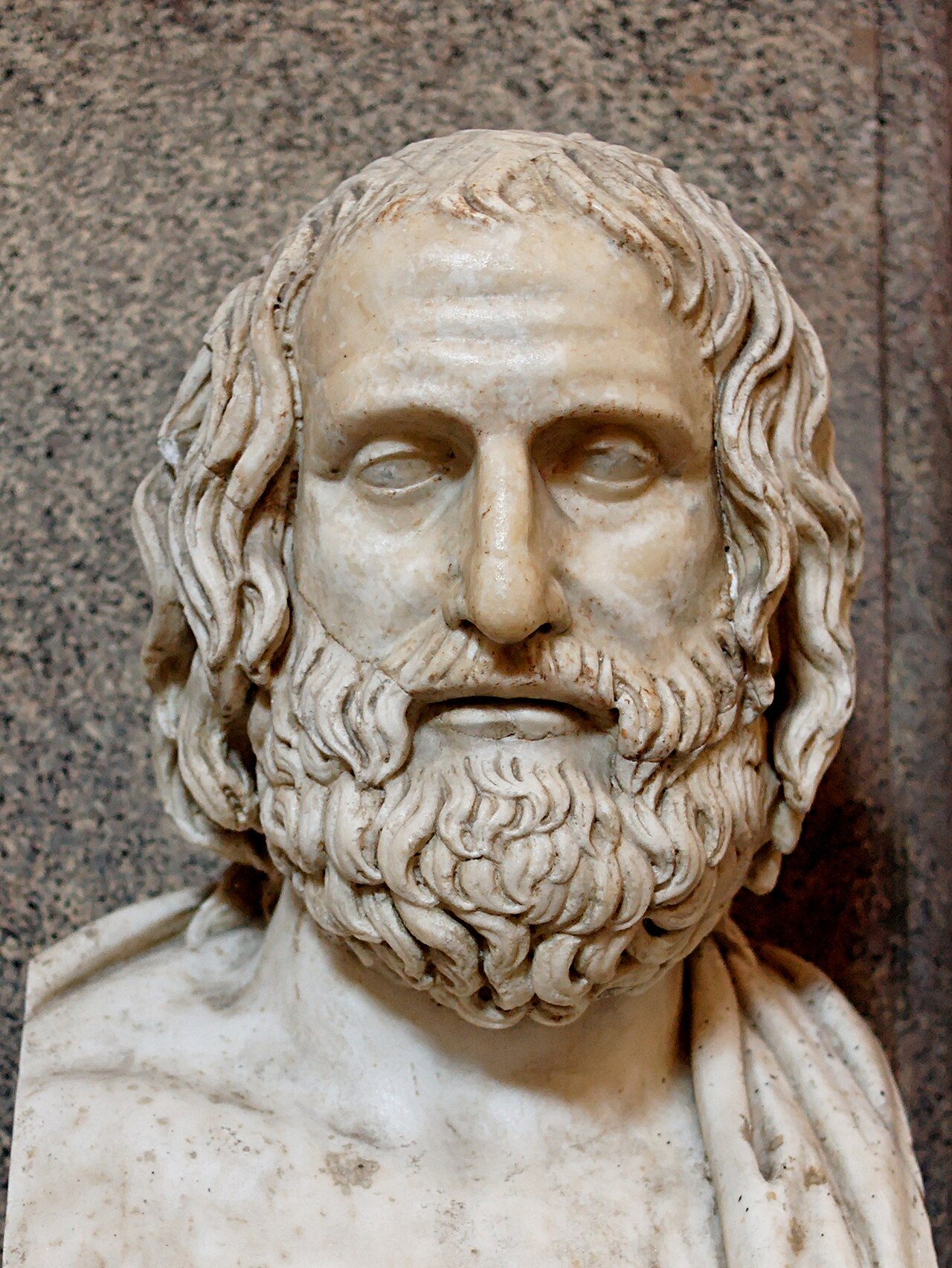
Portrait of Euripides
Roman copy after a Greek original of c. 330 BCE
A Roman marble copy of a Greek bust type, now in the Vatican, showing the standard image of Euripides as an aged, brooding poet.
This bust is the standard portrait image used to represent Euripides, created long after his lifetime.
About this source
What it is
This marble bust is a Roman copy of a portrait type created in the Lycurgan era, based on a Greek original from around 330 BC. It is held in the Museo Pio-Clementino at the Vatican.
The bust shows a bearded man with wavy, shoulder-length hair, a furrowed brow and deep-set eyes, wearing a draped garment over his shoulders.
Why it matters
This is considered the standard image of Euripides, showing him as an older, serious-looking man. Since no portrait was made during his actual lifetime, this image reflects how later generations of Greeks and Romans imagined and remembered the great tragedian, decades or centuries after his death.
Look closer
- Why might ancient sculptors have chosen to show Euripides looking serious and thoughtful rather than smiling?
- What does it tell us that this portrait type was copied many times by the Romans?
- Does a bust like this tell us anything true about the real Euripides, or only about how he was remembered?
This sculpture is part of the curated material that grounds the AI version of Euripides on Humy.ai — when students ask about related events, the AI can quote it and cite it.

Ready when you are
Start chatting with Euripides now.
20 messages free · No credit card · Available in 50+ languages.