


Secondary sourcePainting1833
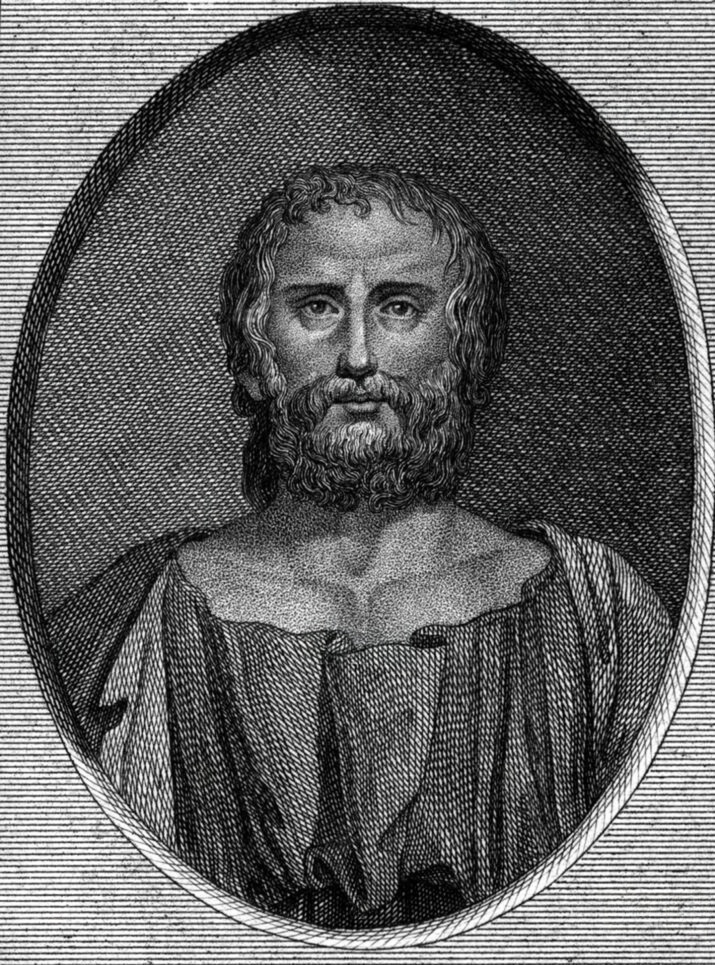
Portrait of Euripides by Max Karl Baldamus
Max Karl Baldamus · 1833
An 1833 oval engraved portrait of the tragic poet Euripides by Max Karl Baldamus, labelled as a tragedian. It is an imagined likeness made long after his death.
An 1833 imagined portrait labelling Euripides as a tragic poet, showing how later artists remembered him.
About this source
What it is
This is an oval portrait of Euripides from 1833, made by Max Karl Baldamus. It is engraved in black and white. It shows a bearded man with curly hair and a heavy beard, wearing a loose draped garment with an open neck. The background is finely hatched inside a decorative border. The label reads Euripide, tragediografo, Italian for Euripides, tragic poet.
Why it matters
The portrait was made more than two thousand years after Euripides lived. The curator's note describes it as an imagined portrait, so it reflects how nineteenth-century artists and readers pictured the ancient tragedian. It shows that Euripides had become a symbol of Greek tragedy for later audiences, in Europe as well as in Athens.
Look closer
- What features of the face and clothing make this man look like a poet or thinker?
- Why might an artist choose an oval frame and a decorative border for a portrait of a playwright?
- What can this image not tell us about the real appearance of Euripides?
This painting is part of the curated material that grounds the AI version of Euripides on Humy.ai — when students ask about related events, the AI can quote it and cite it.

Ready when you are
Start chatting with Euripides now.
20 messages free · No credit card · Available in 50+ languages.