


Primary sourcePainting1768
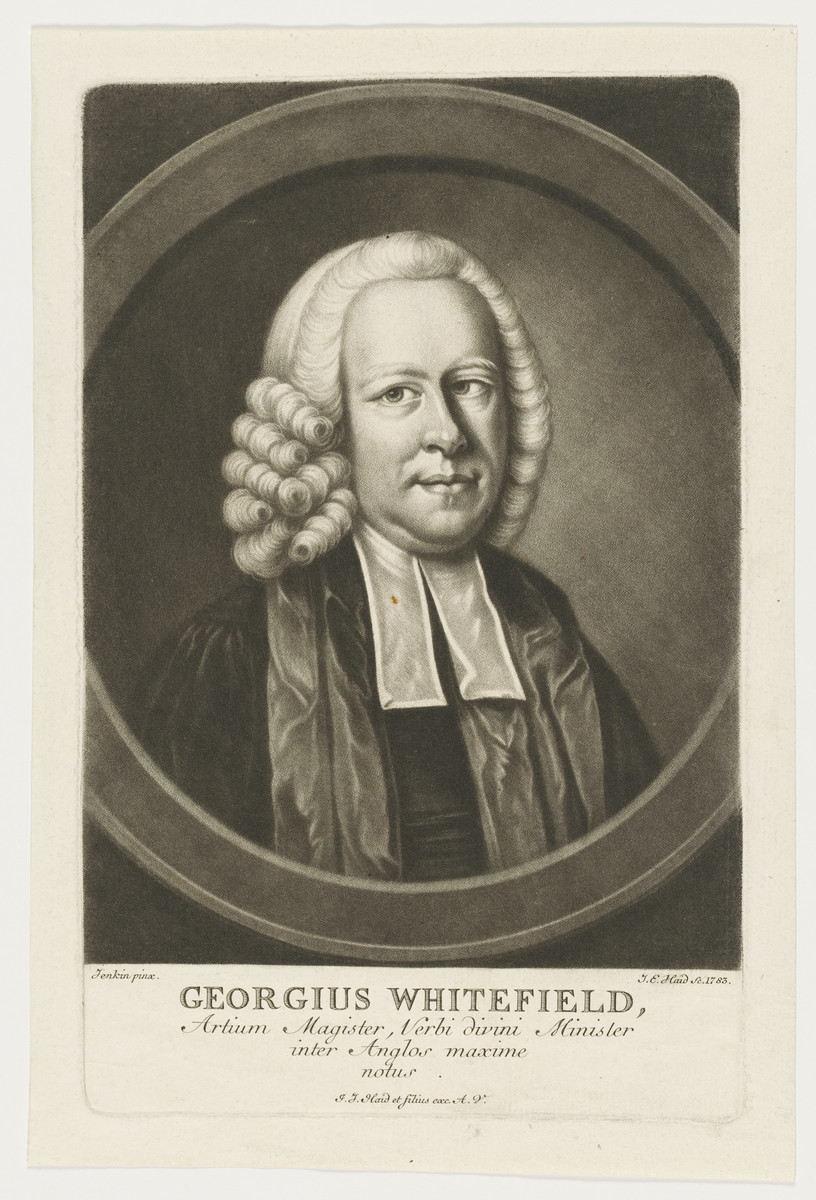
Portrait of Georgius Whitefield
Johann Elias Haid · 1768
A German mezzotint portrait of Whitefield in a white wig and dark gown, signed by Johann Elias Haid and dated 1768.
It is a 1768 likeness made while Whitefield was alive, showing his fame in German-speaking lands.
About this source
What it is
This is a mezzotint portrait of a clergyman in a white wig and dark gown with white bands, set in an oval frame. Below the oval is the inscription GEORGIUS WHITEFIELD, Artium Magister, Verbi divini Minister inter Anglos maxime notus, which calls him a minister best known among the English. The signature J.E. Haid sc. 1768 appears at the lower right. The print is held by Leipzig University Library in Germany.
Why it matters
The print was made in Germany in 1768, while Whitefield was still alive, and shows that his fame extended to continental Europe. Its Latin inscription reflects the learned language used by scholars and churchmen of the period.
Look closer
- What does the Latin inscription tell you about how Whitefield wanted or was expected to be known?
- Who would have bought a print like this, and why?
- What does the signature and date add to your understanding of the portrait?
This painting is part of the curated material that grounds the AI version of George Whitefield on Humy.ai — when students ask about related events, the AI can quote it and cite it.
More George Whitefield sources
Browse all 70 →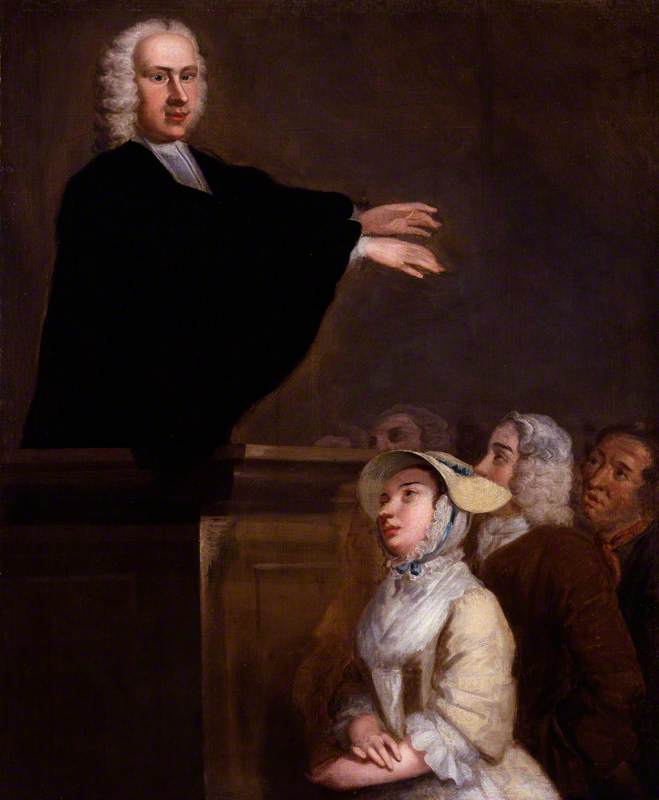 Painting
Primary source
George Whitefield
John Wollaston the Younger · 1742
 Speech
Primary source
The Nature and Necessity of our New Birth in Christ Jesus, in order to Salvation
George Whitefield · 1737
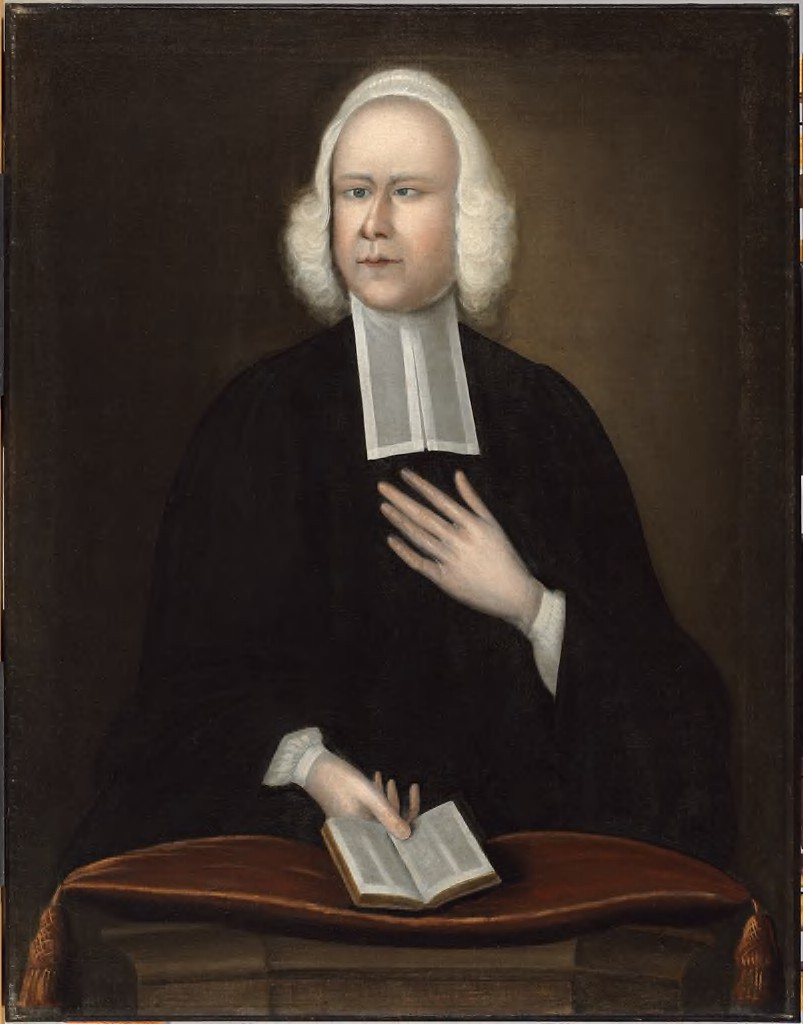 Painting
Primary source
George Whitefield (1714-1770)
Joseph Badger · 1745
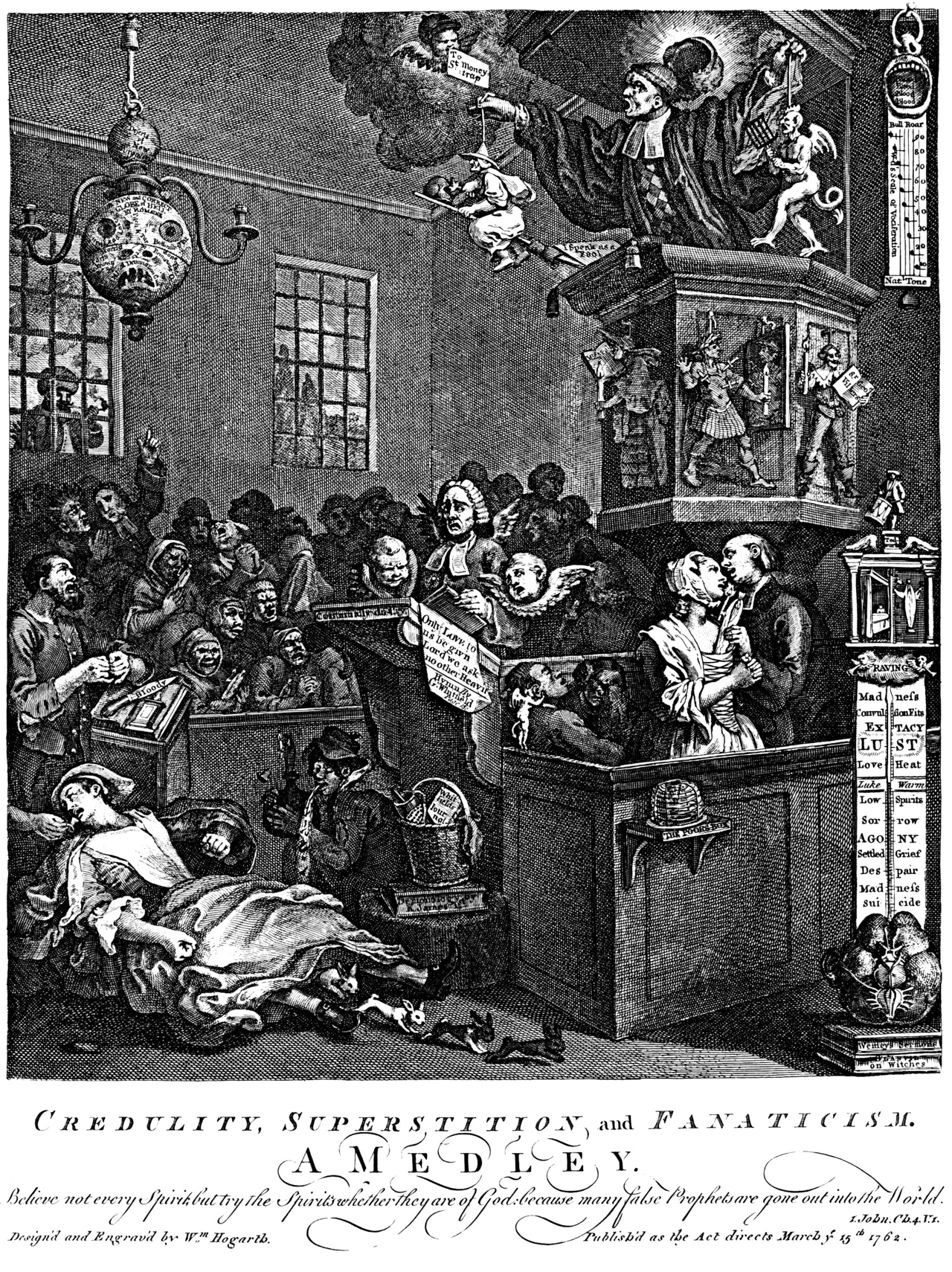 Painting
Primary source
Credulity, Superstition, and Fanaticism
William Hogarth · 1762
Free account
Read every George Whitefield source
Sign up free →
Ready when you are
Start chatting with George Whitefield now.
20 messages free · No credit card · Available in 50+ languages.