


Primary sourceArtifactca. 1777
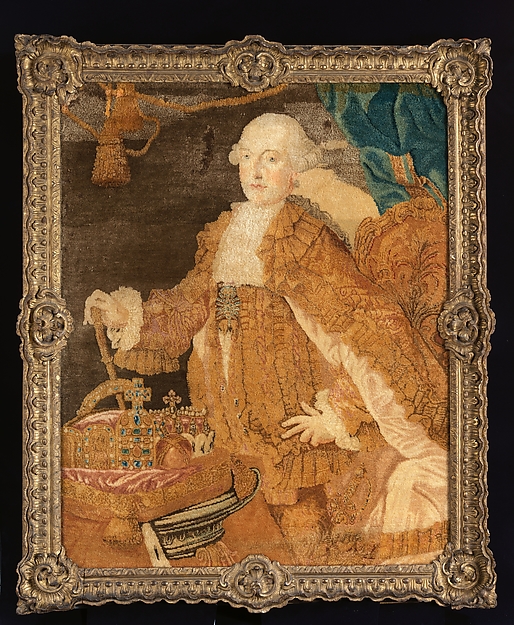
Portrait of Joseph II, Emperor of the Holy Roman Empire
Savonnerie Manufactory · ca. 1777
A knotted-wool Savonnerie tapestry panel portraying Emperor Joseph II, made around 1777 during his reign.
A rare contemporary woven portrait of Joseph II made during his reign, showing him with the symbols of imperial power.
About this source
What it is
This is a knotted-wool panel made by the Savonnerie Manufactory around 1777, showing Emperor Joseph II with powdered white hair, dressed in a golden robe with lace, holding a scepter beside a jeweled crown on a cushion. It is held by The Metropolitan Museum of Art, a gift of J. Pierpont Morgan in 1906.
Why it matters
Woven portraits like this were luxury objects made by skilled French textile workers for elite patrons, and this one gives a rare contemporary image of Joseph II made during his own reign. It shows how rulers were depicted with symbols of power — the crown, the scepter, the rich robe — to project authority rather than to show an ordinary likeness.
Look closer
- What objects surround Joseph II in this portrait, and what do they say about his power?
- Why might a ruler's portrait be made as a woven textile rather than a painting?
- What can't a formal, symbolic portrait like this tell us about what Joseph II was actually like?
This artifact is part of the curated material that grounds the AI version of Joseph II on Humy.ai — when students ask about related events, the AI can quote it and cite it.
More Joseph II sources
Browse all 95 →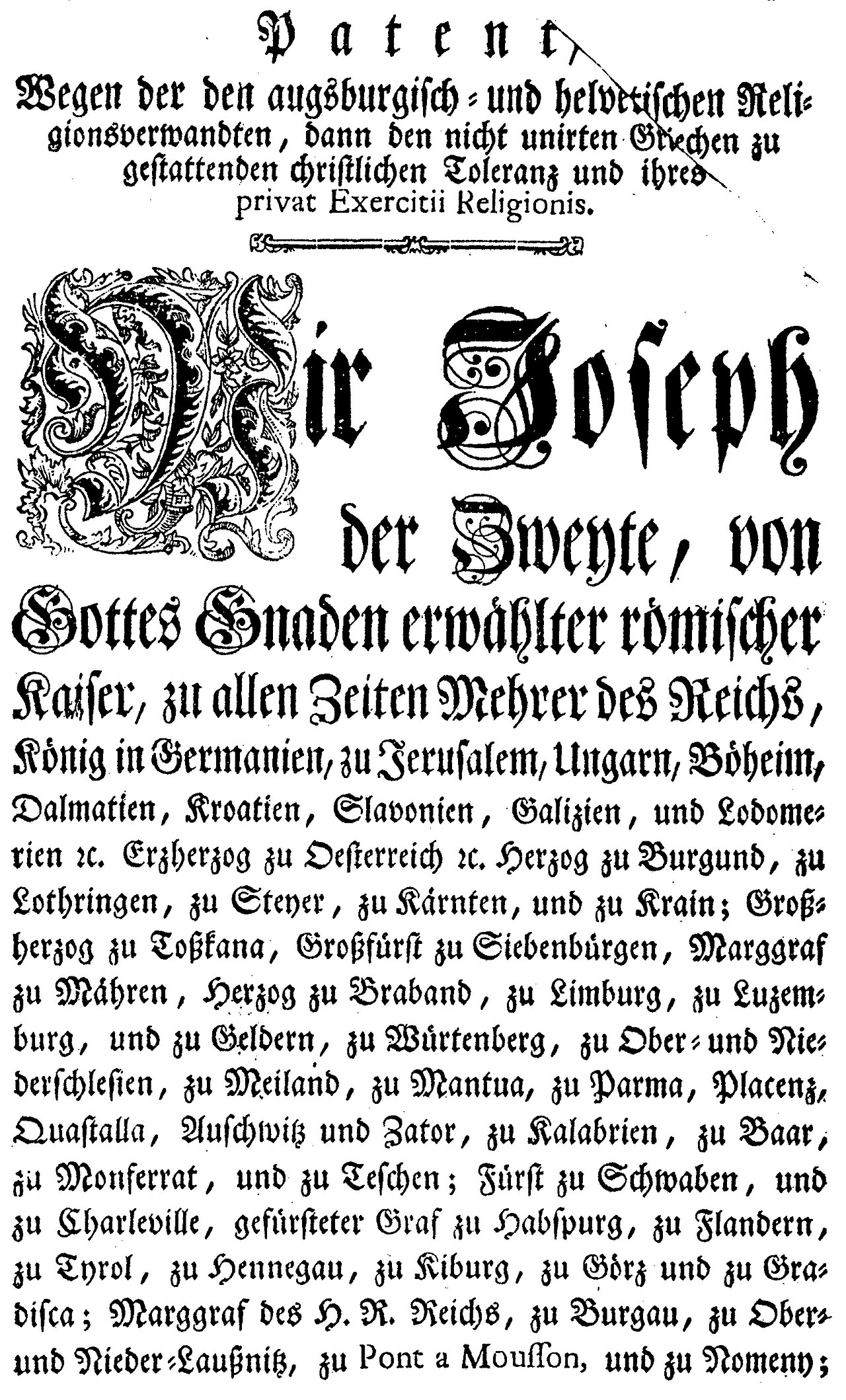 Document
Primary source
Patent of Toleration
Joseph II, Holy Roman Emperor · 13 October 1781
 Document
Primary source
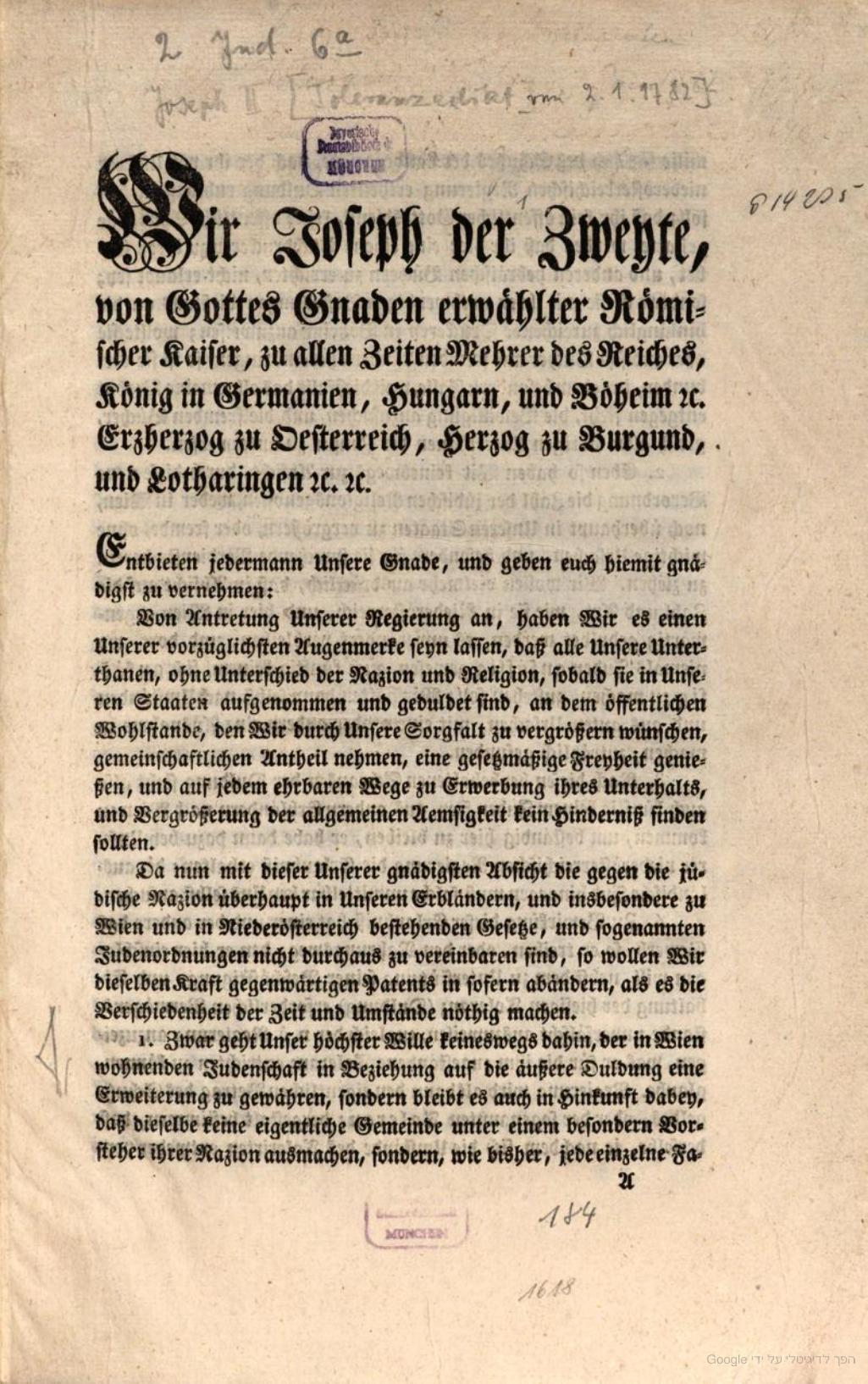
1782 Edict of Tolerance
Joseph II, Holy Roman Emperor · 2 January 1782
 Painting
Primary source
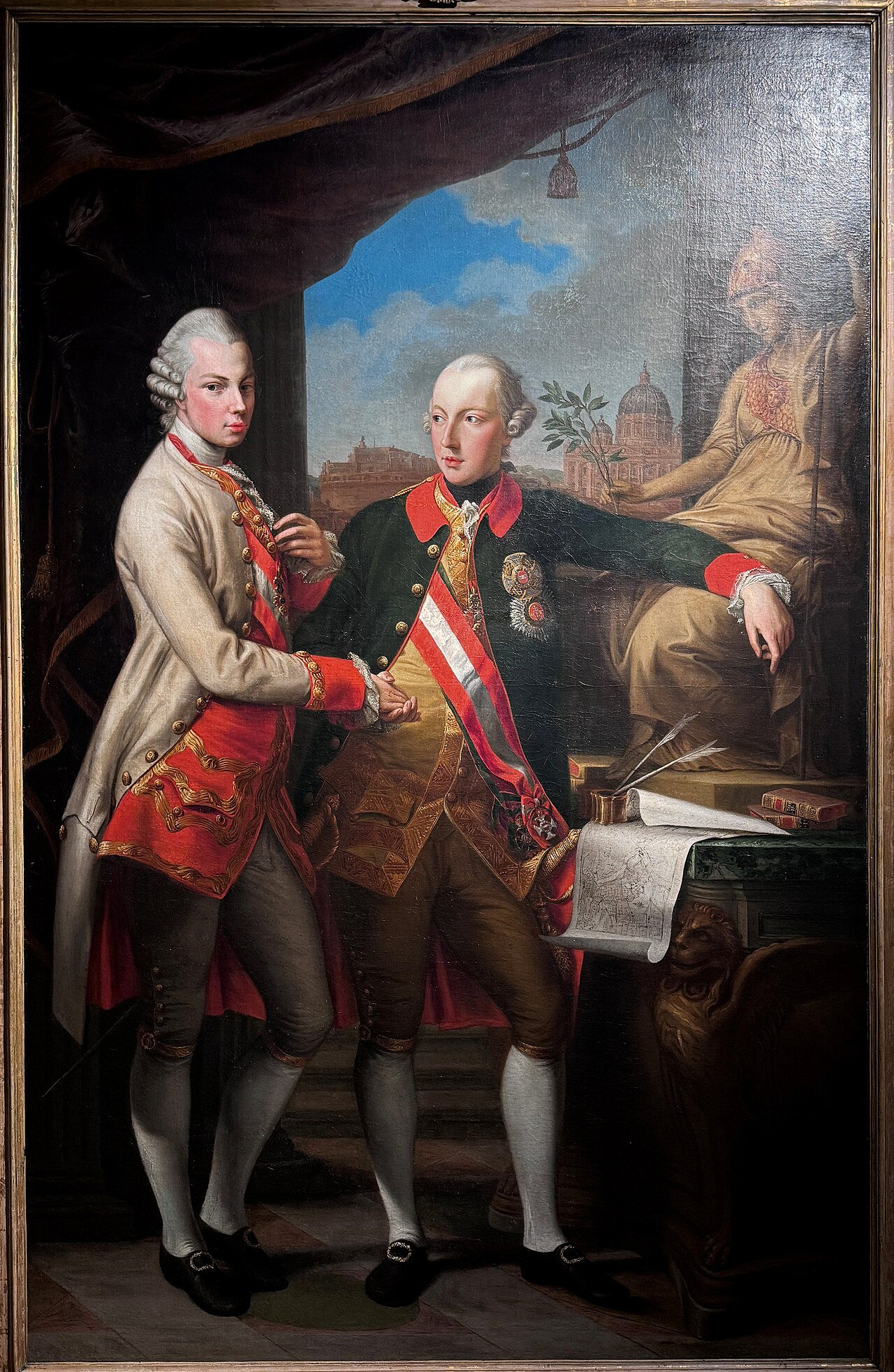
Emperor Joseph II and Grand Duke Leopold of Tuscany
Pompeo Batoni · 1769
 Painting
Primary source
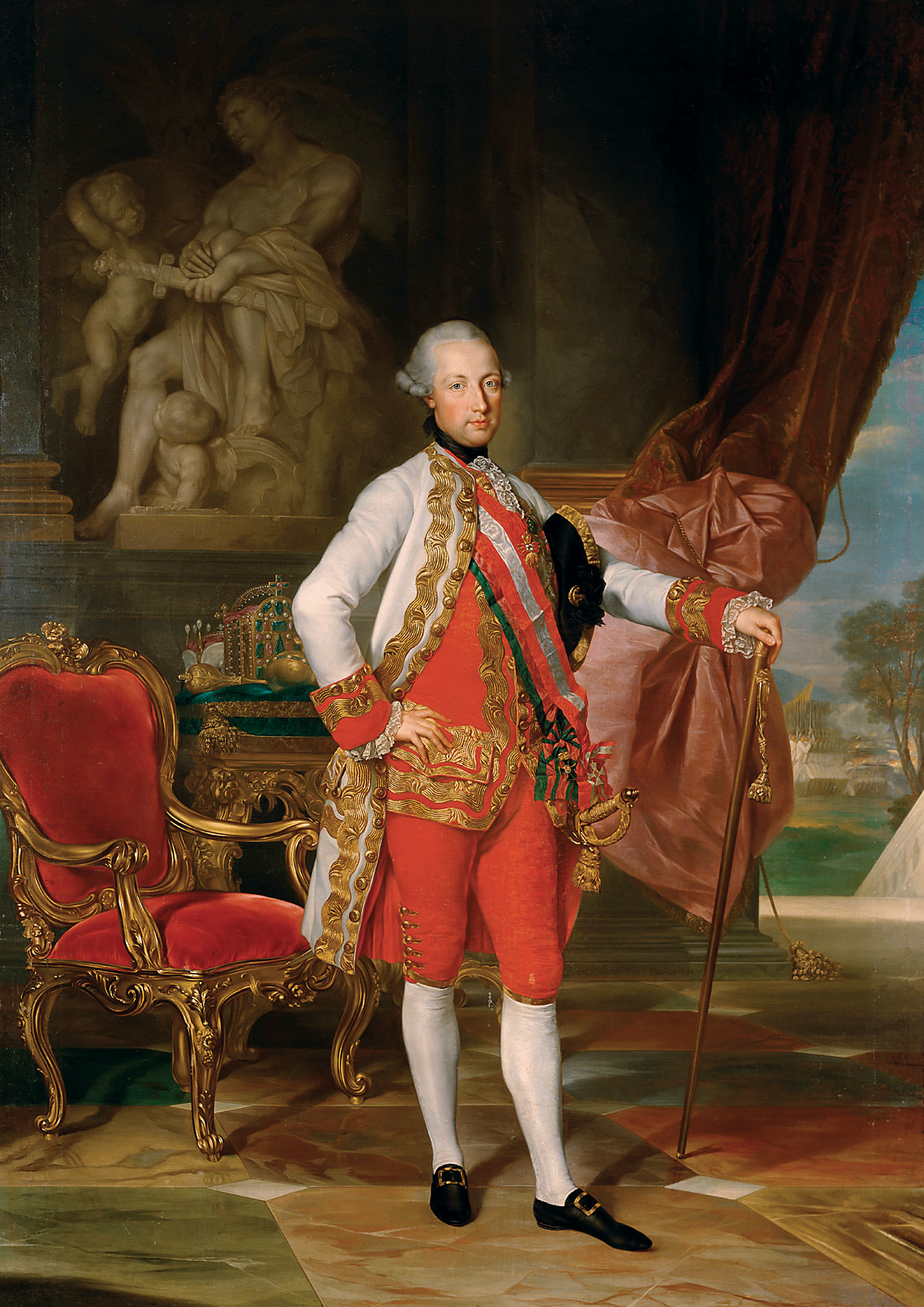
Portrait of Joseph II, Holy Roman Emperor
Anton von Maron
Free account
Read every Joseph II source
Sign up free →
Ready when you are
Start chatting with Joseph II now.
20 messages free · No credit card · Available in 50+ languages.