


Secondary sourcePaintingc. 1200
Portrait of Otto I the Great in the Chronicle of Bishop Otto of Freising
Unknown · c. 1200
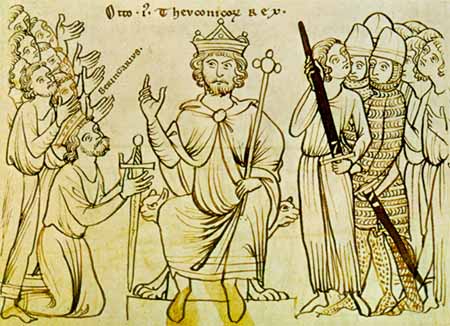
A Milanese manuscript drawing of around 1200 showing Otto I enthroned, receiving homage, as he was remembered in Italy.
This manuscript image shows how Otto I was remembered as King of the Germans two centuries after his death.
About this source
What it is
This is a sepia ink drawing from a manuscript of the Chronicle of Bishop Otto of Freising, made in Milan around 1200. It shows a crowned, bearded king seated on a throne with a scepter, identified by caption as 'Otto I Theutonicorum Rex' (Otto I, King of the Germans).
Why it matters
Made about two centuries after Otto's death, this image shows how he was remembered in Italy as emperor, long after his own lifetime. The scene of a kneeling man offering a sword and soldiers standing nearby suggests the authority and military power associated with his memory.
Look closer
- Why do you think the artist chose to show Otto receiving a sword from a kneeling figure?
- What does the Latin caption tell us about how Otto was titled and remembered?
- Since this was made centuries after Otto's death, what can and cannot we learn from it about the real man?
This painting is part of the curated material that grounds the AI version of Otto I the Great on Humy.ai — when students ask about related events, the AI can quote it and cite it.
More Otto I the Great sources
Browse all 95 →Primary source
Res gestae saxonicae sive annalium libri tres
Widukind of Corvey · c. 960-973
 Artifact
Primary source
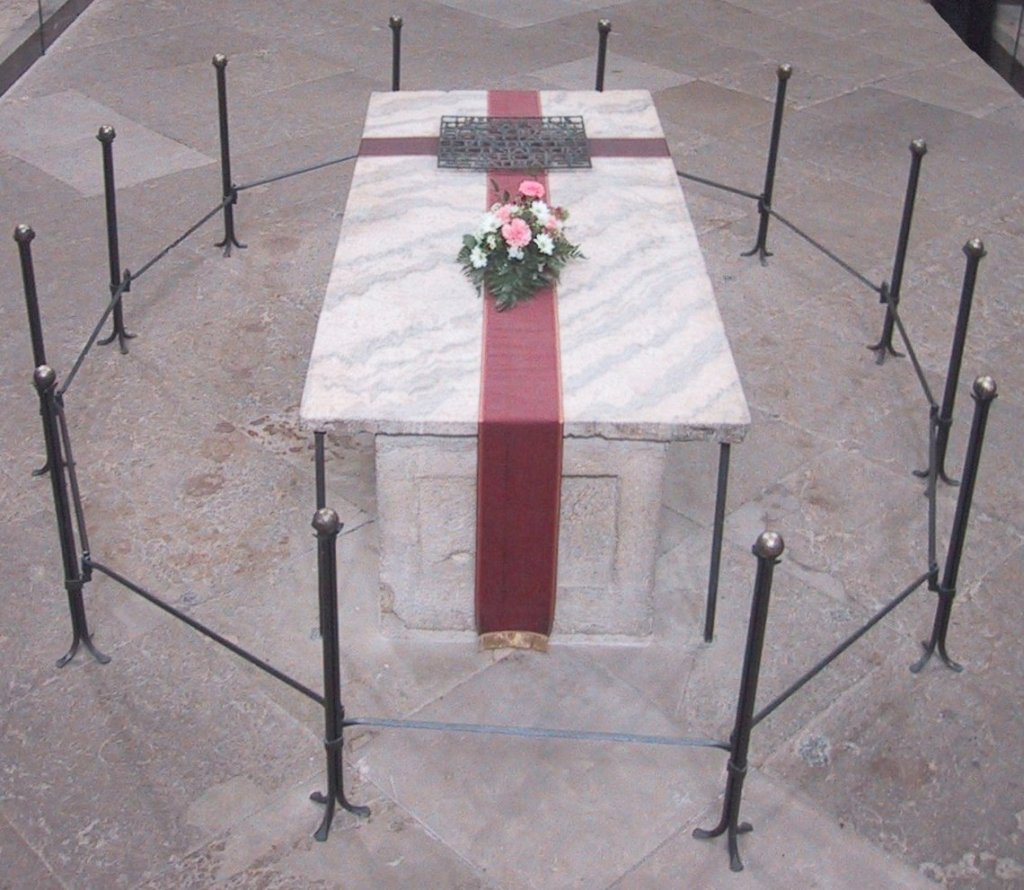
Tomb of Otto I, Holy Roman Emperor
973
 Letter
Primary source
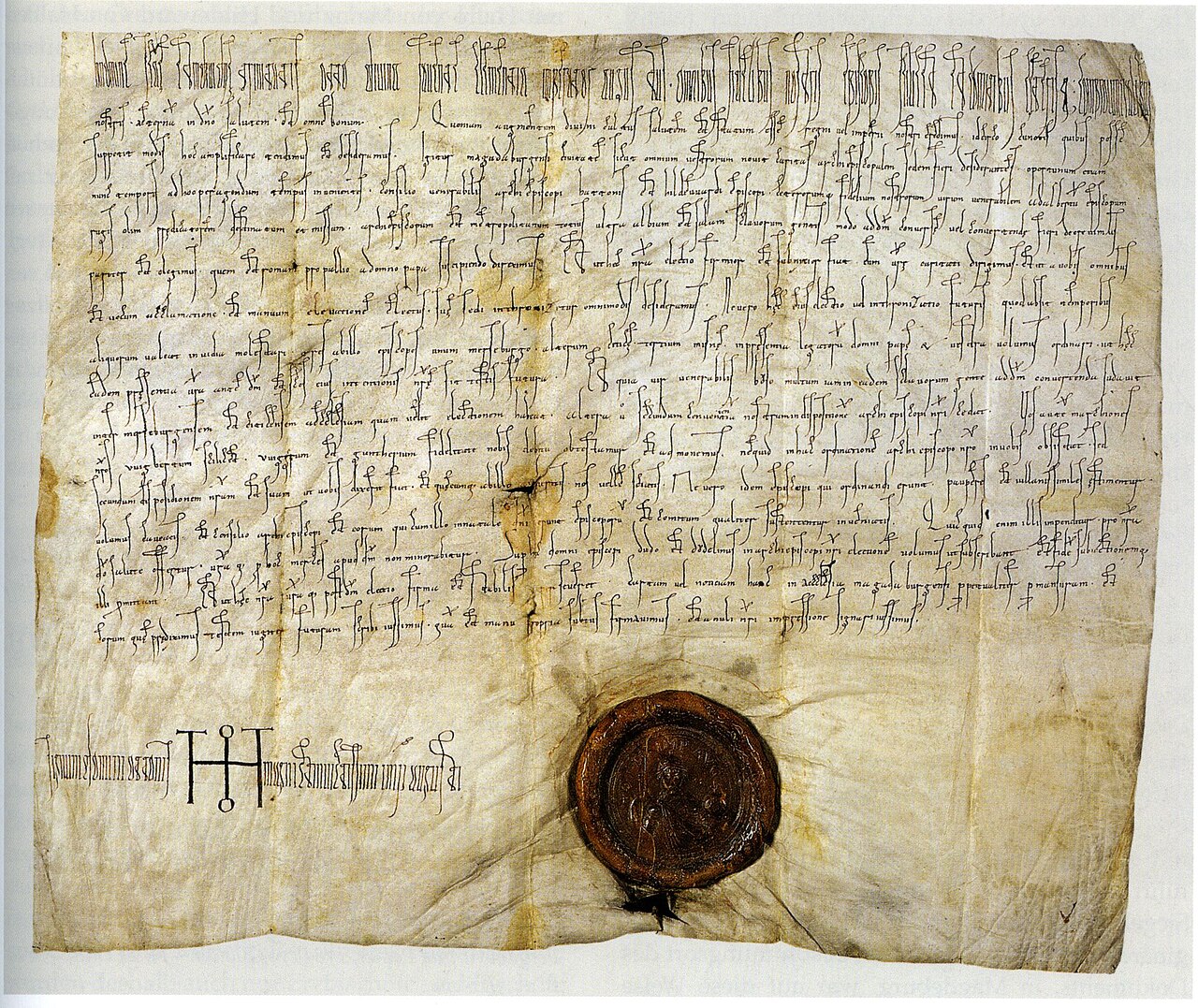
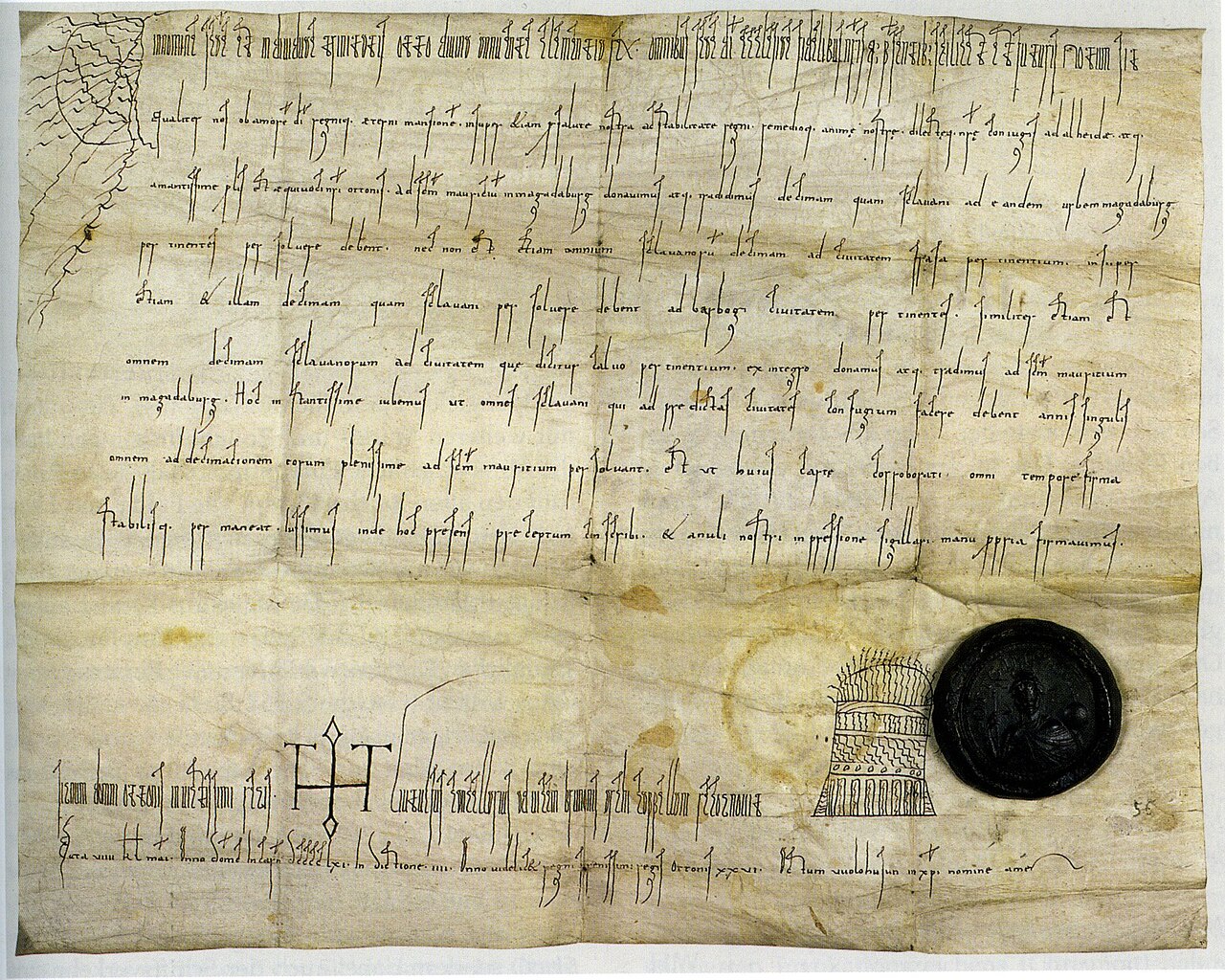
Letter announcing the Archbishopric of Magdeburg
Otto I the Great · 968
Primary source
Carmen de gestis Ottonis I. imperatoris
Hrotsvitha · c. 950
Free account
Read every Otto I the Great source
Sign up free →
Ready when you are
Start chatting with Otto I the Great now.
20 messages free · No credit card · Available in 50+ languages.