


Primary sourcePainting1527
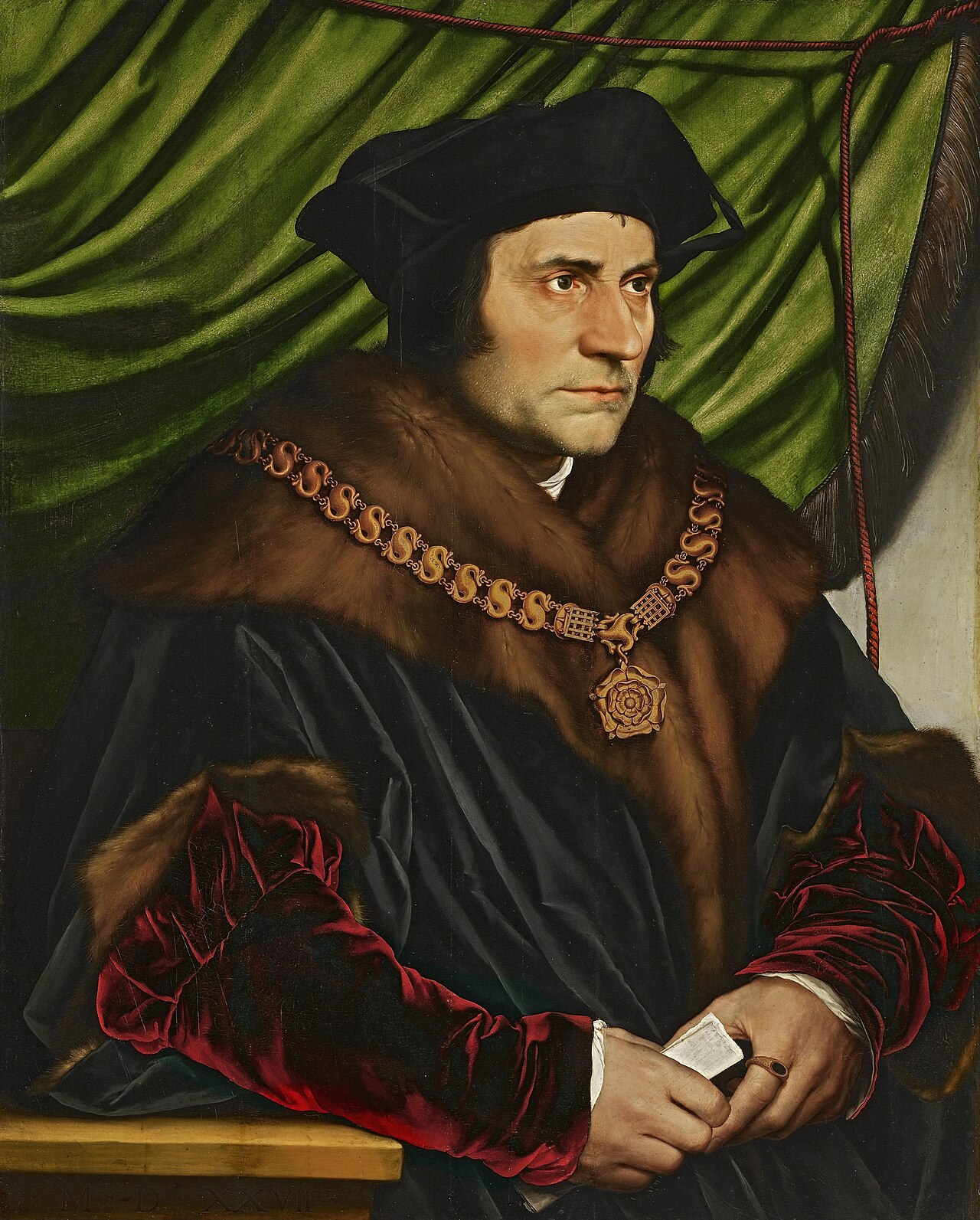
Portrait of Sir Thomas More
Hans Holbein the Younger · 1527
Hans Holbein the Younger's 1527 oil portrait of Thomas More, painted from life, now considered the defining image of him.
This life portrait of More, painted at the height of his career, is the best-known image of him.
About this source
What it is
This oak panel painting was made in 1527 by the German artist Hans Holbein the Younger, during his stay in London. It shows Thomas More in half-profile, wearing a fur-lined coat and his royal livery chain of office, and holding a book. It is now held by the Frick Collection in New York.
Why it matters
Holbein was introduced to More through their mutual friend, the humanist Desiderius Erasmus. The portrait captures More at the height of his career as a knighted statesman and speaker in Parliament. Details like the livery chain and a cord tied in a Franciscan knot point to both his public role and his private religious devotion.
Look closer
- What do More's clothing and the chain around his neck tell you about his status at the time?
- Why might Holbein have included the small knotted cord, and what might it suggest about More beyond his public role?
- How does a painted portrait like this differ from a written description of a person?
This painting is part of the curated material that grounds the AI version of Thomas More on Humy.ai — when students ask about related events, the AI can quote it and cite it.
More Thomas More sources
Browse all 90 →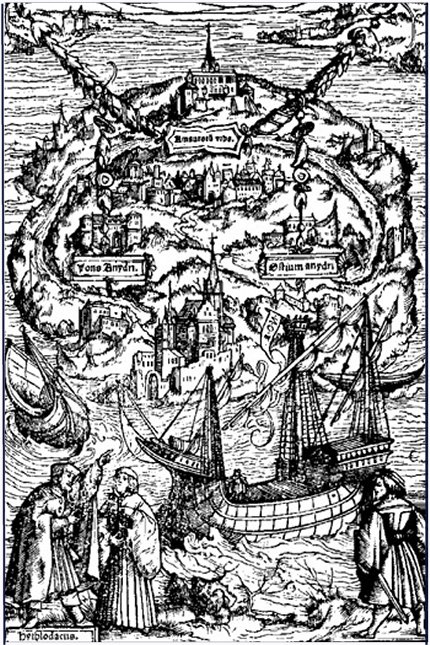 Book
Primary source
Utopia
Thomas More · 1516
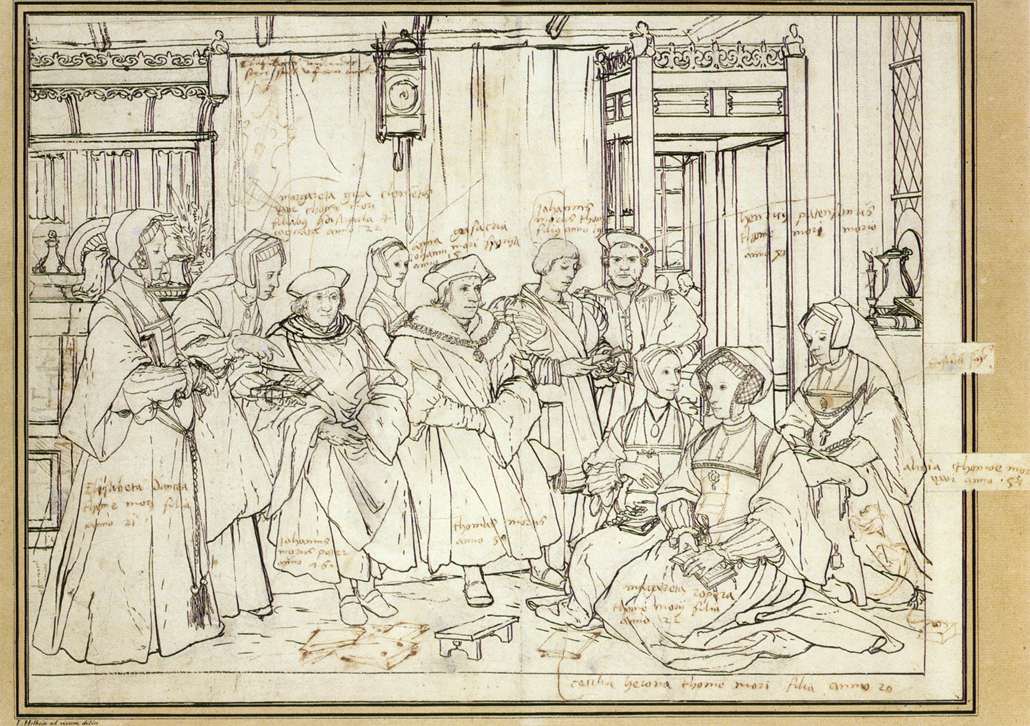 Artifact
Primary source
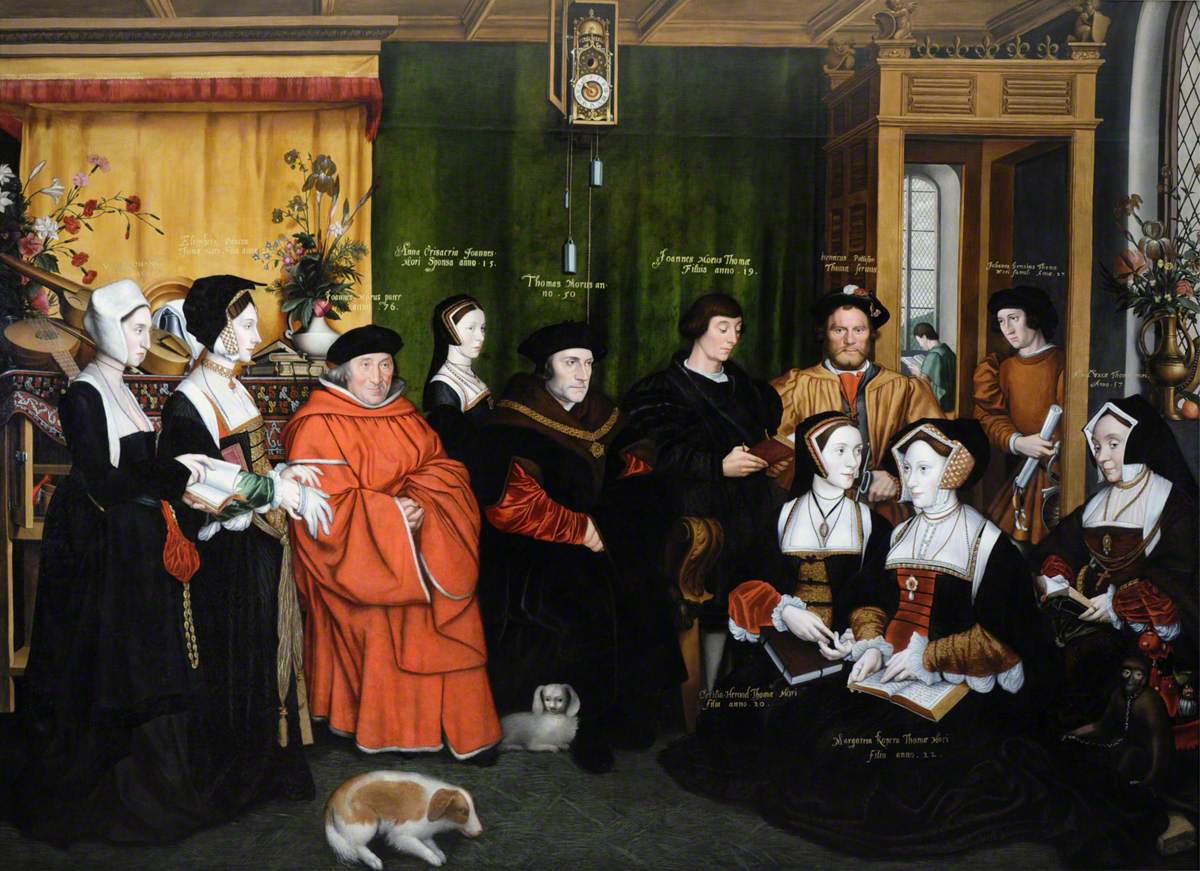
Study for the Family of Sir Thomas More
Hans Holbein the Younger · c. 1527
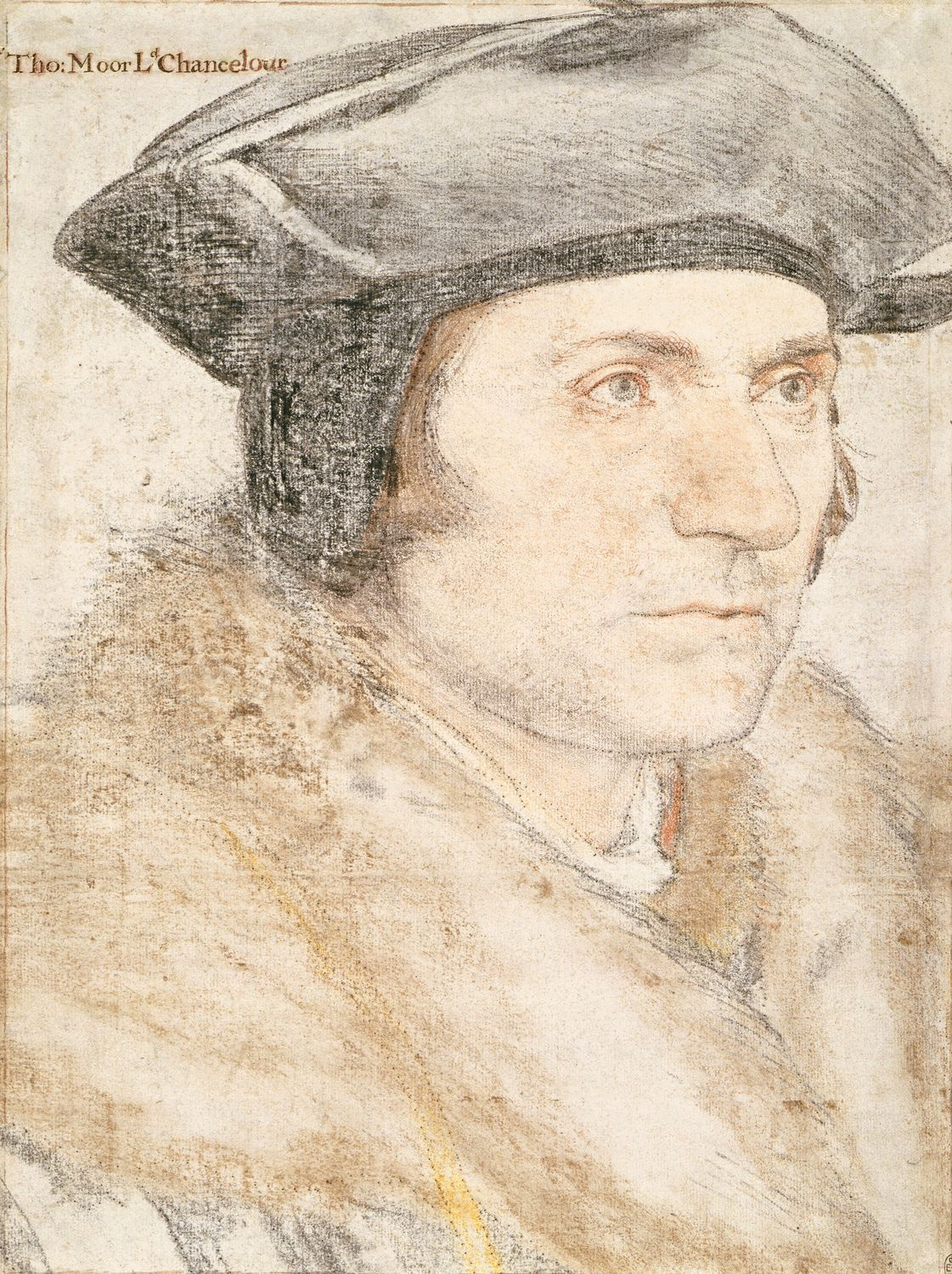 Painting
Primary source
Sir Thomas More (chalk portrait drawing)
Hans Holbein the Younger · c. 1526–1527
Primary source
History of King Richard III
Thomas More
Free account
Read every Thomas More source
Sign up free →
Ready when you are
Start chatting with Thomas More now.
20 messages free · No credit card · Available in 50+ languages.