


Secondary sourcePaintingc. 1700
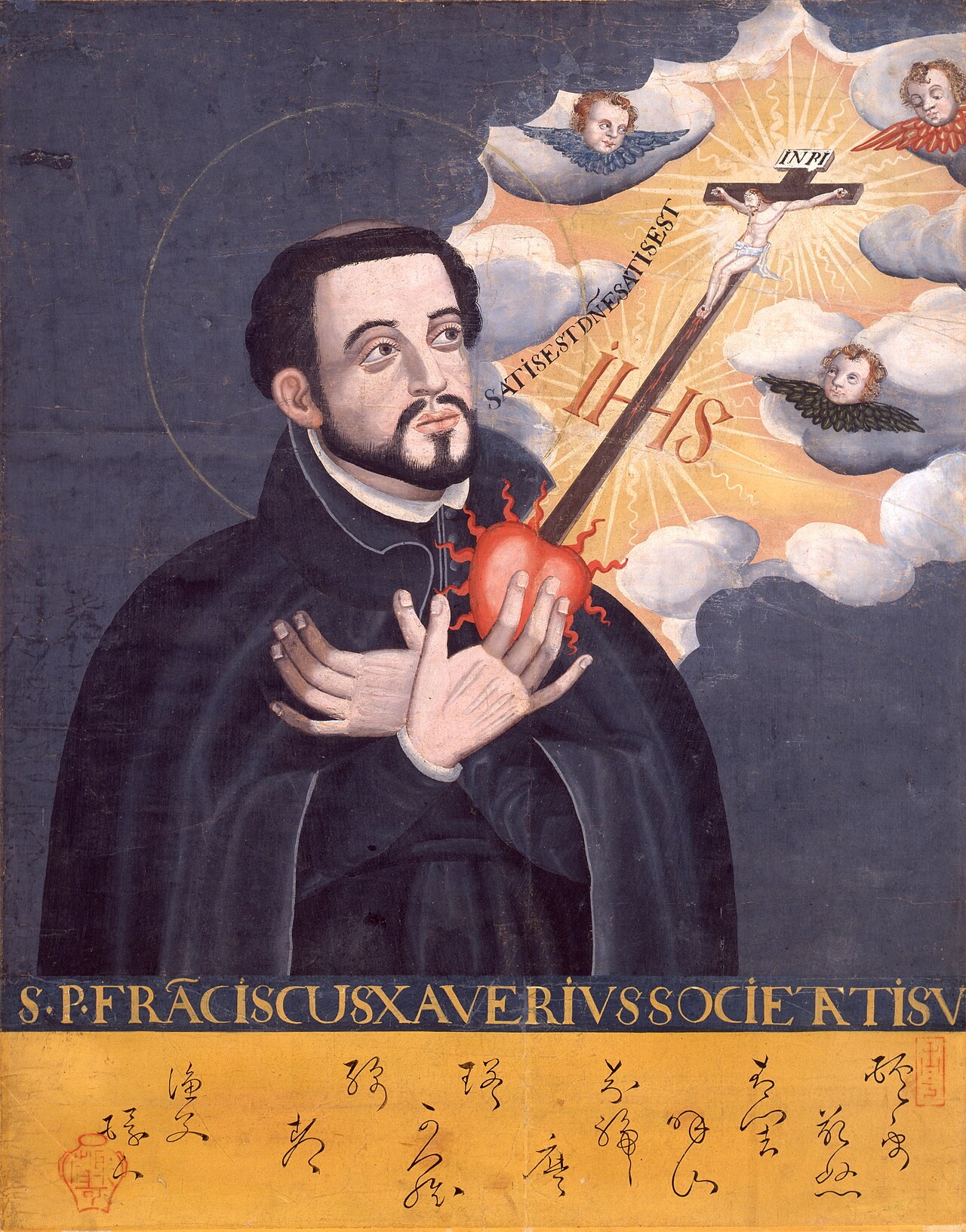
Portrait of St. Francis Xavier
c. 1700
A Japanese Kirishitan-era painting of Francis Xavier, hidden for generations by underground Christians and now one of the best-known images of him in Japan.
This devotional portrait, hidden by Japan's underground Christians, became the standard image of Xavier in Japan.
About this source
What it is
This painting shows a bearded man in a black cassock with a white collar, his hands pressed to his chest holding a red flaming heart, eyes raised upward. Above him floats a golden cloud with a crucifix, the letters IHS, and two cherubs, with a Latin inscription and Japanese characters below. It dates from around 1700 and is held today at the Kobe City Museum.
Why it matters
The painting was kept secret for centuries by Japan's underground Christian communities, who continued to practise their faith despite persecution. It became the iconic image of Francis Xavier reproduced in Japanese history textbooks, showing how his memory survived even when Christianity was banned.
Look closer
- Why might the painter have combined European religious symbols (IHS, the crucifix) with Japanese writing?
- What does the fact that this image had to be hidden tell you about the risks faced by Christians in Japan?
- What is left out of this image about Xavier's actual life and travels?
This painting is part of the curated material that grounds the AI version of Francis Xavier on Humy.ai — when students ask about related events, the AI can quote it and cite it.
More Francis Xavier sources
Browse all 85 →
Ready when you are
Start chatting with Francis Xavier now.
20 messages free · No credit card · Available in 50+ languages.