


Secondary sourceSculpture
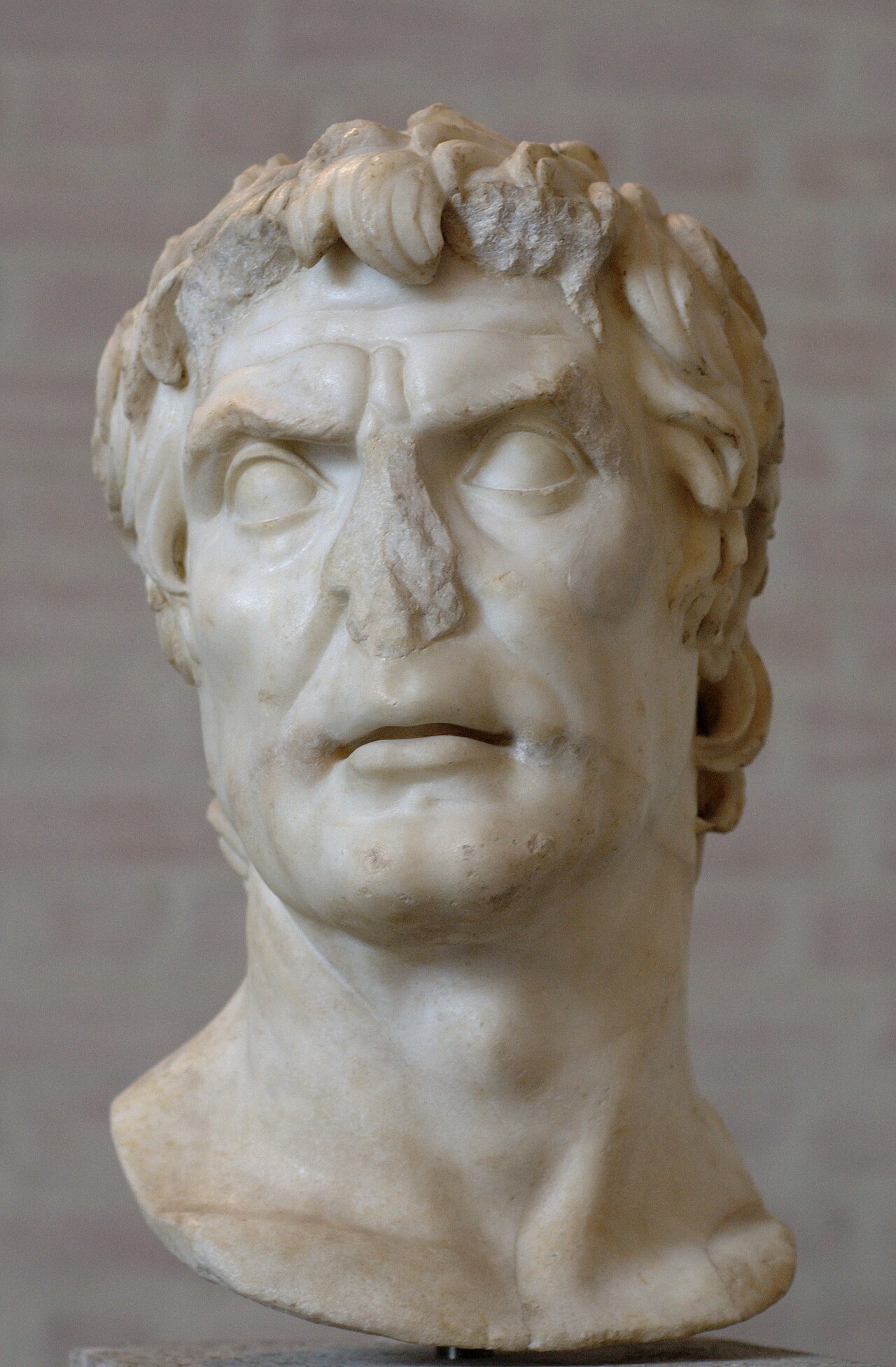
Portrait of Sulla
A marble head long identified as Sulla, now in the Munich Glyptothek, though the identification is debated among scholars.
This marble head is the most widely used image said to depict Sulla, though its identification is uncertain.
About this source
What it is
This marble head, held in the Munich Glyptothek, is traditionally called a portrait of Sulla. It is probably a copy made around the time of Augustus, based on an original portrait of an important Roman from the 2nd century BC.
Why it matters
This bust is the most widely reproduced image said to show Sulla, but scholars are not certain the identification is correct. It shares notable details — such as proportions, an open mouth, and large eyes — with a bust traditionally called 'Marius,' leading some scholars to suggest the two statues, representing rival Roman leaders, may have originally been displayed together. This makes the portrait a useful case study in how ancient images are identified and sometimes misidentified.
Look closer
- What features of the face might lead someone to identify this as a powerful or stern Roman leader?
- Why might ancient copies of portraits differ from a true likeness of the original person?
- What does the uncertainty over this identification teach about trusting artifact labels?
This sculpture is part of the curated material that grounds the AI version of Sulla on Humy.ai — when students ask about related events, the AI can quote it and cite it.
More Sulla sources
Browse all 70 →


Ready when you are
Start chatting with Sulla now.
20 messages free · No credit card · Available in 50+ languages.