


Secondary sourcePainting1801–1834
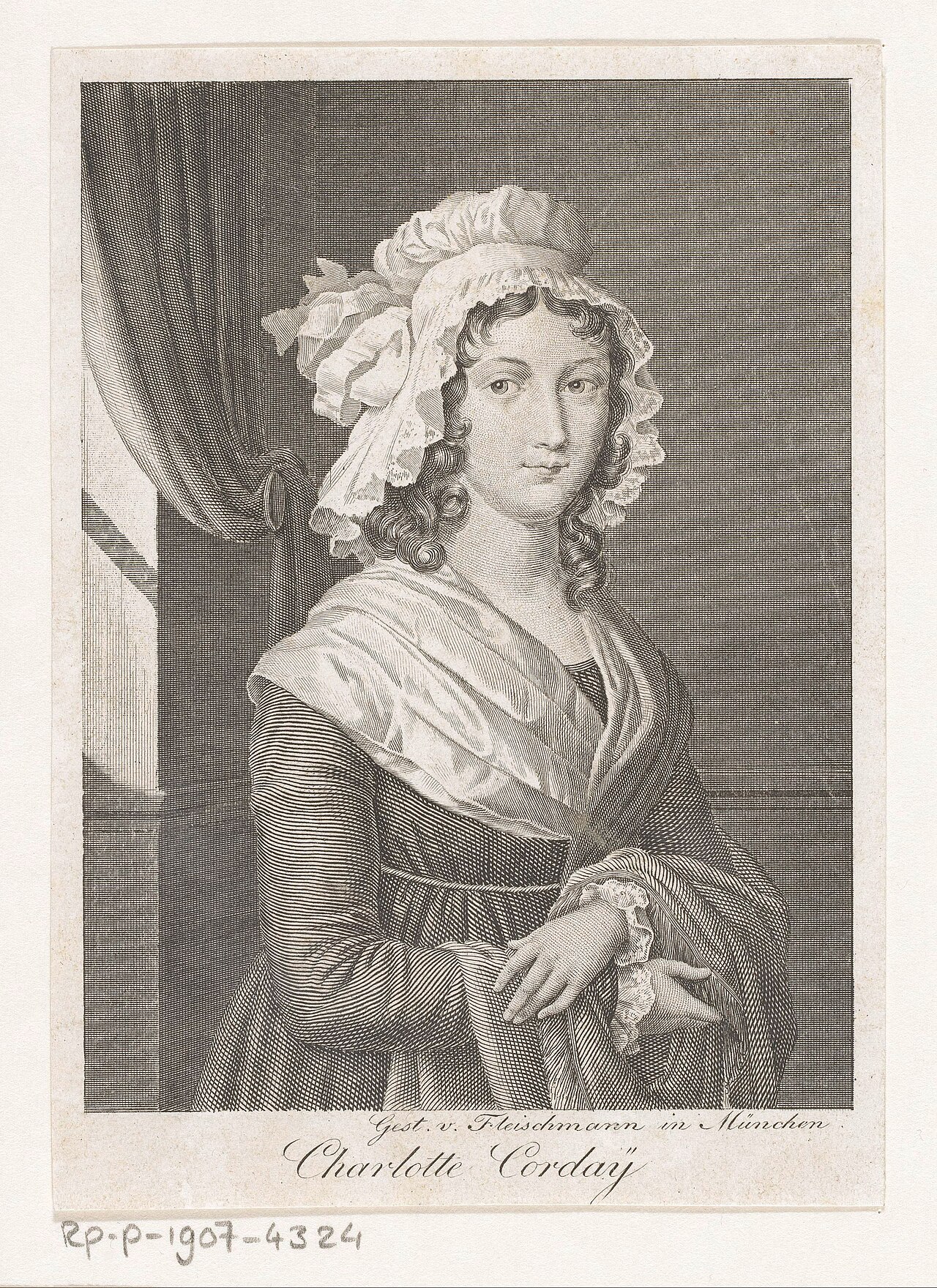
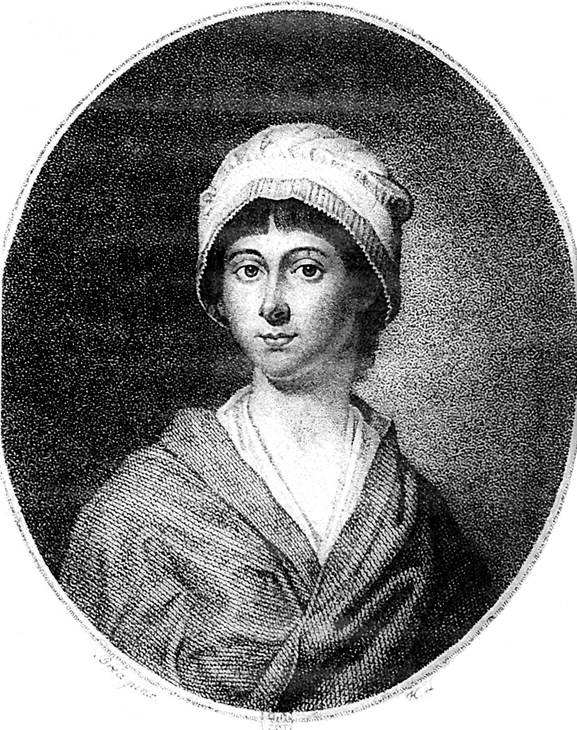
Portret van Charlotte Corday
Friedrich Fleischmann · 1801–1834
A German engraved portrait print of Charlotte Corday held in the Rijksmuseum, showing her image circulating across Europe.
This German engraved portrait of Corday shows how her image spread across Europe after her death.
About this source
What it is
This engraved portrait print of Charlotte Corday was made by Friedrich Fleischmann in Munich sometime between 1801 and 1834. It is held in the Rijksmuseum, having entered the collection as a gift in 1907.
Why it matters
The print shows Corday in a lace-trimmed bonnet and shawl, a formal, dignified image made decades after her death. Its creation in Munich and eventual home in a Dutch museum shows how her image and story spread across Europe in the decades following the Revolution, turning her into a figure of wider fascination beyond France.
Look closer
- What does the formal pose and clothing suggest about how the printmaker wanted viewers to see her?
- Why might an image of a French revolutionary figure be made and collected in Germany and the Netherlands?
- What might be missing from a portrait made decades after its subject's death?
This painting is part of the curated material that grounds the AI version of Charlotte Corday on Humy.ai — when students ask about related events, the AI can quote it and cite it.
More Charlotte Corday sources
Browse all 78 →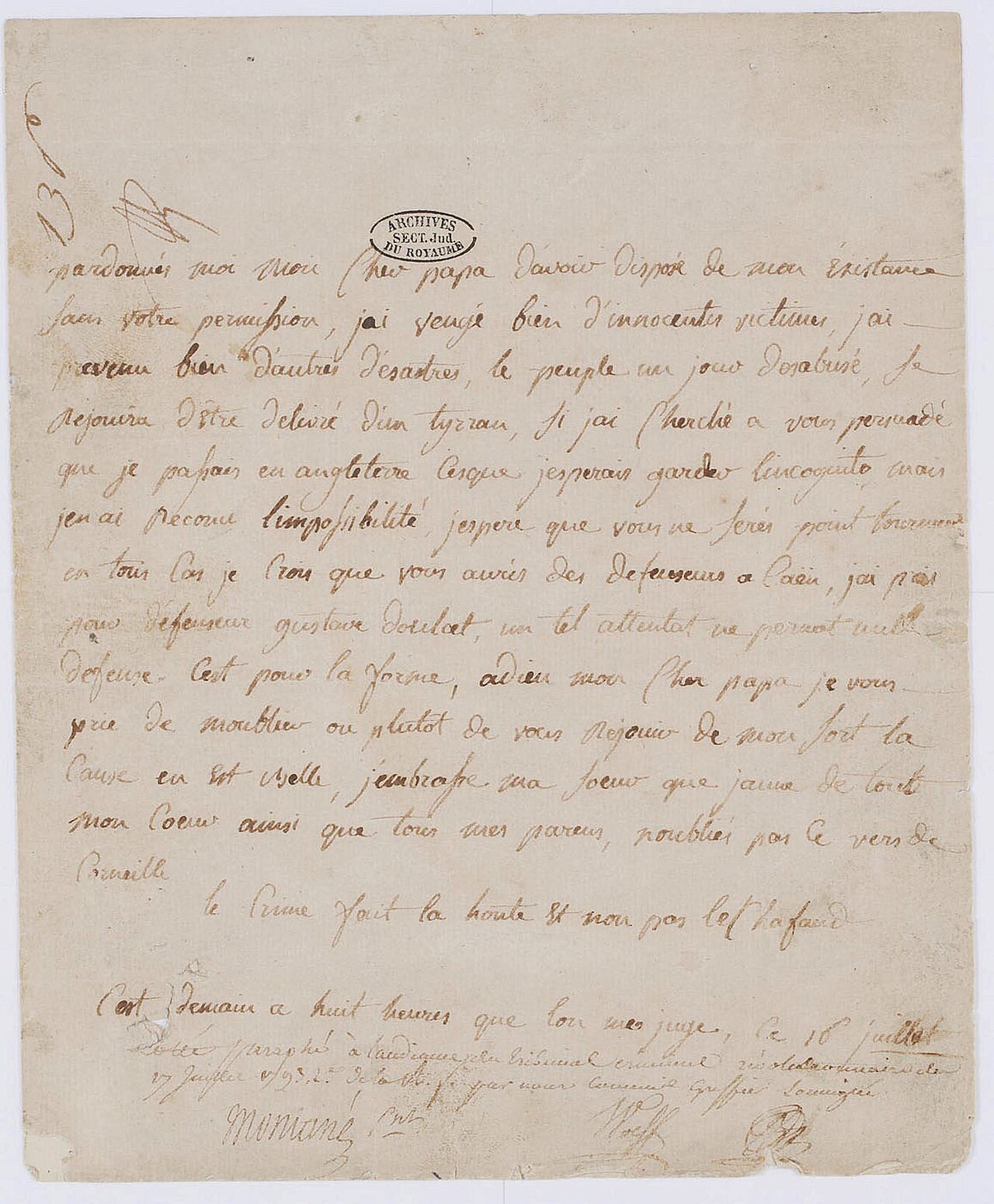 Letter
Primary source
Farewell Letter to Her Father
Charlotte Corday · 16 July 1793
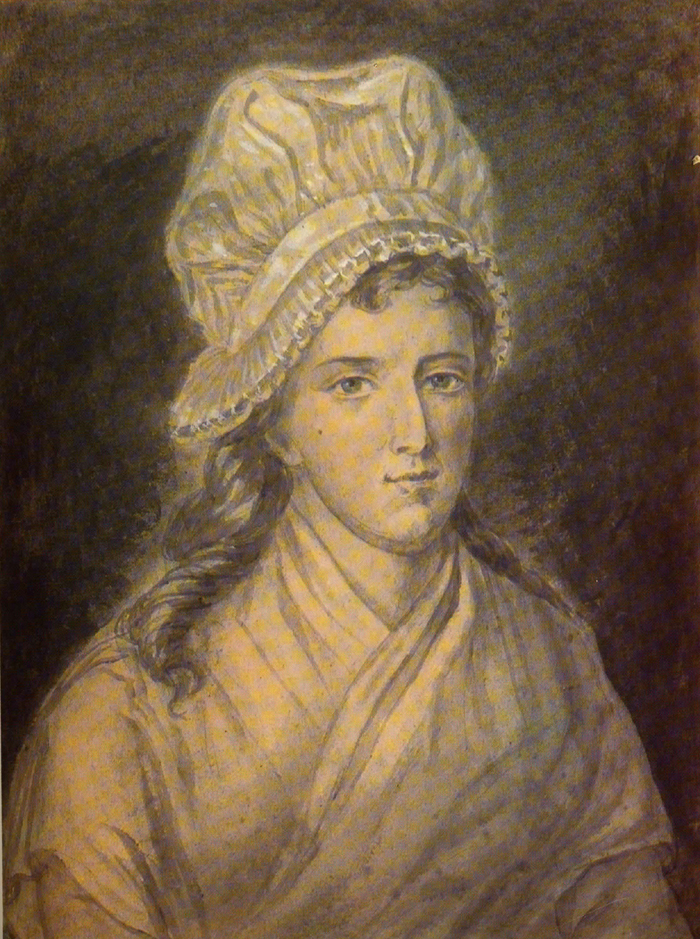 Painting
Primary source
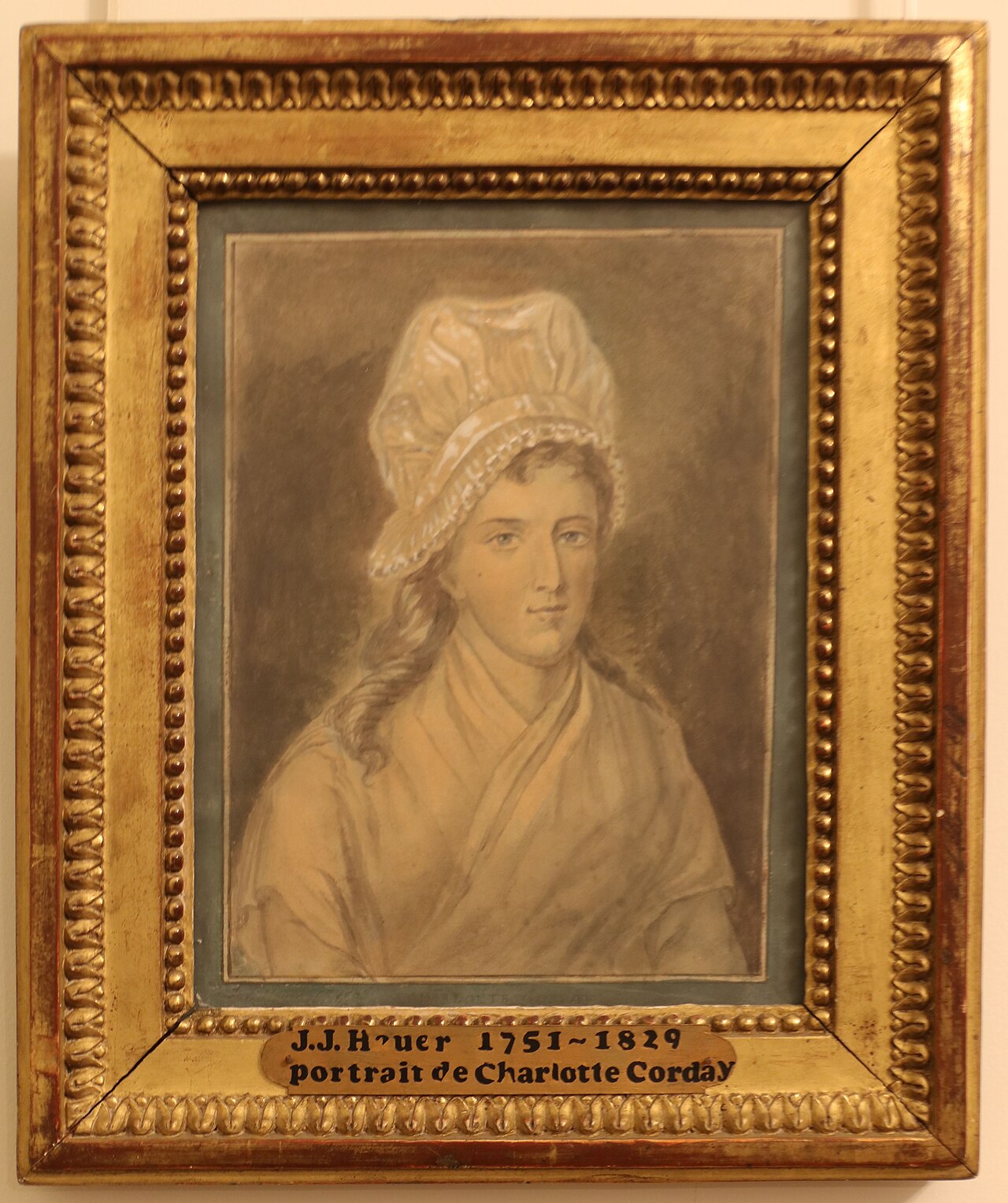
Portrait of Charlotte Corday by Hauer
Jean-Jacques Hauer · 17 July 1793
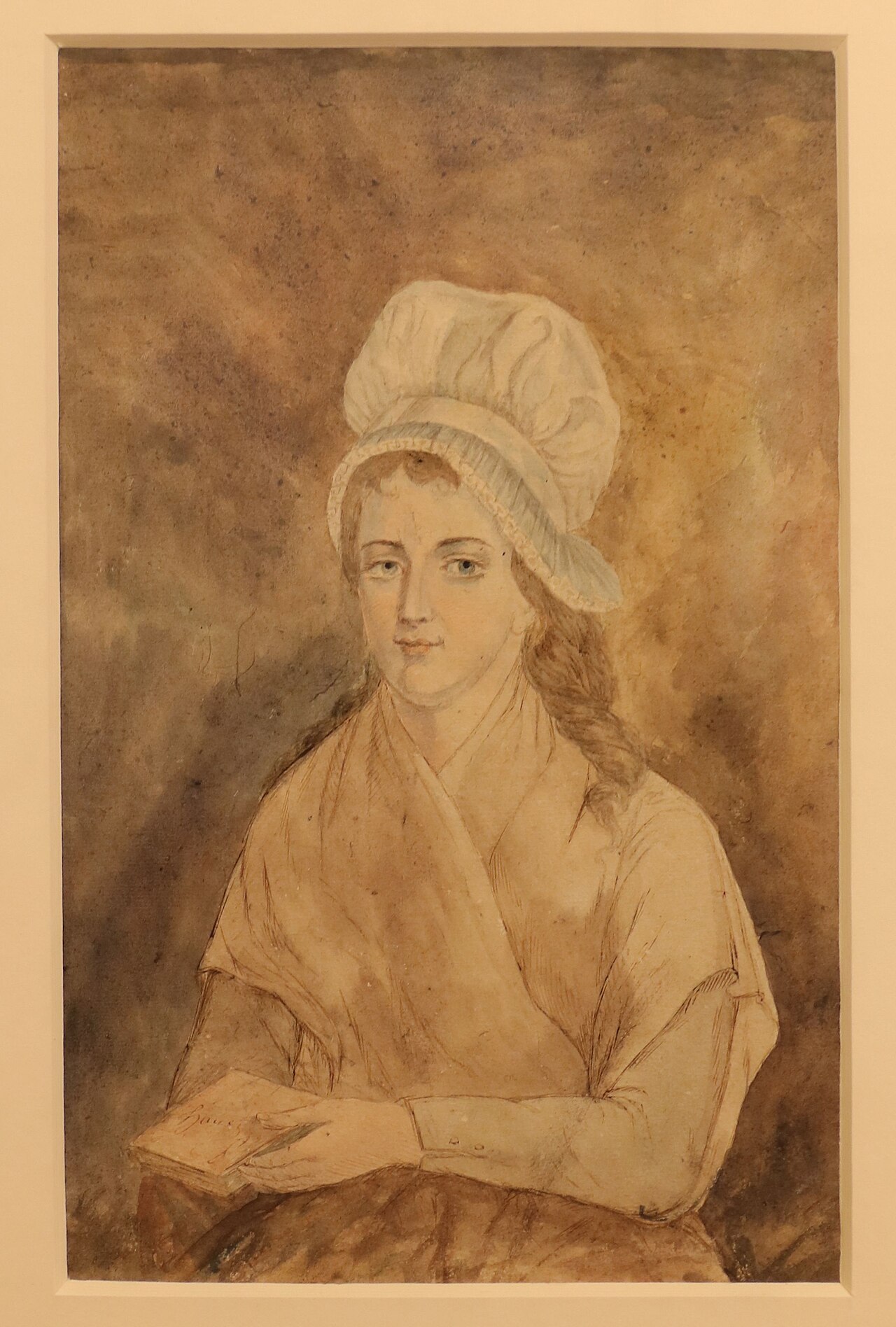 Painting
Primary source
Charlotte Corday Holding a Book
Jean-Jacques Hauer · 1793
 Document
Primary source
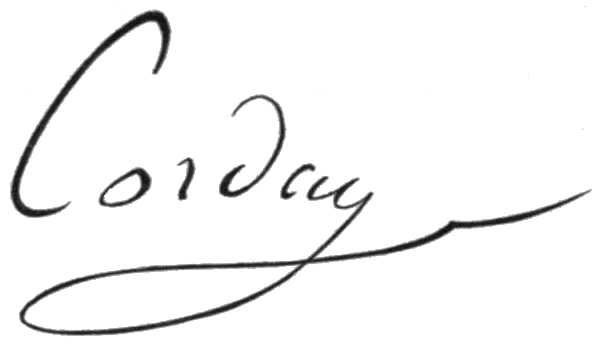
Signature of Charlotte Corday
Charlotte Corday
Free account
Read every Charlotte Corday source
Sign up free →
Ready when you are
Start chatting with Charlotte Corday now.
20 messages free · No credit card · Available in 50+ languages.