


Primary sourceDocument1849
Positivist Calendar
Auguste Comte · 1849
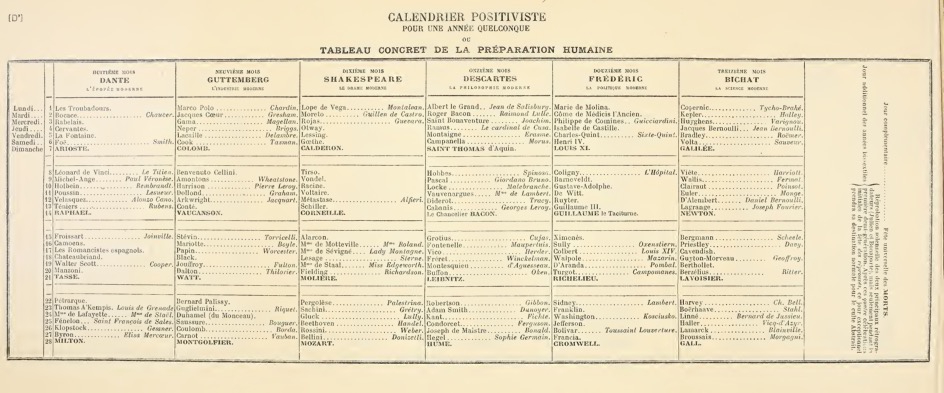
Comte's 1849 reform calendar with thirteen 28-day months named after great figures of human history, meant to replace the Christian calendar.
Comte's own invented calendar, showing his attempt to build a secular system honouring great figures of humanity.
Free Humy account · No credit card · 120,912 sources to read
About this source
What it is
This is the Calendrier positiviste, a calendar reform devised by Auguste Comte in 1849. It is held at the Bibliothèque nationale de France and the Maison d'Auguste Comte. It used thirteen months of 28 days each, with months named after figures such as Dante, Gutenberg, Shakespeare and Descartes, plus an extra day outside the months.
Why it matters
The calendar was Comte's attempt to apply his 'scientific study of society' to everyday life, replacing religious holy days with a secular commemoration of great figures from humanity's past. It reveals his ambition to found a new, non-Christian cult of humanity, built on the idea that society could be reorganised around admired historical figures rather than saints.
Look closer
- Why might Comte choose scientists, writers, and rulers rather than religious figures for his calendar's names?
- What does replacing the familiar 12-month calendar reveal about how ambitious his positivist project was?
- Why do you think this calendar was never widely adopted?
This document is part of the curated material that grounds the AI version of Auguste Comte on Humy.ai — when students ask about related events, the AI can quote it and cite it.
More Auguste Comte sources
Browse all 81 →Primary source
System of Positive Polity
Auguste Comte · 1851–1854
 Book
Primary source
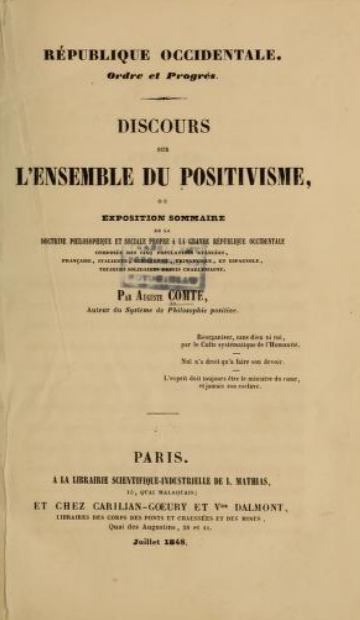
A General View of Positivism
Auguste Comte · 1848
 Letter
Primary source
Correspondence between Auguste Comte and John Stuart Mill
Auguste Comte and John Stuart Mill · 1841–1847
 Painting
Secondary source
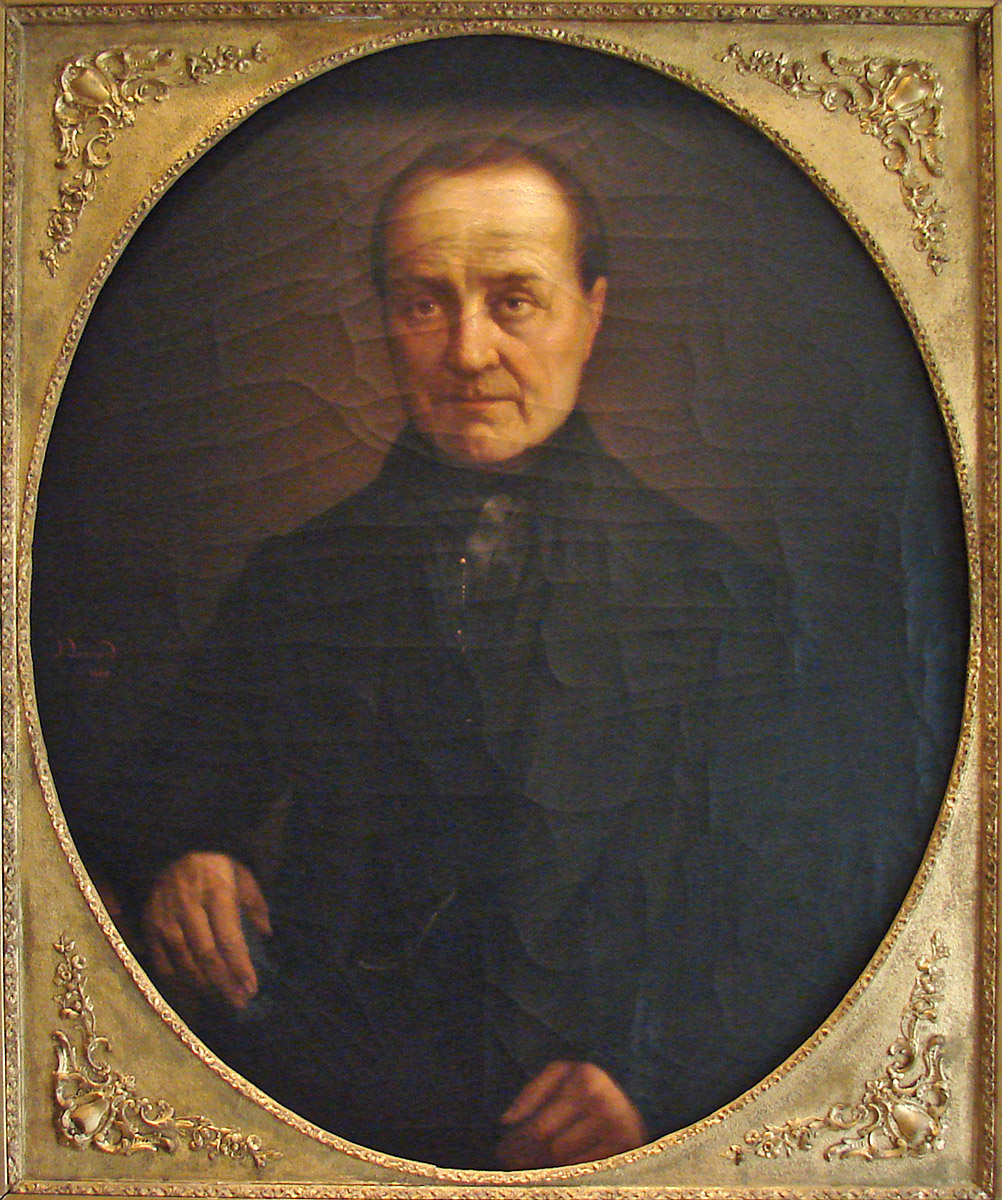
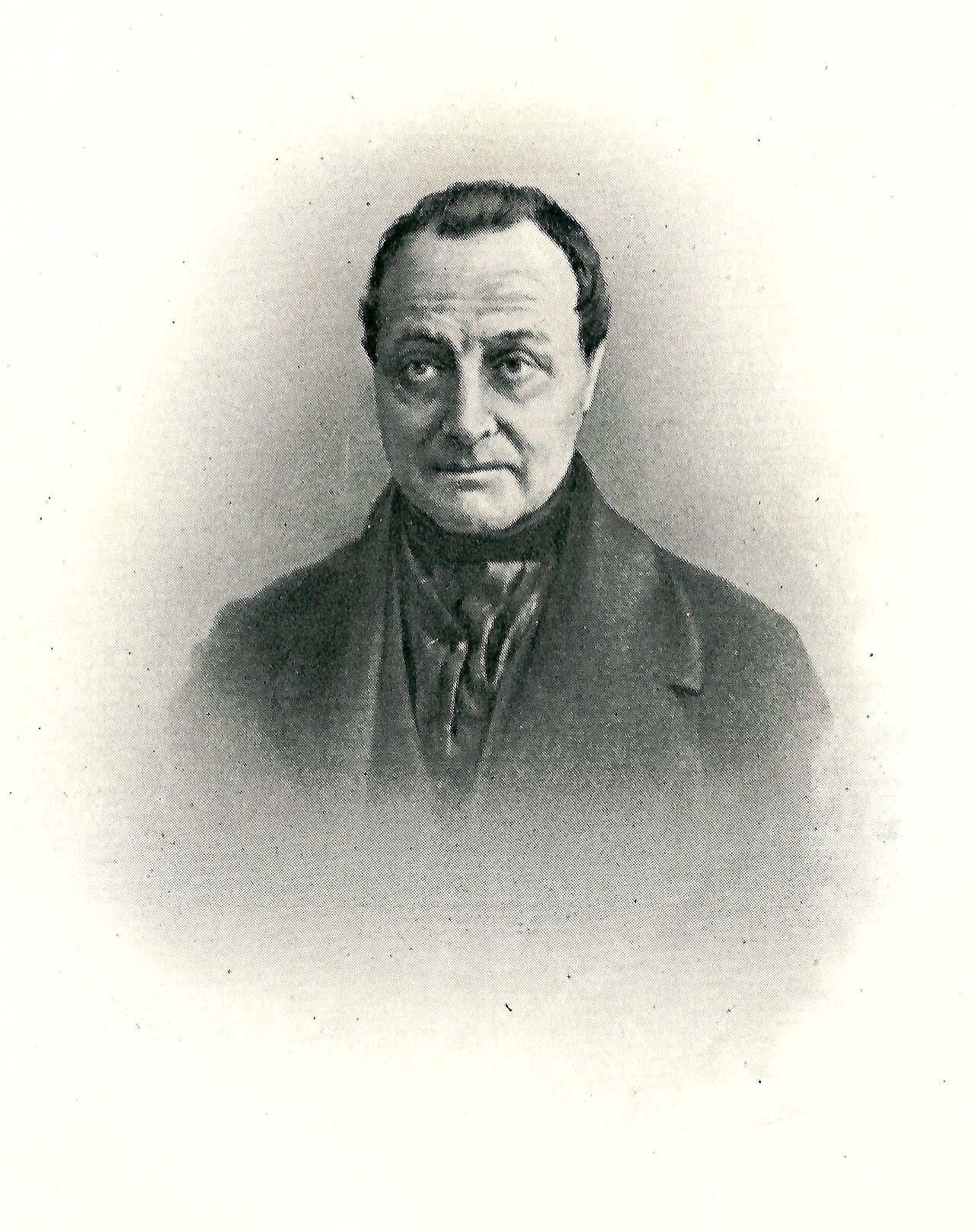
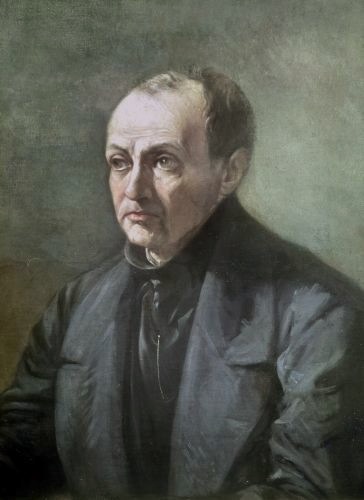
Portrait of Auguste Comte
Free account
Read every Auguste Comte source
Sign up free →
Ready when you are
Start chatting with Auguste Comte now.
20 messages free · No credit card · Available in 50+ languages.